
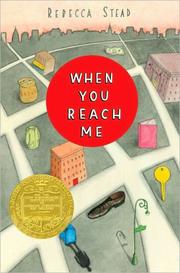
When You Reach Me
2,456-word summary 11 min read 208 pages in the book
- First published
- 2009
- Publisher
- Wendy Lamb Books
- Pages
- 208
- ISBN
- 9780385737425
Reading options
What's inside (8 sections)
I read When You Reach Me in one evening and sat quiet after, thinking about how much a short book can hold. First published in 2009 by Wendy Lamb Books at 208 pages in hardcover, it won the 2010 Newbery Medal. It is set on the Upper West Side of Manhattan in 1978 and 1979, narrated by sixth grader Miranda Sinclair. She finds strange notes addressed to M, asking her to write down what happens, because someone is trying to save a life through time. I loved how ordinary and strange it is at once.
Miranda lives with her mom in a small apartment. Her mom is warm, funny, a little broke, working as a paralegal and preparing to appear on The 20000 Pyramid game show hosted by Dick Clark. Miranda helps her practice, shouting answers at the TV. Her mom's boyfriend Richard is kind, steady, a little awkward in the apartment. He fixes things, he listens, he tries not to push. Miranda likes him but holds back because her dad is mostly absent and she learned not to count on men staying.
Her best friend since forever is Sal, who lives in the same building. They walked to school together, fought bullies together, knew each other's routines. Then Sal gets punched by a bigger kid on the street one day, for no reason Miranda sees, and after that he stops walking with her. He turns to new friends, to Marcus and Julia, to church youth stuff. Miranda is hurt and confused. She acts cool but checks where he is at lunch. That ache of a friendship shifting in sixth grade felt exactly right. No big betrayal, just distance growing.
School is its own world. Miranda's class reads A Wrinkle in Time, which matters because the book is about time and love and being different. Her teacher talks about time travel ideas. Her classmates argue about who is smart, who is weird, who gets picked. Miranda is smart but hides it sometimes to fit. She has a job carrying sandwiches for a local shop, she has keys to her apartment, she knows which streets to avoid. New York in the late seventies is broke and lively in these pages. Graffiti, game shows, corner stores, a homeless man everyone calls the laughing man who kicks parking meters and laughs.
Notes for M
The notes start small. Miranda finds one in a library book, unsigned, addressed only to M. It says things like I am coming to save my friend's life, and you must write a letter describing what happens. It mentions details no stranger should know. Dates, places, who was where. Miranda thinks it is a joke, then it is too specific to be a joke. More notes come, hidden in odd spots. They know about Sal, about Richard, about her mom's show, about the laughing man.
Miranda does not tell adults right away. She tells herself she will handle it. She starts writing down events as asked, even though she does not know who will read them. That writing becomes the book you hold. It is a clever frame. Every chapter is both sixth grade life and evidence for a future reader. You pay attention to small things because the notes say they matter. A spare key. A dropped glove. A punch. A smile at the right second.
The mystery is gentle, not scary. Who writes the notes. How do they know. What life needs saving. Miranda guesses wildly, suspects classmates, suspects Richard, suspects the laughing man. She watches people more closely. She notices Marcus, who is brilliant and strange, stealing and returning things, talking about time. She notices Julia, sharp and kind, trying to be friends. She notices Belle, the building busybody, and Colin, the boy who laughs too loud. Everyone could be hiding something because everyone in sixth grade is hiding something.
I liked how Stead lets Miranda be wrong. She judges Marcus fast after he hits Sal, then learns his home life is hard. She judges Julia as stuck up, then learns she is lonely. She thinks her mom cares more about TV than her, then sees how hard her mom works to keep them afloat. Growing up here means revising first takes. The notes force that too. You cannot understand time until you admit you did not see people clearly the first time.
Her mom's Pyramid storyline gives warmth and stakes. They practice with flashcards, they argue about what to wear, they worry about money if she wins. The show tapes in California, far from their small kitchen. Miranda is proud and scared. What if her mom looks silly. What if she loses. What if winning changes them. Richard helps quietly, driving, fixing, waiting. His steadiness contrasts with the time travel worry. Real love is present, patient, while impossible love from the future asks for help.
The laughing man
The man on the corner who laughs and kicks parking meters seems like background color at first. Kids avoid him. Adults pity him. Miranda pities and fears him. He shouts, he sleeps in doorways, he remembers odd things. Stead writes him without making him a joke or a saint. He is ill, homeless, part of the block. Miranda learns to see him as a person, not a warning.
Without giving the ending away, I can say the solution ties him, Sal, Marcus, and Miranda's habit of noticing into one careful loop. Time travel here follows rules about knowing and interfering. You cannot just go back and fix. You need someone to write it down, someone to remember, someone to act at the exact moment without knowing fully why. It needs kindness as much as physics. A kicked parking meter, a punch avoided or taken, a key lent, a note hidden. Small acts become large because they happen on time.
When the reveal came, I flipped back and checked. Clues were there. A mention of underwear, a laugh, a shoe, a game show date, a book left open. Stead plays fair. She never cheats with powers that solve everything. The traveler is limited, forgetful, human. He needs Miranda because she pays attention. That theme hit me. Kids who watch closely can save people adults miss.
The science is light. No machines explained, no paradox lectures. It leans on A Wrinkle in Time ideas about love folding time, and on Miranda's teacher talking about time as places you might visit if you knew how. If you need hard science fiction, this will feel soft. If you like mystery with a touch of wonder, it is perfect. The focus stays on friendship, not tech.
What shines and what feels small
What shines is voice and place. Miranda sounds twelve, smart, funny, defensive, tender. Short chapters with titles like Things You Keep in a Box and The Punch. Sentences are clear. New York feels lived in. Corner stores, laundromats, school hallways, apartment buzzers. You can hear it. The diversity of the block feels natural, not lesson-like. Different families, jobs, accents, all sharing stairs and sidewalks.
Friendship is drawn with care. Sal pulling away hurts because Stead does not villainize him. He is growing, scared after being hit, finding safety with new boys. Miranda is left, angry, trying new friends while missing old ease. Their slow repair, through small kindnesses not big apologies, felt true. Marcus and Julia also grow from types to people. Marcus especially, brilliant, poor, impulsive, gets one of the best quiet moments about why he acts out.
What feels small is scope, on purpose. At 208 pages, some threads get little time. Miranda's dad is thin. Belle is more device than person. The game show chapters, though lovely, take space some might want for more notes. I wanted one more note, one more scare. But brevity suits middle grade. It leaves room for reread, and this book rewards reread hugely. Second time you see how every detail matters.
There is no content to warn about beyond a punch, some bullying, brief mentions of homelessness and mental illness, all handled gently. It is ideal for ages 9 to 13, and rich for adults who like time puzzles. Teachers use it with A Wrinkle in Time, and that pairing works. Both ask what love can do across distance.
Who should read it
Read it if you like Newbery winners that earn it, like Holes or The Giver but warmer. Read it if you like time travel without tech talk, mysteries solved by noticing, sixth grade stories that respect kids. Read it aloud with a child and stop to guess who writes the notes. You will both be wrong and glad.
Skip it for now if you need long worldbuilding or action. This is stairs and kitchens and sidewalks, not spaceships. Skip if you dislike open hearted endings. This one is hopeful, unashamedly so.
For me, the image that stays is Miranda writing. A girl at a kitchen table, TV on low, mom practicing answers, Richard fixing a drawer, notes hidden where only she looks, trying to tell the truth clearly enough that someone in the future can use it. Writing as rescue. I closed the 208 pages thinking about my own small records, the letters I kept, the details I wish I had written down. Stead says pay attention, be kind, write it down. That is a good lesson from a short book, and it is why When You Reach Me lasts beyond its twist. It is about time, yes, but more about showing up on time for the people on your block.
School and growing apart
I want to say more about school, because Stead gets sixth grade right in ways many books miss. Miranda's classroom is not evil or perfect. It is mixed, noisy, funny, unfair in small ways. A teacher who tries hard but has favorites. A quiz that feels huge on the day and silly a week later. A lunch table where seats mean everything. Miranda is bright and hides it just enough to stay safe. She answers when called, but does not raise her hand every time. She helps Julia quietly rather than showing off. That balance of pride and self protection felt true to twelve.
Marcus is the kid everyone labels difficult. He is Black, brilliant, poor, angry after years of being underestimated. He steals a notebook, he talks back, he solves puzzles fast and then shrugs like he does not care. Adults punish the shrug more than the act. Miranda first fears him after he hits Sal, then watches longer and sees home pressure, a mother working double shifts, a sister to protect, hunger that makes mornings hard. One scene where Marcus explains time in his own words, halting and clear, changed how I saw him. He is not a plot device for the time trick. He is a boy trying to be seen as smart without being called weird.
Julia, who joins as a new friend, is prickly and loyal. She reads fast, argues about books, hates being pitied for money troubles at home. Her friendship with Miranda grows through shared jobs and secrets, not instant closeness. They walk together, they cover for each other, they fight about small things like who gets to carry keys. Those small fights matter at twelve. How you make up after tells you if a friendship will hold. Miranda and Julia learn to say sorry without making it huge, which is a skill many adults lack.
Sal's distance hurts most because it has no villain. Sal was punched hard by Marcus on the street, out of nowhere, and something in him shuts. He stops walking the old route. He finds church group and new boys who feel safer. He does not tell Miranda he is scared. He just drifts. Miranda tries anger, then coolness, then new friends, then missing him quietly. Their repair is not a big talk. It is Sal saving her a seat once, Miranda lending him a book, standing near each other at the right moment when it counts. That restraint moved me. Not every break needs a speech. Sometimes presence is enough.
Why the time trick earns its keep
Some time travel books use the trick to dodge hard feelings. This one uses it to face them. The traveler cannot change everything. He needs help, he forgets, he must rely on a kid's notes. That limit keeps the story human. He is not a god. He is someone who made a mistake and wants one more chance to be kind at the exact second it matters. Miranda must choose to act without full proof, to trust a note over fear, to run toward trouble rather than away. Courage here is not fighting. It is paying attention and moving in time.
The rules Stead sets are simple and fair. You cannot meet yourself. You cannot force. You need a record. You need love that remembers details. Those rules fit the theme. Love that pays attention can fold time. A mother who practices answers with her daughter. A boyfriend who fixes a lock without being asked. A girl who writes down who stood where. Small loves become coordinates. When the final rescue happens, it works because many small kindnesses lined up, not because one hero was strong.
I also liked how the book treats A Wrinkle in Time. It is not namedropping. Miranda reads it in class, argues about Mrs. Whatsit, wonders if love can travel. Her teacher lets kids disagree. Those class talks give Miranda language for what happens to her. She borrows ideas to explain impossible notes to herself. Books inside books can feel cute. Here it feels necessary. Stories teach her how to read her own life.
If I have a gripe, it is that I wanted more of Miranda's dad. He calls rarely, promises visits, misses. Miranda acts like she does not care, but she keeps his letters. One more scene might have rounded her ache about men leaving and why Richard's steadiness matters. As it is, dad stays thin, more absence than person. Maybe that is honest. Some parents are thin in kids' lives. Still, I felt the gap.
I read the last twenty pages twice, once fast to know, once slow to see how Stead hid the path. The shoe, the bell, the glove, the laugh, all there. Kids who reread will feel smart spotting them. Adults who think middle grade is simple will learn otherwise. At 208 pages, it does more with time and kindness than many long novels. I put it on my shelf beside books twice its length and it holds its own. Pay attention, write it down, show up. Simple, hard, enough.
FAQ
When was When You Reach Me published?
It was first published in 2009 by Wendy Lamb Books at 208 pages in hardcover. It won the 2010 Newbery Medal.
Who is Miranda?
Miranda Sinclair lives on the Upper West Side in 1978 and 1979. Notes addressed to M ask her to write down events for a time traveler.
Similar books

Paper Girls, Volume 1
Four paper girls in 1988 Ohio chase a stolen walkie-talkie into a basement and stumble into a time war, flying dinosaurs, and an older version of themselves.
2,235-word summary · 10 min read

A Swiftly Tilting Planet
Charles Wallace rides time with a unicorn to stop a dictator before birth.
2,193-word summary · 10 min read

Hard Luck
Rowley has a girlfriend, so Greg turns to a Magic 8 Ball, a family Easter hunt and the school yearbook for answers.
2,586-word summary · 11 min read
The First Fifteen Lives of Harry August
Harry August dies and is born again into the same life, again and again, until a warning from a child tells him the world is ending faster with each pass.
2,189-word summary · 10 min read
The Third Wheel
Greg tries to find a date for the Valentine's dance, ends up the third wheel in his own plan, and watches Rowley get the girl.
2,019-word summary · 9 min read
Harriet the Spy
Eleven year old Harriet Welsch fills notebooks with honest, often cruel observations about her neighbors, until her classmates read one and turn her spy route…
2,510-word summary · 11 min read
The Penultimate Peril
Baudelaires as concierges in a hotel sort friends from foes before the end.
2,234-word summary · 10 min read
The End
Baudelaires wash on an island where others decide what safe means.
2,320-word summary · 10 min read

Bud, Not Buddy
A ten year old orphan in the Depression walks to find a jazzman he thinks is his father.
2,568-word summary · 11 min read
The Hostile Hospital
The Baudelaires hide in half-built Heimlich Hospital, uncover a thirteen-page file hinting a parent survived, and flee Olaf's surgery trap through fire.
2,658-word summary · 12 min read
The Grim Grotto
Snicket eleventh Baudelaire book, Sept 2004 HarperCollins, 323 pages: the Queequeg crew, Gorgonian Grotto fungus, Fiona choice, and Sunny wasabi cure that…
2,789-word summary · 12 min read
The Eyre Affair
Literary detective Thursday Next chases a villain who kidnaps Jane Eyre from her own novel in an alternate 1985 England.
1,929-word summary · 9 min read

The Carnivorous Carnival
Baudelaires hide as carnival freaks to find V.F.D. clues, facing lions, Olaf, and a fateful cliff split.
2,027-word summary · 9 min read
Maniac Magee
Orphaned Jeffrey Magee runs to Two Mills, becomes a playground legend, and tests a town split by race while hunting for a real home.
2,219-word summary · 10 min read

Dirk Gently's Holistic Detective Agency
Holistic detective Dirk Gently links a Cambridge murder, a ghost, and time travel to stop a four-billion-year-old mistake.
3,000-word summary · 13 min read
The Mysterious Benedict Society
Four gifted children pass strange tests and go undercover at a school hiding a mind control machine.
2,130-word summary · 9 min read
Recursion
False pasts feel truer than true ones as a memory chair lets the grieving rewrite deaths.
1,995-word summary · 9 min read

The Field Guide
Three siblings move into a creepy Maine estate, anger a brownie, and find a forbidden guide to the fairy world in the first Spiderwick book.
2,033-word summary · 9 min read

Authority
The new director of the Southern Reach takes over an agency that is hiding the truth about Area X, and the building starts to change around him.
2,029-word summary · 9 min read

Wilder Girls
At a quarantined boarding school off Maine, three girls with strange mutations search for a missing friend and learn what the adults have hidden.
2,594-word summary · 12 min read
The Unmaking of June Farrow
A woman in a North Carolina flower-farming family walks through a red door into 1951, where she must solve her mother's disappearance and decide whether to…
2,701-word summary · 12 min read
The Time Paradox
When his mother falls ill with a fairy disease, Artemis Fowl travels back in time to find the extinct lemur that can cure her and confronts his younger self.
2,601-word summary · 12 min read

Clifford the Big Red Dog
Emily Elizabeth picks the smallest puppy in the litter, loves him as hard as she can, and wakes up to a dog the size of a house.
2,092-word summary · 9 min read
Sleeping Giants
A girl falls into a field and lands in a giant metal hand. Years later a secret team assembles the rest of the machine, and it chooses its own pilots.
2,466-word summary · 11 min read

Heist Society
A teenage art thief gets expelled from boarding school, then has two weeks to steal five paintings back from a London museum and clear her father.
2,781-word summary · 12 min read
Frog and Toad Are Friends
Five short stories about a cheerful frog and a grumpy toad who need each other for waking up, swimming, and waiting for the mail.
1,969-word summary · 9 min read
Grip of the Shadow Plague
A plague turns Fablehaven's creatures of light into shadows while Kendra hunts an artifact in Arizona and Seth races to find the cause.
2,131-word summary · 9 min read
Saving the World and Other Extreme Sports
Max and the flock split in two to take down the lab behind their lives, one half in California and the other in Europe.
2,175-word summary · 10 min read
The Thief Lord
Orphaned brothers join a gang of Venice street kids and a masked Thief Lord, chasing a magic merry-go-round that can change a person's age.
2,040-word summary · 9 min read

One of Us Is Dead
In Buckhead, Atlanta, five women narrate a murder among manicures, fundraisers, and social warfare. Jeneva Rose's 2022 thriller is a gossipy revenge fantasy…
2,471-word summary · 11 min read