
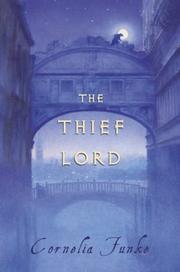
The Thief Lord
2,040-word summary 9 min read 349 pages in the book
- First published
- 2000
- Publisher
- The Chicken House
- Pages
- 349
- ISBN
- 9780439404372
- Original title
- Herr der Diebe
Reading options
What's inside (10 sections)
Before Inkheart made her a household name, Cornelia Funke wrote a Venice book about two runaway brothers, a gang of street kids, and a magical merry-go-round that turns adults into children. Herr der Diebe appeared in Germany in 2000 from Cecilie Dressler Verlag, and the English translation by Oliver Latsch arrived through The Chicken House and Scholastic in 2002, 349 pages. It is a children's novel that trusts its readers with real danger, real poverty, and a villain who turns out to be less of a villain than the heroes assumed.
The setup is a fairy tale with a social conscience. Twelve-year-old Prosper and his five-year-old brother Bo are orphaned in Hamburg. Their aunt Esther Hartlieb and her husband Max want to adopt Bo, who is angelic-looking and photogenic, and send Prosper to boarding school. Rather than be separated, the brothers run away to Venice, the city their mother loved. They sleep rough, dodge tourists and police, and are taken in by a gang of street children living in an abandoned cinema called the Stella, which they rename the Star-Palace.
The Gang
The gang is one of the best parts of the book because each child has a job and a personality that extends beyond the plot. Riccio, whose nickname means hedgehog, is a scrawny pickpocket with a sharp tongue. Mosca is a black boy who serves as the group's mechanic and dreams of finishing a boat. Caterina Grimani, called Hornet, is the only girl, a reader who wears her brown plait like a stinger. And then there is Scipio Massimo, thirteen, masked, and calling himself the Thief Lord, who claims to be an orphan and supports the gang by stealing from Venice's rich houses.
Scipio is the engine of the story and the source of its central lie. He is not an orphan. He is the son of Dr. Massimo, a wealthy and emotionally abusive doctor who owns the Stella. Scipio returns home to his father's mansion but spends his days as the Thief Lord, stealing from the rich and playing at a freedom he does not actually have. The mask gives him a way of being someone his father cannot own, and it is also a very good costume.
Funke is good at the texture of this double life. Scipio is brave, theatrical, and a little cruel, and the younger children worship him. Prosper, who is new to the gang, sees through some of it and still needs him. The novel is honest about the way charisma works on people who have nowhere else to go.
Victor Getz and the Adults
The adults in the book are a mixed bag, which is one of its strengths. Esther and Max are vain and entitled, but they are not monsters. They want Bo because he is adoptable, and they are willing to separate him from his brother to get him. Dr. Massimo is worse, a man who uses money and institutions to control his son.
Then there is Victor Getz, the bumbling Venetian private detective hired by Esther and Max to find the boys. Victor wears disguises, keeps two pet tortoises, and is not very good at his job. He is also decent, and his investigation gradually turns into a rescue. The book lets him be ridiculous and competent at the same time, which is a difficult balance in children's fiction.
Ida Spavento is the other adult who matters. She is a kind, wealthy woman living near Campo Santa Margherita, and she owns a wooden wing that the gang is hired to steal. When she catches them, she does not call the police. She explains that the wing belongs to a magical merry-go-round that can change people's ages, and she lets them take it on condition that she comes to the exchange. Ida is the adult the children need: someone with resources who treats them as people rather than problems.
The Theft and the Conte
The plot proper begins when Scipio is hired by a sinister man called the Conte to steal the wooden wing from Ida's house. Scipio takes Prosper and Mosca to the meeting at Basilica di San Marco, where the Conte leaves an envelope with instructions. The gang breaks into Ida's house, is caught, and then, because this is a book about found family rather than punishment, gains an ally instead of an enemy.
The middle section is a chase through Venice. Funke uses the Rialto Bridge, the Grand Canal, Piazza San Marco, the Palazzo Pisani, and the lagoon, and the city is more than a backdrop. The canals are escape routes. The alleys are hiding places. The tourist crowds are cover. Victor trails the gang, is captured and tied up in the Stella, escapes, and discovers Scipio's real identity. The revelation does not destroy the gang. It forces them to reorganize around the truth.
When the gang delivers the wing to the Conte on a boat in the lagoon, they are paid in counterfeit money. They return to the Stella to find Bo and Hornet gone. The police have raided the cinema. Bo is handed over to Esther, and Hornet is taken to the Merciful Sisters orphanage. Ida and Victor rescue Hornet by pretending to be her godmother and lawyer, and Ida takes the children in.
The Merry-Go-Round
The island sequence is where the book becomes a fairy tale in earnest. Prosper and Scipio go to the Conte's island, the Isola Segreta, to demand the money. They discover that the Conte and his sister Morosina are not villains but former servants of the island's noble family. They used the merry-go-round to turn themselves back into children after lifetimes of hard labor. They needed the wing to repair the carousel.
Scipio, who hates being a child, rides the merry-go-round and emerges as an adult. Barbarossa, the antique dealer, is tricked into riding and ages rapidly backward into a small boy. In panic he breaks the carousel, ending its magic forever. Scipio, now a man, pretends to be his own father and forces Barbarossa to hand over the cash in his shop safe.
The ending rearranges the found family. Prosper, Bo, and Hornet live with Ida Spavento and attend school. Riccio and Mosca move into an empty warehouse in Castello. Scipio, now an adult using the surname Fortunato, becomes Victor Getz's assistant and writes a postcard to his father. Barbarossa, now a child, is adopted by Esther Hartlieb after a sting staged by Ida and Victor. When she catches him stealing, she sends him to boarding school, where he bullies classmates and calls himself the new Thief Lord. In the last movement, Scipio and Prosper row back to the Isola Segreta and find it deserted, the merry-go-round gone.
What the Magic Is For
The merry-go-round is not a random fantasy device. Every character who wants to use it is trying to escape a life they did not choose. The Conte and Morosina wanted to escape servitude. Scipio wants to escape childhood and his father. Barbarossa wants to escape age and consequences. The magic gives them what they ask for and then shows why the wish was wrong.
That is a surprisingly mature idea for a children's book, and Funke does not underline it. Scipio becoming an adult does not make him happy. It makes him responsible. He gets the freedom he wanted and immediately uses it to take care of the younger children, which is what adulthood actually is. The book does not say he made a mistake. It says he got what he asked for and had to grow into it.
The other theme is the difference between a gang and a family. The gang is held together by need and charisma. The family at the end is held together by adults who choose to take responsibility. Funke does not pretend the gang was bad. She shows that it was a bridge, and that bridges are meant to be crossed.
Venice as a Character
Funke wrote this book after living in Venice, and it shows. The city is not a postcard. It is a maze of water, stone, and tourists, and the children move through it with the confidence of people who have learned which bridges are safe at night. The Rialto Bridge, the Grand Canal, Campo Santa Margherita, and the lagoon are all real places, and the novel uses them as a stage rather than a backdrop. The Stella cinema and the Isola Segreta are invented, but they feel as if they could be hidden in the city's real geography.
The lagoon sequence is the best example. A boat, a night crossing, an island that is not on the tourist maps, and a family secret waiting in a ruined villa. Funke writes the water as a border between the ordinary world and the fairy tale, and the children cross it without adults. That crossing is the moment the book becomes an adventure rather than a story about runaways.
Venice also gives the novel its social texture. The city runs on tourism and old money, and the gang survives by picking the pockets of people who have come to admire the architecture. The book does not moralize about this. It just lets the children be small predators in a city built for display, and then lets them find adults who are willing to take them in.
Where It Sags
The book is long for its audience, and the middle chase can feel repetitive. There are only so many times the children can run through Venice before the geography stops being exciting and starts being a schedule. The villains are thin. Esther and Max are snobs, Dr. Massimo is a controlling father, and Barbarossa is a greedy antique dealer. The Conte and Morosina are more interesting, but they arrive late.
The translation is readable and keeps the story's momentum, though some of the German wordplay and the Venetian dialect flavor are lost. Readers coming from Inkheart may find this book simpler and more conventional. It is a first-person-ish adventure with a clear plot, not a meta-fictional puzzle box.
The ending is also very tidy. Everyone gets a place, including the villain, and the magic is removed so the world can return to normal. After the moral complexity of the merry-go-round, the wrap-up feels a little like a bedtime story. That may be exactly what Funke intended. The book is for children, and it wants them to sleep.
Why It Endures
What makes The Thief Lord worth reading now is its portrait of children making a city their own. Venice is a place that belongs to tourists and gondoliers and old families, and Funke gives it to a gang of kids who sleep in a cinema and steal from people who will not miss what they lose. That is a fantasy of agency that children recognize.
It is also a book about brothers. Prosper's love for Bo is the engine of every decision he makes, and the novel never lets that love become sentimental. He is not a parent. He is a twelve-year-old doing a parent's job, badly and stubbornly, and the book respects him for it. When Ida finally takes them in, the relief is not that they have a house. It is that Prosper can stop being the only adult in the room.
Read it aloud if you can. The chapters are short, the cliffhangers are well placed, and the Venetian names are fun to say. Then watch the 2006 film if you want to see the city, but read the book first. The movie has the canals. The book has the cold in the Stella and the weight of a stolen wing, and those are the parts that stay. It is also a good book for a child who has finished a certain famous wizard series and wants another story about friendship, danger, and a city that feels half magic. The stakes are smaller than a war, but the children carry them as if they were everything, which is how childhood works.
FAQ
When was The Thief Lord published in English?
Cecilie Dressler Verlag published it in Germany in 2000 as Herr der Diebe. The Chicken House and Scholastic published Oliver Latsch's English translation in 2002, 349 pages.
Who is the Thief Lord?
Scipio Massimo, the thirteen-year-old son of the wealthy Dr. Massimo, who owns the Stella cinema. He pretends to be an orphan and steals from rich houses as the Thief Lord.
What happens on the Isola Segreta?
The Conte and his sister Morosina, former servants who used the carousel to become children again. Scipio rides it and becomes an adult, while Barbarossa is turned into a boy and breaks the carousel.
Similar books
The Field Guide
Three siblings move into a creepy Maine estate, anger a brownie, and find a forbidden guide to the fairy world in the first Spiderwick book.
2,033-word summary · 9 min read
The Stonekeeper
After their father's death, Emily and Navin chase a monster into a hidden world to save their mother, and Emily's great-grandfather's amulet offers power at a…
2,753-word summary · 12 min read
The Penultimate Peril
Baudelaires as concierges in a hotel sort friends from foes before the end.
2,234-word summary · 10 min read
The Indian in the Cupboard
Omri learns a key turns plastic Little Bear into a live Iroquois man.
2,228-word summary · 10 min read
The End
Baudelaires wash on an island where others decide what safe means.
2,320-word summary · 10 min read
Into the Wild
Housecat Rusty joins ThunderClan and learns clan law before war.
2,597-word summary · 12 min read
Hoot
Roy tracks a shoeless boy to save burrowing owls from a pancake house.
2,290-word summary · 10 min read
Gregor the Overlander
Gregor follows Boots down a grate into the Underland and a war prophecy.
2,516-word summary · 11 min read
The Miraculous Journey of Edward Tulane
A china rabbit lost at sea learns to love through owners kind and cruel across many years.
2,002-word summary · 9 min read
The Demigod Files
Three Percy Jackson side quests plus camp maps, cabin guides, interviews, and god profiles set before the final battle.
2,498-word summary · 11 min read
The Hostile Hospital
The Baudelaires hide in half-built Heimlich Hospital, uncover a thirteen-page file hinting a parent survived, and flee Olaf's surgery trap through fire.
2,658-word summary · 12 min read
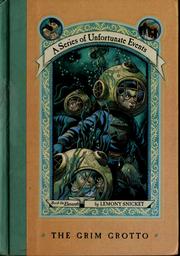
The Grim Grotto
Snicket eleventh Baudelaire book, Sept 2004 HarperCollins, 323 pages: the Queequeg crew, Gorgonian Grotto fungus, Fiona choice, and Sunny wasabi cure that…
2,789-word summary · 12 min read
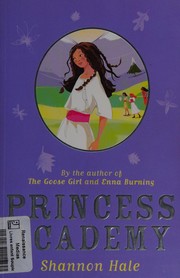
Princess Academy
Miri leaves her Mount Eskel quarry home for Princess Academy, where quarry songs, books, and a bandit siege shape her fight for fair trade, a school, and a…
2,441-word summary · 11 min read
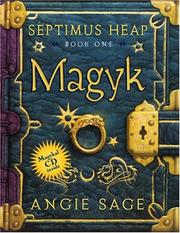
Magyk
A baby found in snow, a lost seventh son, and a run for the Marram Marshes as Marcia Overstrand shields two children from DomDaniel.
2,604-word summary · 12 min read
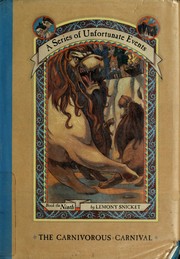
The Carnivorous Carnival
Baudelaires hide as carnival freaks to find V.F.D. clues, facing lions, Olaf, and a fateful cliff split.
2,027-word summary · 9 min read
Maniac Magee
Orphaned Jeffrey Magee runs to Two Mills, becomes a playground legend, and tests a town split by race while hunting for a real home.
2,219-word summary · 10 min read
Bone, Vol. 1: Out from Boneville
Three cartoon cousins are run out of Boneville, separated by locusts, and dropped into a valley where rat creatures and an old grudge are waiting.
2,155-word summary · 10 min read
The Icebound Land
Captured and enslaved in Skandia, Will fights a drug that erases him while Halt and Horace cut a bloody road through Gallica to bring him home.
2,088-word summary · 9 min read
Secrets of the Dragon Sanctuary
Kendra is replaced by a plant copy and held by the Society, while Seth steals a unicorn horn so the family can enter a dragon sanctuary.
2,590-word summary · 12 min read

Hard Luck
Rowley has a girlfriend, so Greg turns to a Magic 8 Ball, a family Easter hunt and the school yearbook for answers.
2,586-word summary · 11 min read
The Time Paradox
When his mother falls ill with a fairy disease, Artemis Fowl travels back in time to find the extinct lemur that can cure her and confronts his younger self.
2,601-word summary · 12 min read
The Chalice of the Gods
Percy needs three recommendation letters from three gods to apply to college, so his first quest is recovering a stolen chalice from the god of old age.
2,106-word summary · 9 min read
Grip of the Shadow Plague
A plague turns Fablehaven's creatures of light into shadows while Kendra hunts an artifact in Arizona and Seth races to find the cause.
2,131-word summary · 9 min read

Saving the World and Other Extreme Sports
Max and the flock split in two to take down the lab behind their lives, one half in California and the other in Europe.
2,175-word summary · 10 min read

The Third Wheel
Greg tries to find a date for the Valentine's dance, ends up the third wheel in his own plan, and watches Rowley get the girl.
2,019-word summary · 9 min read
The Borrowers
A family of tiny people live under the floorboards of an English house, borrowing what they need until a lonely boy and a suspicious housekeeper change…
2,164-word summary · 10 min read
Harriet the Spy
Eleven year old Harriet Welsch fills notebooks with honest, often cruel observations about her neighbors, until her classmates read one and turn her spy route…
2,510-word summary · 11 min read
The War That Saved My Life
Ten-year-old Ada has never left her London flat, hidden away because of her clubfoot. Wartime evacuation sends her to Kent, where a reluctant guardian and a…
2,252-word summary · 10 min read

Beezus and Ramona
Nine year old Beezus tries to be a good older sister while four year old Ramona turns every ordinary day into a disaster, until a tenth birthday forces honesty.
2,062-word summary · 9 min read
When You Reach Me
A sixth grader in 1970s New York gets strange notes that seem to predict the future.
2,456-word summary · 11 min read