
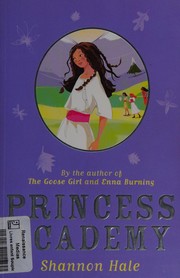
Princess Academy
2,441-word summary 11 min read 314 pages in the book
- First published
- 2005
- Publisher
- Bloomsbury
- Pages
- 314
- ISBN
- 9780747576365
- Series
- Princess Academy (#1)
Reading options
What's inside (8 sections)
I came to Princess Academy because a friend who teaches middle school kept pressing it on me, saying it was the rare school story that cares about work as much as crowns. She was right. The book was first published in 2005 by Bloomsbury, running 314 pages in the standard edition, and it follows Miri Larendaughter, a girl growing up in a quarry village on Mount Eskel where everyone cuts and hauls a pale stone called linder. Shannon Hale writes it as the first book in the Princess Academy series, and it reads like a complete tale even as it leaves room for Miri to grow past the final page. I finished it in two sittings, mostly because I wanted to know whether Miri would get out of the mountain or find a reason to stay.
Mount Eskel is not a pretty backdrop. It is a working place, cold and steep, where children learn early how to read rock and where a slip can crush a foot. Miri is small for her age and has been kept from the quarry by her father and the other adults, who think she will only get in the way. She spends her days helping at home, minding goats, listening to the thump and ring of hammers from below, and feeling left out of the one thing that gives her village its pride. Her pa loves her but keeps her at the edge of danger. Her older sister Marda works hard and does what she is told. The village itself runs on custom: the quarry workers sing while they cut, calling out warnings and rhythm, and the songs carry knowledge about where the stone is sound and where it will split.
The decree and the school on the hill
Change arrives as a decree from the lowlands. The priests have divined that the prince's future bride will come from Mount Eskel, so every girl of a certain age must attend a new academy to be trained as a possible princess. A tutor is sent up the mountain, a strict woman from the city who rents a large house above the village and turns it into a schoolroom. Desks, slates, rules about posture and speech and history and manners. For girls who have spent their lives hauling water and dodging goats, the room feels both grand and insulting.
Miri is among those ordered to attend. She does not want to be a princess. She wants to be allowed into the quarry. But her pa tells her to go, and the village elders agree, because refusing the king is not an option and because schooling might bring trade or favor. The first weeks are rough. The tutor corrects accents, punishes whispering, drills the girls on the history of their kingdom of Danland, on diplomacy, on how to pour tea and address nobles. Miri is quick but restless. She asks why the lowland histories never mention Mount Eskel except as a source of stone. The tutor has no good answer and tells her to copy the passage again.
The other girls fill out fast. Britta, a shy girl from the lowlands who was sent to live on the mountain as a child, keeps to herself and seems to know more about court life than she admits. Katar is sharp and angry, unwilling to pretend gratitude for lessons that feel like erasure. Esa and Frid and the rest each find a place in the pecking order. Miri makes enemies and friends in the same week. She is used to being small and loud to make up for it, and the schoolroom rewards neither trait.
I liked how Hale refuses to make the academy either a prison or a dream. The food is better than at home on some days and worse on others. The beds are warmer. The rules chafe. Lessons in reading open a door Miri did not know she wanted, while lessons in curtseying feel like a leash. That mixed feeling felt true to any kid who has been told education will save her but can see it is also meant to change her.
Quarry songs and book learning
The heart of the book is the contest between two kinds of knowledge. The tutor teaches from books: dates, treaties, the names of kings, the proper forms for letters. Miri and the other mountain girls carry quarry songs in their heads, call-and-response chants that quarry workers use to time their cuts and warn of loose rock. At first the songs look like play. Miri slowly realizes they are a system. Certain melodies mean certain things. The songs can carry messages across rock where shouting fails. The stone itself, linder, seems to hum or answer when the songs are sung well, though Hale keeps that touch light enough to feel like craft rather than magic.
Miri starts to use school skills to record what the village always knew by mouth. She writes down verses. She compares versions. She finds that her mother, who died when Miri was small, left traces in those songs, phrases other women remember. That discovery hits Miri hard because she has grown up feeling motherless in a practical way, raised by a tired father and a kind sister, and now she hears her mother's voice inside work chants. Hale does not push this into sentiment. She lets Miri sit with it during chores, turning lines over while she sweeps or carries.
Peder, Miri's childhood friend, anchors the village side of the story. He is already working stone, proud of his strength, uneasy about the academy taking the girls away for months. He teases Miri about becoming too fine for Eskel, and she snaps back that she was never allowed to be fine at anything, not even quarry work. Their quarrels have the rhythm of kids who have known each other since they could walk. There is affection underneath, but Hale keeps it at the level of shared work and jokes rather than grand promises. Peder carves her small things from spare linder. Miri reads aloud to him from her schoolbooks and watches him pretend not to care while he listens hard.
The tutor slowly sees that Miri learns differently. Miri argues, connects, asks what a tax means for a village that is paid in credit for stone. When the tutor sets a test on trade and negotiation, Miri answers with quarry math, how many blocks make a load, what a broken saw costs in days. The tutor marks her down for form and then, privately, starts giving her harder books. It is not kindness exactly. It is recognition. That dynamic, strict teacher and stubborn pupil finding a grudging respect, carries the long middle of the novel.
Winter, hunger, and bandits
As winter closes in, Mount Eskel gets cut off in the ways mountain places do. Snow piles against doors. Food runs short. The girls stay at the academy house rather than risk the path home each night. Lessons continue by lamplight. Miri reads about famines in lowland history and starts asking pointed questions about who sets the price for linder and who decides how much grain comes up the mountain in return. The tutor warns her not to confuse history with complaint. Miri writes the questions down anyway.
Then bandits come. They have heard that a house full of possible future princesses sits above a village with little guard, and they see ransom. The attack is sudden and frightening, a break-in during a storm when help cannot reach them. The men tie up the tutor and threaten the girls, demanding to know which one the prince will choose, as if Hale's world runs on that single choice. The girls are terrified but not helpless. They use what they have: knowledge of the house, knowledge of the hill, and the quarry songs that can pass warnings through stone walls without the bandits understanding.
This is the best sequence in the book. Miri, who has been told she is too small to work rock, becomes the person who remembers which passage echoes, which door sticks, where the linder piles can be shifted to block a way. Britta surprises everyone by staying calm under threat. Katar fights. The tutor, harmed and furious, still tries to shield them. They hold out long enough for word to reach the village and for Peder and the quarrymen to climb up with ropes and hammers. The fight is messy rather than heroic, with slipping boots and shouting and a man hurt by falling stone. When it ends, the girls are shaking and filthy and closer than any lesson made them.
Hale handles the aftermath well. No one pretends the girls are fine the next morning. Sleep is broken. The tutor weeps once when she thinks no one sees. Miri feels sick when she remembers the sound of rock hitting a man. The village brings food and blankets. For a few days the line between academy and village thins, with quarrymen eating at school tables and girls mending coats by the fire. Then officials arrive from below and the line snaps back, because the prince is still coming and the choice must still be made.
The prince's visit and the choice
Prince Steffan arrives with an escort and a great deal of ceremony that looks thin in mountain light. He is young, polite, trained to smile without promising anything. Each girl is presented. Each has been coached on what to say. Miri expects to feel awe and instead feels tired and angry on behalf of everyone who hauled stone to make this visit possible. She answers his questions plainly. She does not flirt or simper. When he asks what she would do as princess, she talks about schools and fair prices for quarry villages, not about dresses.
The choice itself subverts what the academy promised. The prince does not pick the most polished speaker or the best curtsey. He is drawn to Britta, the quiet girl with lowland roots, and it emerges that Britta has a stronger claim to court ties than anyone guessed. She is gentle with him, and he is gentle with her, and the match feels plausible rather than fated. Some readers may feel cheated that Miri, our viewpoint, is not chosen. Hale clearly intends that relief. Miri does not want to leave Eskel forever. She wants Eskel to be treated justly. Being passed over frees her to ask for something better than a crown.
That turn is why the book has lasted. It refuses the easy prize. The academy was built to produce one princess. It ends up producing a group of literate girls who can speak for their home. Miri's disappointment is brief and honest, she admits she liked being noticed, and then she pivots to what she actually wants: a voice in the bargaining to come.
Coming home as a delegate
The final movement belongs to trade, not romance. With the prince's betrothal settled and the bandit attack fresh in official minds, Miri gets a chance to speak to royal administrators about Mount Eskel's terms. She argues that the village should control more of its linder sale, keep a school, and receive grain at fair rates rather than charity prices. She uses book language she learned at the academy and quarry numbers she learned at home. The men across the table smile at first and then stop smiling when she cites their own laws back at them.
Peder stands with her in those scenes in his own way, not as a rescuer but as proof. He knows stone. He can say how long a block takes and what it costs when tools break. Miri can translate that into petitions and letters. Together they make the case that Eskel is not a poor cousin to be managed but a partner to be paid. The agreement they win is modest, a better share, a promise of a regular teacher, a right to send a delegate down the mountain each year. Hale does not pretend one meeting fixes centuries of neglect. She lets it be a start.
Miri returns to the village changed but recognizable. She is allowed into the quarry at last, not as a favor but because she has shown she can listen to rock and to people. Her pa weeps when she sings her mother's verse correctly on the cut. Marda teases her about her fine speech and then asks her to write a letter. Peder and Miri do not marry on the last page. They promise to keep working and to see what comes, which feels right for fourteen-year-olds who have survived a siege and a prince.
What drags a little
For all its warmth, the book has soft spots, and they cluster in the middle. The schoolroom chapters repeat a pattern: lesson, scolding, small rebellion, copying lines. After the third or fourth cycle, I started skimming descriptions of posture drills and memorized dates. Hale needs those pages to show slow growth, but a tighter cut would have kept the momentum from the strong opening. Young readers who came for bandits may fidget here. Adult readers may wish the tutor's past got more than hints.
The romance is thin by design, yet it still wobbles. Peder and Miri care for each other, but their quarrels sometimes reset rather than build. Britta and the prince connect in few scenes, so the final pairing leans on suitability more than spark. Readers who want swoons will not find them. That is a fair choice for a story about fourteen-year-olds and work, but it leaves the love lines paler than the friendships.
The politics, satisfying as they are, tie up neatly. One brave speech moves experienced administrators farther than seems likely, and the bandit crisis makes officials unusually generous. I accepted it because the book earns goodwill, but I noticed the seams. Mount Eskel's problems took generations to build. A single delegate year will not undo them, and Hale knows it, which is why she keeps the gains small. Even so, the last chapters hum with a tidiness real negotiations rarely allow.
None of that spoiled the book for me. Princess Academy remains a kind, smart story about girls learning to read both books and rock, and about a village learning to speak so the lowlands must listen. Miri's voice, quick, stubborn, funny about her own smallness, carries the slow parts. When she finally stands on quarry rubble and leads a song that steadies the cutters, the moment lands because we watched her earn it line by line.
FAQ
Does Miri become princess in Princess Academy?
No. Prince Steffan chooses Britta, while Miri speaks for Mount Eskel and wins better trade terms, a teacher, and a yearly delegate.
What are quarry songs in Princess Academy?
They are work chants used to time cuts and warn of loose rock. Miri learns they also carry messages through linder stone.
Is Princess Academy the first book in a series?
Yes. The 2005 Bloomsbury book at 314 pages is book one in the Princess Academy series.
Similar books
More from Princess Academy first, then related titles.
The Icebound Land
Captured and enslaved in Skandia, Will fights a drug that erases him while Halt and Horace cut a bloody road through Gallica to bring him home.
2,088-word summary · 9 min read

The Field Guide
Three siblings move into a creepy Maine estate, anger a brownie, and find a forbidden guide to the fairy world in the first Spiderwick book.
2,033-word summary · 9 min read
The Chalice of the Gods
Percy needs three recommendation letters from three gods to apply to college, so his first quest is recovering a stolen chalice from the god of old age.
2,106-word summary · 9 min read
The Stonekeeper
After their father's death, Emily and Navin chase a monster into a hidden world to save their mother, and Emily's great-grandfather's amulet offers power at a…
2,753-word summary · 12 min read

The Indian in the Cupboard
Omri learns a key turns plastic Little Bear into a live Iroquois man.
2,228-word summary · 10 min read
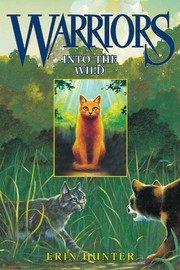
Into the Wild
Housecat Rusty joins ThunderClan and learns clan law before war.
2,597-word summary · 12 min read

Gregor the Overlander
Gregor follows Boots down a grate into the Underland and a war prophecy.
2,516-word summary · 11 min read
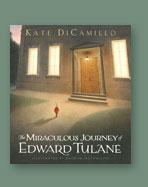
The Miraculous Journey of Edward Tulane
A china rabbit lost at sea learns to love through owners kind and cruel across many years.
2,002-word summary · 9 min read
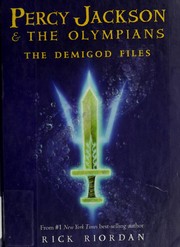
The Demigod Files
Three Percy Jackson side quests plus camp maps, cabin guides, interviews, and god profiles set before the final battle.
2,498-word summary · 11 min read
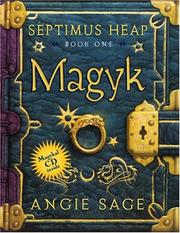
Magyk
A baby found in snow, a lost seventh son, and a run for the Marram Marshes as Marcia Overstrand shields two children from DomDaniel.
2,604-word summary · 12 min read
The Serpent's Shadow
Carter and Sadie Kane have three days to bind Apophis by his shadow before the serpent rises and unmakes the world.
2,941-word summary · 13 min read

The Throne of Fire
Carter and Sadie Kane have five days to wake the sun god Ra before the serpent Apophis breaks free and eats the world.
2,867-word summary · 13 min read
The Red Pyramid
Siblings Carter and Sadie Kane wake the Egyptian gods and must stop Set from destroying the world.
2,682-word summary · 12 min read
The Titan's Curse
Percy joins a winter quest to save Annabeth and Artemis with Thalia, Grover, Bianca and Zoe, facing Atlas and Luke under a hard Oracle prophecy on Mount…
2,229-word summary · 10 min read
The Sea of Monsters
Percy returns for a second summer as Camp Half-Blood loses its borders, Tyson is claimed as his brother, and the Golden Fleece waits past the Sea of Monsters.
2,056-word summary · 9 min read
The Last Olympian
Percy Jackson turns sixteen as Kronos marches on Manhattan, forcing Camp Half-Blood into a final stand for Olympus beside Annabeth as the old prophecy demands…
2,564-word summary · 11 min read
The Battle of the Labyrinth
Percy and Annabeth enter the shifting Labyrinth with Rachel Dare to stop Luke and Kronos from invading Camp Half-Blood.
2,924-word summary · 13 min read
The Lightning Thief
Rick Riordan's The Lightning Thief retold: Percy Jackson, Camp Half-Blood, the stolen bolt, and the road trip to the Underworld.
2,581-word summary · 11 min read
The Goose Girl
A shy princess loses her name on the road to her wedding and must earn it back as a palace goose girl in this Grimm retelling.
2,357-word summary · 10 min read
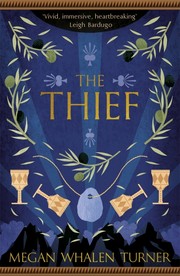
The Thief
A boastful young thief is pulled from a prison to steal a legendary stone for the king's magus, and the story he tells about himself is not the whole story.
2,514-word summary · 11 min read

Inkdeath
The final Inkworld novel sends Mo into the land of the dead, leaves Meggie choosing between two boys, and ends the Adderhead's immortality with three written…
2,062-word summary · 9 min read

Bone, Vol. 1: Out from Boneville
Three cartoon cousins are run out of Boneville, separated by locusts, and dropped into a valley where rat creatures and an old grudge are waiting.
2,155-word summary · 10 min read

Vow of Thieves
Kazi and Jase return to Tor's Watch to find it occupied, and their marriage is tested by captivity, betrayal, and a war for the town of Hell's Mouth.
2,059-word summary · 9 min read
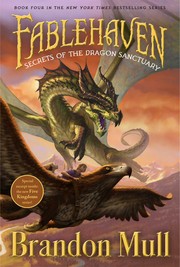
Secrets of the Dragon Sanctuary
Kendra is replaced by a plant copy and held by the Society, while Seth steals a unicorn horn so the family can enter a dragon sanctuary.
2,590-word summary · 12 min read

Lioness Rampant
Alanna searches for the Dominion Jewel with the Shang Dragon, then returns to Tortall to face Duke Roger at Jonathan's coronation.
2,478-word summary · 11 min read

Archenemies
Nova steals for the Anarchists while Adrian hides his Sentinel identity, and a serum that erases prodigy powers puts them both at risk.
2,485-word summary · 11 min read
The Time Paradox
When his mother falls ill with a fairy disease, Artemis Fowl travels back in time to find the extinct lemur that can cure her and confronts his younger self.
2,601-word summary · 12 min read
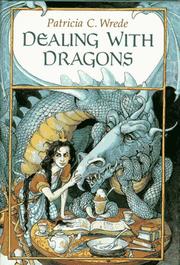
Dealing with Dragons
A princess who hates embroidery runs away to become the cook and librarian for a dragon, then has to outthink wizards, knights, and a plot against the dragon…
2,563-word summary · 11 min read

The Golem's Eye
Two years after The Amulet of Samarkand, Nathaniel is a rising bureaucrat, Bartimaeus is his unwilling servant again, and something made of clay is tearing…
2,299-word summary · 10 min read
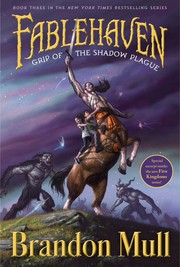
Grip of the Shadow Plague
A plague turns Fablehaven's creatures of light into shadows while Kendra hunts an artifact in Arizona and Seth races to find the cause.
2,131-word summary · 9 min read