
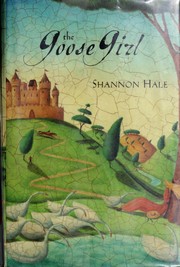
The Goose Girl
2,357-word summary 10 min read 383 pages in the book
- First published
- 2003
- Publisher
- Bloomsbury Children's Books
- Pages
- 383
- ISBN
- 9781582348438
- Series
- The Books of Bayern (#1)
Reading options
What's inside (8 sections)
A friend pressed this book on me with the warning that it starts slowly and then refuses to let go. She was right on both counts. I came in knowing almost nothing except that it was a retelling of a Grimm fairy tale I had never read, and I stayed because the main character felt like someone I had actually met: the quiet girl in the back of the room who is interesting once you get her talking, except nobody ever tries.
Shannon Hale published the novel in 2003 with Bloomsbury, and it was her first book. It opens the Books of Bayern series, though it stands on its own well enough that you could stop here and feel finished. The story follows a crown princess who loses everything on the road to her own wedding and has to win it back without an army, without money, and mostly without anyone believing who she is.
What hooked me was not the magic, though there is plenty. It was the way the book treats shyness as a real obstacle instead of a cute quirk. Ani has to learn to open her mouth and be heard, and the book makes that feel as hard as any sword fight.
The princess who talked to horses better than people
Anidori-Kiladra Talianna Isilee is the crown princess of Kildenree, a small mountain kingdom, and from childhood she is a disappointment to almost everyone except her aunt. Ani stammers. She freezes in front of crowds. Court life, with its performances and small talk, drains her dry. What she can do is listen. Her aunt teaches her animal-speaking, the slow patient skill of understanding birds and horses, and Ani takes to it the way some kids take to music. Her best conversations are with swans and with Falada, her young horse.
This opening stretch is gentle, almost sleepy, and I mean that as both praise and warning. You get long scenes of Ani wandering, watching birds, failing to impress her mother the queen. Her mother is recently widowed and has the warmth of a locked door. She looks at her stammering eldest daughter and sees a weak heir. When a marriage alliance with the neighboring kingdom of Bayern comes up, the queen packs Ani off to marry a prince she has never met. It reads less like a wedding plan and more like a dismissal.
There is a second kind of speaking in this world, and it matters more than the first. People-speaking is the art of holding a room, giving orders that stick, calming or stirring a crowd. Ani is terrible at it. Her lady-in-waiting, Selia, is a natural. Selia is beautiful, quick, silver-tongued, the girl everyone watches at every gathering. Remember that contrast, because the whole book turns on it.
I liked this setup more than I expected. Plenty of fantasy novels give their heroine a hidden power that solves everything. Ani has a hidden power and it solves almost nothing. Talking to birds does not help you survive court, and the book is honest about that.
Over the mountains with the wrong people
The journey to Bayern takes up the next part of the book, and the mood shifts from lonely to tense. Ani travels with an escort of Kildenree guards, her horse Falada, and Selia as her companion. She is seventeen, grieving a father, ignored by her mother, and heading to marry Prince Geric of Bayern, a young man she knows only from letters. She spends the early days of the trip trying to act like a future queen and mostly managing to act like a frightened girl playing dress-up.
Selia spends those same days working on the guards. This is where Hale shows what people-speaking looks like from the outside. Selia flatters, listens, tells stories, makes each guard feel chosen. Ani watches it happen and cannot name what she is seeing, which frustrated me as a reader in the best way. You want to shout at her. But Ani has spent her life being talked over, so of course she misses the moment when the talking turns into plotting.
The betrayal, when it lands, is fast and ugly. Selia claims Ani's identity, backed by the turned guards. She takes the princess's dress, her letters of passage, her crown, everything that proves who Ani is. There are attempts on Ani's life, and only Falada's speed and Ani's dumb luck get her away. She ends up alone in the great Forest between the kingdoms, on foot, with no proof of anything.
Fair criticism belongs here. The traitor guards flip fast, and if you poke at their motives you will find thin gruel. They follow Selia because she is magnetic and because Ani never bothered to learn their names, which is the book's own explanation, and it mostly works on feeling even if it would collapse under questioning. Real mutinies need pay or grievances, and charm alone would not turn them. Hale papers over that with pace, and I let her get away with it because Ani's terror carries the chapters.
Alone in the Forest
The Forest section is the part my friend meant by "starts slowly," except I did not find it slow so much as stripped down. Ani walks. She goes hungry. She drinks from streams and sleeps badly. Her fine clothes tear. At one point she is so empty that the narration narrows to step after step, and I felt that in my shoulders. There is no villain monologue here, no clever plan. Just a girl who was raised in a palace learning that hunger makes every decision simple and every mile long.
She does get help, though not the rescuing-prince kind. An older woman living at the Forest's edge gives her shelter and plain advice, the kind that sounds harsh until you realize it is the first honest talk Ani has had in months. The woman sees a runaway, not a princess, and treats her accordingly. Work for food. Rest. Move on. For someone who has been handled like a fragile object all her life, being treated like an ordinary person is almost a relief.
This is also where Ani starts talking to the wind. It begins as comfort, almost a game. She shapes her breath and her attention, and the air answers in small ways, tugging at leaves, lifting her hair. The wind has moods. Some days it ignores her. Hale writes this with a light touch, and I appreciated that the magic has limits. Ani cannot command storms on demand. She can ask, listen, and sometimes be heard, which turns out to be the template for everything else she has to learn.
If I have a complaint about this stretch, it is that two or three chapters blur together. Hunger, walking, wind, sleep. The sameness is probably the point, and it is still sameness. Readers who need plot on every page will fidget here. I fidgeted once and then settled in.
Isi the goose girl
Ani reaches Bayern's capital with nothing and reinvents herself as Isi, a shortened scrap of her own name. She talks her way into work tending the king's geese, which is about as far from a throne as a person can get. Her coworkers are palace laborers and farm kids. Her boss is exacting. The geese are stupid, loud, and oddly comforting, and Ani, who can speak with birds, finds herself using her strange gift for the most ordinary job imaginable.
Her fellow goose-tender is Conrad, a young man with his own reasons for keeping his head down, and their working relationship is one of the best things in the book. He is suspicious of her at first. She is odd, secretive, too well-spoken for a farm girl one minute and too clumsy the next. They circle each other through shared chores, and the trust builds the way it does in real kitchens and barns: through showing up, through doing the heavy part without being asked.
Then there is Enna, a forest-raised girl with a temper like a struck match, and her talkative friend Razo. Enna befriends Ani fast and without conditions, and I loved her for it. Where court friendship was all performance, Enna's version is blunt. She teases. She demands answers. She drags Ani into the social life of working kids in the city, and Ani, who could not hold a conversation with nobles, slowly learns to hold her own with gooseherds. There is something quietly radical about a princess story where the most valuable education happens among servants.
Meanwhile the false princess sits in the palace. Selia plays the part well enough to fool most people, and she uses her stolen position to push for hard lines against Kildenree, Ani's home. Falada, Ani's horse, is in the royal stables, and Selia orders the animal killed to cut Ani's last living tie to her old life. I will not spoil the details, but this chapter hurt more than the betrayal in the mountains. It is the moment Selia stops being a schemer and shows something colder.
A small note for fellow skeptics: yes, nobody recognizing the real princess strains belief. Hale handles it by keeping Ani filthy, thin, and far from anyone who knew her, and by making Selia genuinely convincing. Accept the premise or put the book down. I accepted it by page one hundred and never looked back.
Learning to speak like a queen
The middle of the book is really a training story disguised as a servant story. Ani practices people-speaking the way she once practiced birdcalls: badly, then less badly, then with flashes of something real. She calms a dispute among workers. She stands up to a bully. She learns to give an order and make it land. Each small win costs her something, usually a humiliation first, and that pattern felt true to me. Confidence is not a switch. It is a stack of survived embarrassments.
The wind work deepens alongside. Ani learns that the wind, like people, responds to attention rather than force. The scenes where she calls it are some of the prettiest in the book without ever turning flowery. A gust arrives when she needs it. Sometimes it does not. She thanks it either way, and I found that moving in a way I cannot fully defend. There is a lesson tucked in there about power that listens, and Hale never underlines it, which is why it lands.
Geric, the actual prince, drifts through these chapters mostly as a rumor. He has been traveling, and reports describe him as decent but unremarkable. I will be honest: the romance is the thinnest part of the book. Ani is promised to this boy, she barely knows him, and the story does little to make him vivid before asking us to care. What carries those pages instead is Ani's growing circle: Enna's loyalty, Conrad's wary respect, the workers who start looking to Isi when trouble comes. She is building a court of her own without knowing it, one made of gooseherds instead of nobles.
Pacing dips here. The goose-tending routine repeats, and a few chapters feel interchangeable: morning with the flock, an evening quarrel, a small kindness, sleep. I started skimming descriptions of pastures. Then a chapter would land, usually a confrontation where Ani speaks up and surprises herself, and I was back in. Uneven, yes. Boring, no.
The unmasking and what the book is really about
The last part moves quickly, almost breathlessly after the slow middle. Ani decides to reclaim her name, which means walking into the palace that employs her as a servant and telling the king of Bayern that his guest, the Kildenree princess, is a fraud. Think about what that takes from a girl who stammered through her own birthday feasts. The book has spent three hundred pages building to one act of public speech, and it treats that speech as the climax it is.
I will keep the mechanics vague because discovering them is half the fun. What matters is how Ani proves herself: through knowledge only the true princess could hold, through the testimony of people she helped when she had nothing to gain, and through Selia's own unraveling. Selia's mask slips the way masks do, not in one dramatic crack but in flashes of temper and contempt that the court finally notices. The confrontation scenes are tense and satisfying, and the wind has its part to play, though not as a rescue trick. Ani wins by speaking, and the book respects its own rules by making her do it out loud, in front of everyone, with shaking hands.
The ending is happy and a little too tidy. Selia's fate is handled fast. The political mess gets smoothed over with handshakes that real kingdoms would spend years negotiating. And Geric steps forward as the worthy prince right on schedule, which felt arranged rather than earned. I closed the book grinning anyway, because Ani's victory never felt gifted. She earned every inch of it in goose yards and bunk rooms.
So what is the book really about, under the fairy tale paint? To me it is about the difference between having a voice and using one. Animal-speaking is Ani's comfort. People-speaking is her duty. Wind-speaking is her gift. None of them matter until she chooses to stand up and be heard by people who can punish her for it. That is a bigger idea than most retellings attempt, and Hale carries it without preaching.
Who should read it? Anyone who likes gentle fantasy with a firm spine, especially younger teens finding their footing. Readers who need gritty politics or crackling dialogue on every page should look elsewhere. The prose is plain and warm rather than sharp, and Selia never becomes more than a fine villain. But if you ever stood in a hallway rehearsing words you never said, Ani's story will find you. It found me. And Enna's story comes next, which is its own recommendation.
FAQ
Is The Goose Girl part of a series?
Yes. It is the first of four Books of Bayern, followed by Enna Burning, River Secrets, and Forest Born. This post covers only the first book.
What ages is The Goose Girl for?
Bloomsbury aimed it at ages ten and up, and it won a place on the ALA Teens' Top Ten list. Teens and adults who enjoy gentle fantasy read it too.
Do I need to know the original fairy tale first?
No. Hale rebuilds the Grimm tale of the stolen princess identity from scratch, so newcomers can start here with no background.
Similar books
More from The Books of Bayern first, then related titles.

In the Hand of the Goddess
Alanna, still disguised as a boy, survives war, court plots, and a death duel as the Goddess's chosen warrior in the second Song of the Lioness book.
2,018-word summary · 9 min read
The False Prince
A nobleman buys four orphans and tells them only one will survive to impersonate the missing prince. The narrator, a defiant thief named Sage, has other plans.
2,044-word summary · 9 min read
La Belle Sauvage
Philip Pullman's prequel to His Dark Materials follows eleven-year-old Malcolm Polstead as a secret message, a hunted baby, and the flood of the century carry…
2,530-word summary · 11 min read
Alanna: The First Adventure
Twins swap roles so Alanna trains as boy page Alan for knighthood while Thom studies sorcery.
2,107-word summary · 9 min read
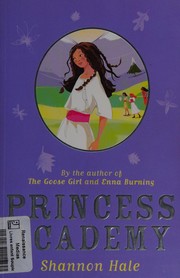
Princess Academy
Miri leaves her Mount Eskel quarry home for Princess Academy, where quarry songs, books, and a bandit siege shape her fight for fair trade, a school, and a…
2,441-word summary · 11 min read
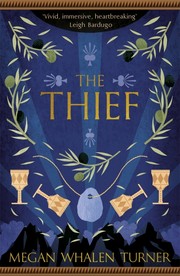
The Thief
A boastful young thief is pulled from a prison to steal a legendary stone for the king's magus, and the story he tells about himself is not the whole story.
2,514-word summary · 11 min read

Inkdeath
The final Inkworld novel sends Mo into the land of the dead, leaves Meggie choosing between two boys, and ends the Adderhead's immortality with three written…
2,062-word summary · 9 min read

Vow of Thieves
Kazi and Jase return to Tor's Watch to find it occupied, and their marriage is tested by captivity, betrayal, and a war for the town of Hell's Mouth.
2,059-word summary · 9 min read

The Icebound Land
Captured and enslaved in Skandia, Will fights a drug that erases him while Halt and Horace cut a bloody road through Gallica to bring him home.
2,088-word summary · 9 min read

Lioness Rampant
Alanna searches for the Dominion Jewel with the Shang Dragon, then returns to Tortall to face Duke Roger at Jonathan's coronation.
2,478-word summary · 11 min read

Archenemies
Nova steals for the Anarchists while Adrian hides his Sentinel identity, and a serum that erases prodigy powers puts them both at risk.
2,485-word summary · 11 min read
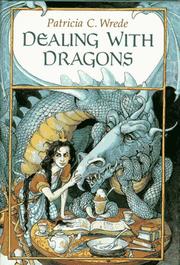
Dealing with Dragons
A princess who hates embroidery runs away to become the cook and librarian for a dragon, then has to outthink wizards, knights, and a plot against the dragon…
2,563-word summary · 11 min read

The Golem's Eye
Two years after The Amulet of Samarkand, Nathaniel is a rising bureaucrat, Bartimaeus is his unwilling servant again, and something made of clay is tearing…
2,299-word summary · 10 min read
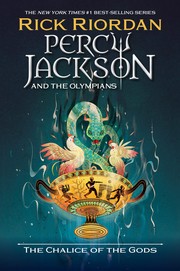
The Chalice of the Gods
Percy needs three recommendation letters from three gods to apply to college, so his first quest is recovering a stolen chalice from the god of old age.
2,106-word summary · 9 min read
The Ship of the Dead
Magnus and his crew sail to the edges of the Norse worlds to stop Loki from launching Naglfar, the ship of the dead.
2,426-word summary · 11 min read

The Rose & the Dagger
Shahrzad is pulled from her Caliph husband and left in a desert camp of rebels, needing to break his curse and end a war before it ends her.
2,520-word summary · 11 min read

The Queen of the Tearling
Nineteen-year-old Kelsea leaves the woods to take her throne, ends a shipment of human captives, and draws the Red Queen's revenge.
2,357-word summary · 10 min read

Starsight
Spensa Nightshade goes undercover aboard the Superiority space station Starsight to steal a hyperdrive, and finds a frightened bureaucracy where she expected…
2,568-word summary · 11 min read

We Hunt the Flame
In a fractured Arabia-inspired world, a disguised huntress and a prince-assassin race to find a magic-restoring book and confront an ancient evil.
2,195-word summary · 10 min read
The Magician
Sophie and Josh flee to Paris with Nicholas Flamel, where John Dee, Machiavelli, and an awakened god close in on the missing pages of the Codex.
2,162-word summary · 10 min read

The Burning Maze
Apollo, still trapped in a mortal teenager's body, follows a dangerous prophecy through the Labyrinth with Meg and Grover as the Triumvirate's grip tightens.
2,248-word summary · 10 min read
Magician: Apprentice
An orphan kitchen boy and a smith's son grow up in a frontier castle just as invaders from another world open a rift and begin a war that will change both of…
2,114-word summary · 9 min read

Lore
Lore Perseous, the last of a hunted bloodline, is pulled back into the Agon when a wounded Athena offers her revenge against the god who killed her family.
2,188-word summary · 10 min read
The Battle for Skandia
Will and Evanlyn are still hiding in the Skandian mountains when Halt and Horace arrive with word of a Temujai invasion that could roll on to Araluen next.
2,248-word summary · 10 min read
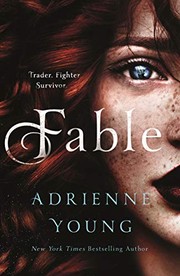
Fable
Abandoned on a lawless island at fourteen, Fable spends four years diving for gems to buy passage off it, straight into the cutthroat trade of the Narrows.
2,320-word summary · 10 min read

The Winner's Curse
An aristocratic girl buys a slave who is secretly a prince plotting rebellion.
2,124-word summary · 9 min read

The Iron Queen
Meghan faces the Iron King past while Ash pays a winter price.
2,548-word summary · 11 min read
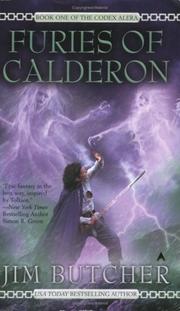
Furies of Calderon
Furyless Tavi defends Calderon Valley when the Marat return and lords scheme.
2,587-word summary · 11 min read

A Winter's Promise
Ophelia reads objects and is sent to marry Thorn on a cold ark.
2,502-word summary · 11 min read
The Hammer of Thor
Magnus and Sam chase Thor's stolen hammer to a giant wedding heist, with Alex Fierro joining Floor Nineteen as Loki bargains and Ragnarok stirs.
3,068-word summary · 14 min read