
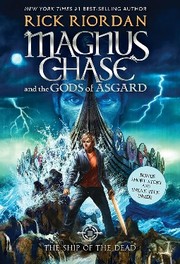
The Ship of the Dead
2,426-word summary 11 min read 432 pages in the book
- First published
- 2017
- Publisher
- Disney-Hyperion
- Pages
- 432
- ISBN
- 9781423160939
- Series
- Magnus Chase and the Gods of Asgard (#3)
Reading options
What's inside (10 sections)
I came to The Ship of the Dead for the ending. I had read the first two Magnus Chase books and liked them the way you like a good theme park ride, and I wanted to know how Rick Riordan would close the loop on Loki, Ragnarok, and the sixteen-year-old orphan who talks to animals and prays to a father who answers. What I got was a joke of a book, and a good one, with a final duel that does something genuinely clever. It is the weakest of the three novels and it contains the best fight, which is a strange thing to say about a series finale and also an accurate description of this one.
Disney-Hyperion published it on 3 October 2017. The hardcover runs 432 pages and carries the ISBN 9781423160939. It is the third and last of Magnus Chase and the Gods of Asgard, after The Sword of Summer and The Hammer of Thor. Riordan announced from the start that it would close the trilogy, and it does, with the door left open for these characters to turn up in the crossover books that came later.
A Dead Wolf and Some Underwear
The book opens with Magnus Chase on the yardarm of the USS Constitution in Boston Harbor, being made to jump by Percy Jackson, because a sea voyage is coming and Magnus has never sailed anything. Percy's coaching goes badly. Magnus breaks every bone in his body, gets dragged back to Hotel Valhalla, dies, and comes back thirty minutes later, because he is an einherjar and cannot die permanently as long as he expires inside the hotel. It is a clean way to introduce the joke that runs through the series: the premise is enormous and the hero treats it like an injury in a gym.
Then Magnus and Alex Fierro go to the townhouse his dead uncle Randolph left him, looking for the instructions Randolph put in his will. In the foyer they find the carcass of a wolf, dead and gone to fur. Inside the house is a small journal in Randolph's handwriting, and it is what sends them after the gods: it mentions something called the Whetstone of Bolverk, and the rest is written in runes that Magnus cannot read until Hunding translates them.
The chapter titles are the other running joke, and they are very good. "I Inherit a Dead Wolf and Some Underwear." "I Have a Nightmare About Toenails." "I Become a Temporary Vegetarian." "Don't Ever Ask Me to Cook My Enemy's Heart." "I Win a Fluffy Bathrobe."
The Big Banana and the Hall of the Huffy Hipster
Loki is free of the chains the gods put him in, which is one of the prophecies that starts Ragnarok early. He is outfitting Naglfar, the Ship of the Dead, with an army of giants and the dishonored dead, and he is waiting for the ice between Niflheim and Jotunheim to melt so the ship can sail. The crew needs to reach it before midsummer.
Frey, Magnus's father, gives him a ship that folds up into a handkerchief. Alex wants to call it the Big Banana, Halfborn Gunderson wants to call it Mikillgulr, and Magnus wants it painted forest green, because his father made the folding boat the colour of a margarine advert. The crew is a good one: Alex, who is Loki's child and shifts between male and female and is magnificent company; Samirah al-Abbas, a Muslim Valkyrie whose green hijab is a camouflage cloak, engaged to Amir Fadlan, fasting through Ramadan while fighting sea monsters; Mallory Keen, daughter of Frigg, who died in 1972 disarming a bomb she had been tricked into planting; Thomas Jefferson Jr., a son of Tyr, who died in a battle in the American Civil War; and Halfborn, a berserker who speaks in declarations.
The ship is caught in a whirlpool and dumped into a cauldron of mead in the hall of Aegir, the sea god, whose nine daughters are the water giantesses. Aegir's wife Ran has told him to kill Magnus. Cornered, Magnus makes a deal: if Aegir lets them go, Magnus will challenge Loki to a flyting, a duel of insults in verse, and will bring Aegir a sample of Kvasir's mead, the one drink Aegir cannot brew himself. Aegir agrees, but steps out of the room so his daughters can do their duty, and the giantesses attack.
Magnus's grandfather Njord, the sea god and Frey's father, saves them by exploding into a fine salt mist and carrying the boat away. Njord also lays out the plan. Kvasir's mead grants the gift of oration, and the only way to beat Loki in a war of words is to drink it. A small measure still exists and the giants guard it jealously. The mead was stolen from the giants once before, by Odin in disguise, using the alias Bolverk. Njord sends Hearthstone and Blitzen to hunt down Bolverk's whetstone, which will open the way to the mead's hiding place, and sends the rest of the crew to Jorvik, which in this world is also Norway, to find a giant who knows where it is kept.
A Whetstone Called Bolverk
In Jorvik, Magnus, Alex, and T.J. have to beat the giant Hrungnir in a church graveyard before he will talk. The answer is the mead of Kvasir, which the giants of Suttung keep somewhere in Norway. Meanwhile Hearth and Blitz have found the whetstone in the hoard of a dragon, and the dragon is Hearth's father.
Alderman is the one who took the cursed ring of the dwarf Andvari, the same ring Magnus and Hearth robbed in the second book to save Blitzen's life. Andvari warned them it would bring misery. Alderman put it on, and it did exactly what it promised, bringing out the worst in him and eventually changing him into a ring dragon with a weak spot in the belly. He sits in a cave in Alfheim with a fortune in gold, having exterminated the brownies who dug his burrows, and he is now a monster who used to be a businessman. Hearth wants to kill him and says so in sign language. The cost is real: a friend who kills a ring dragon can have his own fate stained by it.
Magnus ends up stabbing him in the belly from inside a burrow, because dragon blood is like acid and he has to get out fast. Hearth cuts out the heart, which he could eat to inherit his father's memories, and Magnus knocks it into the fire instead. A drop of blood lands on his hand and he puts it in his mouth, and Hearth explains that fate decided that. It is a good piece of storytelling, because the plot device and the character theme turn out to be the same object.
The mead itself sits in a cave behind a field of wheat being harvested by giants whose blades have gone dull. The whetstone of Bolverk is the key, and when Mallory offers to sharpen the giants' blades with it, the giants finish the harvest and then, deciding who gets to keep the stone, throw it in the air and impale each other on their own sharpened blades. It is a ridiculous, perfect little set piece.
The Long Walk to Niflheim
The boat freezes as it sails north and the crew has to walk the last stretch in a blizzard. They reach the palace of Skadi, Njord's ex-wife, which is the only safe place in Niflheim, and she gives them directions to Loki's ship. The night before the fight, Samirah fasts through the last of Ramadan and prays, and Loki uses a form of mind control on her because she is his daughter and her powers come from him. Her prayer is what holds her together.
At Skadi's table Magnus uncaps the canteen and chugs Kvasir's mead in three big gulps, expecting blood and getting something that tastes like mead. Then he asks Blitz whether he seems poetic. The storm, he reports, looks white and also cold.
What follows is the set piece the book is built around. The crew attacks Naglfar openly so Magnus can board alone and challenge the captain. Loki is the ship's admiral and Hrym is her captain, and the two of them are already squabbling about who has final command. Magnus gets his challenge out. Loki laughs and refuses, and Samirah lunges at him with a spear until Hrym forces him to accept, because the rules of combat say a personal challenge has to be honored.
The Flyting
The first half of the flyting is brutal. Loki's insults are genuinely good and uncomfortably specific. He tells Magnus he is a healer who cannot fight, that he leans on his friends, that he has no plan. Each line makes Magnus physically smaller, and he is down to about two feet before he understands that he is going to lose a contest of insults against the god of lies.
Then he stops trying to win on Loki's terms. A flyting is supposed to cut people down to size, and Magnus is the team player who puts people back together, so he decides to play by his own rules. He starts talking about Mallory Keen. Then about the others. He tells the crowd that he is the son of Frey and the son of Natalie and the friend of Mallory, Halfborn, T.J., Blitzen, Hearthstone, Samirah, and Alex, and that this is his family, his othala, his inheritance.
The effect is immediate, and it is the best idea in the book. Every boast shrinks Loki a little, because a flyting punishes the loser and Loki cannot stop answering. His cruelest weapon, his need to have the last word, is what undoes him. Sigyn, his wife, who has spent centuries collecting snake venom to keep it off his face, slips away into the crowd in the middle of the scene. Loki tries to summon Alex and Samirah to kill Magnus's friends. He tries to change form and cannot. He ends up a few inches tall, wading in puddles of his own venom, screaming that he will kill Magnus slowly. Then Frigg's walnut shell goes over him.
I have read the ending of a lot of series finales and most of them explain themselves at length. This one does not. Magnus wins by giving up the thing the contest was supposed to be about.
The Chase Space
The crew delivers Loki to the gods at the plain of Vigridr, where the Aesir congratulate them for delaying Ragnarok. Thor wants to smash the walnut. Odin explains that the gods cannot change Loki's punishment, only restore it to what it was, so the sequence of events stays the same and Ragnarok is held in check for now. Then Odin asks Magnus whether he wants a boon.
Magnus does not ask for anything for himself. He asks for help turning Randolph's old house into a residence for homeless youth, and Odin sends his lawyers, who clear the zoning board and the mayor's office in two weeks. They call it the Chase Space. Blitzen and Hearthstone move in and cook and teach the kids sign language. Alex recruits them. Some stay. Some take a sandwich and a bed and vanish the next morning, and the rule is no judgment.
The last pages are a Fourth of July on the roof deck of that house, fireworks over the harbor, and Alex and Magnus holding hands. There is a quiet reference to the road to Helheim that Magnus will still have to walk someday. And then the closing thought, which is that the big picture cannot be changed but the details can.
Sometimes, even Loki can be right.
What Works and What Does Not
The comedy is the point and the comedy works. Riordan's jokes are not decoration. The chapter titles, Alex's running commentary, Jack the talking sword complaining that nobody mentions him during the climax, Mallory's grudges, and the sheer absurdity of a Valhalla housekeeping schedule, where the activities include advanced sword-sharpening and something called flyting, all done to the death, carry the book. There is also real warmth in the treatment of homelessness, which is not a gimmick for Magnus but the fact of his life, and it is what he does with Odin's boon.
The Norse material is the weakest part. Riordan has done the research and the mythology is accurately deployed, but it arrives wearing a costume of pop culture. The gods are a group chat with a Thor who wants a fight. The nine realms get names and one paragraph each, and some of them are so compressed that you barely notice you have been somewhere. The famous pieces, the ship made of fingernails and toenails, the world serpent, get screen time, and the connective myth gets a shrug. Readers who come hoping for a guided tour of Norse myth will be disappointed. Readers who want a funny quest will be delighted.
The love story is thin, and it is not really a love story. Alex and Magnus are friends who flirt, kiss twice, and hold hands on a roof at the end. That is the whole of it. If you read these books for the romance, this is the one to skip. The relationship the book is actually about is the one Magnus has with his crew, and that is a better one.
The flyting is the best fight in the trilogy, and it is best because it is a fight with words rather than swords. It is also where the book's real subject shows up. Magnus wins by refusing to be the thing the contest demanded, and the closing thought about Loki being right about details is Riordan admitting that the series was never about beating the villain. It was about what you carry.
Who it is for
This is for readers who want a fast, funny quest with a huge cast and a lot of mythology trivia. It is for people who have read the first two books and want the ending. It works as a standalone, and if the Norse filter puts you off you should know before you start.
I am glad I read it and slightly sorry I read it last. It is fast, it is funny, and the last hundred pages are better than they have any right to be. I will still be thinking about the flyting.
FAQ
When was The Ship of the Dead published?
Disney-Hyperion published it on 3 October 2017. The hardcover runs 432 pages and carries the ISBN 9781423160939.
Who are the main characters?
Magnus Chase, the son of Frey, travels with Alex Fierro, Samirah al-Abbas, Hearthstone, Blitzen, Mallory Keen, T.J. and Halfborn Gunderson. Loki is the enemy.
Is it the last book in the Magnus Chase series?
Yes. It is book three and the final volume of Magnus Chase and the Gods of Asgard, after The Sword of Summer and The Hammer of Thor.
Is there a dragon in the book?
Yes. Alderman, Hearthstone's father, was changed into a ring dragon by the cursed ring of the dwarf Andvari and hoards gold in a cave in Alfheim.
Similar books
More from Magnus Chase and the Gods of Asgard first, then related titles.
The Sword of Summer
A homeless Boston teen learns he is a Norse god son and dies on day one stopping a fire giant.
2,116-word summary · 9 min read
The Hammer of Thor
Magnus and Sam chase Thor's stolen hammer to a giant wedding heist, with Alex Fierro joining Floor Nineteen as Loki bargains and Ragnarok stirs.
3,068-word summary · 14 min read
The Chalice of the Gods
Percy needs three recommendation letters from three gods to apply to college, so his first quest is recovering a stolen chalice from the god of old age.
2,106-word summary · 9 min read
The House of Hades
Percy and Annabeth cross Tartarus while the five close the Doors of Death before Gaea wakes.
2,910-word summary · 13 min read
The Thief
A boastful young thief is pulled from a prison to steal a legendary stone for the king's magus, and the story he tells about himself is not the whole story.
2,514-word summary · 11 min read
The Burning Maze
Apollo, still trapped in a mortal teenager's body, follows a dangerous prophecy through the Labyrinth with Meg and Grover as the Triumvirate's grip tightens.
2,248-word summary · 10 min read
The Dark Prophecy
Mortal Apollo and Leo cross America to free the Oracle as Commodus hunts them.
2,368-word summary · 11 min read
The Serpent's Shadow
Carter and Sadie Kane have three days to bind Apophis by his shadow before the serpent rises and unmakes the world.
2,941-word summary · 13 min read

The Throne of Fire
Carter and Sadie Kane have five days to wake the sun god Ra before the serpent Apophis breaks free and eats the world.
2,867-word summary · 13 min read
The Hidden Oracle
Apollo lands as a teen in New York with no powers and must earn his way back with Meg and demigods.
1,933-word summary · 9 min read

The Blood of Olympus
Seven demigods stop Gaia waking while Reyna brings Athena statue.
2,196-word summary · 10 min read
The Red Pyramid
Siblings Carter and Sadie Kane wake the Egyptian gods and must stop Set from destroying the world.
2,682-word summary · 12 min read
The Son of Neptune
Amnesiac Percy wakes at Camp Jupiter and quests to Alaska with Hazel and Frank to free Thanatos.
2,107-word summary · 9 min read
The Titan's Curse
Percy joins a winter quest to save Annabeth and Artemis with Thalia, Grover, Bianca and Zoe, facing Atlas and Luke under a hard Oracle prophecy on Mount…
2,229-word summary · 10 min read
The Sea of Monsters
Percy returns for a second summer as Camp Half-Blood loses its borders, Tyson is claimed as his brother, and the Golden Fleece waits past the Sea of Monsters.
2,056-word summary · 9 min read
The Lost Hero
Jason wakes with no memory while Piper and Leo learn they are demigods sent to free Hera.
2,734-word summary · 12 min read
The Last Olympian
Percy Jackson turns sixteen as Kronos marches on Manhattan, forcing Camp Half-Blood into a final stand for Olympus beside Annabeth as the old prophecy demands…
2,564-word summary · 11 min read
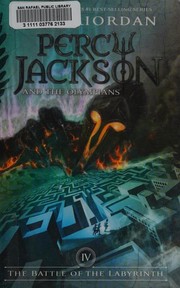
The Battle of the Labyrinth
Percy and Annabeth enter the shifting Labyrinth with Rachel Dare to stop Luke and Kronos from invading Camp Half-Blood.
2,924-word summary · 13 min read

The Lightning Thief
Rick Riordan's The Lightning Thief retold: Percy Jackson, Camp Half-Blood, the stolen bolt, and the road trip to the Underworld.
2,581-word summary · 11 min read

The Icebound Land
Captured and enslaved in Skandia, Will fights a drug that erases him while Halt and Horace cut a bloody road through Gallica to bring him home.
2,088-word summary · 9 min read

Secrets of the Dragon Sanctuary
Kendra is replaced by a plant copy and held by the Society, while Seth steals a unicorn horn so the family can enter a dragon sanctuary.
2,590-word summary · 12 min read

Lioness Rampant
Alanna searches for the Dominion Jewel with the Shang Dragon, then returns to Tortall to face Duke Roger at Jonathan's coronation.
2,478-word summary · 11 min read
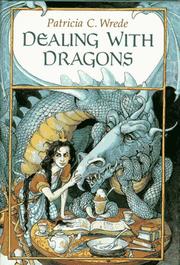
Dealing with Dragons
A princess who hates embroidery runs away to become the cook and librarian for a dragon, then has to outthink wizards, knights, and a plot against the dragon…
2,563-word summary · 11 min read
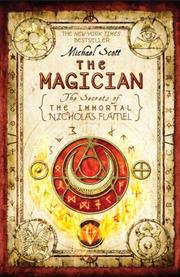
The Magician
Sophie and Josh flee to Paris with Nicholas Flamel, where John Dee, Machiavelli, and an awakened god close in on the missing pages of the Codex.
2,162-word summary · 10 min read

Lore
Lore Perseous, the last of a hunted bloodline, is pulled back into the Agon when a wounded Athena offers her revenge against the god who killed her family.
2,188-word summary · 10 min read
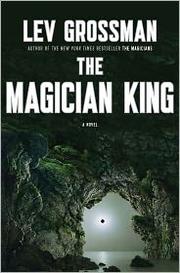
The Magician King
Quentin rules a peaceful Fillory until a golden key strands him on Earth, while Julia's brutal road from hedge witch to demigod rewrites the whole story.
2,431-word summary · 11 min read
The Alchemyst
Twins Sophie and Josh learn their boss is Flamel as Dee steals the Codex minus two pages.
2,085-word summary · 9 min read
Children of Blood and Bone
White haired Zelie chases magic return with princess Amari hunted by Inan.
2,027-word summary · 9 min read
Eldest
Eragon trains with Oromis in Ellesmera while Roran defends Carvahall and Nasuada leads the Varden toward war.
2,652-word summary · 12 min read
Eragon
Paolini's Eragon retold: a farm boy, a blue stone, Saphira the dragon, and the road to the Varden.
1,996-word summary · 9 min read