
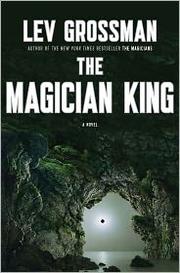
The Magician King
2,431-word summary 11 min read 400 pages in the book
- First published
- 2011
- Publisher
- Viking Press
- Pages
- 400
- ISBN
- 9780670022311
- Series
- The Magicians (#2)
Reading options
What's inside (9 sections)
The second Magicians book belongs, for long stretches, to someone who was barely in the first one. Quentin Coldwater is still the crowned hero, still gets the quest and the worst ideas, but the novel keeps cutting away from him to Julia, the friend he left behind at the Brakebills entrance exam in book one, and those Julia chapters are the best writing Grossman has done in the trilogy. The Magician King appeared in 2011, two years after The Magicians, from Viking Press in the United States (the first edition runs to about 400 pages). It is a middle book in the honest sense: it reopens the wounds of the first volume, sets the board for the third, and contains at least one sequence that justifies the whole project. It is also a book that changes what the series is about, mostly by refusing to let Quentin be the only person who matters.
Four Bored Kings and a Quest for Taxes
When the book opens, Quentin is High King of Fillory, ruling alongside Julia, Eliot, and Janet. He has everything he ever wanted as a boy reading the Fillory novels in Brooklyn, and he is miserable in the specific way he was always going to be miserable. Fillory under their rule is peaceful to the point of tedium. The adventures are small, the paperwork is real, and Quentin, who has never been able to want what he has, starts looking for an excuse to leave the castle. There is also the Alice problem sitting under everything. She became a niffin at the end of book one to kill the Beast, and she is still gone, and Quentin is grieving a person he cannot get back in a kingdom that is supposed to be his reward. Anybody who read the first book knows what happens when Quentin gets bored and decides he deserves more than he has.
The excuse arrives as a bureaucratic errand. Some of the Outer Islands have not paid their taxes, and someone has to go collect. Quentin and Julia sail out, and on one of the islands they find a golden key. Touching it, or using it, they are flung off Fillory and land, of all places, back on Earth. That is the engine of the plot: a king with a crown he cannot use, stranded in the world that rejected him, and a mystery about seven keys that will take the rest of the book to solve.
A Dragon in Venice
Stranded on Earth, Quentin and Julia need a way back. They find Josh, who has gone to ground in Venice and, being Josh, has sold the button that allowed travel between worlds to the dragon living in the Grand Canal. With him is Poppy, an Australian magician who studies dragons, a character who sounds like a punchline and turns out to be one of the steadier people in the book.
Quentin goes to the canal and speaks with the dragon, and this is where the novel widens out. The dragon warns him that the old gods are coming back, that magic was never meant to be available to people like them, and that the Neitherlands, the city between the worlds, is going to close. It is a scene that turns a light adventure into something with an end-of-the-world clock ticking in the background, and it is also where you start to understand what the keys are for. The Neitherlands themselves are one of the book's best inventions, a city of fountains where each pool is a door to a different world, patrolled by bored officials and haunted by a library that seems to know more than it says.
They do get back to Fillory, dragging Poppy and Josh with them. Eliot has been out on his own quest for the remaining keys. In an attempt to send Poppy home, Quentin and Poppy end up in the Neitherlands, where they run into Penny, Quentin's old classmate, who has become a kind of guide to that liminal city. Penny explains the shape of the problem: magic is a loophole in the machinery of the universe, the gods never intended humans to have it, and Fillory itself is the hole through which it leaked. The founders of the Neitherlands built a back door, locked by seven golden keys, so that if the gods ever returned to shut the loophole, magic could be let back in. The keys Quentin and Eliot have been chasing are not a treasure hunt. They are the lock.
The Wrong Girl at the Exam
To understand why any of this matters, the book makes you spend time with Julia, and this is the part that turns a fun sequel into a serious one. In The Magicians, Julia is politely turned away at the Brakebills entrance exam, and the school wipes her memory of magic. The wipe is botched. Julia remembers enough to know that she was shown something real and then had it taken away, and she goes looking for it on her own.
What she finds is the underground scene of self-taught magic, the world the school pretends does not exist. Hedge witches work in safe houses, trading cheap and dangerous spells, and Julia climbs from one circle to the next, learning scraps and tricks that no Brakebills graduate would stoop to. Grossman writes these chapters without any of the cozy charm of the school sections in book one. This is magic as a hustle, taught by people who were also rejected by the official world, and it shows how the same gift becomes a source of shame when you have to steal it. Julia is smarter and more driven than most of the people who got in, and the book lets you feel the injustice of that without turning her into a saint.
Free Trader Beowulf
Julia's talent eventually outgrows the safe houses, so she finds other people like her. Free Trader Beowulf is a small group of self-taught magicians, clever and badly damaged, and Julia moves to Murs, in France, to work with them. They are, in their way, the darker mirror image of Quentin's Brakebills friends: brilliant, restless, and convinced that if they just push hard enough they can do the thing the real magicians can do. She gets close to them, especially a woman named Asmodeus, and for a while it looks like Julia has finally found a place where she belongs.
What they decide to try is a summoning. They mean to call up Our Lady Underground, a local goddess, and ask her for a share of real power. They get Reynard the Fox instead, a trickster god, and it goes as badly as a summoning can go. Reynard kills most of them, telling the survivors that nobody has called on a god in two thousand years, that every god heard them, including the old ones, and that they might as well consider themselves dead. Then, before he leaves, he rapes Julia.
That scene is the hinge of the entire novel, and Grossman does not soften it. It is the moment the book stops being about a bored king and starts being about what it costs to be the person magic forgot. What Reynard leaves behind is a wound that will not close and a small unwanted spark of something godly inside her. Julia comes out of it changed in a way the series never fully undoes, and the way Grossman writes her numbness and her rage afterward is the most honest work in the book. It also drew criticism, and that criticism is fair to weigh. Reviewers pointed out that the assault exists partly to wake Quentin up, that the woman is made to suffer so the man can learn something, and that the book treats her lost humanity as final in a way that feels bleak even for this series. You can argue about it either way, but a reader should know going in that this is not a light sequel, and that the middle of the book is genuinely hard to read.
Seven Keys and the Closing Door
With the two timelines running alongside each other, the present-day plot becomes a race to gather the keys before the gods finish closing the door. Eliot has one. Quentin has one from the island. The others are scattered across Fillory, the Neitherlands, and stranger places, and each one is guarded in the way that fairy-tale objects are guarded, which is to say arbitrarily and with a sense of humor that is the book's lighter register. This is where the tonal split lives. The Quentin and Eliot chapters are brisk, funny, and a little rambling, closer to the playful side of book one. The Julia chapters are raw and dark. Grossman is good enough to make both work, but the seam between them is visible, and readers who loved the rawness of the Julia sections sometimes find the key quest thin, while readers who wanted the adventure of the first book sometimes find Julia's chapters unbearable. Both reactions are reasonable.
The key quest also explains the gods in a way that reframes the whole trilogy. The old gods are not moral authorities. They are just magicians operating at a scale so large that they might as well be weather. Magic was never a gift. It was an accident, a loophole, and the gods have come back to patch it, which means the end of magic for everyone. Fillory, the place Quentin loved as a child, is not a paradise that exists for its own sake. It is the leak, and when the leak is closed, Fillory closes with it. For a series that began as a witty answer to the Narnia books, that is a startlingly grim idea to plant at the center of the second volume, and it retroactively makes the first book look like a setup for something much larger.
Down to the Underworld
The final movement takes Quentin and Julia where the book has been pointing all along: the underworld. To get the last key they have to go down among the dead, and Grossman writes it as a real journey rather than a set piece, with the dead being the dead and no easy rescue waiting. The trip costs Quentin in ways he does not fully see until later, partly because the rules of passage between worlds are strict and nobody explains them in advance. On that journey Julia meets Our Lady Underground, the goddess the others had tried to summon, and the meeting changes her again. In one of the book's strangest and best images, Julia is remade as a dryad, a tree-bound demigod, something between a person and a power.
That is the answer to the question the novel has been asking about her. Every door in the normal magical world was shut to her: the school, the safe houses, the summoners, all of them. The only way she gets in is by becoming something that is no longer quite human. It is a victory and a loss at once, and Grossman is careful not to let the reader have it as simply triumphant. The girl who was rejected is finally powerful, and the price is that she is no longer the girl.
The quest ends at the edge of the world, where the seven keys open the door the founders built into the Neitherlands. They turn the keys, magic is let back in, and the door opens onto the far side of Fillory, a place no one has ever been. There is one more cruelty built into the mechanism. Quentin, because he used a one-way passage on his trip to the underworld, cannot go through. Julia owes a debt for the catastrophe with Reynard, and Quentin takes that debt onto himself so that she can pass. He gives up the throne and the door and Fillory, and the book leaves him back on Earth, alone, a king who ruled in a story and then had to come home.
What the Ending Is Doing
The ending is bleak in a way that sneaks up on you. Quentin spends two books trying to get out of his own life and into Fillory, and the novel's final move is to push him back out into the ordinary world, having paid for someone else's future with his own. Julia gets the transformation the whole book has been building toward, and Quentin gets the door closed in his face. Whether you read that as a punishment, a maturation, or the series just being honest about what heroism costs is up to you. I read it as Grossman finally admitting that the boy who wanted magic to fix him was always the wrong person to hold it.
As a middle book, The Magician King has the usual problem of needing to set things up rather than deliver them whole. The key quest exists mostly to move pieces into position, and the ending is more about launching the third book than satisfying the second. Some of the exposition about gods and loopholes comes in big explanatory lumps, usually through Penny, who by the end is doing a lot of the novel's homework. And the split structure, for all that Julia's chapters are the best thing here, does mean the two halves never quite become one book. Readers who want the tight, self-contained arc of the first novel will notice that this one is built differently, more as a bridge than a destination.
What saves it is Grossman's willingness to be ugly. The Magicians was about a sad boy who got everything and stayed sad. The Magician King is about the person who got nothing, and how she went and took magic anyway, and what that cost. It is not as much fun as the first book, and it is a better novel for it. If you read The Magicians and wondered what happened to Julia, this is your answer, and it is a darker one than you were probably expecting. If you only wanted more of the school and the jokes, the book will spend a lot of its time elsewhere, and you should know that before you start. The trilogy goes on to finish the story in The Magician's Land, but the turn toward a colder, more adult kind of fantasy happens here, in the middle, with a girl climbing down a tree into something that no longer has a name.
FAQ
Is The Magician King a direct sequel to The Magicians?
Yes. It is book two of the trilogy and picks up right after the first novel, with Quentin and Julia now ruling Fillory. It is not a standalone, so it is best read after The Magicians.
What is The Magician King about?
It braids two stories: Quentin's quest to gather seven golden keys to save magic from the returning gods, and Julia's past as a rejected student who learns magic outside the school and is transformed by a run-in with Reynard the Fox.
Was The Magician King adapted for television?
Its events feed into the Syfy series The Magicians, which ran from 2015 to 2020 across five seasons, though the show departs from the novels in many places.
Similar books
More from The Magicians first, then related titles.

The Magicians
Quentin learns real magic at Brakebills, wastes talent in New York, then finds Fillory rotting.
1,995-word summary · 9 min read
The Chalice of the Gods
Percy needs three recommendation letters from three gods to apply to college, so his first quest is recovering a stolen chalice from the god of old age.
2,106-word summary · 9 min read
The Thief
A boastful young thief is pulled from a prison to steal a legendary stone for the king's magus, and the story he tells about himself is not the whole story.
2,514-word summary · 11 min read
The Ship of the Dead
Magnus and his crew sail to the edges of the Norse worlds to stop Loki from launching Naglfar, the ship of the dead.
2,426-word summary · 11 min read
The Burning Maze
Apollo, still trapped in a mortal teenager's body, follows a dangerous prophecy through the Labyrinth with Meg and Grover as the Triumvirate's grip tightens.
2,248-word summary · 10 min read
The House of Hades
Percy and Annabeth cross Tartarus while the five close the Doors of Death before Gaea wakes.
2,910-word summary · 13 min read
The Son of Neptune
Amnesiac Percy wakes at Camp Jupiter and quests to Alaska with Hazel and Frank to free Thanatos.
2,107-word summary · 9 min read
The Icebound Land
Captured and enslaved in Skandia, Will fights a drug that erases him while Halt and Horace cut a bloody road through Gallica to bring him home.
2,088-word summary · 9 min read
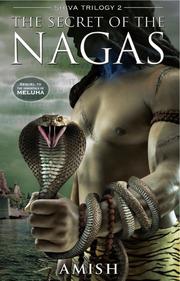
The Secret of the Nagas
Shiva hunts the Naga who attacked Sati, discovers her hidden twin sister and lost son, and follows the trail to the Naga capital of Panchavati.
2,442-word summary · 11 min read
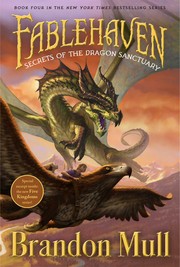
Secrets of the Dragon Sanctuary
Kendra is replaced by a plant copy and held by the Society, while Seth steals a unicorn horn so the family can enter a dragon sanctuary.
2,590-word summary · 12 min read

Lioness Rampant
Alanna searches for the Dominion Jewel with the Shang Dragon, then returns to Tortall to face Duke Roger at Jonathan's coronation.
2,478-word summary · 11 min read
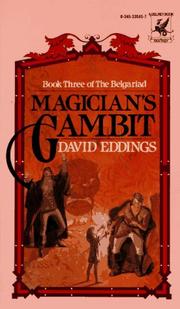
Magician's Gambit
Garion and his companions cross haunted Maragor and the caves beneath Rak Cthol to recover the Orb of Aldur.
2,391-word summary · 11 min read
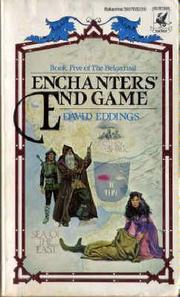
Enchanters' End Game
Garion marches toward Torak while Ce'Nedra leads the West's army in the final Belgariad volume, where prophecy and war meet.
2,557-word summary · 11 min read
Fool's Errand
FitzChivalry Farseer has lived in exile for fifteen years. When Prince Dutiful vanishes before his betrothal, Fitz returns to Buckkeep to find him, with a wolf…
2,606-word summary · 12 min read
The Sword of Shannara
A young half-Elf and a company of companions set out to recover a magic sword before the Warlock Lord destroys the Four Lands.
2,474-word summary · 11 min read
The Magician
Sophie and Josh flee to Paris with Nicholas Flamel, where John Dee, Machiavelli, and an awakened god close in on the missing pages of the Codex.
2,162-word summary · 10 min read
Magician: Apprentice
An orphan kitchen boy and a smith's son grow up in a frontier castle just as invaders from another world open a rift and begin a war that will change both of…
2,114-word summary · 9 min read

Lore
Lore Perseous, the last of a hunted bloodline, is pulled back into the Agon when a wounded Athena offers her revenge against the god who killed her family.
2,188-word summary · 10 min read
Daughter of the Moon Goddess
The daughter of Chang'e hides in the Celestial Court, trains as an archer, and risks everything to free her mother from the Emperor's punishment.
2,146-word summary · 10 min read
A Fate Inked in Blood
In Norse-inspired Skaland, a fish gutter hiding a goddess's blood is claimed by a jarl, bound by oath, and guarded by the son she cannot want.
1,971-word summary · 9 min read
Pawn of Prophecy
Farm boy Garion learns sorcerers watch him as an old Orb wakes.
2,331-word summary · 10 min read

Electric Idol
Psyche wears a camera deal to dodge Aphrodite and falls for Eros.
2,332-word summary · 10 min read
A Touch of Malice
Engaged Hades and Persephone face gods who vote on their marriage.
2,562-word summary · 11 min read
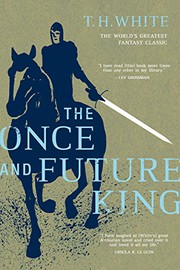
The Once and Future King
T.H. White retells Arthur from boyhood with Merlyn to Camelot's fall, mixing comedy, myth, and a hard look at war and power.
2,200-word summary · 10 min read
The Demigod Files
Three Percy Jackson side quests plus camp maps, cabin guides, interviews, and god profiles set before the final battle.
2,498-word summary · 11 min read
The Hammer of Thor
Magnus and Sam chase Thor's stolen hammer to a giant wedding heist, with Alex Fierro joining Floor Nineteen as Loki bargains and Ragnarok stirs.
3,068-word summary · 14 min read
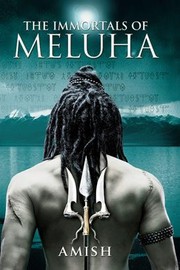
The Immortals of Meluha
Tribal Shiva learns he is fabled Neelkanth prophesied to save Meluha.
1,994-word summary · 9 min read
The Dark Prophecy
Mortal Apollo and Leo cross America to free the Oracle as Commodus hunts them.
2,368-word summary · 11 min read
The City of Brass
Cairo con artist Nahri summons djinn Dara and is drawn to Daevabad where Ali questions pureblood rule.
1,993-word summary · 9 min read
The Alchemyst
Twins Sophie and Josh learn their boss is Flamel as Dee steals the Codex minus two pages.
2,085-word summary · 9 min read