
Reading options
What's inside (8 sections)
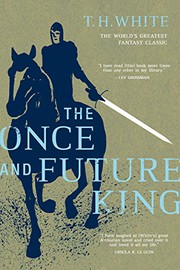
I came to this book late, after years of half knowing the Arthur story from films and children's versions. I expected battles and shining armor and not much else. What I found instead was stranger and funnier and sadder, a 656-page book first put together in 1958 that spends as much time on ants and geese and schoolroom jokes as it does on war. I read it slowly over two weeks, often in the evening, and I kept pausing to argue with it in my head. That is probably the best sign that White did his job.
The book is really four books joined into one. The Sword in the Stone covers Arthur as a boy. The Queen of Air and Darkness shifts to the Orkney family in the north. The Ill-Made Knight follows Lancelot. The Candle in the Wind brings Arthur to old age and ruin. White wrote them across two decades, through the Second World War, and you can feel his thinking change as he goes. Early pages are playful. Late pages are tired in a way that feels honest. The Ace Books edition I used runs 656 pages, which sounds heavy, but the chapters are short and the voice moves fast.
Wart and Merlyn: Schooling by Becoming Animals
Arthur starts as Wart, a foster boy in the castle of Sir Ector in the Forest Sauvage. He is not the heir. His foster brother Kay is the important one, the one being trained for knighthood, and Wart is mostly tagging along, hungry and eager and a little clumsy. Into this arrives Merlyn, tall and bearded and living backward through time, which means he remembers the future and gets confused about the present. He becomes Wart's tutor, and his lessons are not what I expected.
Merlyn does not lecture about kingship. He turns Wart into animals. As a fish, Wart learns about power from a huge pike who claims the moat by right of size. As an ant, he sees a society run entirely on mindless labor and slogans, where individual ants have no names and no rest. As a goose, he finds a world without borders, where geese migrate freely and war seems absurd. As a badger, he hears a long story about creation and human oddness. As an owl and other creatures too, he keeps picking up fragments.
I loved these sections. They are funny, especially Merlyn's bickering with the governess and his owl Archimedes, a fussy scholar who hates being disturbed. But they are also White's way of teaching political thought without making it feel like school. Each animal society is a comment on ours. The ants are clearly a jab at totalitarian systems, written by a man watching Europe fall apart in the 1930s. The geese offer the opposite idea, that boundaries are invented and cruelty is a choice.
My one complaint here is pace. Some of the animal episodes run long, and White likes to stop for jokes about medieval plumbing or school Latin that will land better for British readers of his generation. A few chapters sag in the middle. Still, by the end of this education, Wart feels real to me. He is kind by instinct, not clever in a showy way, and he has learned to ask why people fight rather than how to win.
The Sword in the Stone and a King Made by Accident
Everyone knows the image of the sword stuck in stone, waiting for the true king. White handles it with less pomp than I expected, which I liked. After King Uther dies with no clear heir, England falls into quarrels between local lords. A sword appears in a London churchyard, set in stone with lettering that says only the rightful king can pull it. Tournaments come and go. Knights strain and fail.
Arthur pulls it almost by mistake. He has gone to London as Kay's squire, loses Kay's sword before a fight, runs to find a replacement, sees the sword in the churchyard, and tugs it free because no one is watching and he is in a rush. It is not staged as a heroic moment. It is awkward and rushed and very Wart. Only afterward does the crowd understand what happened.
What follows is White at his most charming and most skeptical. The young king tries to be fair and quickly learns how hard that is. The barons do not accept him at once. Merlyn pushes him to think about Might versus Right, a phrase White returns to again and again. Should a strong man rule because he is strong, or should strength be used only to protect fairness? Arthur takes this to heart. He is not a natural politician. He forgets names, he trusts too easily, he wants everyone to get along. That innocence makes him likable and also makes trouble later.
I should say the comedy here is dated in spots. There are jokes about country folk and women and school life that read as old fashioned now. White can be condescending toward characters he supposedly likes, especially Kay, who is written as a bully with flashes of loyalty. But the core idea lands. Arthur does not want the throne for glory. He gets it because he was kind enough to fetch a sword for someone else. That starting point matters for everything that follows.
Camelot Dreams and the Orkney Blood Feud
The middle of the book widens out. Arthur founds the Round Table, marries Guenever, and tries to turn knighthood into something better than licensed bullying. His plan is simple to say and hard to do. Instead of knights using force to grab land, they will use force to stop others from using force. White calls this the fight against Might is Right, and Arthur clings to it even when his knights get bored or confused.
The best counterweight to Camelot in these pages is the Orkney family. Morgause, half sister to Arthur, raises four sons in the north: Gawain, Agravaine, Gaheris, and Gareth. Their home is fierce and close and soaked in old feuds. White writes them with real attention. Gawain is hot tempered but loyal to his mother. Gareth is gentle and wants to join Arthur. Agravaine is bitter and watchful. Gaheris is quieter. Around them are tales of hunting, feasting, insults, and revenge killings that go back generations.
This is where the book turns darker. Arthur, young and lonely, has a brief encounter with Morgause without knowing she is his half sister. From that union comes Mordred, the son who will later destroy him. White does not play this for shock. He plays it as waste, a mistake born of youth and secrecy that festers for twenty years. Meanwhile the Orkneys nurse hatred for Arthur's family because of older killings tied to Uther and Merlin's schemes. Blood pays for blood.
I found these chapters uneven but strong. White sometimes over explains the moral, pausing the story to tell you what to think about justice or revenge. He also repeats himself about the Orkneys being wild Celts versus Arthur's orderly Normans, a split that feels too neat today. Yet the family scenes stick. A boar hunt, a kitchen quarrel, Gareth slipping away to become a kitchen boy in Camelot so he can earn his spurs without using his name. Those small choices tell you more than speeches.
Lancelot, Guenever, and Love That Breaks the Table
The third part belongs to Lancelot, and it surprised me most. I expected the perfect champion, handsome and confident. White gives me instead an ugly, sad, obsessive man who believes he is sinful and tries to earn grace through deeds. He calls himself the Ill-Made Knight. His face is scarred, his body awkward, his conscience raw. He loves Arthur deeply as a friend and leader, and loves Guenever desperately as a woman, and those two loves tear him apart.
Guenever in this telling is not a distant prize. She is sharp tongued, jealous, aging, funny, and tired of being a symbol. She loves Arthur in one way and Lancelot in another, and White refuses to make her a villain for it. Their affair lasts for years, hidden and then half known, and it corrodes the Round Table long before it becomes public. Knights take sides. Gawain's family watches for insult. Arthur knows more than he says and pretends not to know because naming it would force a war.
There is a long stretch about Lancelot's quest for holiness, his failed pursuit of the Grail, his madness in the woods, his healing. Some readers will find this slow. I did at points. White piles miracle on miracle, and the religious tone shifts from book to book as White himself moved away from simple faith. But the human triangle stays clear. Three decent people who care for each other create a situation no code of chivalry can fix.
Fair criticism: White is harder on Guenever than on the men, even while claiming to defend her. He mocks her aging and her temper in ways that felt unfair to me. He also lets Lancelot off too easily after violent episodes, treating remorse as enough. Still, I believed in them. The scene where Lancelot returns broken and Arthur welcomes him without lectures says more about forgiveness than any sermon in the book.
Mordred, the Grail Dream, and the Fall
The last section, The Candle in the Wind, is the one I will remember. Arthur is old, tired, and mostly alone. The Round Table's best days are gone. The Grail quest scattered his knights. Lancelot is in France. Guenever is restless. And Mordred, now grown, has come to court, cold and clever and determined to expose the affair and use the law to ruin his father.
Mordred is not a cartoon villain. White writes him as a product of neglect and hate, raised by Morgause and the Orkneys to see Arthur as a thief of their birthright. He dresses plainly, speaks little, watches everything. He allies with Agravaine, who wants revenge for his own reasons, and forces Arthur into a legal trap. If Arthur ignores Lancelot and Guenever, he breaks his own justice. If he punishes them, he destroys his own happiness and splits his knights. There is no clean path left.
The war that follows is ugly and small, not grand. Friends kill friends over misunderstandings. Gawain, who once loved Lancelot, turns against him after his brothers die in the rescue of Guenever from the stake. Letters go back and forth. Sieges drag. Arthur sits up at night trying to pass on his idea about Right over Might to a young page, hoping the thought will survive even if the kingdom does not. The final battle is foggy and confused, with orders lost and men dying for nothing anyone can explain.
I found this ending moving and a little repetitive. White restates his war thesis many times, and the dialogue between Arthur and Mordred can feel like an essay slipped into a novel. The book could lose fifty pages here without losing force. But the sadness feels earned because we watched Arthur grow from Wart. He started by learning from geese that war is stupid. He ends watching men prove it true around him. That circle gives the 656 pages their shape.
What Stuck With Me After 656 Pages
A few things will stay with me. First, Merlyn's teaching method. I keep thinking about the ants and the geese when I read the news. It is a simple trick, learn by living as someone else for a day, but White makes it feel fresh each time. Second, Gareth's choice to start as a kitchen boy. In a book full of kings and miracles, that quiet wish to be judged by work rather than name felt modern. Third, Arthur's stubborn decency. He is not smart in the way Lancelot is skilled or Mordred is cunning. He just keeps trying to make force serve fairness, even when it fails.
Who should read it? If you like long fantasies with clear magic systems and fast plots, this may frustrate you. White rambles, moralizes, jokes at odd moments, and drops the story for essays on hawking or heraldry or medieval money. The treatment of women and of non English peoples shows its time, published in 1958 and written earlier, and some passages need patience. The language is rich but not always smooth, swinging between schoolboy slang and high tragedy.
I still recommend it, with those warnings. Read the first book for fun, the second for family drama, the third for the love story, the fourth for grief. I laughed more than I expected in the early chapters and sat quiet longer than I expected at the end. Few retellings of myth try this much, to entertain children and accuse generals in the same breath. White fails at parts of that, and the joins show. Yet Arthur's question stays with me on ordinary days. If strength must exist, how do we keep it from becoming bullying? The book does not solve it. It makes you sit with it, which is rarer and better.
FAQ
Is The Once and Future King only for fantasy readers?
No. The 1958 book uses Arthur to talk about school, power, family feuds, and war, so readers who like character stories and history often enjoy it too.
How is the book structured and how long is it?
The Ace Books edition runs 656 pages. It joins four parts: Wart's schooling, the Orkneys, Lancelot and Guenever, then Arthur's old age and war with Mordred.
Do I need to know the Arthur legend before reading?
No prior knowledge is needed. White explains Uther, the sword, the Round Table, and the Grail as he goes, starting with Arthur as a foster boy called Wart.
Similar books
The Thief
A boastful young thief is pulled from a prison to steal a legendary stone for the king's magus, and the story he tells about himself is not the whole story.
2,514-word summary · 11 min read
The Secret of the Nagas
Shiva hunts the Naga who attacked Sati, discovers her hidden twin sister and lost son, and follows the trail to the Naga capital of Panchavati.
2,442-word summary · 11 min read
The Chalice of the Gods
Percy needs three recommendation letters from three gods to apply to college, so his first quest is recovering a stolen chalice from the god of old age.
2,106-word summary · 9 min read
The Ship of the Dead
Magnus and his crew sail to the edges of the Norse worlds to stop Loki from launching Naglfar, the ship of the dead.
2,426-word summary · 11 min read
The Sword of Shannara
A young half-Elf and a company of companions set out to recover a magic sword before the Warlock Lord destroys the Four Lands.
2,474-word summary · 11 min read
The Magician
Sophie and Josh flee to Paris with Nicholas Flamel, where John Dee, Machiavelli, and an awakened god close in on the missing pages of the Codex.
2,162-word summary · 10 min read
The Burning Maze
Apollo, still trapped in a mortal teenager's body, follows a dangerous prophecy through the Labyrinth with Meg and Grover as the Triumvirate's grip tightens.
2,248-word summary · 10 min read
The Borrowers
A family of tiny people live under the floorboards of an English house, borrowing what they need until a lonely boy and a suspicious housekeeper change…
2,164-word summary · 10 min read

Lore
Lore Perseous, the last of a hunted bloodline, is pulled back into the Agon when a wounded Athena offers her revenge against the god who killed her family.
2,188-word summary · 10 min read
The Magician King
Quentin rules a peaceful Fillory until a golden key strands him on Earth, while Julia's brutal road from hedge witch to demigod rewrites the whole story.
2,431-word summary · 11 min read
A Fate Inked in Blood
In Norse-inspired Skaland, a fish gutter hiding a goddess's blood is claimed by a jarl, bound by oath, and guarded by the son she cannot want.
1,971-word summary · 9 min read
The Last Unicorn
A unicorn learns she may be the last of her kind and sets out to find the others, with a failed magician and a tired woman at her side.
2,245-word summary · 10 min read
The Demigod Files
Three Percy Jackson side quests plus camp maps, cabin guides, interviews, and god profiles set before the final battle.
2,498-word summary · 11 min read
Charlie and the Great Glass Elevator
Charlie and Wonka overshoot Earth in the glass elevator, meet alien Knids, then risk age pills and Minusland.
2,514-word summary · 11 min read
The Hammer of Thor
Magnus and Sam chase Thor's stolen hammer to a giant wedding heist, with Alex Fierro joining Floor Nineteen as Loki bargains and Ragnarok stirs.
3,068-word summary · 14 min read
The Tombs of Atuan
Priestess Arha guards dark Tombs until wizard Ged comes to steal back ring.
2,043-word summary · 9 min read
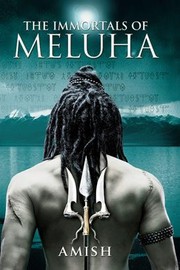
The Immortals of Meluha
Tribal Shiva learns he is fabled Neelkanth prophesied to save Meluha.
1,994-word summary · 9 min read
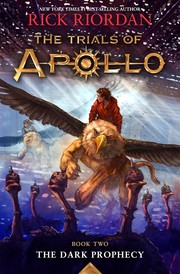
The Dark Prophecy
Mortal Apollo and Leo cross America to free the Oracle as Commodus hunts them.
2,368-word summary · 11 min read
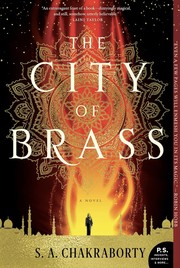
The City of Brass
Cairo con artist Nahri summons djinn Dara and is drawn to Daevabad where Ali questions pureblood rule.
1,993-word summary · 9 min read
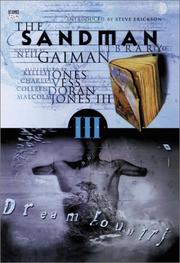
Dream Country
Four Sandman shorts on muses, cats, Shakespeare, and a veiled heroine.
2,001-word summary · 9 min read
The Alchemyst
Twins Sophie and Josh learn their boss is Flamel as Dee steals the Codex minus two pages.
2,085-word summary · 9 min read
The Serpent's Shadow
Carter and Sadie Kane have three days to bind Apophis by his shadow before the serpent rises and unmakes the world.
2,941-word summary · 13 min read
The Throne of Fire
Carter and Sadie Kane have five days to wake the sun god Ra before the serpent Apophis breaks free and eats the world.
2,867-word summary · 13 min read
The Sword of Summer
A homeless Boston teen learns he is a Norse god son and dies on day one stopping a fire giant.
2,116-word summary · 9 min read
The Neverending Story
Bastian steals a book about Fantastica dying and learns he must name and wish to save it.
1,941-word summary · 9 min read
The Hidden Oracle
Apollo lands as a teen in New York with no powers and must earn his way back with Meg and demigods.
1,933-word summary · 9 min read
Children of Blood and Bone
White haired Zelie chases magic return with princess Amari hunted by Inan.
2,027-word summary · 9 min read
Preludes & Nocturnes
Dream escapes a 70 year prison, hunts his lost tools, faces Hell, and learns care from Death.
2,047-word summary · 9 min read
The Silver Chair
Eustace and Jill retold: four signs, a lost prince, Puddleglum the Marsh-wiggle, giants at Harfang, and the Lady below.
2,940-word summary · 13 min read
The Silmarillion
Tolkien's posthumous First Age history, edited by Christopher Tolkien: the Music of the Ainur, Feanor's Silmarils, Beren and Luthien, Gondolin, and the fall of…
2,544-word summary · 11 min read