
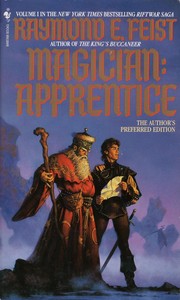
Magician: Apprentice
2,114-word summary 9 min read 485 pages in the book
- First published
- 1982
- Publisher
- Bantam Spectra
- Pages
- 485
- ISBN
- 9780553564945
- Series
- The Riftwar Saga (#1)
Reading options
What's inside (8 sections)
Magician: Apprentice is the kind of fantasy novel that makes me understand why people read twelve-book series. It is not subtle, and it is not trying to reinvent the genre. It is a big, warm, old-fashioned adventure about two boys from a provincial castle who get caught in a war between worlds. The fact that it was built out of a Dungeons & Dragons campaign is obvious on every page, and that is part of its charm. You can almost see the dungeon master drawing the map.
The novel began as Magician, published by Doubleday in 1982. For the American paperback market it was split into two volumes, Magician: Apprentice and Magician: Master. This is the first half, and it ends in the middle of the story. That is worth knowing before you start. The book does not resolve. It stops at a major turning point and expects you to pick up the second volume. If you are the kind of reader who needs a complete arc in one sitting, get the single-volume edition or have Master ready.
The story opens at Crydee, a small castle on the western coast of the Kingdom of the Isles. Pug is an orphan kitchen boy. Tomas is the son of the castle smith. They are best friends, and they spend their days dreaming about adventures and trying to stay out of trouble. Pug is small, thoughtful, and bad at the kind of roughhousing that Tomas excels at. Tomas is strong, eager, and a little reckless. Their friendship is the emotional center of the book, and Feist does a good job of showing how it changes when they start to grow into different people.
Pug is chosen as the apprentice of Kulgan, the duke's magician. This is not a great honor at first. Pug is a terrible student. He cannot master the simple spells that other apprentices learn, and Kulgan is not sure what to do with him. Then Pug saves Princess Carline from a group of mountain trolls, and his life changes. He becomes a squire of the duke's court, which puts him closer to the girl he has a crush on and further away from the kitchen. The romance between Pug and Carline is gentle and awkward, and it feels true to the age of the characters. Feist does not oversell it.
Tomas takes a different path. He trains as a soldier under the swordmaster Fannon, and he turns out to be very good at it. He is strong, quick, and brave, and he likes the idea of being a hero. The two friends are still close, but their worlds are separating. Pug is spending his time with books and magic. Tomas is spending his time with weapons and soldiers. That distance becomes important later, when the war arrives and both of them are forced to become something they did not expect.
The ship and the war
The plot kicks into gear when a strange ship washes up near Crydee. It is built differently from anything the locals know, and the survivors are not from any known kingdom. Soon there are reports of strange warriors in the forests. Duke Borric decides to travel east to warn the king, and he takes a small party with him. Pug and Tomas both end up on the journey, along with Borric's sons, Lyam and Arutha, and the huntmaster Martin.
The journey is the best section of the book. The party is attacked by dark elves, the moredhel, who have been pushed south by the invaders. They take refuge in an abandoned dwarven mine, and the sequence in the tunnels is tense and atmospheric. Tomas gets separated from the group and finds a dying dragon. The dragon gives him a suit of ancient armor, and the armor changes him. It carries the spirit of Ashen-Shugar, one of the Valheru, a race of dragonlords who once ruled the world. Tomas becomes stronger, faster, and much more frightening. He also starts to lose himself. The armor is not a simple power-up. It is a possession, and the book treats it as a danger.
Pug and the rest of the party make it to Krondor and then to Rillanon, where they try to get help from the king. The king is mad. He is paranoid, isolated, and surrounded by advisers who tell him what he wants to hear. The party is turned away with promises and no real support. This is one of the more interesting political passages in the book. Feist shows that the kingdom is not a united force. It is a collection of provinces with different interests, and the capital is more concerned with court politics than with a threat on the western frontier.
The Tsurani
The invaders are the Tsurani, a people from another world called Kelewan. They come through a rift, a magical gate between the worlds, and they come in numbers. Their culture is based on a rigid hierarchy, and their soldiers are disciplined and brave. Feist gives them a distinct look and a distinct set of values. They are not simply orcs with better armor. They have families, politics, and a reason for being where they are, even if that reason is not fully explained in this volume.
The war is the engine of the second half. Pug and Tomas are both caught up in it. Tomas becomes a warrior of terrifying ability, and the armor pushes him toward a destiny that is not entirely his own. Pug is captured in battle and taken through the rift to Kelewan. That is where this volume ends. Pug is a slave in a strange world, Tomas is becoming something inhuman, and the war is only getting started. The cliffhanger is effective, even if it is frustrating. Feist knows how to end a chapter on a turn.
The magic system is loose and intuitive. Kulgan can do spells, but he is not a wizard who can solve every problem. Magic is expensive, unpredictable, and often less useful than a good sword. Pug's inability to learn the standard spells is treated as a personal failure, but it also hints that his talent is different. The book plants that idea early and lets it grow. By the end, you understand that Pug's path is not going to be the path of a normal magician.
What the book is good at
Feist is very good at the pleasure of a well-built fantasy world. Crydee feels like a real place, with a kitchen, a smithy, a practice yard, and a hall where the duke holds court. The dwarves are not merely comic relief. They have a culture, a history, and a grudge against the dark elves. The elves are remote and strange. The politics of the kingdom are sketched in enough detail to make the war feel like more than a backdrop. The book is not deep, but it is solid.
The friendship between Pug and Tomas is the best thing in it. Feist does not make them opposites who bicker. They like each other, and they are happy for each other's successes, even when those successes take them in different directions. When Tomas starts to change, Pug is worried about him, not jealous. When Pug is captured, Tomas is devastated. That emotional throughline gives the adventure a spine. Without it, the book would be a series of set pieces. With it, the set pieces matter.
The pacing is also good. Feist moves the story along quickly, and he is not afraid to skip time when nothing important is happening. The chapters are short, and the point of view shifts between characters, which keeps the reader from getting bored. The prose is plain and functional. It is not beautiful, but it does the job. Some of the dialogue is stiff, especially when the characters are being formal, but that fits the setting.
The edition question
There is a small complication for new readers. The original 1982 Doubleday edition was later revised by Feist for a tenth-anniversary edition in 1992, which he called the author's preferred text. The preferred edition restores scenes that were cut from the first printing and expands others. The Bantam split volumes were also revised, so the page count and some details depend on which version you have. The story is the same, but the preferred edition is the one Feist wants people to read. If you are choosing between editions, take the preferred text if you can find it. It is a little longer, and the extra material fills in some of the relationships that feel thin in the original.
The edition history matters because it explains some of the book's unevenness. Magician was Feist's first novel, and it shows. The early chapters are careful and charming, while the later battle scenes are more conventional. The preferred edition smooths some of that out, but it cannot change the fact that the book was written by a young author learning his craft. That is not a reason to avoid it. It is a reason to read it with the right expectations.
What the book gets wrong
The characters are archetypes. Pug is the chosen orphan. Tomas is the warrior who becomes more than human. Kulgan is the wise old mage. Duke Borric is the noble lord. Princess Carline is the girl who needs rescuing. There is nothing wrong with archetypes, but the book does not do much to complicate them. The female characters are especially thin. Carline exists mostly to be protected and to give Pug a reason to feel brave. The other women in the book are wives, mothers, or background figures. For a story about a war that will affect everyone, the absence of women is noticeable.
The split-volume structure is also a problem. Magician: Apprentice is not a complete novel. It is the first half of one, and it ends right when the story is getting interesting. A reader who picks it up without knowing that may feel cheated. The book also has a tendency to explain things that it could show. Feist loves a prophecy and a mysterious mentor, and he uses both freely. Macros the Black, who appears briefly, is a walking plot device. He shows up, says something ominous, and leaves. That is fine for a first volume in a series, but it is not subtle.
The Tsurani are interesting, but they are seen mostly from the outside. We get their soldiers, their politics, and their strange world, but we do not get much of their interior life. That changes in the second volume, when Pug becomes one of them. In this book, they are still mostly a threat. The same is true of the dark elves. They are frightening, but they are not given a clear motive beyond being pushed out of their territory. The book is more interested in the human kingdom than in the people it is fighting.
Why it still works
I would recommend Magician: Apprentice to readers who want a comfort read with a real sense of scale. It is not as dense as Tolkien, as grim as Martin, or as clever as Pratchett. It is a straightforward adventure with likeable characters, a well-drawn world, and a strong ending. It is also a good introduction to the Riftwar Saga, which grows into something much larger. The first volume is the foundation, and you can feel Feist laying the stones for the books that come later.
The book's best idea is that magic and war are both ways of changing who you are. Pug loses his home and becomes a slave, and that is the beginning of his education. Tomas puts on armor and becomes a hero, and that is the beginning of his loss. Feist does not pretend that either path is simple. The choices the boys make in this volume will define them for the rest of the series. That is a strong hook, and it is enough to make me want to read the next book.
What stays with me is the image of Crydee at the start. Two boys in a kitchen, dreaming about adventures, unaware that the world is about to break open. Feist takes his time with that ordinary life before he destroys it. The contrast between the kitchen and the rift is the whole novel in miniature. It is a story about how quickly the familiar can become strange, and how the people who survive are the ones who learn to change. That is a simple lesson, but it is delivered with enough warmth to make it land.
FAQ
Is Magician: Apprentice a complete story?
No. It is the first half of the novel Magician, and it ends mid-story with Pug captured and taken to Kelewan.
Do I need to read Magician: Master next?
Yes, if you want the rest of the story. Magician: Master is the second half and continues Pug's training and the war.
What is the Riftwar Saga about?
It follows the war between the Kingdom of the Isles on Midkemia and the Tsurani empire of Kelewan after a magical rift connects their worlds.
Similar books
More from The Riftwar Saga first, then related titles.

The Blinding Knife
Kip trains to join the Blackguard while the Prism hides his true identity, loses his colors, and fights a war against a rogue drafter who wants to birth a god.
2,049-word summary · 9 min read

Magician's Gambit
Garion and his companions cross haunted Maragor and the caves beneath Rak Cthol to recover the Orb of Aldur.
2,391-word summary · 11 min read

Homeland
Drizzt Do'Urden is born into the cruel drow city of Menzoberranzan, where his father teaches him to fight and to doubt everything his family believes.
2,303-word summary · 10 min read
Enchanters' End Game
Garion marches toward Torak while Ce'Nedra leads the West's army in the final Belgariad volume, where prophecy and war meet.
2,557-word summary · 11 min read

The Queen of the Tearling
Nineteen-year-old Kelsea leaves the woods to take her throne, ends a shipment of human captives, and draws the Red Queen's revenge.
2,357-word summary · 10 min read
Fool's Errand
FitzChivalry Farseer has lived in exile for fifteen years. When Prince Dutiful vanishes before his betrothal, Fitz returns to Buckkeep to find him, with a wolf…
2,606-word summary · 12 min read
The Sword of Shannara
A young half-Elf and a company of companions set out to recover a magic sword before the Warlock Lord destroys the Four Lands.
2,474-word summary · 11 min read

In the Hand of the Goddess
Alanna, still disguised as a boy, survives war, court plots, and a death duel as the Goddess's chosen warrior in the second Song of the Lioness book.
2,018-word summary · 9 min read
The Tower of the Swallow
Ciri flees as a bandit while Geralt gathers allies to find her.
2,580-word summary · 11 min read
The Emperor's Soul
Forger Shai must stamp a new soul for the dying emperor in 100 days.
2,313-word summary · 10 min read
Shadow's Edge
Kylar fakes death as a king killer while Vi hunts him for the Godking.
2,245-word summary · 10 min read
Pawn of Prophecy
Farm boy Garion learns sorcerers watch him as an old Orb wakes.
2,331-word summary · 10 min read
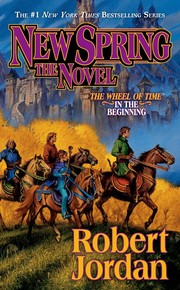
New Spring
Moiraine and Lan hunt the newborn Dragon before the Black Ajah finds him.
2,475-word summary · 11 min read
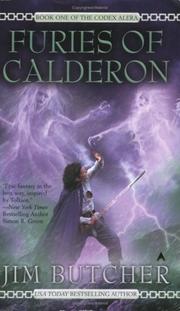
Furies of Calderon
Furyless Tavi defends Calderon Valley when the Marat return and lords scheme.
2,587-word summary · 11 min read
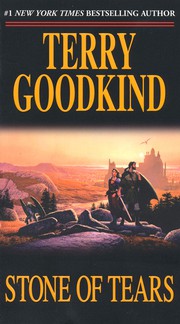
Stone of Tears
After the veil tears, Richard seeks training from the Sisters while Kahlan holds a fracturing Midlands and Zedd hunts the missing Stone.
2,483-word summary · 11 min read
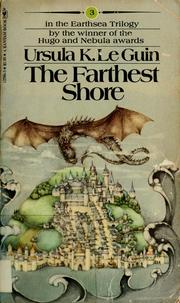
The Farthest Shore
Archmage Ged and Prince Arren sail to the far west to stop Cob, whose bid for endless life drains magic across Earthsea in Le Guin's sad 1972 third volume.
2,800-word summary · 12 min read
Edgedancer
Hungry street thief Lift and her vine-like friend Wyndle cross the Herald Nale in Tashikk when a child emperor shows Radiant signs and she refuses to step…
2,328-word summary · 10 min read
Dragons of Autumn Twilight
Old friends reunite at the Inn of the Last Home, guard a glowing Blue Crystal Staff, face black dragon Khisanth, and free slaves at Pax Tharkas in this 1984…
2,803-word summary · 12 min read
The Eyes of the Dragon
In the kingdom of Delain, a jailed prince and his younger brother face a magician whose long plot for the throne turns on a napkin clue.
2,018-word summary · 9 min read
The City of Brass
Cairo con artist Nahri summons djinn Dara and is drawn to Daevabad where Ali questions pureblood rule.
1,993-word summary · 9 min read
The Black Prism
Dying Prism Gavin Guile hides a secret son while war brews over color magic in the Seven Satrapies.
2,169-word summary · 10 min read
Gardens of the Moon
Empire, gods, and mages collide over Darujhistan as Bridgeburners bleed for Empress Laseen.
2,188-word summary · 10 min read
Crossroads of Twilight
Rand cleansed saidin and the whole world felt it. Book ten follows each faction as they react, stall, and choose sides.
2,264-word summary · 10 min read
Alanna: The First Adventure
Twins swap roles so Alanna trains as boy page Alan for knighthood while Thom studies sorcery.
2,107-word summary · 9 min read
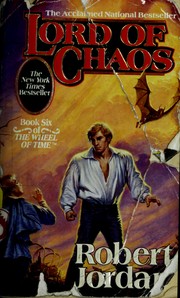
Lord of Chaos
Rand offers amnesty to men who can channel while Egwene is raised Amyrlin in exile. Book six of The Wheel of Time builds toward rescue and reckoning at Dumai's…
2,255-word summary · 10 min read
A Crown of Swords
After Dumai's Wells, Rand holds Cairhien while Egwene besieges Tar Valon and Elayne and Nynaeve hunt relief in Ebou Dar. Book seven crowns kings and queens at…
2,828-word summary · 13 min read
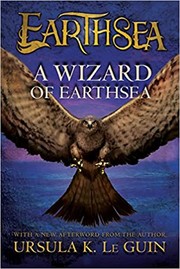
A Wizard of Earthsea
A proud goatherd becomes the wizard Ged, looses a shadow at Roke, and must hunt it across Earthsea to name it. Le Guin's lean 1968 series opener.
2,972-word summary · 13 min read
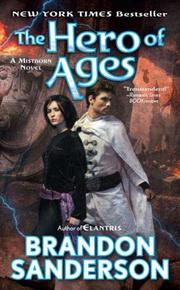
The Hero of Ages
Vin and Elend face ash, mist, and Ruin itself as the prophecies fail and Sazed searches old faiths for answers.
2,559-word summary · 11 min read
Ship of Magic
A sentient ship wakes when her captain dies, and the family that owns her starts to come apart over who gets to sail her.
2,026-word summary · 9 min read

Inkdeath
The final Inkworld novel sends Mo into the land of the dead, leaves Meggie choosing between two boys, and ends the Adderhead's immortality with three written…
2,062-word summary · 9 min read