
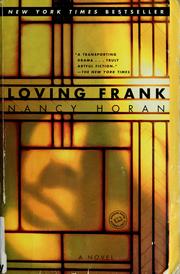
Loving Frank
2,034-word summary 9 min read 362 pages in the book
- First published
- 2007
- Publisher
- Ballantine Books
- Pages
- 362
- ISBN
- 9780345495006
Reading options
What's inside (9 sections)
I knew the ending of Loving Frank before I started it. That is true of most historical novels about famous people, and it is especially true of this one. The story of Frank Lloyd Wright and Mamah Borthwick Cheney ends in fire and murder, and the novel does not hide it. What surprised me was how much time Horan spends on the inner life of a woman who has been remembered mostly as a scandal.
The novel was published in 2007 by Ballantine Books. It runs 362 pages in the first edition and is Nancy Horan's debut. It is a work of biographical fiction, which means it uses real people and real events but imagines conversations, thoughts, and private moments. Horan did extensive research, and the afterword explains what is documented and what is invented. The line is not always visible, but the novel is honest about its method.
Mamah Borthwick Cheney was born in 1869 and grew up in Iowa. She was well educated, fluent in several languages, and married to Edwin Cheney, a successful electrical engineer. They lived in Oak Park, Illinois, a suburb of Chicago. They had two children, John and Martha. In 1903, they commissioned Frank Lloyd Wright to design their house. Wright was already famous. He was also married, with six children. The commission led to an affair that shocked Chicago society and changed both of their lives.
The House and the Man
The novel opens with Mamah attending a public talk by Wright. She is intelligent, restless, and bored by the role of a society wife. Her marriage is not unhappy in the dramatic sense. Edwin is decent, steady, and dull. He does not understand her. She does not respect him. The arrival of Wright, with his genius and his ego, feels like a door opening.
Wright designs the Cheney house, and the construction brings him and Mamah together. Horan shows the attraction growing through conversations about architecture, art, and ideas. Wright is not just a builder. He is a visionary who believes that buildings can change the way people live. He is also a narcissist who believes that his genius entitles him to whatever he wants. Mamah is drawn to both the vision and the attention.
The affair is not a sudden fall. It is a slow recognition. Mamah and Wright talk for hours. They share a dissatisfaction with conventional life. They both want something more than the roles they have been assigned. Wright has a wife who refuses to divorce him, and Mamah has a husband who loves her. The obstacles are real, and Horan does not pretend otherwise.
Mamah's decision to leave is the novel's central act. She leaves her children. That is the fact that people could not forgive then, and it is still the fact that makes her difficult to like. Horan does not soften it. Mamah loves her children. She also knows that if she stays, she will disappear. The novel asks whether a woman can choose herself without destroying the people who depend on her. It does not give an easy answer.
Europe and Ellen Key
In 1909, Mamah and Wright leave their families and go to Europe. They travel to Berlin, Paris, and Italy. Wright is working on a portfolio of his designs, the Wasmuth Portfolio, which will make his reputation in Europe. Mamah studies languages and translates. She meets Ellen Key, the Swedish feminist and writer, and begins to work on an English translation of Key's essays.
Ellen Key is an important figure in the novel. She is a advocate for women's independence, but her views are not simple. She believes that motherhood is a sacred calling, and she criticizes Mamah for leaving her children. Mamah admires Key and is wounded by her judgment. The relationship is a way for Horan to explore the contradictions in early feminism. A woman can believe in freedom and still be constrained by the expectations of her time.
Mamah's translation work gives her an identity outside of Wright. That is important. She is not just the architect's mistress. She is a writer and a thinker in her own right. Horan shows her at her desk, working through Swedish sentences, trying to find the right English words. These scenes are quiet, and they matter. They show that Mamah's search for freedom was not only about love. It was about work.
The European sections are the most intellectually engaging part of the book. Horan brings in artists, writers, and activists. She shows the ferment of ideas in the years before World War I. Mamah is exposed to new ways of thinking about marriage, family, and art. She begins to imagine a life that is not defined by her husband or her children. That imagination is both liberating and dangerous.
The Scandal
The affair becomes public while Mamah and Wright are in Europe. The Chicago newspapers run headlines. Wright's wife, Catherine, refuses to divorce him. Edwin Cheney sues for divorce and is granted custody of the children. Mamah is portrayed as a bad mother and a fallen woman. The scandal follows her everywhere.
Horan is good at showing the double standard. Wright is criticized, but he is also celebrated. He is a genius, and genius is allowed certain freedoms. Mamah is judged more harshly. She is the one who left her children. She is the one who broke the rules. The novel does not excuse her, but it asks the reader to see the social pressure she was under.
The press coverage is a recurring motif. Reporters camp outside Wright's studio. Newspapers print rumors and speculation. The couple's private life becomes a public story. Horan uses excerpts from real newspaper articles, which gives the novel a documentary texture. The effect is claustrophobic. Mamah cannot escape the version of herself that the public has created.
Her relationship with her children suffers. John, her son, is angry and confused. Martha, her daughter, is too young to understand. Mamah tries to maintain contact, but the distance is hard. When she returns to the United States, she finds that John has changed. He is more reserved. He has built a life without her. The novel does not pretend that the damage can be undone.
Taliesin
Wright builds Taliesin, a home and studio in Wisconsin, as a place for him and Mamah to live. The name means "shining brow" in Welsh. It is a beautiful house, set on a hill, with views of the valley. It is also a monument to Wright's ego. He spends money he does not have. He owes money to contractors and merchants. Mamah discovers the debts and is furious. The romantic idyll is not as stable as it looks.
The Taliesin section is the novel's third act. Mamah is trying to build a life that combines love, work, and independence. She translates, writes, and manages the household. She also has to deal with Wright's mother, who disapproves of her, and with the workers who are building the house. The domestic details are precise. Horan makes the reader feel the dust, the heat, and the exhaustion.
Wright is away in Chicago when the murders happen. Julian Carlton, a servant who has been working at Taliesin, attacks Mamah and her children with an ax. He sets the house on fire. Mamah, John, Martha, and several workers are killed. Carlton tries to kill himself and dies later in prison. The scene is sudden and brutal. Horan does not linger on the violence. She focuses on the aftermath, on Wright's grief, and on the way the tragedy becomes another story that the public consumes.
The ending is difficult to read. It is also the reason the novel exists. Horan is not using the murder as a plot twist. She is trying to understand how a woman who wanted to live freely ended up in a house that became a trap. The fire at Taliesin destroyed the life Mamah had built, and it also destroyed the possibility of a different ending. The novel does not suggest that she deserved it. It suggests that the world is not fair, and that genius does not protect the people around it.
What the Novel Does Well
Horan is excellent at period detail. The clothes, the houses, the food, the trains: all of it feels researched without being showy. She is also good at dialogue. The conversations between Mamah and Wright are intelligent and charged. The arguments are not just about love. They are about art, money, and power.
Mamah is a compelling protagonist. She is not a saint. She is selfish, brave, and contradictory. She wants to be a good mother and a free woman, and she cannot figure out how to be both. That tension is the book's real subject. The affair is the plot, but the question is about how a woman can live a meaningful life in a world that expects her to sacrifice everything.
The novel is also a portrait of Wright. He is charismatic, brilliant, and exhausting. Horan does not idealize him. He is careless with money, dismissive of other people's needs, and convinced of his own importance. The book shows why Mamah loved him and why he was impossible to live with. That balance is hard to achieve, and Horan does it well.
The architecture is another character. Horan describes Wright's houses as spaces that shape the people inside them. The low ceilings, the open rooms, the windows that frame the landscape: these details are not decoration. They are an argument about how life should be lived. Wright believed that beauty could change behavior, and the novel shows both the appeal and the arrogance of that belief. A house can be a work of art and a prison at the same time.
The title is also more complicated than it looks. Loving Frank can mean romantic love, but it can also mean loving the idea of Frank, or loving the freedom he represents. Mamah's tragedy is that she confuses the two. She thinks she is choosing a person, and she is also choosing a story about herself. That confusion is very human, and Horan treats it with sympathy rather than judgment.
What Does Not Work
The prose is sometimes flat. Horan is a good storyteller, but she is not a stylist. Some sentences are functional rather than beautiful. The novel also has a tendency to explain its themes. Characters will say things like "a woman must have a life of her own," which is true but a little on the nose. The historical research occasionally shows through in exposition.
The pacing is uneven. The European sections are rich, but the middle of the novel slows down. The Taliesin section is compelling, but the transition to the murder feels abrupt. The ending is shocking, but it is also a historical event that the reader knows is coming. Horan has to work hard to make it feel inevitable rather than sensational.
The novel's treatment of the children is limited. John and Martha are important to the story, but they are not fully developed. The focus stays on Mamah and Wright. That is understandable, but it leaves a gap. The children's suffering is real, and the novel does not give it as much space as it gives the adults' romance.
Why It Endures
Loving Frank is a book about a woman who tried to live on her own terms, and it is also a book about the cost of that attempt. It is not a celebration of adultery, and it is not a condemnation. It is an attempt to understand. That is why it has lasted. It gives Mamah Borthwick a voice that history largely denied her, and it asks the reader to sit with the complexity of her choices.
I would recommend it to readers who like historical fiction, art, and complicated women. It is not a light read. The ending is violent, and the moral questions are uncomfortable. But it is a thoughtful novel, and it stayed with me. I found myself reading about Taliesin afterward, trying to separate the novel from the history. That is a sign that the book did its job.
FAQ
Is Loving Frank a true story?
It is biographical fiction based on real people and events, with imagined dialogue and interior thoughts.
What happened at Taliesin?
In 1914, a servant named Julian Carlton attacked Mamah, her children, and others with an ax and set the house on fire.
Can I read it without knowing about Frank Lloyd Wright?
Yes. The novel explains the architecture and the affair, though prior knowledge adds context.
Similar books
The Agony and the Ecstasy
Irving Stone turns Michelangelo's seventy years of carving, painting, and arguing with popes into a novel about the cost of making something that outlives you.
2,260-word summary · 10 min read
The Marriage Portrait
Fifteen year old Lucrezia Medici marries Ferrara's duke and sits for a portrait shadowed by menace.
2,031-word summary · 9 min read
The Girl You Left Behind
Two women a century apart fight for what they love, joined by a portrait painted in wartime France and claimed in modern London.
2,613-word summary · 12 min read

Evidence of the Affair
Two strangers trade letters after learning their spouses are having an affair in 1970s California.
3,000-word summary · 13 min read
The Tattooist of Auschwitz
Heather Morris retells the years of Lale Sokolov as tattooist at Auschwitz Birkenau, his love for Gita Furman, and the food trades and quiet risks that kept…
2,442-word summary · 11 min read
The Invisible Life of Addie LaRue
Addie trades her soul for freedom in 1714 France and lives forgotten for 300 years, until a Brooklyn bookseller remembers her name.
3,480-word summary · 15 min read
The Stationery Shop
Two teenagers fall in love in a Tehran stationery shop in 1953, are separated by the coup and a family deception, and meet again sixty years later.
2,024-word summary · 9 min read

The Japanese Lover
A Polish refugee and the son of a Japanese gardener fall in love in San Francisco in 1939, then keep the affair secret for nearly seventy years.
2,286-word summary · 10 min read
The Art Forger
A disgraced Boston painter agrees to copy a Degas stolen from the Gardner Museum, then begins to suspect the original she is copying is itself a forgery.
2,117-word summary · 9 min read

Anatomy: A Love Story
In 1817 Edinburgh, a noblewoman who wants to be a surgeon disguises herself to study anatomy and falls for the grave robber who supplies her with bodies.
2,031-word summary · 9 min read

The Shadow Sister
Star D'Apliese steps out of her sister's shadow and follows a bookshop clue into the Edwardian life of Flora MacNichol, a woman who gave up love for duty.
2,260-word summary · 10 min read
The Only Woman in the Room
A novel about Hedy Lamarr's escape from an arms-dealer husband, her Hollywood career, and the frequency-hopping patent the Navy ignored.
2,067-word summary · 9 min read
The Valley of Horses
Exiled from the Clan, Ayla survives alone in a hidden valley, tames a horse and a cave lion, and nurses a wounded stranger back to life.
2,311-word summary · 10 min read
The Boleyn Inheritance
Three women narrate Henry VIII's fourth and fifth marriages: a foreign bride who survives, a teenage queen who does not, and the widow who opens the door.
2,391-word summary · 11 min read
Devil in Winter
A shy heiress with a stammer proposes a marriage of convenience to London's most notorious rake, then makes him prove he can be faithful.
2,548-word summary · 11 min read

Two by Two
Sparks's twentieth novel turns from first love to a marriage breaking up: Russell Green loses his wife and his job, then rebuilds his life around his…
2,192-word summary · 10 min read

Origins
Stefan's diary of 1864 and 1888: how he and Damon fell for Katherine, became vampires, and went looking for a killer in London.
2,056-word summary · 9 min read
On Chesil Beach
Two newlyweds spend one terrible night on Chesil Beach in 1962, and the rest of their lives is decided by it.
2,456-word summary · 11 min read
Last Night at the Telegraph Club
The 2021 National Book Award winner follows Lily Hu, a Chinese American teenager in 1954 San Francisco, as she falls for Kath and learns what it costs to be…
2,336-word summary · 10 min read

Ivanhoe
A disinherited Saxon knight, a great tournament, a besieged castle and a trial by combat. Scott's most famous novel, set in England in 1194.
2,834-word summary · 13 min read
Euphoria
Three anthropologists in 1930s New Guinea turn fieldwork into a love triangle, and a real history breathes behind them.
2,048-word summary · 9 min read
Big Lies in a Small Town
A 22-year-old woman leaves prison to restore a 1940 mural, and Edenton, North Carolina, starts talking.
2,187-word summary · 10 min read

At First Sight
Jeremy and Lexie are married and expecting a baby when anonymous emails tell him the child may not be his.
2,317-word summary · 10 min read
2 States: The Story of My Marriage
A Punjabi boy from Delhi and a Tamil Brahmin girl from Chennai meet at IIM Ahmedabad, and turn a love marriage into a campaign to convince two families.
2,634-word summary · 12 min read
What the Wind Knows
Annie scatters her grandfather's ashes on Lough Gill and is pulled into 1921 Ireland, where she becomes the missing Anne Gallagher and falls for Dr. Thomas…
2,056-word summary · 9 min read
The Birth of Venus
A Florentine merchant's daughter trains as an artist, marries a man who hides a secret, and survives Savonarola's bonfire of the vanities.
2,404-word summary · 11 min read
Marriage for One
Rose marries a cold lawyer to save her coffee shop, then discovers the arrangement was never only business.
2,032-word summary · 9 min read

Doctor Zhivago
A doctor and poet lives through revolution, war, and love in Pasternak's novel of private life under the pressure of Russian history.
2,213-word summary · 10 min read
A Voice in the Wind
A young Christian slave in Rome serves a spoiled patrician daughter and catches the eye of her brother, while a captured German gladiator fights for freedom.
2,322-word summary · 10 min read
The Storm Sister
Ally D'Aplièse loses her father and her lover within weeks, then follows a brass frog and a Norwegian biography into Anna Landvik's music and the world of…
2,376-word summary · 11 min read