
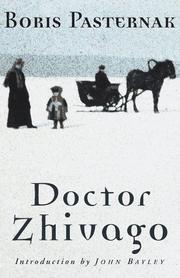
Doctor Zhivago
2,213-word summary 10 min read 592 pages in the book
- First published
- 1957
- Publisher
- Pantheon Books
- Pages
- 592
- ISBN
- 9780679774389
- Original title
- Доктор Живаго
Reading options
What's inside (12 sections)
I read Doctor Zhivago in January, which is the right month for it. The novel is full of snow, trains, frozen windows, and people trying to stay warm in rooms that have lost their heat. It is also full of poetry, although the poetry is not always on the page. Pasternak was a poet before he was a novelist, and the book reads like a long poem that happens to have a plot.
The novel was first published in 1957 in Italy, by Giangiacomo Feltrinelli in Milan. The manuscript had been smuggled out of the Soviet Union, where it was refused publication. The first English edition appeared from Pantheon Books in 1958. The edition I used is the Pantheon edition, which runs 592 pages and carries the ISBN 9780679774389. Pasternak was awarded the Nobel Prize in Literature in 1958, and the Soviet authorities forced him to decline it. He died in 1960. The novel was not published in the Soviet Union until 1988.
Why I read it
I read it because I wanted to understand the Russian Revolution from the inside, not from a history book. I had read about the Winter Palace, the Bolsheviks, and the civil war. I had not read much about what it felt like to live through those years as an ordinary person with a family, a profession, and a private life. Doctor Zhivago is not a political tract. It is a novel about a man who tries to remain human while history is tearing his world apart.
The novel is also a love story. Yuri Zhivago and Lara Antipova meet, separate, meet again, and lose each other. Their relationship is not a simple romance. It is entangled with marriage, war, revolution, and the choices people make when they have very few options. The love story is the book's emotional center, but it is not the whole book. Pasternak is just as interested in the way a society collapses, and in the small acts of kindness and cowardice that people perform while it collapses.
The world of the novel
The novel opens in 1902, at the funeral of Yuri Zhivago's mother. Yuri is eleven. His father, a wealthy industrialist, has already abandoned the family and will soon die by suicide. Yuri is taken in by his uncle, Nikolai Nikolaevich Vedenyapin, a philosopher and former priest. Later, he is raised by the Gromeko family, who treat him as a son. He grows up in a world of comfort, education, and liberal ideals. That world is already beginning to crack.
The first part of the novel is full of coincidences that feel like fate. Yuri sees Lara for the first time at a hotel, where her mother has tried to kill herself and Komarovsky, a lawyer and businessman, is manipulating the family. He sees her again at a Christmas party, where she shoots a prosecutor and is led away. He does not know her name. He does not need to. The image of Lara stays with him.
Lara is the daughter of a Belgian engineer and a Russian mother. After her father's death, her mother takes her and her brother to Moscow, where Komarovsky becomes the family's protector and Lara's abuser. He grooms her from adolescence. She tries to escape him by marrying Pavel Antipov, a young man who becomes a soldier and then a revolutionary commander. The marriage does not save her. Pasha is idealistic, brave, and unable to live with the knowledge of what Lara has suffered. He goes to war, is reported missing, and reinvents himself as Strelnikov, a ruthless revolutionary.
Yuri, meanwhile, studies medicine, marries Tonya Gromeko, and becomes a doctor. He is not a political man. He is a poet, a observer, and a believer in the value of individual life. The revolution arrives, and he greets it with hope, or at least with the hope that it will bring justice. The novel does not mock that hope. It shows how the hope was used and betrayed.
Yuri and Lara
Yuri and Lara meet properly during the First World War. Yuri is serving as a military doctor. Lara is a nurse. They are both married to other people, and they are both exhausted by the war. Their attraction is immediate, but it is not simple. They recognize something in each other: a belief in tenderness, a horror of cruelty, a desire to live a private life in a public catastrophe.
The novel's most famous scenes are the ones in which they are together. The abandoned apartment in Yuriatin. The winter at Varykino. The sound of wolves in the snow. The candle in the window. Pasternak writes these scenes with a poet's eye for detail. The romance is not steamy. It is quiet, sad, and deeply felt. It is the love of two people who know they are stealing time.
Lara is one of the great heroines of Russian literature, but she is also a symbol. She represents beauty, endurance, and the suffering of women in a society that treats them as property. Pasternak does not give her the same interiority he gives Yuri. She is seen mostly through his eyes. That is a limitation, and it is worth naming. The novel is better at imagining Yuri's mind than Lara's.
Tonya is the other woman in Yuri's life, and she is also underdeveloped. She is kind, loyal, and increasingly distant from her husband. Her letters from Paris are among the novel's most moving passages. She knows Yuri loves Lara. She also knows that Yuri is incapable of leaving her cleanly. The triangle is not a competition. It is a tragedy of people trying to do the right thing and failing.
The revolution
The revolution is not a background. It is a force that enters every room. It takes Yuri's house, his food, his patients, and his sense of purpose. It separates families. It turns neighbors into informers. It makes ordinary life impossible. Pasternak shows the revolution from the perspective of the intelligentsia, which is to say from the perspective of people who thought they would be its beneficiaries and discovered that they were its victims.
The novel is often read as anti-Soviet, and it is not hard to see why. Pasternak refuses to glorify the revolution. He shows its violence, its shortages, and its betrayal of the people it claimed to serve. But the book is not a simple defense of the old order either. The old order was unjust, decadent, and cruel. The revolution promised something better. The tragedy is that it delivered a different kind of cruelty.
Yuri's response to politics is to retreat into art and love. He writes poems. He tends to patients. He tries to preserve a private world. The novel does not present this retreat as heroic. It presents it as human. Yuri is not a revolutionary, and he is not a saint. He is a man who wants to live, and the state wants him to be a function. The conflict between the individual and the collective is the book's deepest theme.
Varykino and the partisans
The middle of the novel is the strongest. Yuri and Tonya travel to Varykino, the Gromeko estate in the Urals, hoping to find food and safety. The journey is long and difficult. The train is crowded, the countryside is in chaos, and the family is carrying everything they own. When they arrive, they find a house that has been abandoned and a village that is suspicious of strangers.
Yuri meets Lara again in Yuriatin. She is living there with her daughter, Katenka, and working as a teacher. Their affair begins, and for a while, they have a kind of happiness. It is fragile and guilty. Yuri knows he is betraying Tonya. Lara knows she is betraying her own idea of herself. The happiness is real, but it cannot last.
Then Yuri is captured by a group of Red partisans and forced to serve as their doctor. He spends months with them, treating wounded men, watching them fight, and trying to survive. The partisans are not villains. They are exhausted, frightened, and capable of great cruelty. The section is one of the novel's most powerful indictments of war. It shows how violence becomes ordinary, and how ordinary people become numb.
Yuri escapes and returns to Lara. They have a brief, intense period together at Varykino. Komarovsky arrives with an offer: he can take them east, away from the fighting. Yuri refuses. He wants to stay, to live honestly, to take his chances. Lara and Katenka leave with Komarovsky because Yuri's refusal would doom them. That decision is the novel's turning point. Yuri loses Lara, and he loses the future he imagined.
The ending
The last part of the novel is a long decline. Yuri returns to Moscow. Tonya and her family have emigrated to Paris. He lives with Marina, a servant, and has two children with her. He is a doctor, but he is increasingly detached from his work. He writes poems. He grows thin and tired. In 1929, he dies of a heart attack on a tram.
Lara arrives at his funeral. She is older, still beautiful, and still marked by grief. She disappears soon after, probably arrested. The novel does not tell us what happens to her. That ambiguity is deliberate. Pasternak refuses to give the reader a neat ending. The revolution swallowed millions of people, and their stories were not resolved.
The epilogue takes place during the Second World War. Yuri and Marina's daughter, Tanya, is a laundress. She is recognized by Evgraf, Yuri's half-brother, a mysterious figure who has appeared throughout the novel. Evgraf takes her in and gives her a place in the family. The novel ends with the poems of Yuri Zhivago, which are presented as his legacy.
The poems
The poems are not an appendix. They are the novel's final argument. Yuri's life has been messy, painful, and largely unsuccessful. His poetry is what survives. Pasternak writes the poems in a style that is simpler and more direct than the prose. They are about nature, love, death, and resurrection. They give the novel a spiritual dimension that the plot alone cannot provide.
The most famous poem is "Winter Night," with its image of a candle burning on a windowsill. The candle is a sign of life, of hope, of the human presence in the dark. It is also a memory of Lara. The poem turns a small domestic detail into a symbol of endurance. That is what Pasternak does best. He finds the eternal in the ordinary.
What works and what does not
The prose is beautiful. Pasternak writes with a poet's rhythm and a painter's eye. The snow, the trains, the forests, the rooms: all of it is vivid. The novel is long, but it is not dull. There is always another image, another character, another turn of fate.
The love story is powerful. Yuri and Lara are not a perfect couple. They are two people who find each other in the middle of a disaster and try to hold on. Their relationship is more convincing than most fictional romances because it is not presented as a solution. It is a temporary shelter.
The historical sweep is impressive. Pasternak shows how large events enter small lives. The revolution is not a lecture. It is a series of shortages, disappearances, and betrayals. The reader feels the cold, the hunger, and the fear.
What does not work
The coincidences are hard to accept. Characters meet in crowded cities, on trains, and at the front with improbable regularity. The plot depends on chance encounters that feel contrived. Some readers will find this poetic. Others will find it frustrating.
The women are idealized. Lara is beautiful, suffering, and almost saintly. Tonya is patient and good. Marina is loyal and simple. The novel is more interested in Yuri's inner life than in theirs. That is a real limitation.
The second half is rushed. The years of decline are summarized rather than dramatized. The epilogue introduces a new generation and then ends. The novel's structure is uneven. It is at its best in the middle, when Yuri and Lara are together and the revolution is closing in.
Who it is for
This is a book for readers who love Russian literature, historical fiction, and poetry. It is for people who want to understand the revolution from a human perspective. It is not a fast read. The names are confusing, the plot is episodic, and the politics are complicated. But the rewards are great.
It is also a book for readers who are interested in the relationship between art and politics. Pasternak wrote it under enormous pressure. The novel is his attempt to preserve a vision of individual freedom in a society that was trying to eliminate it. That context makes the book more powerful, but it is not necessary to enjoy it.
I finished Doctor Zhivago with a sense of loss. The book is about people who are caught by history and cannot escape. It is also about the things that survive: love, memory, and a few lines of poetry. The candle in the window is still burning. That is the image I will keep.
FAQ
Is Doctor Zhivago based on a true story?
No, but it draws on Pasternak's experience of the Russian Revolution and the loss of his own world.
Why was Doctor Zhivago banned in the Soviet Union?
The authorities rejected it for its critical view of the revolution, and it was not published there until 1988.
Who are Yuri Zhivago and Lara Antipova?
Yuri is a doctor and poet, and Lara is the woman he loves across decades of war, marriage, and separation.
Similar books
For Whom the Bell Tolls
An American dynamiter joins Spanish guerrillas for three days to blow a mountain bridge, finding love and doomed courage.
2,286-word summary · 10 min read
War and Peace
Pierre, Natasha, and Andrei search for meaning amid the Napoleonic wars.
2,536-word summary · 11 min read
A Farewell to Arms
Frederic loves Catherine in Italy until desertion leads to Switzerland and stillbirth.
2,502-word summary · 11 min read

Sophie's Choice
A young Southern writer in 1947 Brooklyn befriends a brilliant, unstable couple and slowly learns the story of the Polish Catholic woman at the center of their…
2,798-word summary · 12 min read

Ivanhoe
A disinherited Saxon knight, a great tournament, a besieged castle and a trial by combat. Scott's most famous novel, set in England in 1194.
2,834-word summary · 13 min read
The Last of the Mohicans
During the French and Indian War, Hawkeye and two Mohican warriors try to save two British sisters from a Huron chief whose revenge will end the Mohican line.
2,017-word summary · 9 min read
The Red Badge of Courage
Henry Fleming runs at Chancellorsville, then returns to stand.
2,486-word summary · 11 min read
Anne's House of Dreams
Newlyweds Anne and Gilbert start in a seaside house with kind neighbors.
2,465-word summary · 11 min read
The English Patient
In a ruined Italian villa in 1945, a burned man, a nurse, a thief, and a sapper trade pasts shaped by desert love and war.
2,006-word summary · 9 min read
The Aeneid
Trojan Aeneas flees burning Troy for Italy, losing Dido and friends before warring to found a line that becomes Rome.
2,080-word summary · 9 min read
The Scarlet Pimpernel
A foppish baronet rescues aristocrats from the guillotine while his French wife hunts the hero she scorns.
2,980-word summary · 13 min read
Next Year in Havana
A Cuban-American writer takes her grandmother's ashes to Havana and finds a hidden 1959 love that reshapes her family story.
2,962-word summary · 13 min read
The Girl You Left Behind
Two women a century apart fight for what they love, joined by a portrait painted in wartime France and claimed in modern London.
2,613-word summary · 12 min read
White Nights
A lonely dreamer spends four summer nights with Nastenka in Petersburg, listening, hoping, then losing her at dawn.
2,927-word summary · 13 min read
Shogun
An English pilot wrecked in 1600 Japan becomes a pawn in Lord Toranaga's patient bid for power, and slowly becomes Japanese himself.
2,251-word summary · 10 min read
The Things We Leave Unfinished
Georgia Stanton and Noah Harrison finish Scarlett's last novel while her WWII romance with pilot Jameson unfolds in letters. A dual timeline story of grief,…
2,565-word summary · 11 min read
Cold Mountain
Wounded deserter Inman walks home to Ada as the Civil War ends, while she learns to keep a mountain farm in North Carolina with tough Ruby.
2,314-word summary · 10 min read
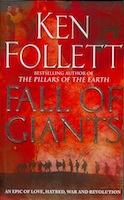
Fall of Giants
Five families from Wales to Russia live through World War I, the Russian Revolution, and the fight for women's votes.
2,255-word summary · 10 min read
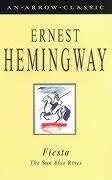
The Sun Also Rises
Jake Barnes drifts through Paris bars and Pamplona bullfights with Brett Ashley and a wounded generation.
3,187-word summary · 14 min read
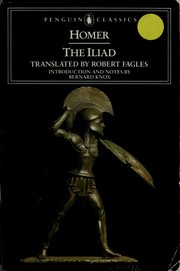
The Iliad
Achilles quits the fight over Briseis, Patroclus falls to Hector, and Troy burns toward its fate in Homer's war epic.
2,320-word summary · 10 min read
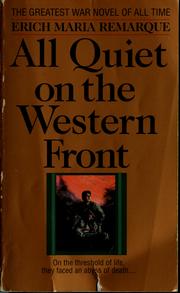
All Quiet on the Western Front
Paul Bäumer enlists at nineteen and faces the trenches of World War I in Remarque's 1929 classic, told from the German side of the wire.
2,543-word summary · 11 min read
Gone with the Wind
Scarlett O'Hara schemes through the Civil War and Reconstruction, from Tara to burning Atlanta, chasing Ashley while Rhett waits and watches.
2,049-word summary · 9 min read
The Stationery Shop
Two teenagers fall in love in a Tehran stationery shop in 1953, are separated by the coup and a family deception, and meet again sixty years later.
2,024-word summary · 9 min read
The Orphan's Tale
A Dutch teenager rescues a Jewish baby from a death train and joins a German circus, where a Jewish aerialist teaches her to fly.
2,943-word summary · 13 min read

The Long Winter
Dakota Territory, 1880: seven months of blizzards cut a town off from the railroad, and a family survives on twisted hay, ground wheat, and a dangerous wheat…
2,210-word summary · 10 min read

The Japanese Lover
A Polish refugee and the son of a Japanese gardener fall in love in San Francisco in 1939, then keep the affair secret for nearly seventy years.
2,286-word summary · 10 min read

Anatomy: A Love Story
In 1817 Edinburgh, a noblewoman who wants to be a surgeon disguises herself to study anatomy and falls for the grave robber who supplies her with bodies.
2,031-word summary · 9 min read

The Shadow Sister
Star D'Apliese steps out of her sister's shadow and follows a bookshop clue into the Edwardian life of Flora MacNichol, a woman who gave up love for duty.
2,260-word summary · 10 min read

Little Town on the Prairie
In the spring after the Long Winter, fifteen-year-old Laura sews shirts, studies for a teaching certificate, and helps send her blind sister Mary to college.
2,071-word summary · 9 min read
The Valley of Horses
Exiled from the Clan, Ayla survives alone in a hidden valley, tames a horse and a cave lion, and nurses a wounded stranger back to life.
2,311-word summary · 10 min read