
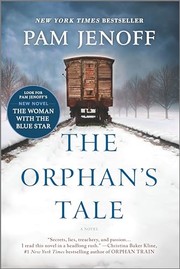
The Orphan's Tale
2,943-word summary 13 min read 363 pages in the book
- First published
- 2017
- Publisher
- MIRA
- Pages
- 363
- ISBN
- 9780778319818
Reading options
What's inside (11 sections)
The woman in the railcar
The old woman leaves her nursing home without telling anyone and makes her way to a museum in Paris. She is close to ninety. The exhibit is called "Two Hundred Years of Circus Magic," and she walks past the costumes until she finds an old railcar from Circus Neuhoff. She climbs inside and opens a hidden compartment she remembers from the years she lived in the car. It is empty. She had come for a letter, and the letter is not there.
That is the first scene of Pam Jenoff's 2017 novel, and it is told by a woman whose name we do not get. For most of the book, the voice sounds like Noa: the girl is the one with a secret in a railcar, the one who would have reason to come back. The reveal, saved for the last pages, is that the old woman is Astrid. The frame is a long game, and it works better than the frame itself does.
The boxcar in the snow
Bensheim, Germany, 1944. Noa is sixteen, Dutch, and alone. Her father threw her out when he learned she was pregnant by a German soldier, and the Reich's Lebensborn home took her in long enough to deliver her son. The baby had dark hair and did not look like the child the program wanted, so the nurses took him away. Noa never learned where. She now sweeps the floors of a small railway station and sleeps in a room above it. Military trains move through at night.
One freezing night, a boxcar sits on a siding. Noa hears crying. She forces the door open and finds dozens of infants packed inside, some already dead, some barely alive, none old enough to say their own names. Jenoff has said she put off writing this scene for as long as she could, and it is the most frightening passage in the book. Noa takes one boy. She notices he is circumcised. She carries him to a milk delivery van and hides him there, half hoping the driver will take him somewhere safe. Then she changes her mind, grabs him back, and runs into the woods.
She collapses in the snow. Peter, a clown traveling with Circus Neuhoff, finds her and the baby. The circus is in winter quarters, and its owner, Herr Neuhoff, is a gentile who has been hiding Jews among his performers for years. He agrees to take Noa in, but not out of pure charity. A girl and a baby appearing from nowhere will draw attention. If she stays, she has to look as if she belongs. She has six weeks to learn the flying trapeze.
Six weeks
The winter quarters are full of rope, sawdust, animals, and people who have learned to keep their heads down. Noa names the baby Theo and passes him off as her younger brother. Astrid is assigned to train her, and Astrid is not pleased. She is a celebrated aerialist with a career behind her, and she has no interest in teaching a terrified teenager to catch a trapeze in six weeks.
Astrid's history arrives in flashbacks, and it is the stronger half of the novel. She was born Ingrid Klemt, into a Jewish circus family in Darmstadt. In 1934 she married Erich, a German officer, and moved to Berlin. Then the Reich ordered German officers with Jewish wives to divorce them, and Erich did. He put her out of their home. She went back to Darmstadt and found her family gone. Her parents would die in a camp. Her brother Jules would eventually reach the United States. Neuhoff, the owner of a rival circus, took her in, gave her the name Astrid Soller, and had papers made that said she was not Jewish.
Peter is her lover, a Russian clown whose act mocks the Germans in a way that is brave and stupid in equal measure. Gerda, another aerialist, resents Astrid for taking the top spot. The circus is a small world, and Jenoff is good at its pettiness: the status of that top spot, the gossip around Peter, the way everyone knows everyone else's business.
The training chapters are where the book slows down. Noa has some gymnastics in her past, but she is afraid of the release, the moment when she has to let go of one trapeze and trust that another pair of hands will be there. Astrid is a hard teacher, and the repetition is the point. The novel wants us to feel the blisters and the fear. Still, six weeks of practice takes up a lot of pages, and after the first few sessions the outcome is never really in doubt.
The breakthrough comes when Noa finally makes the catch. Astrid catches her, then turns on her, accusing her of lying about Theo. To show her how fragile her position is, Astrid pushes her off the platform into the net. Noa confesses that Theo is not her brother, that she took him from a train. The confession does not soften Astrid. It makes the two women allies. Then the SS arrives to search the circus, and Noa sees Astrid disappear into a crawl space. After the soldiers leave, they trade the truth: Astrid is Ingrid, Theo is a rescued Jewish baby, and Noa is a girl who lost her own son.
The friendship that forms is the book's real love story, and Jenoff is smart enough to make it awkward and unequal rather than sweet. Astrid has the skills and the papers. Noa has the baby and the panic. They need each other in different ways, and neither is good at admitting it.
Thiers
The circus leaves winter quarters for a tour of occupied France, and the first stop is Thiers. Noa performs. The scene is well done: the lights, the height, the faces below, the knowledge that one wrong look could expose her. She is a natural, or natural enough, and the act begins to shift. As Astrid's face becomes too recognizable to risk in front of German audiences, Noa takes over more of it.
In Thiers, Noa meets Luc, the mayor's son. He is handsome, careless, and a painter, exactly the kind of boy a sheltered sixteen-year-old would fall for. His father is cooperating with the Germans, which makes Luc a poor choice for a girl hiding a Jewish baby. Astrid tells her to stay away. Noa does not.
The affair is conducted in stolen hours and through letters left in a storage compartment on the circus train, a space the performers call the belly box. It pays off later, when the same compartment becomes the place where the past is looked for. Luc paints Noa. He talks about leaving, about the Resistance, about a future the book has already told us will not happen.
At one performance, a man in the audience is arrested. Noa creates a distraction by deliberately falling from the trapeze into the net. In the confusion, the man gets his daughter out. It is the first time Noa uses the act for something other than survival, and it is a good scene because it is over in seconds.
Then the melodrama piles up. Theo comes down with a fever. While Noa nurses him, Astrid admits she is pregnant by Peter. Noa tells her the rest of the truth about her own baby and the German soldier. Astrid makes her promise to stop seeing Luc. Then Peter arranges a surprise wedding. In the middle of the celebration, the French police arrive and arrest Peter for treason, citing his anti-Nazi routines. A policeman hits Astrid in the stomach. Herr Neuhoff, rushing to her defense, collapses and dies of a heart attack. Astrid starts bleeding and believes she has lost the baby.
It is a lot to happen in one chapter, and the book does not give any of it room to breathe. The wedding, the arrest, the death, and the miscarriage scare arrive in a rush, and the effect is less like catastrophe than like a plot clearing its throat. I believed the grief afterward more than the events themselves.
What Erich sent
With Neuhoff dead, the circus passes to his son Emmet, who is cruel, incompetent, and resentful of everything his father built. He cancels the French tour, sends the company back to Alsace-Lorraine, and fires most of the longtime workers. Metz, a Jewish clockmaker whom Neuhoff had been hiding, hangs himself in the big top. That death is handled quietly, and it lands harder than the louder ones. The circus is no longer a sanctuary. It is a group of people waiting to be caught.
Luc follows the circus and finds Noa. He tells her his father was complicit in Peter's arrest and that he is going to join the Maquis. He asks her to come with him. Before she can answer, he gives her a letter forwarded from Berlin. The envelope is from Erich. Inside is a letter from Jules, Astrid's brother, saying their parents are dead and that he has secured a visa for Astrid to join him in America. There is also an exit permit and money, arranged by Erich. The man who divorced her has, at the last possible moment, tried to get her out.
Astrid does not forgive him. She does not refuse the papers either. She is practical enough to take what is useful and angry enough to hate needing it. Then she decides to give the visa and the permit to Noa, so Theo can be taken somewhere safe. Noa refuses. She says she is leaving with Luc. The argument that follows is bitter and honest, and it is the last real conversation the two women have.
The fire
The final performance is poisoned by that fight. Noa and Astrid perform with a coldness that is worse than anger. Then Noa takes Theo and goes to meet Luc. She waits. He does not come. She decides he has abandoned her, and she turns back toward the circus to accept Astrid's offer after all.
She finds the big top on fire. An Allied air raid has started, and the tent is going up. An elephant has knocked down the ladder to Astrid's platform, trapping her above the flames. Noa runs in with Theo, climbs the opposite ladder, and takes a trapeze. She swings out, catches Astrid, and throws her toward a section of net that has not burned. Astrid lands. Noa gets Theo and starts down, but the ladder gives way. She drops the baby into Astrid's arms. Then the main pole collapses on top of her.
Astrid pulls her out of the wreckage. Noa's legs are crushed. She is dying, and she knows it. She makes Astrid promise to take Theo and use the papers to get to America. She tells her Luc never came, and Astrid insists something must have happened. The two women forgive each other. Noa closes her eyes and pretends to be dead so Astrid will stop arguing and go. Astrid takes Theo and leaves. Noa dies seeing Peter, Neuhoff, and Luc, and then the three of them together in the railcar.
The empty compartment
The epilogue returns to the museum. Astrid has spent her life wondering why Luc did not meet Noa that night. She came to the railcar hoping to find a letter in the belly box, something that would explain it. The compartment is empty. Then she sees a painting of Noa, Luc's portrait, hanging in the exhibit. The plaque says it was found with the body of an unidentified man killed in a resistance stronghold bombing in May 1944. Astrid realizes the man was Luc. He died the same night Noa did. He had not abandoned her. In the years since, she has also learned that Peter died at Auschwitz and Erich was killed in a bombing raid.
Her children arrive. Theo is the baby Noa took from the train. Petra is the daughter Astrid thought she had lost when the policeman struck her; the pregnancy survived, and Petra was born. They have come to bring their mother home. Astrid tells them the part they did not know: Noa had a son of her own, taken from her by the Reich, and she never found out what happened to him. The novel ends with the family leaving the museum together.
What was real
The historical groundwork is real, and Jenoff is careful in her author's note to say the novel is not. She found two stories in the Yad Vashem archives. One was the account of the "Unknown Children," a boxcar of infants taken from their parents and sent toward the camps. The other was Circus Althoff, a German circus that sheltered Jews. Irene Danner, a Jewish aerialist from another circus family, hid with the Althoffs along with her mother, her sister, and her father, Hans Danner, a non-Jewish German soldier who was ordered to divorce his Jewish wife and refused. Irene fell in love with Peter Storm-Bento, a clown in the circus. Adolf Althoff, the owner, was named Righteous Among the Nations in 1995. He said circus people saw no difference between races or religions. Jenoff borrows the shape of those lives, then invents Noa, Astrid, and the fire.
MIRA published the novel in 2017, and it runs 363 pages. It was a bestseller, and the cover copy promised "The Nightingale meets Water for Elephants." That is marketing, not a fair description. It has the circus setting of Water for Elephants, but not the sustained darkness of The Nightingale, and it is not trying to. This is commercial historical fiction with a romance at its center, and it is at its best when it stays inside the circus.
What works and what does not
The weaknesses are real. Kirkus called the premise interesting and the execution imperfect, which is close to my reading. The dialogue often sounds modern. Danger is frequently described rather than dramatized: we are told the SS might come, we are told the papers might not hold, but the scenes where the threat arrives are fewer than the tension requires. Luc is a sketch more than a person, and the coincidences pile up. The circus finding Noa in the woods, Erich's envelope arriving when it does, the painting turning up in the exact museum she visits: these are conveniences.
The frame is the shakiest part. A woman close to ninety traveling alone, climbing into a railcar, and finding a hidden panel is a lovely image, but it is also a device, and the novel does not earn the ease with which she moves through the world. The reveal that she is Astrid is a good twist. The mechanics around it are thin.
What does work is the relationship. Noa and Astrid are not friends in the way the cover copy suggests. They are two women who need each other and resent it, and the book is honest about the imbalance. Their bond is built on shared danger rather than affection, and that makes the ending land. When Noa catches Astrid in the fire, the roles have reversed. The girl who was afraid to let go is the one doing the catching, and the woman who taught her is the one who has to trust.
The boxcar scene is the other thing the book gets right. Jenoff does not linger over the dead babies, but she does not look away either. The detail of the circumcision makes Noa's choice specific: this is a Jewish child, and she knows what that means.
If you want a strict Holocaust novel, this is not it. The camps are offstage. The violence is mostly implied. The book is more interested in forged papers, travel permits, and the daily arithmetic of who can pass for whom. Jenoff handles that bureaucracy of survival better than she handles the action. The scenes with the visa and the exit permit are more tense than the fire, because they are about a piece of paper that can save a life and a man who might or might not have sent it in time.
The ending is sad in the way the book has been promising, and it is not cheap. Noa dies so Astrid and Theo can live, and the novel does not pretend this is a fair trade. It is a sacrifice made by a sixteen-year-old who has already lost one child and cannot bear to lose another. The epilogue gives Astrid a long life, a family, and a chance to tell the story. It does not give Noa back.
What stays with me is the empty compartment. Astrid spends decades hoping for a letter that would explain the worst night of her life, and the compartment is empty. The explanation comes from a painting instead, and from a plaque, and from the chance that she is still alive to read it. The novel is full of documents that are forged, lost, forwarded, or never sent. The one that finally tells the truth is a label on a museum wall.
That is a better ending than the book entirely deserves, and it is why I would still hand it to someone who likes this kind of story. It is a fast, emotional read with a strong central pair and a setting that has not been used to death. It is not the masterpiece the blurbs promise. It is a good book with a few cheap shortcuts, and the shortcuts do not ruin the parts that work.
FAQ
Is The Orphan's Tale based on a true story?
It is a novel inspired by real history. Jenoff drew on the Unknown Children transported from a camp and on Circus Althoff, which sheltered Jews, but Noa, Astrid, and the fire are invented.
Is The Orphan's Tale part of a series?
No. It is a standalone novel published by MIRA in 2017. Jenoff has written other World War II novels, but they do not continue this story.
What happens to Noa at the end?
She dies after the circus tent collapses on her, having caught Astrid and handed Theo to safety. Astrid survives and raises Theo as her own.
Similar books
Code Name Verity
In 1943 France, captured agent Verity writes a confession for von Linden to buy time. Her pilot friend Maddie survives the crash and searches for her by…
2,690-word summary · 12 min read
Lilac Girls
Three women meet across World War II: a New York volunteer, a Polish courier turned prisoner, and a German camp doctor.
2,731-word summary · 12 min read
The Zookeeper's Wife: A War Story
The directors of the Warsaw Zoo hid roughly three hundred Jews in empty cages and outbuildings after the German invasion, while Jan worked for the resistance.
2,065-word summary · 9 min read

Sophie's Choice
A young Southern writer in 1947 Brooklyn befriends a brilliant, unstable couple and slowly learns the story of the Polish Catholic woman at the center of their…
2,798-word summary · 12 min read
Exodus
Leon Uris's sweeping 1958 novel follows Jewish refugees, Haganah fighters, and Holocaust survivors from Cyprus to the founding of Israel and the 1948 war.
2,529-word summary · 11 min read
Those Who Save Us
A Minnesota professor hunts her mother's hidden wartime past in Weimar, where survival came wrapped in an SS officer's protection. A dual timeline about…
2,345-word summary · 10 min read
The Paris Library
Odile lands her dream job at the American Library in Paris as war closes in, then hides that past in Montana until teen Lily draws it out.
2,813-word summary · 13 min read
The Island of Sea Women
On Jeju island, haenyeo divers Young-sook and Mi-ja share decades of friendship strained by war and massacre.
2,204-word summary · 10 min read
The English Patient
In a ruined Italian villa in 1945, a burned man, a nurse, a thief, and a sapper trade pasts shaped by desert love and war.
2,006-word summary · 9 min read
Schindler's List
Womanizing profiteer Schindler spends a fortune typing over a thousand Jews onto factory lists.
2,048-word summary · 9 min read
We Were the Lucky Ones
Based on her own family, Hunter follows the Kurc family of Radom as war scatters five siblings from Siberia to Brazil and back toward reunion.
2,805-word summary · 12 min read
Cilka's Journey
After surviving Auschwitz, Cilka Klein is sentenced to a Siberian labor camp, where she trains as a nurse and fights to stay human.
2,365-word summary · 11 min read
The Rose Code
Three Bletchley Park women reunite in 1947 to expose a wartime traitor in Quinn's codebreaking novel.
3,219-word summary · 14 min read
The Nightingale
Nightingale retold: Vianne and Isabelle in occupied France, hide children, run routes, trials.
1,950-word summary · 9 min read
All the Light We Cannot See
Doerr's All the Light We Cannot See retold: blind Marie-Laure, Werner the radio boy, and Saint-Malo.
1,962-word summary · 9 min read
A Thousand Splendid Suns
Splendid Suns retold: Mariam and Laila share Kabul house, war, Rasheed, escape and return.
1,957-word summary · 9 min read
The Lost Girls of Paris
In 1946, a war widow finds an abandoned suitcase in Grand Central holding photographs of twelve women who vanished in the war, and follows their story back to…
2,668-word summary · 12 min read

The Japanese Lover
A Polish refugee and the son of a Japanese gardener fall in love in San Francisco in 1939, then keep the affair secret for nearly seventy years.
2,286-word summary · 10 min read
The Power of One
A boy in apartheid South Africa decides to become welterweight champion of the world, and the novel follows every mentor, fight, and loss that gets him there.
2,145-word summary · 10 min read

The Only Woman in the Room
A novel about Hedy Lamarr's escape from an arms-dealer husband, her Hollywood career, and the frequency-hopping patent the Navy ignored.
2,067-word summary · 9 min read

The Happiest Man on Earth
Eddie Jaku's memoir follows a Leipzig childhood, Buchenwald, Auschwitz, a death march, and the slow rebuilding of a life in Australia.
2,597-word summary · 12 min read
A Long Walk to Water
Two eleven-year-olds in southern Sudan, twenty-three years apart: a Dinka boy fleeing war and a Nuer girl walking hours for water, until their stories meet at…
2,217-word summary · 10 min read
Stones from the River
Trudi Montag is born a dwarf in a small German river town in 1915 and grows up to keep the town's library and its secrets, from the First World War to the…
2,818-word summary · 13 min read
The Tuscan Child
After her father's death, Joanna follows a returned letter to Tuscany and uncovers his wartime love, a hidden painting and a village secret. A dual-timeline…
2,095-word summary · 9 min read
The Silence of the Girls
Briseis, queen of Lyrnessus, is captured by Achilles and narrates the Trojan War from inside the Greek camp, where women are prizes and survival is its own…
2,098-word summary · 9 min read
The Last of the Mohicans
During the French and Indian War, Hawkeye and two Mohican warriors try to save two British sisters from a Huron chief whose revenge will end the Mohican line.
2,017-word summary · 9 min read
Mother Night
Howard W. Campbell Jr., a Nazi propagandist and American spy, tells the story of his double life from an Israeli prison cell while waiting to be tried for war…
1,988-word summary · 9 min read
Doctor Zhivago
A doctor and poet lives through revolution, war, and love in Pasternak's novel of private life under the pressure of Russian history.
2,213-word summary · 10 min read
The Battle for Skandia
Will and Evanlyn are still hiding in the Skandian mountains when Halt and Horace arrive with word of a Temujai invasion that could roll on to Araluen next.
2,248-word summary · 10 min read
The War That Saved My Life
Ten-year-old Ada has never left her London flat, hidden away because of her clubfoot. Wartime evacuation sends her to Kent, where a reluctant guardian and a…
2,252-word summary · 10 min read