
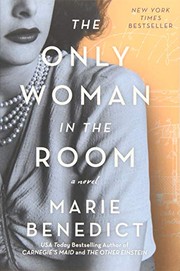
The Only Woman in the Room
2,067-word summary 9 min read 336 pages in the book
- First published
- 2019
- Publisher
- Sourcebooks Landmark
- Pages
- 336
- ISBN
- 9781492666868
Reading options
What's inside (11 sections)
I knew Hedy Lamarr's face before I knew anything about her mind. That is the trap the novel is built around. Lamarr was one of the most photographed women in Hollywood, and for most of the twentieth century she was treated as a beautiful surface. She was also an inventor who co-patented a frequency-hopping system that helped make modern wireless communication possible. Marie Benedict's novel takes that gap between the face and the mind and turns it into historical fiction.
The book was published in 2019 by Sourcebooks Landmark. It follows Lamarr from her teenage years in Vienna through her marriage to an arms dealer, her escape to London, her career at MGM, and her collaboration with the composer George Antheil on the invention. It is a novel, not a biography, and Benedict says as much in her author's note. She fills in thoughts, conversations, and scenes that the historical record does not contain. The question is whether the invented parts serve the true story or flatten it.
Vienna
Hedy Kiesler was born in 1914 in Vienna. Her father was a bank director, her mother a pianist. She was bright, restless, and interested in science before she was interested in acting. The novel opens with her on stage as Empress Elisabeth in a play, and the performance brings her to the attention of Friedrich Mandl, an arms manufacturer known as the Merchant of Death.
Mandl is older, rich, and powerful. He sends her roses. He courts her parents. He is also connected to the Austrian fascists and, eventually, to the Nazis. Hedy's family is Jewish, and the rise of antisemitism in Austria makes Mandl's protection seem valuable. Her parents encourage the match. Hedy is drawn to his power and, in the novel's version, to the way he treats her as an adult rather than a child.
Her mother is a quiet but important presence in the early chapters. She is a pianist who gave up her own career, and she sees something of herself in Hedy's ambition. She also sees the danger in Mandl and persuades herself that the marriage is a form of security. The novel does not judge her for that. It shows how a family can make a choice that looks like prudence and turns out to be a trap.
She marries him and gives up acting, which is his condition. The marriage is a cage. Mandl controls her clothes, her schedule, and her body. He is jealous, possessive, and violent. He expects her to be beautiful and silent. The novel is good at showing how a smart woman can be trapped by a situation that looks, from the outside, like a fairy tale.
The Dinner Parties
The most compelling section of the book is the one in which Hedy sits in on her husband's meetings. Mandl does not intend for her to be a participant. She is there to be decorative. But she listens. She has a technical mind, and she remembers what she hears: weapons systems, radio signals, torpedo guidance, the problems the German military cannot solve.
The novel uses these scenes to establish her intelligence without making her a superhero. She does not understand everything. She asks questions. She notices patterns. She stores information away. The reader knows that this will matter later, and the book is patient about getting there.
The historical record supports the broad outline. Lamarr did attend parties with Mandl and did overhear conversations about weapons and military technology. The novel imagines the details, but the idea is grounded. That is what historical fiction can do well: it can make a plausible inner life for a person whose outer life is documented.
The dinner-party scenes also give the book its best image of power. Mandl and his guests talk about the world as if it were a map they are redrawing. Hedy is present, but she is not part of the conversation. She is a beautiful object in a room full of men deciding what to do with other people's lives. The novel returns to that image again and again, and it is the reason the title works. Hedy is always in the room, and she is never in the room.
Escape
Hedy escapes from Mandl in 1937. The novel describes two attempts. The first fails. The second involves a disguise, a train, and a great deal of nerve. She gets to London, where she meets Louis B. Mayer, the head of MGM. Mayer is impressed by her. She negotiates a contract, and she goes to Hollywood.
The escape is one of the places where the novel is most novelistic. The historical record is thin on exactly how she got out. Benedict chooses a version that is dramatic and plausible, and she does not pretend it is documented. The result is a strong sequence, but it is also a reminder that the book is inventing as much as it is reporting.
In Hollywood, Hedy becomes Hedy Lamarr. She is marketed as the most beautiful woman in the world. She makes films. She is good at it, though the studio system does not give her much to work with. The novel shows her frustration with the roles she is offered: decorative women, exotic women, women whose main job is to be looked at. She wants to be taken seriously, and the industry is not interested.
The Guilt
The novel's emotional engine is guilt. Hedy got out of Austria. Her mother got out later. Many other people did not. She knows what Mandl was doing, and she knows that she sat in rooms where the fate of Europe was discussed. She feels complicit, even though she was a prisoner in those rooms. That guilt drives her to try to do something useful.
This is the best psychological insight in the book. Hedy's invention is not presented as a lucky accident. It is presented as an attempt to repay a debt. She wants to shorten the war. She wants to use what she learned in Mandl's house against the people he was helping. The novel makes that motive believable.
The title does a lot of work here. Hedy is always the only woman in the room, whether the room is a Vienna dinner party, a Hollywood boardroom, or a Navy office. She learns to use that position. She listens because no one thinks she is listening. She remembers because no one thinks she is paying attention. The novel is at its best when it shows that survival strategy turning into intellectual advantage, and at its weakest when it simply states the theme.
The Duet
The invention begins with a party. Hedy meets George Antheil, a composer known for experimental music and for his use of player pianos. They sit down at a piano and play a duet. The experience of adapting to each other's tempo gives her an idea: a radio signal that changes frequency in a pattern that both the transmitter and the receiver know, so an enemy cannot jam it.
Antheil is an appealing character. He is smart, eccentric, and willing to take her seriously. Their collaboration is one of the few relationships in the novel that is not defined by power. He does not want her body or her fame. He wants to solve the problem. The book is at its warmest when the two of them are working.
The technical explanation is kept simple. Hedy and George propose a system in which a paper tape, like the roll in a player piano, controls the frequency changes. The transmitter and receiver hop together. The idea is elegant, and the novel does not bog down in engineering. It gives the reader enough to understand why it matters and then moves on.
The Patent
Hedy and George file for a patent in June 1941. It is granted in August 1942 as U.S. Patent No. 2,292,387, under the name Hedwig Kiesler Markey (she was married to the screenwriter Gene Markey at the time) and George Antheil. The patent describes a "Secret Communication System." The Navy classifies it and then does not use it.
The rejection is the novel's turning point. Hedy and George go to Washington. They present the invention to a council. The officers are polite and dismissive. One of them suggests she could help the war effort by selling war bonds. The implication is clear: they do not believe a film actress can have invented anything useful.
The novel treats this as a betrayal. Hedy has spent years trying to be seen as more than a beautiful face, and the men in the room refuse to see her. She gives up on inventing. She goes back to acting and spends the rest of the war raising money for the war effort. The book's final chapters are about her resignation, not her triumph.
What the Novel Gets Right
The book is right about the shape of Lamarr's life. She was a brilliant woman who was underestimated, and her invention was real. The frequency-hopping idea was ahead of its time. It was not used in torpedoes during the war, but the underlying principle became important in later communications technology. Lamarr received the Electronic Frontier Foundation's Pioneer Award in 1997, late in her life, and she died in 2000.
The novel is also right about the atmosphere of Vienna and Hollywood. The antisemitism, the casual sexism, the way powerful men treated women as property: these are not invented. Benedict does a good job of showing how the personal and the political are tangled together.
What the Novel Invents
The novel's biggest weakness is its voice. Hedy narrates in a restrained first person that often feels more like a summary than a consciousness. She tells the reader what she is feeling, but the prose rarely lets the reader feel it. The style is clean and readable, but it is not distinctive. A woman this complicated deserves a more interesting inner life.
The book also compresses and rearranges events. The timeline is smoothed. Some characters are composites. The escape is dramatized. The patent process is simplified. None of this is dishonest, as long as the reader knows it is fiction. But the novel sometimes reads as if it is reporting facts, and that can be misleading. The author's note helps, but it comes at the end.
The ending is also rushed. The rejection by the Navy is a strong scene, but the decades that follow are covered in a few pages. The novel is more interested in the invention than in the long aftermath, and that leaves the last third feeling thin.
Why It Matters
The reason to read this book is not the prose. It is the story. Hedy Lamarr's life is a case study in what happens to a woman who is valued for one thing and wants to be valued for another. The novel makes that case clearly. It also makes the point that invention is not a solo act. Hedy needed George, and George needed Hedy. Their collaboration is the heart of the book.
It is worth remembering how narrow the Hollywood version of her was. She was famous for Algiers and for Samson and Delilah, and for a beauty that the studio sold as a product. The press wrote about her marriages and her face. The invention was not part of the story until much later. The novel is trying to correct that, and it succeeds at the level of emphasis even when the prose does not sing.
The title is also a quiet indictment. Hedy is the only woman in the room in Vienna, in Hollywood, and in Washington. She is never allowed to be ordinary. She is always representing something: Austrian glamour, Hollywood beauty, female ambition, Jewish survival. The novel shows how exhausting that is, and why she retreats into the shell of the movie star at the end. The shell is the only thing the world will accept from her.
I would recommend it to readers who liked Hidden Figures or The Radium Girls, and who want a fictionalized account of a real woman's intellectual life. It is not a great novel. It is a useful one. It takes a woman who was treated as a decoration and shows her thinking, working, and fighting to be seen. That is worth the read.
FAQ
Is The Only Woman in the Room a true story?
It is a novel based on Hedy Lamarr's life, with invented dialogue and scenes; the author's note separates fact from fiction.
Did Hedy Lamarr really invent frequency hopping?
She and George Antheil patented a frequency-hopping system in 1942; the Navy did not use it during the war, but the principle mattered later.
When was the novel published?
Sourcebooks Landmark published it in 2019.
Similar books
The Lost Girls of Paris
In 1946, a war widow finds an abandoned suitcase in Grand Central holding photographs of twelve women who vanished in the war, and follows their story back to…
2,668-word summary · 12 min read

Cilka's Journey
After surviving Auschwitz, Cilka Klein is sentenced to a Siberian labor camp, where she trains as a nurse and fights to stay human.
2,365-word summary · 11 min read

Violeta
A woman born in 1920 writes her life story to her grandson, from one pandemic to another, through wealth, ruin, passion, and dictatorship in South America.
2,555-word summary · 11 min read

The Orphan's Tale
A Dutch teenager rescues a Jewish baby from a death train and joins a German circus, where a Jewish aerialist teaches her to fly.
2,943-word summary · 13 min read

The Japanese Lover
A Polish refugee and the son of a Japanese gardener fall in love in San Francisco in 1939, then keep the affair secret for nearly seventy years.
2,286-word summary · 10 min read
Mrs. Everything
Two Jewish sisters in Detroit grow up, apart and together, across seven decades of American life, from the 1950s to the 2016 election.
2,362-word summary · 10 min read
The Agony and the Ecstasy
Irving Stone turns Michelangelo's seventy years of carving, painting, and arguing with popes into a novel about the cost of making something that outlives you.
2,260-word summary · 10 min read
Stones from the River
Trudi Montag is born a dwarf in a small German river town in 1915 and grows up to keep the town's library and its secrets, from the First World War to the…
2,818-word summary · 13 min read
Euphoria
Three anthropologists in 1930s New Guinea turn fieldwork into a love triangle, and a real history breathes behind them.
2,048-word summary · 9 min read

The Tuscan Child
After her father's death, Joanna follows a returned letter to Tuscany and uncovers his wartime love, a hidden painting and a village secret. A dual-timeline…
2,095-word summary · 9 min read
Mother Night
Howard W. Campbell Jr., a Nazi propagandist and American spy, tells the story of his double life from an Israeli prison cell while waiting to be tried for war…
1,988-word summary · 9 min read
Loving Frank
Mamah Borthwick Cheney leaves her family for Frank Lloyd Wright, and their affair becomes a public scandal that ends in tragedy at Taliesin.
2,034-word summary · 9 min read
The House of Eve
Two Black women in 1950s Philadelphia and Washington, one a pregnant teenager and one a doctor's wife who cannot carry a child, are pulled together by a…
2,270-word summary · 10 min read

Those Who Save Us
A Minnesota professor hunts her mother's hidden wartime past in Weimar, where survival came wrapped in an SS officer's protection. A dual timeline about…
2,345-word summary · 10 min read

The War That Saved My Life
Ten-year-old Ada has never left her London flat, hidden away because of her clubfoot. Wartime evacuation sends her to Kent, where a reluctant guardian and a…
2,252-word summary · 10 min read
The Redbreast
Harry Hole chases an ageing sniper through modern Oslo while two Norwegian volunteers on the Eastern Front carry a fifty-year-old betrayal toward a royal…
2,453-word summary · 11 min read
The Keeper of Happy Endings
Barbara Davis's 2021 standalone braids a Paris dressmaker's wartime losses with a grieving Boston artist who unlocks her family's secrets through an old row…
2,437-word summary · 11 min read
Code Name Verity
In 1943 France, captured agent Verity writes a confession for von Linden to buy time. Her pilot friend Maddie survives the crash and searches for her by…
2,690-word summary · 12 min read

The Paris Library
Odile lands her dream job at the American Library in Paris as war closes in, then hides that past in Montana until teen Lily draws it out.
2,813-word summary · 13 min read
The English Patient
In a ruined Italian villa in 1945, a burned man, a nurse, a thief, and a sapper trade pasts shaped by desert love and war.
2,006-word summary · 9 min read
We Were the Lucky Ones
Based on her own family, Hunter follows the Kurc family of Radom as war scatters five siblings from Siberia to Brazil and back toward reunion.
2,805-word summary · 12 min read

The Secret Keeper
A girl watches her mother kill a stranger in 1961; fifty years later she digs into her mother wartime London past.
2,262-word summary · 10 min read
The Huntress
A Soviet night pilot, a Boston photographer doubting her stepmother Annelise, and a Nazi hunter chase Die Jagerin from wartime Europe to 1950 Boston in a long…
2,666-word summary · 12 min read

The Things We Cannot Say
A Florida mother travels to Poland to answer her silent grandmother's plea, uncovering a wartime love story and a decades-old identity swap.
2,365-word summary · 11 min read

The Book of Lost Names
A young forger in occupied France helps Jewish children flee with new names while keeping a secret book of the truth.
2,097-word summary · 9 min read
Salt to the Sea
Four refugee teens cross frozen Prussia toward a doomed ship that history barely remembers.
2,094-word summary · 9 min read

Winter Garden
Two sisters keep a deathbed promise: hear their cold mother's Russian fairy tale to the end, and find besieged Leningrad inside it.
2,983-word summary · 13 min read
The Rose Code
Three Bletchley Park women reunite in 1947 to expose a wartime traitor in Quinn's codebreaking novel.
3,219-word summary · 14 min read

Lilac Girls
Three women meet across World War II: a New York volunteer, a Polish courier turned prisoner, and a German camp doctor.
2,731-word summary · 12 min read
Hotel on the Corner of Bitter and Sweet
A Chinese American boy befriends a Japanese American girl in wartime Seattle, then loses her to the internment camps.
2,973-word summary · 13 min read