
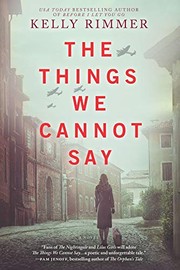
The Things We Cannot Say
2,365-word summary 11 min read 432 pages in the book
- First published
- 2019
- Publisher
- Graydon House
- Pages
- 432
- ISBN
- 9781525823565
Reading options
What's inside (6 sections)
I started The Things We Cannot Say expecting a standard dual-timeline war novel, the kind where the present-day chapters feel like filler between the historical parts. This one surprised me. Published in 2019 by Graydon House at 432 pages, it is a standalone novel, and both halves pulled me along. The modern story follows Alice, a Florida mother stretched thin by caregiving, and the past follows Alina, a Polish farm girl whose engagement collapses when the Nazis arrive. The two threads meet through a grandmother who can no longer speak and a name nobody in the family recognizes.
The opening puts you straight inside Alice's life. She is at a grocery store in Winter Park with her young son Eddie, who is autistic and mostly nonverbal, when the yogurt brand changes its packaging and Eddie falls apart on the floor. Anyone who has parented a child with sensory needs will recognize the scene. Alice tries the visual schedules and the calm script and all of it, and none of it works that day while strangers stare. What rescued the scene for me is that Rimmer does not play it for pity. Alice loves Eddie fiercely. She is also exhausted, and embarrassed, and worried about her grandmother in the hospital, all at once. People contain all of that, and Alice does.
Her daughter Callie is bright and old enough to sense the strain. Her husband Wade works long hours in science and stays at a distance from Eddie's care, which Alice resents more with every passing month. Her mother Julita is a district court judge, formidable and practical, not given to sentiment. And her grandmother, Babcia, the warm center of the family, has had a stroke that stole her speech. The family gathers in the geriatric ward not knowing how much of Babcia is still reachable.
Then comes the turn. Eddie uses an AAC app on an iPad to communicate by selecting images and words. Babcia, who cannot speak or write after the stroke, starts using Eddie's device. Slowly, with terrible effort, she types out a demand. Find Tomasz. Go to Poland. Alice thinks it is confusion at first. Julita is sure of it. But Babcia repeats the message, and adds details, a box of keepsakes, a photo of a thin young man from 1941 who is not Alice's grandfather, a tiny hand-stitched leather baby shoe, a letter in Polish nobody ever translated. The list of names on Babcia's device includes people nobody has heard of. One entry reads like an address in Trzebinia, Poland. Babcia wants Alice, specifically, to go.
Alina and Tomasz before everything broke
The past thread opens in Trzebinia in the late thirties. Alina Dziak is fifteen and promised, in the way of small villages, to Tomasz Slaski, her best friend since childhood and the son of a respected doctor. She has known since she was nine that she would marry him. He leaves for medical school in Warsaw. She waits on the family farm, dreaming about a wedding while Europe darkens around her. Her parents run a working farm. There are brothers sent to labor, neighbors who whisper, a younger circle of kids including Tomasz's little sister Emilia, whose drawings grow darker as the year turns.
Rimmer writes this village life with patience. The farm routines, the church calendar, the hillside paths, the Sunday lunches where adults stop talking when children enter the room. Alina is sheltered without being stupid. She hears that German soldiers are near the border and believes the neighbors who say it will pass. Then September 1939 arrives, and it does not pass. The invasion reaches Trzebinia fast. Soldiers seize food and houses. Public executions remove the town's leading men, including Tomasz's father. The mayor dies. The world Alina assumed becomes a place of curfews and identity cards and selections.
Tomasz vanishes into the chaos of Warsaw's fall. Alina measures time between his letters, then between rumors. She helps place little Emilia with relatives for safety. Her brothers are taken for forced labor in her place, a sacrifice the family barely discusses and never gets over. Both boys die in the war, one shot after protesting cruelty, one of sickness in camp. Rimmer does not linger on these deaths with spectacle. She states them the way families state unbearable facts, briefly, and moves on, which somehow makes them land harder.
What I appreciated is that Alina's fear builds by accumulation rather than by one big scene. A decree that anyone hiding Jews will be killed with their whole family. A neighbor hinting that other neighbors hide people for money. Her father shutting down talk at the table. A friend mentioning an aunt who might know where Tomasz is. Each piece tightens the air. Alina decides to break curfew one night and walk to a nearby village for news, and the woods feel full of watchers. Then a voice says her name in the dark, and it is Tomasz, gaunt and filthy, alive.
The boy who comes back is not the boy who left
Tomasz has been hiding in the woods for weeks, stealing food, sleeping rough. He warns Alina away from certain families and will not explain why both Germans and Poles might want him dead. He promises to come to her window at night. It sounds romantic, and in a different book it would be, but here every meeting risks all of them. Her father nearly catches them once. To buy time together, Alina announces she will pray the rosary on the hill each morning, and her stepmother figure presses bread into her hands for the walk, a quiet sign that the adults understand more than they say.
Bit by bit Tomasz tells her what happened in Warsaw. After the city fell he was captured and given a choice no one should face. Serve in German uniform or watch his family die. He served. He was assigned to help force Jewish families into the ghetto, using his calm voice to soothe frightened children with lies while they were marched in. The memory that broke him was seeing a man he admired, Saul Weiss, a surgeon who had guided him, inside the ghetto with his wife Eva. Saul recognized him and smiled with kindness anyway. Tomasz deserted soon after, escaping through the sewers with Saul and Eva, and resistance contacts moved them toward Trzebinia. Saul and Eva hid with their newborn daughter. Tomasz fed them by stealing, and kept feeding others when he could.
This is the section where the novel asks the most of the reader. Tomasz did a terrible thing under threat, then risked his life to undo it. Rimmer does not present him as a hero or a villain. He is a young man with blood on his conscience trying to pay it back person by person. Alina listens, recoils, and stays. She decides his work is now hers. I found those scenes convincing because Alina does not forgive him in a speech. She just starts carrying bread on her morning walks and stops asking questions that would slow them down.
The farm hides more than one secret. Alina's parents have stockpiled food in a hidden cellar, trading on the black market at mortal risk. Tomasz sleeps down there when he must. Nearby, Saul and Eva and the baby hide inside a neighbor's false wall. The network holds for a while. Then it breaks. Soldiers take Alina's parents away to Auschwitz. A raid finds the neighbor's hiding place. Eva and the baby are killed. Saul survives, shattered, holding what is left.
Tomasz understands instantly what his presence now costs. As long as he is hunted near the farm, Alina and Saul will be found. So he makes the decision that shapes the rest of the novel. He will turn himself in and draw the hunt away. He hands Saul his own passport and papers. Saul will become Tomasz Slaski on paper. Alina, pregnant with Tomasz's child, will travel with Saul under a false name, posing as his wife, all the way out through the Soviet zone toward a refugee camp and eventually, by way of British evacuation, to America. To make the papers hold, Alina takes a new identity as well. The girl Alice knew as Babcia Hanna was born Alina Dziak.
There is a detail about film canisters hidden in a plaster cast, evidence of atrocities meant for the Allies, and a forged identity card and a bribed guard and a crate journey across a river. I will not lay out every step, because the pleasure of these chapters is watching each narrow escape stack on the last. What matters is the exchange at the center. Tomasz gives Saul his name so Saul can live. Saul accepts the name so Alina and the unborn child can live. Tomasz walks toward capture so the other two can walk away.
He is executed in 1942. The family buries him on the hill behind Alina's childhood farm. Decades later he is honored as Righteous Among the Nations for the Jewish lives he helped save. Alice learns all of this in pieces, long after, from archives and from Emilia, the little sister grown into an old woman who never forgot.
Alice goes to Poland
Back in Florida, Alice decides to go. It is not a simple decision. Eddie needs constant care with rigid routines. Wade cannot or will not cover everything alone. Julita thinks the whole trip is sentimentality. Alice goes anyway, flying to Krakow with a phone full of photos of documents and a short list of names. A local guide named Zofia helps her work through records offices and graveyards and parish lists. The research scenes move quicker than I expected. A missing birth record here. A familiar address there. A grave on a hill that matches Babcia's stories stone for stone.
The emotional center of this half is not the archives, though. It is Alice on the phone and on video calls with home, watching Wade step up with Eddie in her absence, and watching her mother Julita reconsider a lifetime of stories. Julita grew up believing her father was Tomasz Slaski, a gentle pediatric surgeon in Florida who loved her, went to church without taking communion, visited a synagogue quietly in retirement with his wife, and kept a baby shoe nobody was allowed to ask about. The truth, which Alice has to carry home, is that the man Julita knew as father was Saul Weiss, living under Tomasz's name since the war, raising another man's child as his own, keeping faith with the dead by being a good doctor and a steady husband for fifty years.
Rimmer handles the reveal through Emilia, now elderly, in a video call with Babcia that I found genuinely moving. Two old women, one in Florida and one in Poland, looking at each other across seventy years. No big speech. Recognition, grief, a few confirmed facts. Babcia dies peacefully not long after Alice returns. Eddie, at the exact hour, types out that Babcia is finished. Whether you read that as coincidence or connection probably says more about you than the book, but I admit it caught my throat.
Ten months later the family flies together to Trzebinia. They bury Babcia's and Saul's ashes in Tomasz's grave on the hill where two teenagers once planned a wedding. Wade and Eddie have found a new closeness after Alice's absence forced change. Julita stands at the grave of the young man who saved her family by disappearing from it. Alice thinks about names, Alina and Hanna, Tomasz and Saul, and about how long a secret can live in a house before someone finally opens the box.
What holds up and what strains
Criticism, fairly given. The modern chapters occasionally lean on familiar beats. Wade's distance stretches a little long before it shifts, and Julita's thaw follows a predictable line from dismissal to acceptance. Readers who come only for the war story may skim Alice's early domestic scenes, though I think skipping them misses the point. The novel is arguing that caregiving is its own kind of endurance, and Alice's daily persistence with Eddie mirrors Alina's wartime persistence more closely than it first appears.
On the historical side, some coincidences stack high. Messages arrive at useful moments. Guides find records quickly. A plaster cast hides exactly what it needs to hide. If you demand strict realism in every escape, you will raise an eyebrow more than once. I forgave most of it because the central moral situation is drawn with care. Forced service in the ghetto, desertion, the false wall, the identity swap, these are presented with weight and consequence, not as adventure set pieces. The deaths hurt. The choices cost.
Who should read it. Fans of novels about the war in Poland, family secrets, and dual timelines will feel at home. It sits near books about hidden children and false papers and postwar emigration, but the autism representation in the present gives it a different texture from most of its shelf neighbors. Eddie is written with attention and respect, never as a device, and his communication device becoming Babcia's voice is the kind of plot turn that earns its emotion.
One practical note. The prose states the edition facts plainly, and they match the record. First publication in 2019, Graydon House, 432 pages in the original trade paperback. The story moves between Winter Park and Trzebinia, between English and untranslated Polish phrases that are always clear from context. Chapters alternate voices, Alice and Alina, with dates heading each section so you always know where you stand.
I finished it thinking about silence. Eddie cannot speak most days. Babcia loses speech to a stroke. Saul lives decades without saying his own name. Alina keeps her first love quiet for a lifetime. And yet all of them communicate, through a device, through objects in a box, through a shoe and a photo and a letter. The title says these are things we cannot say. The book suggests we find other ways to say them anyway, and that listening is half of love.
FAQ
Is The Things We Cannot Say based on a true story?
It is fiction inspired by the author's own family history in Poland, not a retelling of one real person's life.
Who are the main characters?
Alice Michaels in present-day Florida, and Alina Dziak with Tomasz Slaski and Saul Weiss in wartime Poland.
Is it part of a series?
No. It is a standalone novel published by Graydon House in 2019 at 432 pages.
Similar books

The Japanese Lover
A Polish refugee and the son of a Japanese gardener fall in love in San Francisco in 1939, then keep the affair secret for nearly seventy years.
2,286-word summary · 10 min read
We Were the Lucky Ones
Based on her own family, Hunter follows the Kurc family of Radom as war scatters five siblings from Siberia to Brazil and back toward reunion.
2,805-word summary · 12 min read
The Long Winter
Dakota Territory, 1880: seven months of blizzards cut a town off from the railroad, and a family survives on twisted hay, ground wheat, and a dangerous wheat…
2,210-word summary · 10 min read

The Shadow Sister
Star D'Apliese steps out of her sister's shadow and follows a bookshop clue into the Edwardian life of Flora MacNichol, a woman who gave up love for duty.
2,260-word summary · 10 min read
The Valley of Horses
Exiled from the Clan, Ayla survives alone in a hidden valley, tames a horse and a cave lion, and nurses a wounded stranger back to life.
2,311-word summary · 10 min read

What the Wind Knows
Annie scatters her grandfather's ashes on Lough Gill and is pulled into 1921 Ireland, where she becomes the missing Anne Gallagher and falls for Dr. Thomas…
2,056-word summary · 9 min read
The Storm Sister
Ally D'Aplièse loses her father and her lover within weeks, then follows a brass frog and a Norwegian biography into Anna Landvik's music and the world of…
2,376-word summary · 11 min read
The War That Saved My Life
Ten-year-old Ada has never left her London flat, hidden away because of her clubfoot. Wartime evacuation sends her to Kent, where a reluctant guardian and a…
2,252-word summary · 10 min read

The Keeper of Happy Endings
Barbara Davis's 2021 standalone braids a Paris dressmaker's wartime losses with a grieving Boston artist who unlocks her family's secrets through an old row…
2,437-word summary · 11 min read
Anne's House of Dreams
Newlyweds Anne and Gilbert start in a seaside house with kind neighbors.
2,465-word summary · 11 min read
The Rules of Magic
Franny, Jet, and Vincent Owens test strict family rules and a love curse in 1960s Manhattan and Massachusetts in Alice Hoffman's warm prequel about love, loss,…
2,686-word summary · 12 min read

The House at Riverton
In 1999, ninety eight year old maid Grace Bradley tapes the truth about a 1924 shooting at Riverton Manor, poet Robbie Hunter, two sisters and a lie held for…
2,433-word summary · 11 min read
The English Patient
In a ruined Italian villa in 1945, a burned man, a nurse, a thief, and a sapper trade pasts shaped by desert love and war.
2,006-word summary · 9 min read

The Seven Sisters
Maia follows Pa Salt clue from Geneva to Rio and Christ the Redeemer.
2,210-word summary · 10 min read

The Girl You Left Behind
Two women a century apart fight for what they love, joined by a portrait painted in wartime France and claimed in modern London.
2,613-word summary · 12 min read

The Henna Artist
In 1950s Jaipur, a henna artist to rich women rebuilds her life until the sister she never knew arrives.
2,104-word summary · 9 min read
Cilka's Journey
After surviving Auschwitz, Cilka Klein is sentenced to a Siberian labor camp, where she trains as a nurse and fights to stay human.
2,365-word summary · 11 min read
When He Was Wicked
Widowed Francesca Bridgerton falls for her late husband cousin Michael, who loved her silently for years.
2,055-word summary · 9 min read

The Fiery Cross
Jamie musters militia for Tryon while Brianna and Roger wed on the Ridge, ending at Alamance with a hanging that steals Rogers voice.
2,719-word summary · 12 min read
Salt to the Sea
Four refugee teens cross frozen Prussia toward a doomed ship that history barely remembers.
2,094-word summary · 9 min read
Cold Mountain
Wounded deserter Inman walks home to Ada as the Civil War ends, while she learns to keep a mountain farm in North Carolina with tough Ruby.
2,314-word summary · 10 min read
Between Shades of Gray
In 1941, fifteen-year-old Lina is deported from Lithuania to Siberia and uses her drawings to survive and send word to her father.
2,263-word summary · 10 min read
Drums of Autumn
Brianna crosses stones to save parents, finding love, assault fallout, and a home to build.
2,003-word summary · 9 min read
Winter Garden
Two sisters keep a deathbed promise: hear their cold mother's Russian fairy tale to the end, and find besieged Leningrad inside it.
2,983-word summary · 13 min read

Lilac Girls
Three women meet across World War II: a New York volunteer, a Polish courier turned prisoner, and a German camp doctor.
2,731-word summary · 12 min read
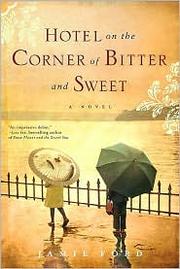
Hotel on the Corner of Bitter and Sweet
A Chinese American boy befriends a Japanese American girl in wartime Seattle, then loses her to the internment camps.
2,973-word summary · 13 min read
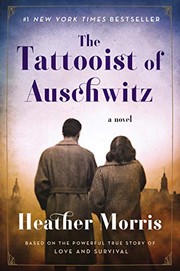
The Tattooist of Auschwitz
Heather Morris retells the years of Lale Sokolov as tattooist at Auschwitz Birkenau, his love for Gita Furman, and the food trades and quiet risks that kept…
2,442-word summary · 11 min read

What Happened to Goodbye
Mclean has reinvented herself in four towns since her parents divorced. In Lakeview she uses her real name, and for the first time staying put becomes a choice.
2,796-word summary · 12 min read

The Stationery Shop
Two teenagers fall in love in a Tehran stationery shop in 1953, are separated by the coup and a family deception, and meet again sixty years later.
2,024-word summary · 9 min read
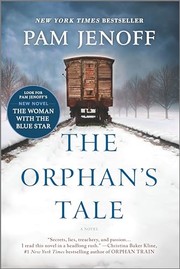
The Orphan's Tale
A Dutch teenager rescues a Jewish baby from a death train and joins a German circus, where a Jewish aerialist teaches her to fly.
2,943-word summary · 13 min read