
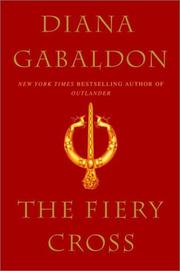
The Fiery Cross
2,719-word summary 12 min read 992 pages in the book
- First published
- 2001
- Publisher
- Delacorte Press
- Pages
- 992
- ISBN
- 9780385315272
- Series
- Outlander (#5)
Reading options
What's inside (8 sections)
I picked up The Fiery Cross because Drums of Autumn had left everyone on Fraser's Ridge in a fragile kind of peace. Claire and Jamie had a house with a hearth. Brianna had crossed the stones. Roger had followed. A baby was wailing. I wanted the wedding and the calm after. What I got was slower and stranger than that, and in places more upsetting. The book came out in 2001 from Delacorte Press, 992 pages in the first US hardcover tied to ISBN 9780385315272. It is book five in the Outlander series. The story runs from late 1770 into 1772 on and around Fraser's Ridge in North Carolina, with trips to Mount Helicon for a Gathering and to River Run for another wedding, and then to Alamance Creek for a fight no one on the Ridge really wants.
If you have not read the earlier books, this is a hard place to start. Claire Randall Fraser was a twentieth century nurse who stepped through stones at Craigh na Dun and stayed with Jamie Fraser. Brianna is their daughter, raised in Boston, who followed them back with Roger MacKenzie. By now Jemmy, their son, is a baby. Fergus and Marsali live close. Jocasta Cameron holds River Run. Stephen Bonnet, who attacked Brianna, is still alive on the coast. That is the family net this book tests.
The pace tells you early what kind of book it will be. Gabaldon spends a hundred pages on a single week. She describes food in pots, linen on lines, tools in sheds, herbs drying in Claire's surgery, and talk that circles without hurrying. People who want Alamance by page fifty will feel impatient. I did at first. Then I settled into Ridge time, where a christening and a wedding matter as much as a governor's order, and the slowness started to feel like the point. Life here is work that never quite ends.
The Gathering at Mount Helicon
The opening Gathering takes up a large block. Highlanders come to Mount Helicon in October 1770. They camp in tents and wagons. They trade horses and news. Claire treats blisters and coughs and bad teeth. Jamie acts as host and judge at once. Men bring him disputes about boundaries. Children run between fires.
Brianna and Roger plan two rites at once. Their son Jeremiah needs baptizing. They also need a proper wedding to satisfy both law and kin after a handfasting that felt private and rushed. Roger nicks himself shaving on the morning of the ceremony, a small cut that bleeds more than it should and that Claire fusses over. It reads as plain foreshadowing once you know what happens to his throat later, though at the time it just looks like nerves with a razor.
The rites get tangled in church politics. The Catholic priest who was supposed to help is arrested before he can act, so Claire and Jamie and Marsali slip out to get the children baptized in secret. For the wedding itself a Protestant minister is found, and the vows happen in a tent with family pressed close and rain noise on canvas and Jemmy squalling through part of it. It is funny in spots. Roger forgets words. Brianna laughs when she should look solemn. Jamie cries and pretends he has smoke in his eyes. I believed this scene more than the grand ceremonies in earlier books because it allows interruption. A wedding with a baby present never runs clean.
In the middle of the feasting Jamie receives a letter from Governor William Tryon. There has been a riot in Hillsborough against court fees and taxes. Tryon wants Jamie to raise a militia from his tenants and neighbors to support the Crown if the Regulators move again. Jamie holds the paper long after reading it. He is a former Jacobite who swore an oath to the Crown to keep his land. He knows from Claire and Brianna that a larger war is coming in a few years and that he will end up on the American side. For now he must smile and muster men for a king he expects to oppose. That pressure never lifts for the rest of the book.
The fiery cross of the title comes from old Highland custom. When a chief needed his men for war he sent a cross charred in fire from farm to farm. Jamie understands the call in his bones. He also hates what it asks of a settlement built for peace. The Ridge was meant for cabins and crops, not for lists of men fit to march.
River Run and the Frenchman's gold
After the Gathering the family returns to the Ridge for a short rest. Then they travel to River Run for the wedding of Jocasta to Duncan Innes, who has served her for years. The house is full. Philip Wylie, a vain trader, hovers around Brianna. Major Donald MacDonald tries to draw Jamie into talk of loyalty and land grants.
A death breaks the celebration. Betty, an enslaved woman in the house, drinks drugged wine meant for someone else and dies. Claire smells bitter almond or chemical wrongness and grows certain it was poison, not a fit. Later suspicion settles on Lieutenant Stephen Wolff, a rejected suitor of Jocasta's with a temper, who seems to have wanted Duncan dead and then had to silence Betty after she drank from the wrong cup. The inquiry plays out in whispers in halls and in a careful review of cups and bottles and who carried what to which room. It never becomes a courtroom scene. It stays as house talk with fear under it, which felt true to how such a house would handle shame.
With the murder comes talk of gold. Jocasta has kept a secret for decades about French gold sent to support the Jacobite cause. Burglars break in asking where it lies. Jocasta finally tells Jamie and Claire and Duncan what she knows and what she chose to hide to protect kin. The gold itself matters less than what it shows about oaths kept too long.
Jocasta and Duncan do marry, though grief sits beside the vows. Brianna paints. Claire notes who eats and who avoids food, a doctor's habit she cannot switch off. Jamie smooths tempers between guests who favor the Regulators and guests who call them rabble.
I found this middle section baggy in places. The Wylie teasing goes on past amusement. The house intrigue needs close attention to names that blur if you read late at night. Yet the murder and the gold do work that pays off later. They remind you that the Ridge is not the only place where old loyalties rot into danger, and that Jamie cannot protect everyone by being fair at a table.
Regulators and the road to Alamance
Back on the Ridge, the Regulator trouble sharpens. These were backcountry farmers in North Carolina who protested corrupt fees and courts owned by local officials. Their leader in this book is Herman Husband, a Quaker who preaches reform and resists violence even as angrier men talk of shooting sheriffs. Jamie knows many complaints are fair. He also holds land from Tryon and has given his word to answer a muster.
Gabaldon shows the muster in close detail. Who owns a sound horse. How to feed forty men on the march. Jamie calls out his settlers and kin. He drills them with help from men who served in earlier wars. Roger marches too. He wants to prove he belongs on the Ridge and to stand beside Jamie, with whom his bond is still new after past fights.
Murtagh sits in this part of the story as absence rather than action. In the novels Murtagh Fitzgibbons, Jamie's godfather, died at Culloden years before, though the television version kept him alive to lead Regulators at Alamance. The book does not bring him back. Jamie thinks of him when he looks at stubborn men who will not bend to governors, and when he remembers Ardsmuir prison and the men from those years who now farm near him. That memory explains why Jamie tries to warn Regulator friends even while wearing the governor's commission. He sees Murtagh's cast in Husband and in other backcountry Scots who would rather lose than kneel. If you came from the show expecting Murtagh with a musket at Alamance, the book will surprise you. Husband holds that ground here, and Jamie's grief for the dead shapes his mercy toward the living.
Tryon calls and then stands men down when the Regulators scatter, then calls again in spring 1771. Jamie marches with Claire as surgeon. Brianna stays on the Ridge with the baby and with Marsali and Fergus.
The Battle of Alamance on May 16, 1771 was short and uneven. Tryon's troops with cannon faced a larger but divided crowd, many of whom expected talks. There is shouting across a field. Cannon fire panics men who have never faced artillery. Jamie nearly kills Tryon in rage at a cruel order, then checks himself because murder would doom his family.
Before the guns, Jamie sends Roger across the lines to speak with Husband and urge the crowd to disperse. Husband, shaken, does leave and begs others to go with him. It is a brave errand for a man with no soldier training, and it fails in the way many honest errands fail in crowds. Some listen. Most stay. Roger walks back through noise and smoke knowing he did what Jamie asked and that it changed little.
The hanging and the throat
What happens after Alamance is the hardest part to read. Roger, separated from Jamie's men, meets Morag MacKenzie, a young mother he once knew aboard the ship Gloriana when Stephen Bonnet threatened her child. They embrace as kin. Her husband Buck, full name William Buccleigh MacKenzie and Roger's own ancestor, sees it and reads it wrong. Buck binds Roger and gags him so he cannot give his name.
Buck then steals Roger's militia credentials and passes Roger off to Tryon's men as a captured Regulator leader due for hanging. The soldiers, eager to punish rebels and working fast, do not check closely. Roger is hanged with a small group and left for dead. His height and a stretching rope and his own torn hands working free buy him seconds that save his life. Morag rides to warn Jamie's camp. When Jamie and Claire and Brianna reach the hanging tree, the bodies seem still. Then they see Roger is alive, barely, with a crushed throat and ruined hands.
Claire does a field tracheotomy with a knife and a tube, only mud and lantern light around her. She has made ether on the Ridge and has tried to prepare penicillin from mold, and here her nerve matters more than any drug. She gets air into him. Brianna holds his hands. Jamie stands guard with guilt written plain.
Roger lives but loses what made him known. His singing voice, clear enough that friends called him Thrush, breaks into a rasp. He cannot speak above a whisper for weeks. He turns inward and refuses for a time to try at all. Brianna swings between fury at Buck and fear that Roger will never forgive the Ridge.
Recovery comes in small steps. Jamie suggests Roger write an account of Alamance when he cannot bear idle chores. Later, on the trail home, Jamie is bitten by a snake and nearly dies, and he must depend on Roger to carry messages if he fails. That reversal does more to mend them than any apology could.
I found these chapters painful and strong. The hanging is described with care but without turning suffering into show. Gabaldon keeps the camera on hands and breath rather than on spectacle. The aftermath avoids quick healing. Roger's shame about his voice and his fear that Brianna will stop wanting him are allowed to sit for many pages. If the book has a moral center, it is here, in the choice to keep nursing someone who cannot thank you in his old voice.
Medicine, signs and time travel kept low
For a series built on time travel, this book keeps the stones quiet. No one crosses here except in memory. Ian Murray returns from living with the Mohawk, carrying the journal of Otter Tooth, who knew about stones and about a skull with a silver filling that Claire once found. The journal hints that gems might shelter a traveler. Brianna puzzles over how stones might work. Jemmy shows no sign of anything strange.
Claire's medicine fills the space that time travel leaves. She distills ether and uses it for surgery, including a tumor removal that awes Ridge folk. She grows mold for penicillin and tests it with care. She keeps notes in a casebook. These scenes can read slow if you want duels, but they show why the settlement needs her.
Stephen Bonnet stays on the edge like a shark fin. Jamie hunts him. Brianna dreams of him and wakes sick. Roger wants to kill him and knows Brianna needs him to stay home more than she needs revenge. The hunt leads to false starts and to news that slips away. Some readers hate that Bonnet is not finished here. I understood the choice even as it frustrated me. A predator who cannot be caught by wishing keeps the Ridge from feeling safe, which is honest. Safety would be a lie in 1771 with war talk in taverns.
The Beardsley twins, Josiah and Keziah, add another thread. Taken in as indentured lads, they bring trouble about a missing girl and a baby left with neighbors. Jamie and Claire sort through claims that shift by teller. I lost track in one long council scene and had to flip back.
Family ritual holds the middle. Shared meals of stew and cornbread. Brianna sketching faces. Marsali scolding Fergus. Ian learning how to be among settlers again. These pages make the Ridge feel lived in rather than mapped.
Why it drags and why I stayed
No honest account can call this book tight. At 992 pages it carries pages a sterner edit would have cut. Militia lists repeat. Councils about taxes circle the same ground. The River Run murder takes long setup and then resolves in talk that feels rushed. The Bonnet hunt stalls.
The length also strains belief in small ways. Claire finds time to be surgeon and apothecary and dentist and mother and wife while cooking for crowds. Jamie settles disputes and drills troops and writes letters and hunts and farms without sleep. Brianna nurses and engineers and draws and keeps house through grief. Everyone is more capable than any tired parent I know, though I admit I envy them that energy on good days.
And yet I stayed. The wedding earned its laughter. Alamance earned its dread. Roger's hanging and the slow repair after earned my attention in a way battle scenes rarely do. The scene where Jamie asks Roger to write rather than speak stayed with me for days. So did Brianna sitting beside a man who cannot sing and choosing him again without music.
If you read for plot alone, borrow a summary and skip to the hanging and the battle. If you read to live on the Ridge a while, give this book room. Read it in the evening without hurry. Let the councils blur and keep the faces sharp. Jamie trying to honor an oath he hates. Claire cutting to let a man breathe. Brianna learning that engineering cannot fix a throat. Roger learning that a voice is not the same as a self. Those four carry 992 pages even when the road around them wanders.
I closed the book missing the Ridge kitchen more than the battlefield. Smoke and herbs and wet wool. A baby asleep near the fire. Men outside arguing about powder while women inside decide what will actually happen. That is Gabaldon's gift when she trusts it. She builds a house of people and lets war knock at the door without letting war become the whole house. The door will open wider in later books. For now the knock is enough, and the family answering it together is enough to make me follow.
FAQ
When was The Fiery Cross published?
It was first published in 2001 by Delacorte Press, 992 pages in the first US hardcover, and is book five in the Outlander series.
Does Roger die at Alamance?
No. He is seized by his ancestor Buck MacKenzie after Alamance, hanged as a supposed Regulator, and saved with a crushed throat that costs him his singing voice.
Does Murtagh lead the Regulators in the book?
No. In the novels Murtagh died at Culloden. Herman Husband leads the Regulators here. The show kept Murtagh alive to Alamance, which differs from the book.
Similar books
More from Outlander first, then related titles.

Outlander
Nurse Claire Randall slips through Craigh na Dun from 1945 to 1743 Scotland, torn between Frank and Jamie Fraser as clan politics, war and witch trials close…
2,190-word summary · 10 min read
Dragonfly in Amber
Claire 1968 recalls Jacobite Paris with Jamie to stop Culloden.
2,530-word summary · 11 min read
Voyager
Claire returns through the stones in 1968 after learning Jamie survived Culloden.
2,901-word summary · 13 min read
Drums of Autumn
Brianna crosses stones to save parents, finding love, assault fallout, and a home to build.
2,003-word summary · 9 min read
A Breath of Snow and Ashes
Jamie and Claire Fraser face the coming Revolution on Fraser's Ridge, torn between Crown oaths and rebel neighbors as old enemies return.
2,362-word summary · 10 min read
An Echo in the Bone
Jamie and Claire endure Revolution war while Brianna reads their letters at home.
1,945-word summary · 9 min read
Written in My Own Heart's Blood
1778 war splits Jamies and Claires across rebellion and time as Brianna hunts a kidnapped son.
2,008-word summary · 9 min read
What the Wind Knows
Annie scatters her grandfather's ashes on Lough Gill and is pulled into 1921 Ireland, where she becomes the missing Anne Gallagher and falls for Dr. Thomas…
2,056-word summary · 9 min read

The Japanese Lover
A Polish refugee and the son of a Japanese gardener fall in love in San Francisco in 1939, then keep the affair secret for nearly seventy years.
2,286-word summary · 10 min read

The Shadow Sister
Star D'Apliese steps out of her sister's shadow and follows a bookshop clue into the Edwardian life of Flora MacNichol, a woman who gave up love for duty.
2,260-word summary · 10 min read
The Valley of Horses
Exiled from the Clan, Ayla survives alone in a hidden valley, tames a horse and a cave lion, and nurses a wounded stranger back to life.
2,311-word summary · 10 min read

Ivanhoe
A disinherited Saxon knight, a great tournament, a besieged castle and a trial by combat. Scott's most famous novel, set in England in 1194.
2,834-word summary · 13 min read
The Storm Sister
Ally D'Aplièse loses her father and her lover within weeks, then follows a brass frog and a Norwegian biography into Anna Landvik's music and the world of…
2,376-word summary · 11 min read
News of the World
Captain Kidd carries captive Johanna home across 1870 Texas.
2,571-word summary · 11 min read
Anne's House of Dreams
Newlyweds Anne and Gilbert start in a seaside house with kind neighbors.
2,465-word summary · 11 min read
The Signature of All Things
Botanist Alma Whittaker grows up in Philadelphia trade wealth, studies mosses, marries distant Ambrose Pike, and sails to Tahiti seeking how species change.
2,535-word summary · 11 min read
The Rules of Magic
Franny, Jet, and Vincent Owens test strict family rules and a love curse in 1960s Manhattan and Massachusetts in Alice Hoffman's warm prequel about love, loss,…
2,686-word summary · 12 min read
The House at Riverton
In 1999, ninety eight year old maid Grace Bradley tapes the truth about a 1924 shooting at Riverton Manor, poet Robbie Hunter, two sisters and a lie held for…
2,433-word summary · 11 min read
One Thousand White Women: The Journals of May Dodd
May Dodd journals joining Cheyenne as a bride in an 1875 government swap, learning prairie life and loss.
2,036-word summary · 9 min read
Daughter of Fortune
Eliza Sommers flees Chile for California gold rush San Francisco, disguised and searching for her lover, finding freedom with Tao Chi'en.
2,009-word summary · 9 min read
The Seven Sisters
Maia follows Pa Salt clue from Geneva to Rio and Christ the Redeemer.
2,210-word summary · 10 min read
The Scarlet Pimpernel
A foppish baronet rescues aristocrats from the guillotine while his French wife hunts the hero she scorns.
2,980-word summary · 13 min read
The Gentleman's Guide to Vice and Virtue
Bisexual heir Monty flees across Europe with his crush Percy and sister Felicity after stealing a dangerous box.
2,724-word summary · 12 min read
Once and Again
Novak women can redo one moment; Lauren must decide whether to use hers.
2,330-word summary · 10 min read
The Girl You Left Behind
Two women a century apart fight for what they love, joined by a portrait painted in wartime France and claimed in modern London.
2,613-word summary · 12 min read
The Things We Cannot Say
A Florida mother travels to Poland to answer her silent grandmother's plea, uncovering a wartime love story and a decades-old identity swap.
2,365-word summary · 11 min read
The Henna Artist
In 1950s Jaipur, a henna artist to rich women rebuilds her life until the sister she never knew arrives.
2,104-word summary · 9 min read
When He Was Wicked
Widowed Francesca Bridgerton falls for her late husband cousin Michael, who loved her silently for years.
2,055-word summary · 9 min read

Before the Coffee Gets Cold
In a Tokyo cafe where guests can revisit the past until their coffee cools, four visitors seek words left unsaid with lovers and kin.
2,233-word summary · 10 min read

What Happened to Goodbye
Mclean has reinvented herself in four towns since her parents divorced. In Lakeview she uses her real name, and for the first time staying put becomes a choice.
2,796-word summary · 12 min read