

The Signature of All Things
2,535-word summary 11 min read
- First published
- 2013
- Publisher
- Viking
- ISBN
- 9780670025855
Reading options
What's inside (8 sections)
I picked up The Signature of All Things because I wanted a long, old fashioned novel about science and I was tired of books that treat research as a montage. A botanist friend said this one actually stays with the work, the drying, the labeling, the waiting. She was right. Elizabeth Gilbert published the novel with Viking in October 2013, and it follows one woman from birth to old age across the nineteenth century, through botany, trade, marriage, travel, and grief. I read it slowly over a week, a chunk each evening, and the middle tested my patience in the way big nineteenth century novels often do. The ending paid me back.
The woman is Alma Whittaker, born in Philadelphia in 1800 to a father who seems invented by fortune and a mother who seems invented by discipline. Henry Whittaker is a poor English boy turned rich through nerve and plants. He sails as a gardener's boy, learns to steal cuttings and keep them alive, works for Joseph Banks and other patrons, then builds his own trade in quinine and other medicinal plants. He buys an estate outside Philadelphia, fills its glasshouses with living stock, and speaks in blunt maxims. Beatrix, his Dutch wife, is tall, plain spoken, excellent at languages and management, and determined that her daughters will be educated without softness. Together they make a house where money is counted and Latin names are memorized at dinner.
The quinine king and the girl who collected plants
Alma grows up inside that estate with her adopted sister Prudence. Prudence is beautiful, sweet tempered, and liked by everyone. Alma is large, clever, quick with languages and sums, and aware from an early age that she is not the pretty one. Gilbert does not soften this. Servants comment. Visitors compare. Beatrix corrects Alma's posture and pronunciation but offers little comfort. Henry loves Alma fiercely in his rough way and tells her she has a good mind, which in his world is higher praise than beauty.
The house runs on trade and study. Ships bring bark, seeds, and roots. Clerks weigh and price. Gardeners repot. Alma learns to read catalogues before novels. She keeps her own small herbarium, pressing leaves between paper, writing dates and places in a careful hand. A neighbor boy teases her. A tutor praises her memory. Prudence draws flowers while Alma dissects them. The difference matters. Prudence loves pretty surfaces. Alma wants to know how the parts fit and why they persist.
Two early losses shape her. A young Irish boy who works on the grounds becomes a friend and then dies, showing Alma that bodies fail without reason. Later, a close childhood companion in the house, Retta Snow, bright and theatrical, slides into confusion and illness that the family can neither cure nor name. Alma watches Retta talk to people who are not there and feels both fear and pity. These scenes slow the early chapters, but they plant questions Alma will carry for six hundred odd pages of life, though I will not cite a page total here since editions vary: why do minds break, why do plants endure, and what can study actually console.
By her twenties Alma manages much of the estate's botanical correspondence. She writes to collectors, trades duplicates, corrects mislabels. Men twice her age learn to respect her eye. She is not allowed into certain rooms of power, literally and socially, because she is a woman and unmarried, but Henry backs her with money and Beatrix backs her with training. Philadelphia society finds her odd and formidable. She attends dinners, says too much about stamens, and goes home to her microscope.
Mosses and the desire for order
In her thirties Alma turns to mosses. Bryology is unfashionable, which suits her. Flowers get painters. Trees get poets. Mosses get Alma, on her knees in woods with a lens, collecting cushions of green from rocks and logs. She builds a cabinet of specimens, each packet annotated with place, date, substrate, and notes on form. She draws what she sees through the microscope: stalks, capsules, teeth around the mouth of the capsule that open and close with damp.
What hooks her is not only beauty but a puzzle about time and variation. Mosses reproduce in ways that seem modest and strange, with alternating generations, with sperm that must swim through water to reach an egg. Alma watches them over months and years, noting how colonies on one stone differ from colonies a yard away. She starts to ask whether those differences are accidents of soil and shade or something passed down and shaped by pressure. She reads Humboldt and Linnaeus and later Lyell, arguing in letters with men who have more freedom to travel.
Gilbert gives these study chapters real texture. Drying paper changed daily. Mold ruining a month's work. Ink freezing in an unheated glasshouse. A lens fogging from breath. Alma's hands smell of damp and paste. Her back aches. She loves it. For a reader who has done any lab or field work, the portrayal rings true. Progress is mostly maintenance plus attention, with rare minutes of excitement when a pattern clicks.
Prudence, meanwhile, marries well and becomes a model of Christian duty, founding a school and speaking about abolition and charity. Alma admires her and feels judged by her in equal parts. Their mother Beatrix ages into sternness. Henry ages into bulk and stories, repeating his rise from hunger to quinine wealth. The estate prospers, then faces the usual strains as markets shift and children of partners quarrel. Through it all Alma keeps her moss table. It is the one place where she does not have to be a daughter, a sister, or a difficult woman. She can be a worker.
Ambrose Pike and a marriage that never fits
At forty eight, an age when novels of the period usually retire women to aunts, Alma falls in love. Ambrose Pike arrives to draw orchids for the estate's publications. He is beautiful, gentle, bewildered by commerce, devoted to a utopian vision of communal innocence. He draws flowers as if they were people, with faces and gestures. He speaks of Tahiti and of Eden and of living without shame. Alma, who has spent decades being told she is too much, hears a man praise her mind and her body in the same breath and decides to act.
Their courtship is tender and strange. He brings her drawings. She shows him mosses. They walk. He tells her he has never felt desire as other men describe it. She misunderstands, or chooses to misunderstand, thinking modesty or inexperience explains his distance. They marry with Henry's money smoothing the path and Beatrix's doubt hanging over the table.
The marriage fails in bed and survives elsewhere for a time. Ambrose is kind, honest in his way, and unable to want Alma physically. He loves her as a soul, as a friend, as a fellow admirer of beauty, but not as a lover. Alma, who has waited decades for touch, is devastated and ashamed. She tries patience, then pleading, then anger. He weeps. He prays. He suggests they live as brother and sister. She refuses at first, then accepts in practice while grief hardens.
Gilbert handles this with care rather than farce. Ambrose is not cruel. He is built differently, drawn toward spiritual friendship and toward Tahiti as a place where he imagines bodies without guilt. He spends money Alma gives him, talks of founding a pure community, drifts from project to project. Alma keeps the house solvent, answers his letters, and learns to live beside a man who adores her image and cannot meet her need. Friends whisper. Prudence pities. Beatrix dies and Henry declines, leaving Alma with an estate, a husband in orbit, and a microscope.
The break comes when Ambrose leaves for Tahiti as a missionary of his own vague gospel and Alma discovers letters and drawings that make his distance clearer. He seeks a world without commerce and without carnal pressure. She stays in Philadelphia with her mosses, her ledgers, and her unspent love. They do not hate each other. That is what makes it ache. Two decent people misread one signal at the start and then lacked any honest language to correct it.
Tahiti and the question of how species change
After Henry dies and Ambrose settles abroad, Alma does what few women of her station could do. She sails to Tahiti herself, years later, to see him, to settle affairs, and to study. The voyage is long and sickening. She shares cramped quarters, eats bad food, reads and rereads Wallace and early Darwin in proof and letter form as they circulate among naturalists. By now the question of species change is no longer her private hobby. It is the argument of the age.
In Tahiti Alma finds Ambrose altered, thinner, living simply, still drawing, still kind, still distant. They meet without theater. He is ill in spirit though not yet in body. She nurses no revenge. She asks practical questions about money and drawings and health. They talk about God. They do not remake the marriage. He dies there, and she buries him with help from locals and missionaries who never quite understood him.
What matters more for the novel is what Alma sees on the island and on the way. Coral reefs, vanilla vines, introduced weeds crowding native plants, Tahitian gardeners who know names and uses she never learned from books. A Dutch trader shows her how vanilla must be hand pollinated outside its home range. A missionary's wife shows her which ferns survive burning. Alma fills notebooks. She begins to think in terms of struggle and luck rather than fixed types.
Back in correspondence with naturalists, she works toward her own account of change. She studies mosses again with new eyes, watching colonies compete on a single wall. She reads Alfred Russel Wallace on variation and Charles Darwin on selection as their books appear. She sees that her years of notes support a similar view: small differences, preserved when useful, erased when not, over spans no single life can watch complete. Gilbert lets Alma arrive near the truth without stealing history. Alma is not Darwin. She is a careful worker whose private theory confirms the published one and who feels both pride and a sharp, human envy that the world will cite the men who traveled while she kept the cabinet.
The Tahiti chapters are the most alive in the book for me. Heat after Philadelphia cold. Color after green on green. Talk after solitude. Alma swims, eats fruit, learns a few words of Tahitian, makes mistakes that embarrass her, and keeps working. Age has not made her soft. It has made her more direct. She asks what things cost and who does the work, questions Henry taught her, and she asks what things are and how they breed, questions her mosses taught her.
Old age and the book of mosses
Alma returns to live long. Prudence dies. Friends die. The estate shrinks and then stabilizes under new management. Alma moves to smaller rooms, keeps her herbarium, answers letters from younger botanists, some respectful, some condescending. She adopts a routine: morning walk, morning lens work, afternoon writing, evening reading. She outlives almost everyone who knew her young.
In these final decades she writes her great work, a study of mosses that is also a quiet argument about how life changes. She pays for its printing herself, as Henry would have. She corrects proofs with shaking hands. She sends copies to societies that shelve it politely and to friends who actually read it. One young researcher writes back with real engagement, and Alma treasures the letter out of proportion, because to be understood late is still to be understood.
She also reckons with family secrets that reframe earlier years. I will not spoil every turn here beyond saying Prudence's goodness looks more complicated on closer look, Henry's fortune has a harder edge than his stories allowed, and Alma's own choice to fund Ambrose's Tahiti years reads differently once money and motive are laid bare. None of this arrives as a twist for shock. It arrives as what old age often brings, papers found, remarks remembered, a clearer view of parents as people rather than forces.
Alma dies old, tired, clear eyed, still curious about a patch of moss near her door. Gilbert closes not with a thesis but with an image of attention sustained across a lifetime. A woman who was told she was too large, too plain, too learned, too late, kept looking through a lens until looking became a form of love. That final note felt877 earned because the book made me wait for it through ledgers, lenses, and loss.
What shines and what sags
The shine is Alma herself. She is one of the most fully built women in recent historical fiction, allowed to be intelligent without being charming about it, sexual without being punished for it in narrative terms, wrong without being dismissed. Henry and Beatrix are equally strong, vivid without caricature. Henry's maxims could have become shtick; instead they reveal a man who turned survival rules into philosophy. Beatrix's coldness could have been villainy; instead it reads as a Dutch manager's love, limited and real.
Gilbert's research shows without showing off most of the time. Quinine bark, glasshouse heating, packet storage, microscope work, missionary logistics, vanilla pollination: each is explained through task rather than lecture, and the Tahiti material in particular feels lived. The novel's view of science as patient accumulation rather than sudden genius is refreshing. Alma does not have a eureka bath. She has decades.
The sag is pace. The Philadelphia middle, between Alma's youth and Ambrose's arrival, lingers on estate business and correspondence that repeats its point. A reader can feel Gilbert keeping all her research on the table. Some dinners, some letters, some ledger disputes could have been cut. Ambrose, for all his narrative function, stays thin as a person. He is saintly, vague, and oddly weightless next to the Whittakers. His utopian talk never gains enough detail to feel like a real alternative rather than a gentle evasion. When he dies, the grief belongs mostly to Alma's lost hope, not to him.
The science lectures also crowd the story near the end. Letters summarize Wallace and Darwin at length, restating ideas the moss chapters already dramatized. A firmer hand could have trusted the images: teeth of a moss capsule opening in damp, a wall of colonies fighting for light, a vanilla flower waiting for a hand. Those scenes argue better than paragraphs of summary.
Even so, I finished with affection. The Signature of All Things, Viking's October 2013 novel, is that rare big book that lets a woman grow old on the page without turning age into defeat. Alma's mosses, tiny and stubborn, carry the theme without speech. Keep watching what others step past. Keep records. Let time do what time does. I put the book down and noticed the weeds in my own pavement cracks with more respect, which is a small change but not a fake one.
FAQ
Who is Alma Whittaker?
She is a Philadelphia botanist born in 1800 to quinine trader Henry and manager Beatrix, who spends decades studying mosses and variation.
Why does Alma's marriage to Ambrose Pike fail?
Ambrose loves her as a soul and friend but cannot desire her physically, then drifts to Tahiti while Alma stays and keeps working.
How long is The Signature of All Things?
The Wikipedia page states no page count, so this post omits pages rather than guessing from varying printings.
Similar books

Ivanhoe
A disinherited Saxon knight, a great tournament, a besieged castle and a trial by combat. Scott's most famous novel, set in England in 1194.
2,834-word summary · 13 min read

The Sisters Brothers
Two hired killers ride from Oregon to Gold Rush California to murder a prospector, and find their trade, their brotherhood, and the frontier myth coming apart.
2,095-word summary · 9 min read

Flight Behavior
Dellarobia Turnbow is stuck in a Tennessee farm marriage until a valley full of monarch butterflies, and the scientist who comes to study them, force her to…
2,051-word summary · 9 min read

News of the World
Captain Kidd carries captive Johanna home across 1870 Texas.
2,571-word summary · 11 min read

Song of Solomon
Milkman Dead leaves Michigan to hunt for family gold and finds instead the old song of his ancestor Solomon.
2,465-word summary · 11 min read

The Island of Missing Trees
A talking fig links 1970s Cyprus lovers Kostas and Defne with their grieving London daughter Ada years later.
3,172-word summary · 14 min read
The Bonesetter's Daughter
A ghostwriter translates her mother's hidden Chinese memoir and learns the truth about Immortal Heart, Precious Auntie, and a family curse.
2,720-word summary · 12 min read

Daughter of Fortune
Eliza Sommers flees Chile for California gold rush San Francisco, disguised and searching for her lover, finding freedom with Tao Chi'en.
2,009-word summary · 9 min read

Shuggie Bain
Sweet Shuggie loves his alcoholic mother Agnes through 1980s Glasgow poverty and pride.
2,081-word summary · 9 min read
The Cider House Rules
Homer Wells grows up in a Maine orphanage under Dr. Larch, who delivers babies and performs illegal abortions.
2,985-word summary · 13 min read
State of Wonder
A researcher travels into the Amazon to learn what happened to her colleague, and finds her fearsome former teacher guarding a fertility discovery.
2,648-word summary · 12 min read
Small Things Like These
A coal merchant in 1985 Ireland finds a girl locked in a convent and must act.
2,799-word summary · 12 min read

The Fiery Cross
Jamie musters militia for Tryon while Brianna and Roger wed on the Ridge, ending at Alamance with a hanging that steals Rogers voice.
2,719-word summary · 12 min read
Life After Life
Ursula Todd dies and restarts through wars, flus, and bad marriages.
2,060-word summary · 9 min read
Drums of Autumn
Brianna crosses stones to save parents, finding love, assault fallout, and a home to build.
2,003-word summary · 9 min read
The Lincoln Highway
Emmett and Billy plan California in 1954, but two escapees steal their car and drag them east to New York.
2,954-word summary · 13 min read
Hamnet
Agnes Hathaway holds her Stratford family together while her husband works in London, until plague takes eleven-year-old Hamnet in 1596.
3,164-word summary · 14 min read
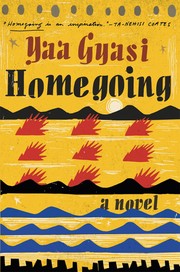
Homegoing
Half sisters Effia and Esi lines span Ghana to America across centuries.
2,552-word summary · 11 min read

Violeta
A woman born in 1920 writes her life story to her grandson, from one pandemic to another, through wealth, ruin, passion, and dictatorship in South America.
2,555-word summary · 11 min read

The Long Winter
Dakota Territory, 1880: seven months of blizzards cut a town off from the railroad, and a family survives on twisted hay, ground wheat, and a dangerous wheat…
2,210-word summary · 10 min read

The Japanese Lover
A Polish refugee and the son of a Japanese gardener fall in love in San Francisco in 1939, then keep the affair secret for nearly seventy years.
2,286-word summary · 10 min read

Ship of Magic
A sentient ship wakes when her captain dies, and the family that owns her starts to come apart over who gets to sail her.
2,026-word summary · 9 min read

The Shadow Sister
Star D'Apliese steps out of her sister's shadow and follows a bookshop clue into the Edwardian life of Flora MacNichol, a woman who gave up love for duty.
2,260-word summary · 10 min read

The Beach
A young backpacker follows a dead man's map to a hidden island community, then discovers what the people there are willing to do to keep it secret.
2,067-word summary · 9 min read

Little Town on the Prairie
In the spring after the Long Winter, fifteen-year-old Laura sews shirts, studies for a teaching certificate, and helps send her blind sister Mary to college.
2,071-word summary · 9 min read

Mrs. Everything
Two Jewish sisters in Detroit grow up, apart and together, across seven decades of American life, from the 1950s to the 2016 election.
2,362-word summary · 10 min read

Howards End
Forster's 1910 novel follows two families, a house in Hertfordshire, and a burned note, asking whether money and feeling can ever be connected.
2,187-word summary · 10 min read
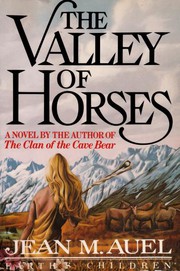
The Valley of Horses
Exiled from the Clan, Ayla survives alone in a hidden valley, tames a horse and a cave lion, and nurses a wounded stranger back to life.
2,311-word summary · 10 min read

Sophie's Choice
A young Southern writer in 1947 Brooklyn befriends a brilliant, unstable couple and slowly learns the story of the Polish Catholic woman at the center of their…
2,798-word summary · 12 min read

James
Percival Everett retells Huckleberry Finn from Jim's side, giving him a library, a hidden school, and a voice the novel lets loose.
2,211-word summary · 10 min read