

Howards End
2,187-word summary 10 min read 302 pages in the book
- First published
- 1910
- Publisher
- Penguin Books
- Pages
- 302
- ISBN
- 9780141182131
Reading options
What's inside (8 sections)
The house in the meadow
"One may as well begin with Helen's letters to her sister." That is the first line of Howards End, and it is a good joke about how the novel works. I came to the book expecting a country-house comedy and found something closer to a trial, with a house as the witness. Forster starts with gossip, with a young woman writing home from a place she does not quite understand, and only later lets you see the place itself. Howards End is a small and inconvenient old house in Hertfordshire, surrounded by meadow and farm buildings, with a wych-elm in the garden and pigs' teeth driven into its bark. Ruth Wilcox loves it with a quiet, physical love. Her husband Henry controls it, and his family tolerates it. The house is the novel's moral test: whoever values it for its own sake, rather than for what it says about them, is on the right side.
The epigraph is two words: "Only connect..." Forster spends the novel working out what that might mean, and he is honest enough not to pretend he has solved it.
The Schlegels are the other half of the equation. Margaret and Helen, with their brother Tibby, live at Wickham Place in London, in a house full of books and music, where argument is a household habit. They are half German and comfortably off, and they take art seriously in a way that can be maddening. Margaret is the elder, practical and generous, the one who manages the household and tries to understand people. Helen is younger, impulsive and quick to feel, and prone to announcing that life is either panic or emptiness, a phrase she takes from a performance of Beethoven's Fifth. Their aunt, Mrs. Munt, known as Aunt Juley, frets over them from a distance.
The Wilcoxes are the new England: Henry, his sons Charles and Paul, his daughter Evie, and Charles's wife Dolly, plus the family motor car. They are practical and emotionally clumsy, and they believe in progress. They make money in rubber and colonial trade, they travel to Nigeria, and they treat the world as a series of problems to be managed. Forster is fair to them. Henry is not a villain. He is a man who has organized his life so that feeling arrives only after business, and by then it has usually missed its train.
Helen at Howards End
Helen visits the Wilcoxes and, within a day, is engaged to Paul. The engagement is a flare of adolescent romance, and it goes out just as fast. Paul's family is embarrassed, Helen is humiliated, and Aunt Juley, who has rushed down to defend her niece, is met at the station by Henry and bundled into the car in a scene that plays like farce. The motor car is everywhere in the early chapters, a machine that carries the Wilcoxes over the surface of England and never quite touches it.
What matters more than the broken engagement is Ruth Wilcox's reaction to Margaret. Ruth meets her when the families collide, and something passes between them. Ruth is dying, though the novel is delicate about it. She wants Margaret to have the house. She writes a note, in pencil, saying so, and then she dies. The note is not a proper will, and the family treats it as a piece of sentiment. Henry cannot take it seriously. Margaret does not even learn of it for a long time. The house is left in the hands of people who do not need it.
This is the first of Forster's large contrivances, and it is worth noticing how well it works anyway. The note is a piece of paper, but it is also a claim from the dead, and the novel never lets it go. Ruth's wish is the buried engine of the plot. Everything that follows is a long way of answering it.
The marriage and the clerk
Margaret and Henry meet again in London, after Ruth's death, and begin a friendship that turns into a proposal. Forster makes the courtship odd and believable. Henry is attracted to Margaret's seriousness, and she is attracted to his solidity, and neither of them quite understands the other. When he proposes, she says yes with a kind of surprise at herself. She wants to save him or enlarge him, and she also wants a home, because Wickham Place is being pulled down. The lease is ending, the landlord wants flats, and the Schlegels' London is disappearing under them. Henry's flat in Ducie Street is comfortable and has nothing to do with her.
Helen disapproves of the marriage. She thinks Henry is a philistine, and she is not wrong. The wedding is quiet, and the marriage is not a romance. Forster is good on the daily friction of it, on Henry's assumptions and the adjustments Margaret makes. A clever woman can spend years translating a dull man's moods, and the novel shows the cost of that work without making a martyr of her.
The Basts enter through a concert. Helen and Margaret go to hear Beethoven, and Helen walks off with a young clerk's umbrella by mistake. Leonard Bast works for an insurance company, the Porphyrion, and lives in Brixton with his wife Jacky, a woman older than he is, faded and fond of drink. Leonard reads poetry and criticism and dreams of culture. He is thin and anxious, and he is doomed to be patronized. Helen and Margaret visit him, talk about books, and mean well. Henry, hearing the story, gives Leonard advice: the Porphyrion is not sound, he says, and Leonard should get out while he can. Leonard takes the advice of a rich man he barely knows, leaves his job, and finds a worse one. Then he loses that too.
This is one of the cruelest sequences in the book, and Forster does not soften it. The Schlegels' kindness costs them nothing. Henry's advice costs Leonard everything. The episode is a small demonstration of how the comfortable damage the poor by treating them as material for a theory.
Oniton
Henry takes Margaret to Oniton, his house in Shropshire, for Evie's wedding. It is a grand, cold place, and the wedding is a Wilcox production: cars, servants, a marquee, and a lot of money moving through the rooms. Helen arrives at Oniton with the Basts. She has found Leonard destitute, and she has brought him and Jacky to the house, partly out of pity and partly out of a wish to force Henry to look at what his advice did.
The scene that follows is the novel's best piece of stagecraft. Jacky, who has been drinking, sees Henry and recognizes him. Years ago, in Cyprus, she was his mistress. Henry's past walks into his present in a shabby hat, and the room goes quiet. Margaret, who has just married him, learns in a few minutes what she had not guessed. Henry's response is not remorse. It is panic and a demand that the matter be dropped.
Margaret does not leave him. She forgives him, or rather she decides to forgive him, and the distinction matters. She does not pretend the knowledge is small, and she does not go. The marriage survives, but something in it has been exposed, and Forster is honest about the cost. Margaret's generosity is real, and it is also a form of management. She is now the one who keeps the family standing.
Helen leaves Oniton with the Basts. She gives them what help she can. Then, some weeks later, in a hotel room, she takes Leonard to bed. Forster does not dramatize the encounter. He reports it, and lets the consequences do the work. Helen becomes pregnant. She goes abroad, refuses to answer her family's letters, and stays away for months. The novel's middle section is partly a study of absence: Margaret in London and Henry at his office, with Helen somewhere out of reach, all of them waiting for a silence to break.
The return to Howards End
Helen comes back to London to collect her books and furniture before Wickham Place is demolished. Margaret, who has been desperate to see her, asks her to come to Howards End. Helen arrives, and Margaret sees at once that she is pregnant. Helen refuses to enter the house while Henry is there, so Margaret goes out to her, and then insists on staying the night with her. For the first time in the book the two sisters are alone together in the house that was meant for them.
The next morning Leonard Bast comes to Howards End. He is ill and half out of his mind with guilt. He has been walking, and he wants to see Helen, or to explain himself, or simply to be forgiven. Charles Wilcox is at the house, and Charles has been waiting for someone to blame. He confronts Leonard on the lawn. There is a sword in the hall, a relic of the Wilcoxes' idea of themselves, and Charles takes it and strikes him with the flat of the blade. Leonard falls. His heart, which has been weak all along, gives out, and he dies at the house.
The aftermath is the part people remember. There is an inquest, and then a trial. Charles is charged with manslaughter. The family closes ranks, and the closing does not save him. He is convicted and sent to prison. Henry, who has spent his life believing that money and manners can settle anything, collapses. His health fails, and he becomes an old man in a few chapters. Margaret nurses him. The woman he married for strength turns out to be the only strength left.
Helen and Henry reconcile at the end, or something like reconcile. He asks her forgiveness, and she gives it, and the scene is deliberately unspectacular. The hay is cut in the meadow. Helen's son, a small boy, plays in the field. The house is Margaret's now, and it is understood that it will pass to Helen's child. The Wilcoxes' money and the Schlegels' feeling end up in the same place, which is a small old house in Hertfordshire that nobody planned to love.
What the book is doing
Forster's great subject is the difficulty of connection between people who have been trained to value different things. Margaret believes in the inner life. Henry believes in the outer one. Leonard believes in a version of the inner life that he has read about and cannot afford. None of them is simply wrong, and none of them can quite reach the others. The novel's moral climax is not the trial but Margaret's demand that Henry extend to Helen the forgiveness he once granted himself. The novel's famous phrase, "the prose and the passion," is a way of saying that a life needs both the practical and the felt, and that England in 1910 had sorted them into different postcodes.
The social criticism is sharper than the book's reputation suggests. Forster sees exactly how Henry's advice wrecks Leonard, and he sees how the Schlegels' sympathy can be a performance. He is less clear about what should be done. The ending is a compromise: the house survives and the child inherits, while the characters settle into a life that is comfortable rather than transformed. Forster knows this, and the last pages have a melancholy that undercuts the reconciliation.
There are real flaws. The plot depends on coincidence, especially Jacky's appearance at Oniton and the pencil note, and the machinery shows. The narrator interrupts with generalizations that can feel like a lecturer clearing his throat. Leonard is more a case study than a person; his poverty is rendered with sympathy but not much interiority. The German versus English contrast is a period piece, and some of the talk about undeveloped hearts has aged into exactly the kind of gentility the novel is criticizing. The first hundred pages are slow, and readers who want a plot that moves will find the Schlegels' dinners and concerts a test of patience.
And yet the book earns its ending. The house is not a symbol of escape. It is a place where people have to live with the consequences of what they have done. Margaret gets what she wanted, and it is smaller and sadder than she imagined. Henry is humbled, and his humiliation is not a lesson he can use. Helen has her child, and the child will grow up in a house that was almost given away twice.
I would recommend it to someone who likes novels of ideas and can tolerate a narrator who thinks out loud. I would not recommend it to a reader who wants a clean plot or a comfortable moral. Forster is too honest for comfort, and too fond of his characters to punish them. The book's final image is not a solution. It is a house in a field, with a boy in the grass, and the hope that the next generation will connect what the last one could not.
FAQ
Is Howards End part of a series?
No. It is a standalone novel, though Forster returns to questions of class and connection in A Passage to India.
What does the phrase Only connect mean?
It is the novel's epigraph and its central hope, that the Wilcox world of money and the Schlegel world of feeling might be brought together. Forster shows how rarely that happens.
How long is Howards End?
The Penguin paperback edition cited here runs 302 pages. Other editions vary in page count, but the text is the same.
Similar books

Stoner
William Stoner trades farm life for literature, then endures a cold marriage and petty campus wars in John Williams's quiet classic.
2,282-word summary · 10 min read
Mansfield Park
Fanny Price loves Edmund amid Crawfords theatricals at Mansfield.
2,389-word summary · 11 min read

Revolutionary Road
A Connecticut couple who believe they are too good for the suburbs plan to move to Paris, and the plan slowly exposes everything they cannot say to each other.
2,085-word summary · 9 min read

Fathers and Sons
Arkady brings the nihilist Bazarov home to his father's estate, and a generational argument turns into love, a duel, and an early death.
2,192-word summary · 10 min read

The Chosen
A shattered pair of glasses in a 1944 Brooklyn softball game starts a friendship between a Hasidic boy and his Orthodox neighbor, and their fathers pull them…
2,443-word summary · 11 min read
On Chesil Beach
Two newlyweds spend one terrible night on Chesil Beach in 1962, and the rest of their lives is decided by it.
2,456-word summary · 11 min read

A Spool of Blue Thread
Four generations of the Whitshank family in Baltimore, and the silences, resentments and quiet love they hand down without ever saying so.
2,408-word summary · 11 min read
The House of Mirth
Lily Bart, beautiful and penniless at twenty-nine, navigates New York's marriage market until a Dorset yacht scandal strips her of the only currency she has.
2,468-word summary · 11 min read
The Most Fun We Ever Had
Four Sorenson sisters orbit perfect parents hiding old cracks.
2,590-word summary · 12 min read
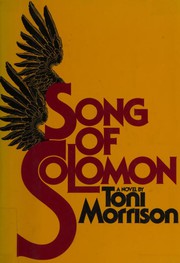
Song of Solomon
Milkman Dead leaves Michigan to hunt for family gold and finds instead the old song of his ancestor Solomon.
2,465-word summary · 11 min read
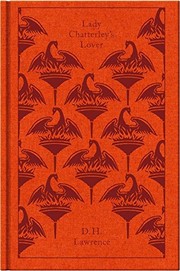
Lady Chatterley's Lover
A baronet's wife, starved in a marriage the war broke, takes the gamekeeper as her lover. Lawrence's banned 1928 novel of class and touch.
2,566-word summary · 11 min read
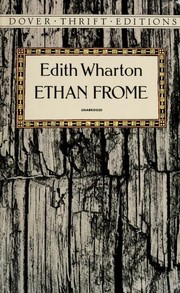
Ethan Frome
In snowy Starkfield, farmer Ethan Frome falls for his wife's young cousin Mattie, and one sled ride ends any hope of escape.
2,558-word summary · 11 min read
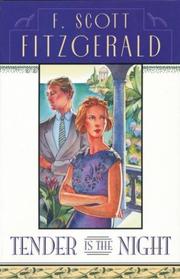
Tender Is the Night
Dick Diver marries his patient Nicole, and their Riviera marriage slowly breaks apart in Fitzgerald's 1934 novel of money, care, and drinking.
2,607-word summary · 12 min read
Fates and Furies
Lauren Groff tells one 24 year marriage twice, first through Lotto's bright luck, then through Mathilde's hidden past and quiet control.
2,992-word summary · 13 min read
Middlemarch
Idealistic Dorothea marries dry scholar Casaubon while ambitious doctor Lydgate marries Rosamond, and a Midlands town watches both marriages strain.
2,883-word summary · 13 min read
Freedom
A St. Paul couple and their grown children strain marriage, loyalty, and ideals in 2000s America.
2,678-word summary · 12 min read
As I Lay Dying
A poor Mississippi family hauls Addie Bundren's coffin to Jefferson through flood and fire, told by fifteen voices. Faulkner's 1930 novel is strange, bleak,…
3,544-word summary · 16 min read

The Vegetarian
After a bloody dream, Yeong-hye stops eating meat, and her ordinary marriage cracks open in Han Kang's spare and unsettling novel.
2,302-word summary · 10 min read
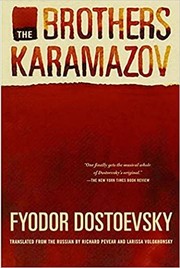
The Karamazov Brothers
Dmitri, Ivan, and Alyosha Karamazov face their father, murder, faith, and doubt in Dostoevsky's final novel.
2,512-word summary · 11 min read
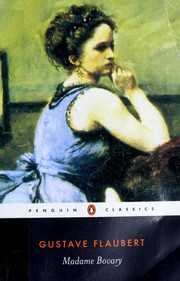
Madame Bovary
Emma Rouault marries Charles Bovary for romance, then seeks lovers and luxury until debts ruin them both.
2,400-word summary · 11 min read
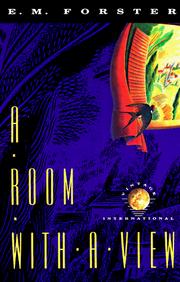
A Room with a View
Lucy Honeychurch meets the odd Emersons in Florence, gets engaged to the proper Cecil Vyse, then must choose.
2,637-word summary · 12 min read
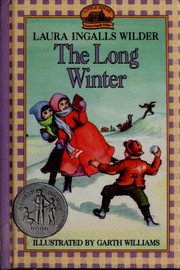
The Long Winter
Dakota Territory, 1880: seven months of blizzards cut a town off from the railroad, and a family survives on twisted hay, ground wheat, and a dangerous wheat…
2,210-word summary · 10 min read

The Guest
Cast out of her wealthy boyfriend's Hamptons house, twenty-two-year-old Alex spends five days talking her way through other people's homes and accounts.
2,165-word summary · 10 min read

The Crying of Lot 49
A California woman named executor of her ex-lover's estate follows a muted post horn into a possible centuries-old postal conspiracy, and Pynchon refuses to…
2,003-word summary · 9 min read
Silas Marner
A falsely accused weaver hoards gold in Raveloe until a stolen hoard and an abandoned child remake his narrow life.
2,699-word summary · 12 min read
Make Way for Ducklings
A pair of mallards raise eight ducklings on the Charles River and lead them across Boston to the Public Garden, with a little help from a friendly policeman.
2,044-word summary · 9 min read

Lisey's Story
Two years after her novelist husband dies, Lisey Landon follows a trail of clues into his childhood and the other world that made him a writer.
1,998-word summary · 9 min read

The Shadow Sister
Star D'Apliese steps out of her sister's shadow and follows a bookshop clue into the Edwardian life of Flora MacNichol, a woman who gave up love for duty.
2,260-word summary · 10 min read

Little Town on the Prairie
In the spring after the Long Winter, fifteen-year-old Laura sews shirts, studies for a teaching certificate, and helps send her blind sister Mary to college.
2,071-word summary · 9 min read
The Boleyn Inheritance
Three women narrate Henry VIII's fourth and fifth marriages: a foreign bride who survives, a teenage queen who does not, and the widow who opens the door.
2,391-word summary · 11 min read