
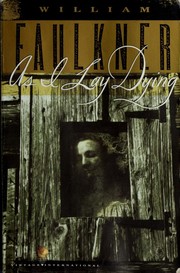
As I Lay Dying
3,544-word summary 16 min read 262 pages in the book
- First published
- 1930
- Publisher
- Vintage Books
- Pages
- 262
- ISBN
- 9780679732259
Reading options
What's inside (9 sections)
I picked up As I Lay Dying because I had just finished The Sound and the Fury and wanted something shorter. A friend told me this one was Faulkner on speed, written in a few weeks while he worked a night shift. I expected it to feel easier. It is shorter, yes, and the sentences are often plain. But the shape of it kept throwing me. One voice hands off to another. Time slips. People say odd and flat things about death while doing hard physical work. I read it in three sittings, mostly late at night, and I kept thinking about that coffin on a wagon long after I closed the book.
The facts help to hold onto. William Faulkner first published the novel in 1930. The edition I am drawing on here is the Vintage Books paperback, which runs 262 pages. That is useful to know because the book can feel timeless and placeless if you let it. It is not. It belongs to rural Mississippi in the early twentieth century, to Yoknapatawpha County, the made up county Faulkner returned to again and again. Poor farmers, small towns, dirt roads, a river that floods when it rains too much. The Bundrens live out from town. Jefferson, the county seat, sits some distance away. That distance is the whole plot.
Addie Bundren is dying as the book opens, and then she is dead. Her wish, stated plainly and repeated by her family, is to be buried in Jefferson, where some of her people come from. Her husband Anse promises it. That promise sends the family on a long wagon trip with her coffin, through bad weather and bad luck, to get her into the ground where she asked to be put. Around that simple errand Faulkner builds something wild and sad and often funny in a way that made me uncomfortable to laugh at.
A house waiting for death
The early pages stay close to the house. Addie lies in bed. It is hot. Her husband Anse and some of her children and neighbors move around her, working and talking and avoiding the fact in front of them.
Cash, the eldest son, is outside building her coffin. He is a carpenter by trade, careful and literal, and he works with the boards right under her window so she can hear him. At first that struck me as cruel. Then it struck me as practical in a poor place where you cannot afford to waste time or lumber. Cash measures and saws and fits the corners with real care. He talks about the bevels and the balance of the box in the same tone other people might use for a table. His love shows in workmanship, not in words.
Darl is the second son and the strangest voice in the book. He seems to know things he should not know, things happening in other rooms or far away. He describes Addie and the yard and the heat with a kind of poetic attention that feels out of place for a farm boy, and then he says something cutting about his brother Jewel. Darl and Jewel share a crackling tension from the start. Jewel works fiercely at his own tasks and keeps to himself. He loves his horse with an intensity that feels larger than the animal.
Inside the house are Dewey Dell, the daughter, and Vardaman, the youngest boy. Dewey Dell is watchful and private. She fans her mother. She thinks about things she does not say aloud. Vardaman is very young and processes death in raw bursts. He drills holes in the coffin when his father allows it, thinking his mother needs air, because no one has explained to him in terms he can hold what has happened. Neighbors come and go. Tull, a neighboring farmer, helps and observes. His wife Cora offers opinions and food and judgment in about equal measure. A doctor passes through. A preacher named Whitfield is spoken of and later speaks for himself.
Addie dies partway through this opening movement. Faulkner does not dress it up. One moment people are waiting, the next they are arranging the body and dealing with the heat and the smell and the need to move fast. Anse sits and grieves in his own passive way. The children react according to their natures. Vardaman runs out and says the line everyone remembers about his mother being a fish. In context it is not a joke. He has just caught a fish and cleaned it, and he links the bloody, slippery body to what he saw in the house. It makes a terrible kind of sense for a child.
Fifteen voices taking turns
The most famous thing about the form is the number of tellers. There are fifteen narrators in all. Some speak at length. Some speak only once or twice. They hand the story back and forth in short sections, each headed by a name.
Darl narrates a great deal early on. Tull narrates about the work and the weather. Cora narrates with strong moral views. Cash narrates in plain lists and carpenter logic. Jewel gets a fierce, rushing section. Dewey Dell narrates with a worried, repeating inner voice. Vardaman narrates in fragments that jump from fish to coffin to train to mother. Anse narrates and sounds exactly like himself, sorry for himself and firm about his promise. Addie herself gets one section, a single powerful chapter from beyond the waiting, where she talks about her life and her children and her marriage. Whitfield gets a section too, filling in part of the past from his side.
I found this structure hard for the first forty pages and then I found it carried me. You stop expecting a single reliable guide. You learn to listen for bias. Cora thinks she knows the family. Tull tries to be fair. Darl sees a great deal but his seeing has an edge. Vardaman tells the truth as he feels it, which is not the same as fact. Cash tells the truth as he can measure it, which leaves out a lot of feeling. No one gives you the full picture. The full picture builds up between them.
What helped me was to stop trying to solve every jump and just follow the coffin. Where is the box, who is carrying it, what is the weather doing. If you track the physical object, the voices start to make sense around it.
Addie's own chapter sits near the middle and changes the weight of everything before it. She talks about her time as a schoolteacher, her marriage to Anse, the births of her children, and how words felt empty to her compared to acts. She is sharp about Anse. She is sharp about herself too. She names which children felt like hers in different ways. I will not lay out every claim she makes, because part of the force is hearing her flat tone for yourself, but it reframes Jewel and Darl and Dewey Dell and the promise about Jefferson. After her chapter, the trip reads less like duty and more like the aftershock of a complicated marriage.
Cash, Darl, Jewel, Dewey Dell, and Vardaman
It helps to pause on the children, because Faulkner keeps them distinct even when the plot gets chaotic.
Cash is steady. He thinks in terms of load and balance and right angles. When the family later faces a flooded river, Cash is the one who reasons about how to cross and where to place the coffin. He injures his leg badly during the trip and spends much of the later journey lying on top of the coffin with cement on his leg, in pain, still trying to be useful. His sections about his tools and his injured leg are among the most moving because they are so plain. He does not ask for pity. He asks for the work to be done right.
Darl is intelligent and detached and increasingly frayed. He narrates beautiful descriptions of heat and water and movement, then undercuts people with cold remarks. His relationship with Jewel is prickly. He teases Jewel about his horse and his mother. As the journey wears on, Darl's behavior grows less stable. He laughs at the wrong moments. He asks questions that sound like accusations. By the end his family decides he is mad, and that decision, whether fair or not, is one of the saddest turns in the book.
Jewel is all action and held feeling. He works hard. He saved money to buy his horse, and that horse matters to him more than almost anything. He resents Darl. He loves Addie with a private fierceness that he never explains. During the disasters on the road, Jewel acts while others talk. He rides, pulls, shouts, risks himself. If Cash is the hands of the family and Darl is the restless mind, Jewel is the muscle and the locked heart.
Dewey Dell carries a secret through the whole trip. She is pregnant and hopes to find help in Jefferson. Her sections circle around that fear. She tries to get money. She trusts people she should not trust. Her trip to town for what she thinks will be medicine is painful to read, because she is young and alone in a way her brothers do not see. Faulkner treats her with a mix of closeness and distance that left me wishing she had one clear ally.
Vardaman is the youngest and in some ways the clearest. He confuses words and things, fish and mother and coffin and train, but his confusion is honest. He wants his mother back. He wants someone to tell him where she went. His short bursts break up the longer adult rationalizing. When he says his mother is a fish, he is trying to fix her in a form he knows. When he later talks about the coffin and nails and air holes, he is still trying to care for her in the only way he knows how. I found his parts harder to read than Darl's, because they show how little the adults explain to children.
Anse, the father, hovers over all of them. He is a tall, shuffling man with a passive manner and a habit of talking about his misfortunes. He insists on keeping his promise to Addie about Jefferson, and that insistence drives the plot. Whether it comes from love or stubbornness or a wish to get to town for his own reasons becomes a central question. Faulkner lets you sit with that doubt.
The river
The middle of the book belongs to the road, and the road belongs first to water.
Rain swells the river they must cross. The bridge is gone or unsafe. The family reaches the ford with the wagon and the mules and the coffin, and they have to decide what to do. Tull and others warn them. Cash reasons it out. Anse insists on going on. What follows is messy and physical and frightening.
The wagon tips. The mules panic. The coffin breaks loose and floats. Cash is hurt. Jewel fights the water to save the box and the animals. Darl narrates parts of it with strange calm, describing the current and the wood and the bodies straining. Tools are lost. Lumber is lost. The family ends up on the far bank battered, with a damaged coffin and an injured eldest son, still set on Jefferson.
I slowed down here and read twice. Faulkner writes action well when he wants to. You can feel the pull of the water and the weight of wet wood. You can feel the shame of men who know they should have waited but did not. The scene also shows how poverty narrows choices. They cannot afford to wait for the river to fall and hire help and buy a new coffin. They have to push through with what they have. That pressure makes their persistence both admirable and foolish.
After the river, they rest at a farm. Cash's leg is set badly with cement poured over it. The smell from the coffin grows worse. Buzzards circle. Neighbors stare and comment. Tull is kind but plain about the fact that the smell is strong and the delay is unwise. Cora is sterner. The family presses on because Anse says they must, and because turning back would mean admitting the trip was a mistake.
This is where I started to feel the book's humor, though humor feels like the wrong word. It is not jokes. It is the gap between high purpose, burying a mother where she asked, and low reality, a stinking box, a cement leg, lost tools, stubborn mules. Faulkner does not wink. He just keeps adding weight until perseverance looks like pride.
Fire, town, and the long smell of the road
If water is the first trial, fire is the second.
They shelter at another farm with a barn. During the night the barn catches fire. Jewel and Darl and others rush in to save animals and the coffin. The scene is chaotic, full of shouting and smoke and kicking horses. Jewel acts with wild courage, dragging the coffin out. Darl is there too, but his actions and motives blur. Later it becomes clear that Darl may have set the fire, or tried to, thinking that burning the coffin would end the ordeal cleanly. The family does not discuss it calmly. They absorb it and move on, as tired people do.
The fire injures Jewel and damages the coffin again. Cash suffers more. The mules are lost or ruined at different points, forcing Anse to trade and borrow to keep moving. He gets another team under terms that favor the lender. He keeps his eyes on Jefferson.
Dewey Dell's side plot tightens as they near town. She looks for a drugstore and for someone who will help her end her pregnancy. She meets men who take advantage of her ignorance. One gives her something useless and takes her money. The episodes are brief and sordid and they show how little protection she has. Her brothers are absorbed in the coffin and their own pain. Her father is absorbed in his own wants. Town, which should offer help, offers mainly people ready to take from a country girl.
Vardaman keeps watching. He sees the town with wide eyes. He worries about the coffin and the buzzards and the train he hears. He wants the journey to mean something. Darl keeps slipping. He laughs. He talks about death in ways that scare the others. Anse keeps repeating that he is doing his duty by Addie.
When they finally reach Jefferson, the burial happens with little ceremony. The town has watched them come in with their terrible smell and their broken wagon. Officials and onlookers react with disgust and pity. Addie is put into the ground among her people, as promised. The promise is kept. It does not feel like triumph. It feels like exhaustion finding a place to stop.
Then comes the coda that everyone argues about. Anse, who has talked through the book about his teeth and his needs, shows up with new teeth and introduces a new wife, a woman he met along the way. Darl is taken away to an asylum in Jackson. Cash recovers enough to think about his tools and his music. Jewel keeps his horse. Dewey Dell goes home still pregnant. Vardaman is left to adjust to a new mother he did not ask for.
I laughed the first time I read that ending and then felt bad for laughing. Faulkner means you to feel both. The new teeth are comic and grotesque. They are also human. Anse has been without, chewing poorly, feeling old. He used the trip to get what he wanted. Whether that cancels his devotion to Addie's wish is left for you to decide.
Why this book divides people
Fair criticism first, because this novel asks a lot and does not always repay it in kind.
The style is hard. Fifteen voices means fifteen starts and stops. Time folds. Darl reports things he could not have seen. Vardaman jumps. Dewey Dell repeats. If you need a steady guide, you will be annoyed for many pages. I was. The book also withholds basic help. Faulkner does not pause to explain who Tull is to the Bundrens or what Whitfield did years ago or how Dewey Dell got pregnant. You gather it sideways. Some readers love that gathering. Others find it tiring, and I understand that. This is not a book to read when you are distracted. It wants your full attention and it punishes skimming.
The humor divides people too. Much of it grows from suffering. A rotting corpse, a boy with cement on his leg, a father counting his teeth while his wife waits for burial. If grotesque comedy is not to your taste, large stretches will feel cold rather than funny. I winced more than once. The buzzards circling the wagon are played almost as a running gag by onlookers, and the family has to pretend not to smell what everyone smells. Faulkner finds human vanity inside grief and shows it without softening. That honesty can read as cruelty.
The family can feel unsympathetic. Anse is selfish and passive. Darl is cruel to Jewel. Jewel is hard. Dewey Dell is secretive. Cash is kind but narrow. Vardaman is lost. Addie, when she finally speaks, is bitter about motherhood and marriage. If you want someone to root for without reservation, Cash comes closest and even he goes along with things that harm others. I missed having one warm center. Tull offers some decency from outside, but he is a neighbor, not family, and he steps back when the smell gets strong.
There are also passages a modern reader will question around how women are seen. Dewey Dell's treatment by men in town is shown as sordid, which is to Faulkner's credit, but she gets little interior relief. Addie's chapter gives her a strong mind, yet much of what she says about children and duty is bleak. Cora moralizes in ways that flatten Dewey Dell further. None of this felt false to the time and place, but it can leave a sour taste, especially since Dewey Dell's problem is never solved.
Still, the difficulties serve a purpose. By refusing one clear voice, Faulkner shows how a family can share an event and live in different stories about it. By keeping the prose close to work, lifting, sawing, fording, pulling, he keeps death physical. This is not a book about grief as feeling alone. It is about grief as labor, as smell, as weight on a wagon, as money owed for mules. That physical pressure is what stayed with me.
How I would approach it if you are new
Read for the coffin, not for the calendar. Keep a simple list of names on a scrap of paper. Anse the father. Addie the mother. Cash, Darl, Jewel, Dewey Dell, Vardaman from oldest to youngest. Tull and Cora the neighbors. Whitfield the preacher with a past link to Addie. When a new name heads a section, place them on that map and keep moving.
Let Darl be strange. He is meant to be. Let Vardaman be repetitive. He is a child trying to make language do what it cannot do. Let Cash be boring in the best way. His lists of how a coffin is made and how a leg should be set are his way of saying the world should hold together.
Do not skip Addie's chapter. It is short and it reframes the burial promise. Read it slowly. She talks about words failing and acts mattering, about teaching and marrying and bearing children, about why Jefferson matters to her. You do not have to agree with her to feel the force of her will. That will is what drags the wagon forward even after she is gone.
Expect the ending to feel abrupt. Burial, new teeth, new wife, Darl taken away. Faulkner does not close with a moral. He closes with people continuing. Anse gets what he wanted. Cash thinks about a gramophone. Jewel rides on. Dewey Dell endures. Vardaman watches. The bluntness is deliberate. A family that carried death for miles does not transform. It disperses back into need.
I am glad I read it right after The Sound and the Fury. That earlier book is grander and more sorrowful. This one is leaner and stranger, more body than mind. Both live in the same county and share Faulkner's interest in how families fail and persist. If that earlier novel felt like walking through a house four times, this one feels like walking beside a wagon for days, smelling it, hearing the wood creak, wanting it to stop and wanting it to arrive. When it finally arrives, you feel relief and unease together. I think Faulkner wanted both. The promise is kept. The people are still themselves. That is the bleak joke and the sad truth at once, and it kept me thinking for days about what we owe the dead and what we use the dead to get.
FAQ
When was As I Lay Dying published?
William Faulkner published As I Lay Dying in 1930. The Vintage Books edition cited here runs 262 pages with ISBN 9780679732259.
Why does the Bundren family travel to Jefferson?
Addie Bundren asks to be buried in Jefferson, so her family carries her coffin by wagon through a flooded river and other disasters.
How many narrators does the novel have?
It has fifteen narrators, including her family members and neighbors. Vardaman's short section says, My mother is a fish.
Similar books

Howards End
Forster's 1910 novel follows two families, a house in Hertfordshire, and a burned note, asking whether money and feeling can ever be connected.
2,187-word summary · 10 min read

Fathers and Sons
Arkady brings the nihilist Bazarov home to his father's estate, and a generational argument turns into love, a duel, and an early death.
2,192-word summary · 10 min read

The Chosen
A shattered pair of glasses in a 1944 Brooklyn softball game starts a friendship between a Hasidic boy and his Orthodox neighbor, and their fathers pull them…
2,443-word summary · 11 min read

Song of Solomon
Milkman Dead leaves Michigan to hunt for family gold and finds instead the old song of his ancestor Solomon.
2,465-word summary · 11 min read

Ulysses
Bloom, Stephen, and Molly cross Dublin on June 16 1904 in parallel to Odyssey, from breakfast to night bed yes.
2,222-word summary · 10 min read

To the Lighthouse
On a Scottish island, the Ramsay family and their guests circle one postponed trip to a lighthouse across ten years of loss.
2,548-word summary · 11 min read

Stoner
William Stoner trades farm life for literature, then endures a cold marriage and petty campus wars in John Williams's quiet classic.
2,282-word summary · 10 min read

The Karamazov Brothers
Dmitri, Ivan, and Alyosha Karamazov face their father, murder, faith, and doubt in Dostoevsky's final novel.
2,512-word summary · 11 min read

Mansfield Park
Fanny Price loves Edmund amid Crawfords theatricals at Mansfield.
2,389-word summary · 11 min read

The Sound and the Fury
A ruined Mississippi family seen through three brothers across four days, closing on Easter Sunday with their servant.
2,226-word summary · 10 min read

The Long Winter
Dakota Territory, 1880: seven months of blizzards cut a town off from the railroad, and a family survives on twisted hay, ground wheat, and a dangerous wheat…
2,210-word summary · 10 min read

The Crying of Lot 49
A California woman named executor of her ex-lover's estate follows a muted post horn into a possible centuries-old postal conspiracy, and Pynchon refuses to…
2,003-word summary · 9 min read
Silas Marner
A falsely accused weaver hoards gold in Raveloe until a stolen hoard and an abandoned child remake his narrow life.
2,699-word summary · 12 min read

Revolutionary Road
A Connecticut couple who believe they are too good for the suburbs plan to move to Paris, and the plan slowly exposes everything they cannot say to each other.
2,085-word summary · 9 min read

Make Way for Ducklings
A pair of mallards raise eight ducklings on the Charles River and lead them across Boston to the Public Garden, with a little help from a friendly policeman.
2,044-word summary · 9 min read

Little Town on the Prairie
In the spring after the Long Winter, fifteen-year-old Laura sews shirts, studies for a teaching certificate, and helps send her blind sister Mary to college.
2,071-word summary · 9 min read

Sophie's Choice
A young Southern writer in 1947 Brooklyn befriends a brilliant, unstable couple and slowly learns the story of the Polish Catholic woman at the center of their…
2,798-word summary · 12 min read

Unaccustomed Earth
Lahiri’s second story collection follows Bengali families in America and abroad, tracing the quiet distances between parents and children, spouses, and the…
2,333-word summary · 10 min read

The Age of Miracles
A California girl grows up while the Earth's rotation slows, and ordinary adolescence continues alongside slow catastrophe.
2,417-word summary · 11 min read

Naked Lunch
Burroughs's banned 1959 collage novel follows Bill Lee through addiction, Tangier, and the nightmare bureaucracy of the Interzone.
2,082-word summary · 9 min read

Peace Like a River
An asthmatic boy in the early 1960s narrates his family's search for his older brother, who is accused of two killings and has escaped custody.
1,969-word summary · 9 min read

We Are Okay
Marin fled San Francisco after her grandfather vanished and stopped answering anyone. When Mabel visits her college dorm, she has to say what happened.
2,253-word summary · 10 min read

The Dharma Bums
Ray Smith rides freight trains, climbs Matterhorn Peak and argues about Zen with the poet Japhy Ryder in Kerouac's 1958 road novel.
2,729-word summary · 12 min read

Ivanhoe
A disinherited Saxon knight, a great tournament, a besieged castle and a trial by combat. Scott's most famous novel, set in England in 1194.
2,834-word summary · 13 min read

A Spool of Blue Thread
Four generations of the Whitshank family in Baltimore, and the silences, resentments and quiet love they hand down without ever saying so.
2,408-word summary · 11 min read

Wide Sargasso Sea
Jean Rhys gives the first Mrs. Rochester a Caribbean childhood, a marriage built on money and suspicion, and a voice that Charlotte Bronte left in the attic.
2,021-word summary · 9 min read

This Is How You Lose Her
Yunior cycles through love affairs and betrayals in nine linked stories, tracing the damage he does and the family history behind it.
2,195-word summary · 10 min read

The Gambler
Dostoevsky's roulette novella: Alexei loses Polina, wins a fortune, loses everything, and promises himself one more bet tomorrow.
2,022-word summary · 9 min read
The Borrowers
A family of tiny people live under the floorboards of an English house, borrowing what they need until a lonely boy and a suspicious housekeeper change…
2,164-word summary · 10 min read

Orlando
A young Elizabethan nobleman becomes a woman and lives for centuries, moving through English history while writing a single poem about an oak tree.
2,030-word summary · 9 min read