
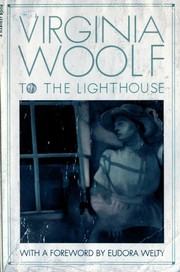
To the Lighthouse
2,548-word summary 11 min read 209 pages in the book
- First published
- 1927
- Publisher
- Hogarth Press
- Pages
- 209
- ISBN
- 9780156907392
Reading options
What's inside (8 sections)
I picked up To the Lighthouse right after Mrs. Dalloway because I wanted to see what Woolf would do with a bigger canvas. Dalloway stays inside one London day. This book takes a whole family across ten years, with a war in the middle and a house that nearly rots away. I expected something grander and colder. What I got was warmer and stranger, a book about a dinner party that somehow contains marriage, art, grief, and a small boy's fixed wish to visit a tower of stone in the sea.
Here is the shape of it. The Ramsay family spends summers in a house on a Scottish island. On the first evening, six year old James begs to sail to the nearby lighthouse the next day, and his mother says yes if the weather holds. His father says it will not hold. That small exchange opens the novel, and everything after grows out of it. Guests come and go, a dinner stretches late into candlelight, years pass in a rush, and at the end the survivors return to finish what was left hanging. Virginia Woolf first published the book in 1927 with the Hogarth Press, the small press she ran with her husband Leonard, with a dust jacket designed by her sister Vanessa Bell. This summary follows the 209 page Harcourt Harvest edition, ISBN 9780156907392, which is the common modern reading text.
Fair warning the way I would give it to a friend. Almost nothing happens in the normal sense, and then a death arrives inside brackets in the middle of a paragraph about curtains. If you read for plot you will feel cheated twice, once slowly and once fast. If you read for the feeling of being inside other minds, of watching one moment fill with past and future at once, few books reward you more.
One evening and a promise
The novel opens on a September evening at the Ramsays' summer house. Mrs. Ramsay sits with her youngest boy James, who is cutting pictures from a catalogue, and promises him the lighthouse trip if tomorrow is fine. Mr. Ramsay, passing by, corrects her. There will be no landing at the lighthouse tomorrow. The wind is wrong. James feels a hot spike of hatred for his father, the kind of pure childish feeling adults forget they ever had. Mrs. Ramsay smooths things with a story and a look. The trip hangs there, promised and canceled in the same breath.
Around this small scene Woolf arranges her people. Mr. Ramsay is a respected philosopher, a big bearded man who strides the terrace quoting poetry under his breath and measuring his own mind against the great thinkers. He fears his books will not last, and he asks his wife for proof that he matters with a neediness that embarrasses them both. Mrs. Ramsay is beautiful, tired, and magnetic, the center every room forms around. She mothers eight children, manages guests, knits a brown stocking for the lighthouse keeper's boy, and carries on a long inner argument about whether her marriage is enough and whether it is everything.
The guests matter as much as the family. Lily Briscoe, an unmarried painter in her thirties, has set up her easel on the lawn and keeps starting a picture she cannot finish. Charles Tansley, a prickly young follower of Mr. Ramsay, trails the philosopher and repeats his opinion that women can neither write nor paint, which Lily hears and files away with cold fury. William Bankes, an older widowed friend with a kind, scientific mind, watches Lily work and wonders about art and loneliness. The poet Augustus Carmichael shuffles about, half asleep, dosing himself and saying little. Two young people, Paul Rayley and Minta Doyle, flirt on the edges of everything while Mrs. Ramsay schemes to marry them off.
I love how Woolf runs this evening. The camera never sits still. One paragraph lives inside Mrs. Ramsay's head as she thinks about the stocking and the children and the cost of the trip. The next paragraph slides into Lily's worry about her painting, or Bankes watching a bird, or Mr. Ramsay brooding over his work. Nobody announces the change. Thought just passes from mind to mind like weather across the lawn. It sounds confusing and reads, once you settle in, like the most natural thing in the world.
The dinner party
The center of the first part is dinner, and Woolf gives it the weight other novels give to battles. Mrs. Ramsay has ordered a French beef stew, the kind that takes hours, and the meal gathers slowly. People arrive late. Children are fetched and scolded. Carmichael asks for more soup and gets it. Lily sits across from Tansley and Bankes and tries to talk about painting while Tansley condescends and Bankes listens with real care. Paul and Minta lose Minta's grandmother's brooch on the beach and come back late, sandy and glowing, half engaged already.
Mrs. Ramsay runs the table the way a conductor runs an orchestra. She lights the candles so faces soften. She draws out the shy ones and quiets the loud ones. She brings Paul and Minta together with a look and a seating plan. She gets Carmichael to smile. She watches her husband at the far end, gloomy about his work, and sends him warmth across the dishes. For a stretch the separate minds at the table join into one shared thing, a sense that life, for an hour, holds together. Lily thinks about her painting through it all, about the purple shape and the lines she cannot place, and feels shut out and held at once.
Then Mrs. Ramsay steps out for a moment and sees the lighthouse beam starting its evening turn across the bay, and Paul and Minta walking close together in the dark. She understands they will marry, and the knowledge fills her with an odd mix of triumph and pity. Marriage brings safety and children and rooms of your own trouble, she thinks. She has arranged this match and doubts the whole business in the same breath. It is the clearest window in the book into her mind. She believes in bringing people together and she knows exactly what togetherness costs.
Later she reads to James from a book of fairy tales while the house settles. She promised him the lighthouse. She did not promise the weather. The boy falls asleep beside her as she knits and thinks about her husband waiting downstairs for some word that will set him at rest. She goes to him, and they sit together while the light from the tower strokes the wall. The evening closes on a small admission about tomorrow's weather, given and received like a gift between two people who have fought all day with kindness.
Night thoughts in the house
After the children sleep, the house keeps thinking. Mr. Ramsay prowls and reads, hungry for praise his wife rations with care. He wants her to tell him straight out that she loves him, and she cannot say the words, so she shows him instead by sitting near and letting her silence mean yes. Lily lies awake replaying the dinner, Tansley's insults, Bankes's attention, the unfinished picture. Bankes walks and thinks about solitude and friendship. Paul and Minta, out on the dark beach or the road, cross the line from flirting to promising.
Woolf uses these night hours to show what each person wants and cannot name. Mr. Ramsay wants lasting fame and fears he is a minor figure. Bankes wants closeness without the mess of marriage. Lily wants to paint something true and fears she lacks the force. Mrs. Ramsay wants everyone held together and fears the holding is all she is. The lighthouse beam keeps passing, stroking each sleeper in turn, touching and withdrawing. It watches without comment, the way the book watches its people. Nothing is solved at night. Everything is stored.
This is the part where some readers lose patience, and I understand it. Pages pass in which nobody does anything but sit, knit, walk, and remember. The action is all inward. A boy resents his father. A woman doubts her life. A painter moves a shape in her mind. If your eye keeps sliding ahead looking for the next event, the prose feels like fog. I found it helped to read these chapters the way you listen to music, letting the same phrases come back changed. The repetition is the meaning. Minds circle because life circles.
Time passes
Then Woolf does the boldest thing in the book. She skips ten years in about twenty pages. The middle section, called Time Passes, follows the empty summer house through seasons, storms, and the First World War. The dinners and quarrels drain out of it. Plaster falls. Rats move in. The garden runs wild. Two cleaning women, Mrs. McNab and her helper, come now and then to push back the decay, and their tired gossip and aching joints are almost the only human warmth for pages at a time.
The human news arrives sideways, inside brackets, as if history cannot be bothered to stop for it. Mrs. Ramsay dies one night, and the sentence reporting it sits inside parentheses in a paragraph about something else. Her daughter Prue dies young, in childbirth, in brackets. Her son Andrew is killed by a shell in the war, in brackets. A lesser writer would give these deaths chapters. Woolf gives them asides, and the effect is shattering precisely because of the smallness. Life went on elsewhere and did not pause. The house did not notice. The reader notices all the harder.
I sat with this section a long time. On a first read it can feel heartless, as if Woolf is swatting her characters like flies. On a second look it feels honest about how loss actually reaches us. We hear months later, in a letter, between other news. Someone says your mother died, and the curtains still need hanging. The brackets are not coldness. They are the shape of grief arriving while the world keeps its own schedule. Even Carmichael, the sleepy poet, publishes a book during the war that finds unexpected readers, and the success is reported with the same flat calm as the deaths. Time lifts one thing and drops another. It does not explain itself.
By the end of the section the house is barely standing, full of damp and silence. Then, in the last pages, orders come. The family will return. Mrs. McNab and her helper scrub and air and mend, and the old rooms wake up one by one. The war is over. The survivors are older. The lighthouse is still there.
Return and finishing
The last part brings back three threads and braids them. Mr. Ramsay, now older and widowed, finally takes the boat to the lighthouse with two of his children, James, now a teenager, and his sister Cam. They sail with the fisherman across the bay while Lily Briscoe, back at the house with Carmichael, sets up her easel again to finish the picture she abandoned ten years before. The two journeys run side by side, one across water and one across canvas, and neither is really about its destination.
The boat trip is quiet and tense. James steers, remembering his father's old cruelty and expecting more of it. Mr. Ramsay reads, broods, and praises the sailing in short bursts. Cam watches her father with a mix of loyalty and fear, siding now with him and now with her brother. As the lighthouse grows from a distant tower into a real place of rock and stairs and keepers, the children's old dream thins out. It is smaller than memory and stranger. When they land, Mr. Ramsay gives his son a word of praise that lands after years of silence, and James feels something old loosen in his chest. The trip his mother promised has happened without her. That absence is the whole event.
Onshore, Lily fights her own crossing. She remembers Mrs. Ramsay sitting in the window with James, and grief rises so sharp she nearly cries out. She thinks about marriage and independence, about Tansley long gone and Bankes far away, about whether her small talent justifies a life spent alone with it. She wrestles the picture all morning, moving shapes, scraping paint, losing the design and finding it again. Carmichael watches and says little. The house hums behind her. The boat shrinks toward the rock.
Then, in the closing pages, both journeys complete at once. Lily draws one final line down the middle of her canvas and knows the picture is done. She has had her vision, held it, and let it go. Across the water, James steps onto the rock he wanted as a child. Neither ending is loud. Both feel earned in the way only long waiting can earn things. Woolf closes not with speeches but with acts. A line. A landing. Enough.
What the book does, and what tests patience
Reading it through, I kept asking what Woolf is actually after, and my answer changed by section. In the first part she wants to show how a family and its guests make a shared world out of separate minds, and how one strong woman holds that world together by constant quiet work. In the middle she wants to show how fast time undoes such worlds, and how little ceremony history allows. In the last part she wants to show that art and forgiveness can finish what life leaves open, not by restoring the dead but by completing the pattern they started.
The marriage at the center deserves a fair look. Mr. Ramsay can be insufferable, demanding comfort like a child and trampling his son's hopes without noticing. Mrs. Ramsay can be maddening too, managing everyone's love lives while dodging hard questions about her own. Woolf loves both of them and excuses neither. That balance is rare. Plenty of novels pick a side between husband and wife. This one holds the whole difficult knot up to the light and turns it slowly.
Now the honest complaints, because the book is not for every mood. The pace is slow by design, and the middle section will punish anyone who needs steady company. Some figures stay thin. Paul and Minta glow for an evening and never deepen. Tansley is more function than person. The philosophy talk can feel airless if you have no taste for it. And Lily's ending, moving as it is, asks you to accept that finishing a painting answers ten years of loss, which some readers will find beautiful and others will find slight.
For all that, I think the book earns its place beside Mrs. Dalloway, and in some ways passes it. Dalloway is tighter. This one is deeper. It contains a dinner you will remember like one you attended, a house you will hear decaying in your sleep, and a final line of paint that lands like a held breath released. Read it slowly, in long sittings, and let the brackets do their worst. When James reaches the rock and Lily sets down her brush, you may find, as I did, that very little has happened and almost everything has changed.
FAQ
When was To the Lighthouse published, and which edition is used here?
It was first published in 1927 by the Hogarth Press in London, the press run by Virginia and Leonard Woolf. This summary follows the 209 page Harcourt Harvest edition, ISBN 9780156907392.
Does Mrs. Ramsay die in the novel?
Mrs. Ramsay dies between the first and last parts, during the ten years covered in Time Passes. Her death is given in brackets, and her absence shapes everything Lily and the Ramsays do afterward.
Is To the Lighthouse part of a series?
No. It stands alone. It followed Mrs. Dalloway in 1925 and is often read beside it, since both use a gliding close third person that moves between minds.
Similar books
Mrs. Dalloway
Clarissa Dalloway gives a London party across one June day while veteran Septimus Smith faces shell shock in the same city.
2,935-word summary · 13 min read
Ulysses
Bloom, Stephen, and Molly cross Dublin on June 16 1904 in parallel to Odyssey, from breakfast to night bed yes.
2,222-word summary · 10 min read
Fates and Furies
Lauren Groff tells one 24 year marriage twice, first through Lotto's bright luck, then through Mathilde's hidden past and quiet control.
2,992-word summary · 13 min read
As I Lay Dying
A poor Mississippi family hauls Addie Bundren's coffin to Jefferson through flood and fire, told by fifteen voices. Faulkner's 1930 novel is strange, bleak,…
3,544-word summary · 16 min read
The Sound and the Fury
A ruined Mississippi family seen through three brothers across four days, closing on Easter Sunday with their servant.
2,226-word summary · 10 min read

Howards End
Forster's 1910 novel follows two families, a house in Hertfordshire, and a burned note, asking whether money and feeling can ever be connected.
2,187-word summary · 10 min read

Fathers and Sons
Arkady brings the nihilist Bazarov home to his father's estate, and a generational argument turns into love, a duel, and an early death.
2,192-word summary · 10 min read

Unaccustomed Earth
Lahiri’s second story collection follows Bengali families in America and abroad, tracing the quiet distances between parents and children, spouses, and the…
2,333-word summary · 10 min read

The Age of Miracles
A California girl grows up while the Earth's rotation slows, and ordinary adolescence continues alongside slow catastrophe.
2,417-word summary · 11 min read
Peace Like a River
An asthmatic boy in the early 1960s narrates his family's search for his older brother, who is accused of two killings and has escaped custody.
1,969-word summary · 9 min read

We Are Okay
Marin fled San Francisco after her grandfather vanished and stopped answering anyone. When Mabel visits her college dorm, she has to say what happened.
2,253-word summary · 10 min read

The Chosen
A shattered pair of glasses in a 1944 Brooklyn softball game starts a friendship between a Hasidic boy and his Orthodox neighbor, and their fathers pull them…
2,443-word summary · 11 min read

A Spool of Blue Thread
Four generations of the Whitshank family in Baltimore, and the silences, resentments and quiet love they hand down without ever saying so.
2,408-word summary · 11 min read

This Is How You Lose Her
Yunior cycles through love affairs and betrayals in nine linked stories, tracing the damage he does and the family history behind it.
2,195-word summary · 10 min read
The Birth of Venus
A Florentine merchant's daughter trains as an artist, marries a man who hides a secret, and survives Savonarola's bonfire of the vanities.
2,404-word summary · 11 min read
Flight Behavior
Dellarobia Turnbow is stuck in a Tennessee farm marriage until a valley full of monarch butterflies, and the scientist who comes to study them, force her to…
2,051-word summary · 9 min read

And Every Morning the Way Home Gets Longer and Longer
An elderly grandfather, his son, and his grandson share memories and fears as the old man's mind begins to fade, in a short novel about grief and love.
2,078-word summary · 9 min read

The Tiger's Wife
A young doctor in a war-scarred Balkan country chases the stories her grandfather left behind, including a deathless man and a deaf girl who loved an escaped…
2,232-word summary · 10 min read

The Story of Edgar Sawtelle
A mute boy on a Wisconsin dog-breeding farm relives Hamlet as his uncle returns, his father dies in the barn, and the dogs inherit what is left.
2,392-word summary · 11 min read
Olive, Again
Elizabeth Strout returns to Crosby, Maine, as Olive Kitteridge marries Jack Kennison, confronts her son, and faces old age, grief, and small-town judgment.
2,333-word summary · 10 min read
We Were the Mulvaneys
After a rape following a school dance, the Mulvaneys, a family that believed it was blessed, comes apart over fifteen years. Narrated by the youngest son.
2,094-word summary · 9 min read
Foster
A girl spends a summer with relatives on a Wexford farm and is cared for properly for the first time. A spare novella about family and what children notice…
2,043-word summary · 9 min read
The Most Fun We Ever Had
Four Sorenson sisters orbit perfect parents hiding old cracks.
2,590-word summary · 12 min read

The Accidental Tourist
Grieving Macon writes travel guides for haters of travel, then Muriel intrudes.
2,252-word summary · 10 min read

Kitchen
Orphan Mikage finds home in a kitchen with Yuichi and Eriko after loss.
2,597-word summary · 12 min read
Case Histories
A Cambridge PI takes three cold cases that tangle with his own loss.
2,465-word summary · 11 min read
An Object of Beauty
Lacey climbs the art world from Sotheby to fraud and fall.
2,629-word summary · 12 min read
The School for Good Mothers
A mother sent to a reform school fights to keep her daughter under cold surveillance and strict rules.
2,114-word summary · 9 min read

The Perfect Nanny
A trusted nanny kills two children, and the book traces how love and class hid warning signs.
2,200-word summary · 10 min read
Song of Solomon
Milkman Dead leaves Michigan to hunt for family gold and finds instead the old song of his ancestor Solomon.
2,465-word summary · 11 min read