

Kitchen
2,597-word summary 12 min read 152 pages in the book
- First published
- 1988
- Publisher
- Grove Press
- Pages
- 152
- ISBN
- 9780802142443
Reading options
What's inside (8 sections)
I came to Kitchen because a friend who cooks for a living pressed it on me after a funeral. She said it was short enough to read in two sittings and gentle enough to read while grieving. That sounded right for a week when I had little patience for long novels. First published in Japan in 1988, in the Grove Press edition cited here which runs 152 pages, it is really two linked novellas in one slim volume. The main story follows Mikage Sakurai after the death of her grandmother. A shorter second story, called Moonlight Shadow, follows another young woman after a boyfriend dies in an accident.
What surprised me was how practical the sadness feels. Mikage does not give speeches about loss. She notices where she can sleep, what she can eat, who washes the rice. Yoshimoto keeps the focus close to kitchens, train rides, late night jobs, and small kindnesses between people who have almost no one left. It reads fast, but the mood stays with you longer than you expect.
Waking up beside the fridge
Mikage Sakurai starts the book alone in a way that feels complete. Her parents died when she was young. Her grandparents raised her. Then her grandfather died, and then her grandmother dies just before the story opens. Mikage is a university student living in the family apartment, sleeping poorly, drifting through days, eating little. The only place in the apartment where she feels calm is the kitchen. She likes the hum of the fridge, the clean tiles, the knives lined up, the sense that food can still be made even when everything else has stopped.
That detail could sound cute. In practice it reads as a grief symptom I recognized. When people lose the last person who kept a home running, they fix on one room or one habit that still works. For Mikage it is the kitchen. She says she can sleep on the floor next to the refrigerator when her bedroom feels too empty. She counts pots instead of sheep. She wakes to make tea because the steps are known and the result is warm. Yoshimoto lets this go on long enough that you understand it, then she brings in other people before it turns static.
The turn comes through Yuichi Tanabe. He is a young man Mikage barely knows, a fellow student with a kind, slightly distant manner. He shows up after the funeral with an offer from his mother Eriko. Come live with us for a while, he says, until you decide what to do with the apartment. Mikage accepts because she has no better plan and because the Tanabe kitchen sounded good when Yuichi described it. She packs a bag, leaves the apartment with its echoes, and moves into a new home where she does not yet know the rules.
I liked how little fuss surrounds this decision. No long debate. No money talk to slow the pages. Just a tired young woman accepting help and a family willing to give it. That plainness sets the tone for the rest of the book.
Yuichi and Eriko
The Tanabe household is small and unusual, and Yoshimoto explains it without making it a puzzle. Yuichi lives with his mother Eriko, a tall, cheerful woman who runs a gay bar and who turns heads when she walks into a room. Eriko was once Yuichi father. After Yuichi mother died, his father chose to live as a woman, with surgery and a new life, and raised Yuichi with steady love. Yuichi speaks of her with pride and ease. Mikage, who has little recent practice with family warmth, watches them and learns how they tease, how they apologize, how they share chores.
Eriko is the emotional center of the first half. She is loud in a good way, generous with food, quick to notice when Mikage goes quiet. She works nights, sleeps late, keeps flowers in odd places, tells stories about customers, and treats Mikage as a guest who should become comfortable rather than grateful. One of the best stretches shows the three of them cooking side by side, arguing lightly about seasoning, tasting soup from the same spoon, leaving dishes to soak while they talk. For Mikage, who had been eating alone over the sink, this return to shared meals feels like being allowed back into life.
Yuichi is harder to read at first, and that feels deliberate. He is polite, a bit passive, fond of Mikage but slow to say what he wants. He studies, works part time, comes home late, falls asleep on the sofa. He and Mikage develop a friendship built on proximity rather than declarations. They stay up talking. They shop together. They learn each other small habits. Mikage notices that Yuichi is lonely in his own way even with Eriko near, because his family history also holds loss. His birth mother died when he was small. His one steady parent remade a life from scratch. He carries thanks and worry together.
Living there steadies Mikage. She starts cooking more seriously, cleaning with care, sleeping through the night. The apartment scenes have a lived in texture. A sticky rice cooker lid. A chipped mug kept because Eriko likes it. A plant that needs turning. A futon that smells of sun after airing on the balcony. These are not symbols planted for later. They are just the stuff of a home restarting.
Learning to cook for others
Midway through, the book shifts from shelter to work. Mikage decides she wants to get better at cooking for a living, and not only for her own comfort. She takes a job as an assistant with a cooking teacher, a brisk professional who runs classes and caters small events. The work is physical. Carry bags from the market. Wash greens three times. Peel lotus root without wasting it. Keep knives sharp. Keep counts straight when there are twenty students and only twelve burners. Mikage is clumsy at first, then less clumsy. She learns to time rice, to fix soup that is too salty, to plate quickly without fussing.
I found these passages the most satisfying because they show grief turning into skill. Mikage cannot bring her grandmother back, but she can learn to make a proper stock. She cannot fix the past, but she can show up on time and keep the sink clear. Yoshimoto respects manual work. She writes about market mornings, cold hands around a paper cup, the weight of a daikon, the sound of oil when it is ready. Food here is not fancy. It is home food done right. Rice, miso soup, simmered vegetables, fried tofu, simple fish, tea that is hot enough.
Around this time Mikage moves into her own small place again, partly to stand on her own and partly because she senses Yuichi needs space. The new room is bare. She buys one good knife. She sets up the kitchen before she sets up the bedroom. She takes extra shifts. She calls Eriko for advice about pork and about life. Yuichi visits sometimes with groceries. Sometimes he does not call for days. Their bond wobbles between friendship and something more, but neither names it cleanly. That vagueness annoyed me a little on first read, then felt true to people in their early twenties who are scared to add need on top of need.
The cooking thread also lets Yoshimoto show class and city life without lecturing. Mikage counts yen. She rides crowded trains. She eats staff meals standing up. Her teacher is demanding but fair, the kind of boss who corrects your grip once and then trusts you. Customers are mostly ordinary women trying to feed families better. No one is rich. No one is starving. The stakes are modest and therefore believable. Will Mikage keep the job. Will she learn enough to be useful. Will she be able to pay rent and still eat well.
Losing Eriko
Then the floor drops a second time. Eriko is killed by a man who had been stalking her, a customer whose fixation turns violent outside the bar. Yoshimoto handles this without gore or long suspense. The news arrives bluntly. The funeral is crowded. Yuichi goes flat with shock. Mikage, who had just started to feel safe, finds herself grieving again, this time for someone else mother as much as her own family.
This is where the book earns its reputation, I think, because it does not repeat the first mourning beat. Mikage first loss left her numb and kitchen bound. This second loss pushes her outward. She worries about Yuichi more than herself. She cooks for him. She cleans Eriko room with care. She answers the phone when he cannot. She notices that Yuichi, who had always been the one to offer help, now cannot ask for it. He stays in the apartment alone, stops eating properly, lets the plants wilt, sleeps at odd hours.
Yoshimoto captures male shutdown well without excusing it or turning Mikage into a nurse. Yuichi is not cruel. He is stuck. He loved his mother in a way that held his whole story together. With Eriko gone, he doubts his memory, his manners, his future. He pulls back from Mikage because closeness now smells like another loss coming. Mikage feels hurt and tries not to show it. She throws herself into work. The teacher gives her more responsibility. Nights get busy. Winter comes. The city feels colder.
A lesser novel would add a new romance or a big speech here. Kitchen stays smaller. Mikage and Yuichi drift, call, miss each other, leave messages, promise to meet and cancel. Eriko absence sits in every room. The bar regulars mourn in their own loud way. Someone leaves flowers. Someone pays a bill quietly. Mikage keeps cooking, and the cooking keeps her from sinking, but it does not solve Yuichi distance. That honesty about the limits of care felt adult to me. You can feed someone and still not reach them.
Katsudon in the night
The most famous sequence comes near the end, and it still works even if you have heard about it. Mikage is away for work in the resort town of Izu, helping cater at a busy inn. She is tired, a bit lonely, thinking about Yuichi with a steady ache. She learns he is staying nearby at a cheap hotel, barely eating, barely sleeping. On impulse she buys a hot pork cutlet over rice, katsudon, from a shop that will pack it to travel, and runs through the night to bring it to him while it is still warm.
On paper that sounds sentimental. On the page it reads as physical comedy and need braided together. Mikage begs the cook to make it fresh, worries about the egg setting too firm, runs with the package held level, gets lost, asks directions, arrives out of breath. Yuichi opens the door, surprised and thin and sad, and she holds out the food like an offering. They sit on the hotel floor and he eats. The pork is crisp at the edges, the onion soft, the rice steaming. He eats fast, then slower. She watches. Nobody explains what it means.
I love this scene because it trusts action over talk. Mikage cannot argue Yuichi out of grief. She can bring hot food across town at midnight. That is the book in one image. Care expressed as temperature and timing. Later they talk a little, awkward and kind, about Eriko, about what comes next, about whether Mikage will keep living alone. Nothing is settled. But Yuichi eats, and eating means he has agreed, for one night, to stay in the world. The next morning feels lighter without pretending to be cured.
After Izu, the ending stays open in a good way. Mikage returns to work with more confidence. Yuichi starts to clean his place and to call more often. They may become lovers. They may remain the closest of friends who once shared a kitchen. Yoshimoto does not force a label. The last images are domestic. A kettle boiled. A window opened. A meal planned. For a book about death, that restraint feels like hope rather than dodge.
Moonlight Shadow and what works less well
American readers sometimes forget that the Grove Press volume includes a second novella, Moonlight Shadow, and it changes how the book feels as a whole. The second story follows Satsuki, a young woman whose boyfriend Hitoshi died in a car accident. She cannot shake grief. She walks, cannot sleep, loses appetite. Through Hitoshi younger brother Hiiragi, who is grieving his girlfriend Yumiko lost in the same crash, Satsuki meets a strange woman named Urara who tells her about a mystical bridge experience that might allow one last meeting. The tone here is more openly magical than Kitchen, with dreams, river mist, a bell sound, and a dawn walk to a bridge where the veil thins.
I liked Moonlight Shadow less on first read and more on second. It is thinner in daily detail and leans harder on a supernatural device. Satsuki morning runs, her tea with Hiiragi, her talks with Urara, all move quickly. The bridge scene is moving if you accept the premise and silly if you do not. But paired with Kitchen, it clarifies Yoshimoto project. Both stories ask what the living can do when rituals run out. Cook. Run. Show up. Accept a strange chance to say goodbye. The ordinariness of Kitchen makes the strangeness of Moonlight Shadow easier to take, and vice versa.
Fair criticism belongs here because the book charm can hide its limits. The prose in English, translated by Megan Backus, is plain to the point of flatness in places. Conversations repeat. Mikage narrates a lot of feeling directly instead of letting scenes carry it. She tells us she is sad, tells us she is warmed, tells us she is lonely, sometimes twice on a page. Readers who want sharp sentences may find it soft. Readers who want plot may find little happens between the two deaths and the katsudon run. Yuichi passivity can frustrate. Eriko, wonderful as she is, risks becoming a saintly helper whose main role is to heal Mikage and then exit. The handling of Eriko as a transgender woman is loving for 1988 and was brave for a young author, but some passages stress her looks and passing in ways that read dated now. The stalker murder arrives fast and serves the theme more than it explores her inner life.
None of that spoiled the book for me, but it kept me from calling it perfect. Kitchen is not a novel of ideas or twists. It is a small shelter built from food, sleep, and company. If you meet it when you need that, its simplicity feels like skill. If you meet it wanting complexity, you may find it slight. I read it in the state it seems made for, tired and missing someone, and the kitchen light stayed on.
For readers new to Yoshimoto, a few practical notes help. The names are easy to track if you keep the households straight. Mikage Sakurai is the narrator. Yuichi Tanabe is the young man who takes her in. Eriko Tanabe is his mother. The Izu trip and the late night katsudon delivery form the climax of the main story. Moonlight Shadow centers on Satsuki and Hitoshi, with Hiiragi and Yumiko as the parallel couple and Urara as the guide. Hold those threads and the slim page count feels full rather than rushed.
FAQ
Is Kitchen one story or two?
The Grove Press 152 page edition holds the title novella Kitchen plus a second novella called Moonlight Shadow about Satsuki after her boyfriend Hitoshi dies.
Who are the main people in Kitchen?
Narrator Mikage Sakurai, fellow student Yuichi Tanabe, and his mother Eriko, who runs a bar and takes Mikage in after her grandmother dies.
When was Kitchen first published?
It was first published in Japan in 1988, and the edition cited here is the Grove Press edition.
Similar books

The Accidental Tourist
Grieving Macon writes travel guides for haters of travel, then Muriel intrudes.
2,252-word summary · 10 min read

A Tale for the Time Being
A diary by bullied Tokyo teen Nao washes up in Canada, pulling novelist Ruth into her family past.
2,148-word summary · 10 min read

We Are Okay
Marin fled San Francisco after her grandfather vanished and stopped answering anyone. When Mabel visits her college dorm, she has to say what happened.
2,253-word summary · 10 min read

A Spool of Blue Thread
Four generations of the Whitshank family in Baltimore, and the silences, resentments and quiet love they hand down without ever saying so.
2,408-word summary · 11 min read

In an Instant
After a family camper crashes down a snowy mountain, sixteen-year-old Finn watches from the afterlife as survivors make impossible choices and try to live with…
2,130-word summary · 9 min read

Days at the Morisaki Bookshop
Heartbroken Takako moves into her uncle's tiny secondhand bookshop in Jimbocho, and the shop and its regulars slowly give her back her life.
2,011-word summary · 9 min read

And Every Morning the Way Home Gets Longer and Longer
An elderly grandfather, his son, and his grandson share memories and fears as the old man's mind begins to fade, in a short novel about grief and love.
2,078-word summary · 9 min read

The Tiger's Wife
A young doctor in a war-scarred Balkan country chases the stories her grandfather left behind, including a deathless man and a deaf girl who loved an escaped…
2,232-word summary · 10 min read

Olive, Again
Elizabeth Strout returns to Crosby, Maine, as Olive Kitteridge marries Jack Kennison, confronts her son, and faces old age, grief, and small-town judgment.
2,333-word summary · 10 min read
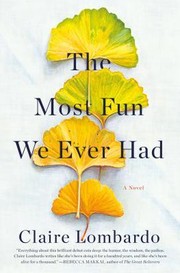
The Most Fun We Ever Had
Four Sorenson sisters orbit perfect parents hiding old cracks.
2,590-word summary · 12 min read

Men Without Women
Seven stories about men living after women leave, die, or stay distant.
2,673-word summary · 12 min read


The Berry Pickers
A four year old vanishes from a Maine blueberry camp in 1962, and two families carry the loss for decades until Joe and Norma face the truth.
2,606-word summary · 12 min read

We Are All Completely Beside Ourselves
Rosemary tells of twin sister Fern, a chimp raised as family, and research fallout.
2,058-word summary · 9 min read

The Winners
Two years on, Beartown opens a new rink, welcomes Maya and Benji home, and faces money fights and a gun at the ice.
2,366-word summary · 11 min read

The Mothers
Nadia hides abortion from church Mothers while Luke and Aubrey circle for years.
2,078-word summary · 9 min read

The Shipping News
At thirty-six, failed newsman Quoyle loses his cruel wife and flees to ancestral Newfoundland with his daughters, where a small-paper job slowly rebuilds him.
2,833-word summary · 13 min read

Sing, Unburied, Sing
A Mississippi family drives to Parchman prison while ghosts press close, and a dying grandmother holds the house together.
2,871-word summary · 13 min read

Freedom
A St. Paul couple and their grown children strain marriage, loyalty, and ideals in 2000s America.
2,678-word summary · 12 min read

The Corrections
An aging Midwestern couple tries to gather three troubled adult children for one last Christmas at home.
2,094-word summary · 9 min read
Leaving Time
Thirteen-year-old Jenna searches for her mother who vanished from an elephant sanctuary ten years earlier.
3,001-word summary · 13 min read

Dear Edward
Twelve-year-old Edward Adler survives a plane crash that kills his family, then learns how to live with grief, letters, and love.
2,903-word summary · 13 min read

My Grandmother Sends Her Regards and Apologises
Seven-year-old Elsa loses her granny and best friend, then delivers apology letters to neighbours while holding onto fairy tales of Miamas and the Land of…
2,311-word summary · 10 min read

I Know This Much Is True
A housepainter fights to free his schizophrenic twin from a locked ward while a grandfather's memoir and a lost marriage resurface. Long, heavy, hard to forget.
2,533-word summary · 11 min read

Hamnet
Agnes Hathaway holds her Stratford family together while her husband works in London, until plague takes eleven-year-old Hamnet in 1596.
3,164-word summary · 14 min read

Convenience Store Woman
At 36, Keiko has worked at a Tokyo convenience store for 18 years and loves it. Family pressure to marry pushes her toward a strange fake partnership.
2,989-word summary · 13 min read

Extremely Loud and Incredibly Close
Nine year old Oskar searches New York for a lock matching his father's key after 9/11.
2,999-word summary · 13 min read

Norwegian Wood
Toru recalls 1969 Tokyo, torn between fragile Naoko and lively Midori after a friend's suicide.
2,051-word summary · 9 min read

Lisey's Story
Two years after her novelist husband dies, Lisey Landon follows a trail of clues into his childhood and the other world that made him a writer.
1,998-word summary · 9 min read

Little Earthquakes
Four Philadelphia women meet during pregnancy and discover that new motherhood is nothing like the plan, while friendship becomes the thing that holds them…
1,997-word summary · 9 min read