
Reading options
What's inside (8 sections)
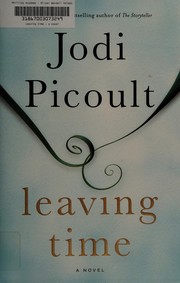
I came to Leaving Time sideways. I had read My Sister's Keeper years ago and remembered how Picoult likes a family under pressure and a last minute turn that makes you rethink the whole setup. A friend who volunteers with rescue animals kept mentioning the elephant chapters, so I finally picked up the Ballantine Books edition from 2014. It runs 416 pages in the first edition. I expected a courtroom story. What I got was closer to a missing person search with a psychic who no longer trusts herself, a former cop who drinks too much, and a thirteen year old who refuses to accept that her mother walked away.
The premise is simple to state. Jenna Metcalf is thirteen and living with her grandmother. Her mother, Alice Metcalf, an elephant researcher, vanished ten years earlier on the same night a worker died at the New England elephant sanctuary where her parents worked. Her father Thomas has been in a mental health facility since soon after. Jenna has grown up on scraps, old journals, internet searches, and the firm belief that her mother would never leave her on purpose. She decides to hire help with babysitting money and sheer persistence.
That opening pulled me in fast. Jenna sounds like a real teenager in some moments, funny and blunt, and like an older soul in others. I liked her immediately even when I worried about her. She is the kind of kid who reads everything and remembers everything, which makes her good company for a mystery and sad company when you realize how alone she has been.
A girl, a stack of journals, and a mother who studied grief
Jenna anchors the early chapters. She lives with her grandmother on the edge of ordinary life, school and chores and late night searches, while carrying this large absence. Her father Thomas set up the sanctuary with big hopes. Her mother Alice came to it as a scientist with a specific interest, how elephants grieve. That detail matters more than it first seems.
Alice kept journals. Jenna has read them until the binding feels soft. In those pages Alice writes about daily work, mud and feeding schedules and rivalries among staff, and also about questions that keep resurfacing in her field. Do elephants remember their dead. Do they return to bones. Do they stand guard. Do they cover bodies with branches and dirt. Do mothers stay near calves that do not survive.
Picoult weaves short research passages through the story. Some readers will love those parts. I did, mostly. You learn about matriarchs, about how herds respond when one of their own goes down, about calves and memory and the way elephants seem to check on places where loss happened. The science is presented in plain language, tied to Alice as a person. She is curious, stubborn, tender with animals in a way she sometimes struggles to be with people.
Thomas is harder to see clearly at first. Jenna visits him. He is largely shut down, barely speaking, kept in care after a breakdown that followed the disappearance. Jenna loves him but cannot reach him. Her grandmother loves both of them but shuts down questions about that night. That silence is what pushes Jenna outward. If no one at home will tell her the full story, she will pay strangers to help her find it.
One small thread I appreciated was money. Jenna is thirteen. She does not have much. She counts bills, compares rates, chooses the psychic she can afford. That practical detail keeps the story grounded when the paranormal enters. She is not chasing ghosts for fun. She is budgeting for answers.
Serenity Jones, who stopped hearing anything
Serenity Jones used to be famous for finding missing people. Then she made a high profile miss involving a kidnapped boy connected to a public figure, and her career collapsed. Since then she says she hears nothing. No impressions, no guides, no pulls toward one town over another. She does readings to pay rent and feels like a fraud while doing them.
Jenna shows up and asks for help finding Alice. Serenity wants to say no. She is tired, broke, embarrassed, and afraid of failing another child. But something about Jenna gets under her skin. A dream that feels too specific. A computer glitch that arrives at an odd time. A sense that she is being nudged. She agrees to meet, then to look at the journals, then to actually try.
I liked Serenity a lot. She is funny in a weary way. She bickers with tech support, she talks to herself in the car, she apologizes too much and then catches herself. Under the jokes she is dealing with shame. When you build an identity around helping people and then you get it wrong in public, it is hard to trust any flicker that comes back. Picoult lets her be skeptical of herself, which makes her easier to believe when she starts to sense something around Jenna.
Her chapters also raise a fair question without preaching. What do we do with knowledge that does not fit lab methods. Alice herself, the scientist, wrote that some small part of animal behavior resists clean explanation. Serenity lives in that gap. She does not claim to have all answers. She tries, she misses, she tries again. That wobble felt human to me.
Her fear for Jenna is real too. She warns her, more than once, that searching can hurt. You might learn your mother chose to leave. You might learn she died. You might learn something about your father that changes how you see him. Jenna hears the warning and keeps going. Thirteen year olds who have waited ten years do not scare easily.
Virgil Stanhope, who never let the case go
Virgil Stanhope was one of the officers called to the sanctuary that night. Years later he is a private investigator in name, mostly taking small jobs and drinking through the gaps. He carries guilt about how that first investigation was handled. There were signs of a struggle, questions about blood and timing, pressure from above to keep things quiet and move on. He went along when he should have pushed. He knows it.
Jenna tracks him down. He does not want the job. He is gruff, hungover, late on rent, quick with a dismissive line. But Jenna is persistent and oddly formal, laying out what she knows with dates and printouts. That surprises him. Then Serenity calls. The two adults circle each other with instant irritation that slowly turns into something like teamwork.
Virgil gives the book its noir edge, though Picoult keeps it light enough for a mainstream mystery. He revisits the closed sanctuary grounds, knocks on doors that people would rather keep shut, asks former staff about old affairs and old grudges, chases paper that has gone missing. He is not good at self care. He is good at noticing when a story has been smoothed over.
His bond with Jenna sneaks up on you. He starts by treating her as a client he should protect from false hope. Then he starts showing up on time. He remembers how she takes her food. He gets angry on her behalf when adults lie to her. For a man who claims to feel nothing, he feels plenty. His chapters are sad in a quiet way because you can see he wants to make up for failing Alice by not failing her daughter.
The banter between Serenity and Virgil helps the middle move. She teases him about his drinking and his manners. He teases her about her so called gift and her messy office. Underneath, both recognize the same wound. They each had one bad night that defined them, and they have been living in the shadow of it since.
What happened at the sanctuary
To follow the investigation you need the staff map. Alice and Thomas ran the New England sanctuary with another couple and extended family around them. Gideon was a worker there. His wife Grace worked there too. Grace mother Nevvie helped with care, including watching little Jenna. There were elephants with distinct personalities, including Maura, who features heavily in Alice journals as intelligent and sensitive.
Years before Jenna starts searching, cracks were already showing. Alice and Gideon had an affair. When Grace learned of it, she took her own life. That loss broke Nevvie. It also poisoned daily life at the sanctuary. People who once shared meals stopped meeting each other eyes. Thomas, who already lived with bipolar disorder, grew less steady. Alice felt guilt and confusion and threw herself into work. Little Jenna, three years old at the time, absorbed tension she could not name.
On the night in question, several things went wrong at once. Nevvie took Jenna out onto the grounds. What happened next is the heart of the book and Picoult reveals it in pieces. Nevvie, grief stricken over Grace and angry at Alice, struck Jenna with a rock. Alice arrived to find her daughter badly hurt and confronted Nevvie. The two women fought. Alice was hit on the head and lost consciousness. When she came to, her daughter body was gone and Nevvie was dead, trampled.
Picoult does not rush this. You get it through journals, through Virgil interviews, through a trip to Tennessee where Gideon relocated to another elephant facility, through forensic bits like a tooth found in dirt and a sliver under a nail. Gideon admits the affair and its fallout. Records and memories conflict. Thomas reacts strongly to certain objects, like a necklace, in ways that suggest memory locked behind illness rather than indifference.
The elephant behavior research pays off here. Alice had spent years noting how elephants respond to death. They linger. They touch bones. They cover bodies with earth and branches. When Alice wakes to find Jenna gone and Nevvie dead, one explanation fits what she knew from the field. Maura moved Jenna body and covered it, the way elephants mourn. Whether you buy every beat, the idea lands with force because Picoult prepared you for it across hundreds of pages. The science stops being background and becomes central to the mystery.
I found these investigation chapters the most readable. The pace picks up. Serenity tries to connect at meaningful spots and at first gets little. Virgil pushes for DNA testing. Jenna remembers more as she returns to places from early childhood. There is a tooth that tests as belonging to a small child. There is blood on clothing that points one way, then another. There is the slow realization that Alice fled not because she killed someone but because she feared she would be blamed, head injured and terrified, with her child missing and a dead colleague on the ground.
Alice leaving the hospital that night and disappearing fits that panic. She was hurt, confused, sure no one would believe her version. She eventually built a new life far away working with elephants in Africa, telling herself her old self was gone. That choice is hard to forgive and easy to understand at the same time, which is very Picoult. People do the wrong thing for reasons that make sense in the moment, then live inside the consequences.
The turn that changes who is alive
I will discuss the ending plainly because these summaries cover full plots, so stop here if you want to stay surprised.
Jenna is dead. She has been dead since that night at age three.
Virgil is also dead. After failing to solve the case and carrying guilt for years, he took his own life without fully realizing he had succeeded. He has been moving through the search as a spirit who thinks he is still alive.
Only Serenity among the trio is living. That is why waitresses speak only to her, why phone records do not line up, why patients in Thomas facility seem to see Jenna and Virgil when staff do not, why certain doors open easily and others do not. Picoult plants clues without flagging them. Jenna arriving at night and saying she misses talking to people. Virgil slipping past lines and checkpoints a living man could not. Gideon seeming off in Tennessee. Tallulah, the lab contact, already gone. Once you know, earlier scenes click into place.
The tooth matters. It leads to testing that confirms a small child died. Serenity pushes police to look where Maura likely left Jenna. Searchers find shallow remains near the sanctuary. A detective later calls Alice in Africa to tell her they found her daughter body. Alice returns for burial.
It is a lot. Some readers will feel cheated. I felt sad more than tricked. The book is about grief, and the twist forces you to feel what Alice studied. Elephants return to bones. People do too, in their own way. Jenna search was, without her knowing, a search for rest. Virgil search was a search for amends. Serenity, who thought her gift was gone, learns she has been using it all along. She saw them because she can see the dead. That reframes her shame. She did not lose everything. She was doing the work while doubting it.
There are still ghosts in the details that nagged me. How Nevvie exact motives get described shifts a little depending on who tells it. How Alice could leave a missing child without checking harder strains belief until you factor in head injury and terror. How Thomas could live for years without knowing strains belief until you factor in illness and the way institutions isolate people. I accepted most of it because the emotional logic held, but I understand readers who do not.
The final meetings are gentle. Serenity contacts Alice and proves, through small facts she could not otherwise know and through a mirror moment with Jenna, that she is truly in touch. Alice gets a kind of closure, though closure feels too neat a word for burying a child ten years late. She goes back to work with a heavier and clearer heart. Serenity keeps going, less afraid of her own mind. Virgil and Jenna move on. Maura, in memory and in Alice journals, stands over all of it, large and patient.
Elephant science, memory, and where the book drags
What I will remember most is not the twist mechanics but the parallel Picoult draws. Alice work gives you a way to think about human mourning without turning people into case studies. Elephants remember paths to water and places where companions fell. People keep journals, save voicemails, revisit restaurants, sleep on one side of the bed. Both species circle loss. Both have rituals that look strange from outside and make complete sense from inside.
That parallel is helped by bold choices in structure. Four voices rotate, Jenna, Alice, Serenity, Virgil, plus journal excerpts and brief elephant fact passages. When it works, the rotation builds suspense. You learn a little from each angle and feel smart assembling it. When it drags, especially in the middle third, the research passages pile up and the investigation stalls. I skimmed two or three elephant sections on first read, then went back and found one image that reframed a later scene. So the material earns its place, but the pacing asks for patience.
Fair criticism is needed here. Virgil can feel stitched from cop show parts in early chapters, the bottle, the ex wife energy, the gruff one liners. He gets better once his guilt specifics surface, but the first fifty pages with him lean on type. Serenity wisecracks sometimes cover real pain and sometimes just fill space. Jenna occasionally sounds fourteen going on forty, with insights about marriage and mental illness that feel written by an adult looking back rather than a teen living it. Thomas and Grace get less interior life than they deserve, seen mostly through other people need for them.
The twist will divide people, and that is worth saying up front. If you like stories where the supernatural reframes the mystery, like a certain famous film about seeing dead people, you may admire how Picoult hides her ghosts in plain sight. Service workers ignoring them, records that do not match, the way only Serenity pays when they eat out. If you prefer every clue to be checkable in a police file, you may feel the rules shifted late. I landed in the middle. I guessed part of it, missed the Virgil half completely, and appreciated the reread value even while wishing one or two haunting details had been seeded with a lighter hand.
Who should pick this up. Readers who like family mysteries with emotional weight, readers curious about elephants, readers who do not mind crying a little on a plane. Readers who want a trial or a legal puzzle like some Picoult books should know this one is different. The courtroom is absent. The drama is internal and investigative. Content notes are mild for Picoult, affairs and a suicide in backstory, a child death at the center, grief and mental illness throughout, but nothing written for shock.
I closed the book thinking about Maura more than any person. An elephant who watched, who acted, who mourned in the only way she knew. And about Alice, who spent her career documenting grief in another species and then had to live inside her own findings. Picoult can be sentimental, and at times she reaches for a big feeling when a smaller one would do. Here the big feeling felt earned. A mother who left, a daughter who waited, and a long walk back to the same patch of dirt where everything changed.
If you read it, read the author note on research. It will not settle the paranormal questions, which is the point. Some things about memory and love resist neat proof. Alice knew that with elephants. Serenity learns it with people. Jenna, in her way, teaches it to both of them.
FAQ
When was Leaving Time published and how long is it?
Ballantine Books published it in 2014. The first edition runs 416 pages and carries ISBN 9780345544926, which is the edition cited here.
How is the story told?
You follow Jenna, her mother Alice, psychic Serenity Jones, and ex detective Virgil Stanhope in rotation, with Alice journals and elephant research notes mixed in. The sections build toward the night at the sanctuary and what came after.
Is this a book about elephants or about people?
No. The human plot stays focused on grief, memory, and a missing person search. Elephants matter because Alice studied them, and their mourning habits mirror what the people cannot face.
Similar books
Vanishing Acts
A search-and-rescue worker's perfect life cracks when her past and her father catch up.
2,799-word summary · 12 min read
Plain Truth
An Amish teenager denies a hidden pregnancy after a newborn is found dead, and a city lawyer moves to the farm to defend her.
2,669-word summary · 12 min read
In an Instant
After a family camper crashes down a snowy mountain, sixteen-year-old Finn watches from the afterlife as survivors make impossible choices and try to live with…
2,130-word summary · 9 min read

The Accidental Tourist
Grieving Macon writes travel guides for haters of travel, then Muriel intrudes.
2,252-word summary · 10 min read

Kitchen
Orphan Mikage finds home in a kitchen with Yuichi and Eriko after loss.
2,597-word summary · 12 min read

We Begin at the End
Thirteen-year-old Duchess Day Radley shields her little brother Robin after their mother dies, as freed killer Vincent King returns and sick chief Walk tries…
2,956-word summary · 13 min read
The Winners
Two years on, Beartown opens a new rink, welcomes Maya and Benji home, and faces money fights and a gun at the ice.
2,366-word summary · 11 min read
The Last Anniversary
A single woman inherits island house and unknots a vanished baby story.
2,158-word summary · 10 min read

Suzanne's Diary for Nicholas
A dumped editor reads a Vineyard mother's diary that reframes everything.
2,087-word summary · 9 min read

Little Secrets
A mother missing a son finds her husband cheating and handles both herself.
2,008-word summary · 9 min read

Where the Forest Meets the Stars
A grieving bird researcher hosts a strange child who claims to be alien in an Illinois cabin.
1,910-word summary · 8 min read

My Grandmother Sends Her Regards and Apologises
Seven-year-old Elsa loses her granny and best friend, then delivers apology letters to neighbours while holding onto fairy tales of Miamas and the Land of…
2,311-word summary · 10 min read
Wish You Were Here
Diana goes to the Galapagos alone when Covid keeps her boyfriend in New York, and being stranded there forces her to rethink her job and relationship.
2,178-word summary · 10 min read

The Storyteller
Baker Sage Singer is asked by old Josef Weber to kill him for his SS past, while her grandmother Minka's war story weighs on her.
2,174-word summary · 10 min read
The Pact
After Emily Gold dies from a gunshot, her boyfriend Chris Harte says it was a suicide pact and faces trial for murder.
2,873-word summary · 13 min read

Nineteen Minutes
Sterling High student Peter Haddon commits a school shooting and lawyer Jordan McAfee defends him while Josie Cormier hides truth.
2,267-word summary · 10 min read
My Sister's Keeper
Thirteen-year-old Anna sues her parents for medical emancipation so she can refuse to give her dying sister Kate a kidney.
2,332-word summary · 10 min read

Little Earthquakes
Four Philadelphia women meet during pregnancy and discover that new motherhood is nothing like the plan, while friendship becomes the thing that holds them…
1,997-word summary · 9 min read
Summer Island
A radio advice host hides a scandal, and the estranged daughter hired to write about it agrees to care for her at the family's island house.
2,325-word summary · 10 min read

Sam's Letters to Jennifer
A grieving journalist reads her grandmother's letters and finds a decades-long love affair that changes how she sees her family.
2,310-word summary · 10 min read

The Girls in the Garden
Clare moves her daughters to a gated London garden where the community feels safe; at the midsummer party, twelve-year-old Pip finds her sister bleeding in the…
1,973-word summary · 9 min read

We Are Okay
Marin fled San Francisco after her grandfather vanished and stopped answering anyone. When Mabel visits her college dorm, she has to say what happened.
2,253-word summary · 10 min read

Two by Two
Sparks's twentieth novel turns from first love to a marriage breaking up: Russell Green loses his wife and his job, then rebuilds his life around his…
2,192-word summary · 10 min read
The House We Grew Up In
The Bird family of the Cotswolds breaks apart after a suicide and spends twenty years not talking about what happened.
2,198-word summary · 10 min read

At First Sight
Jeremy and Lexie are married and expecting a baby when anonymous emails tell him the child may not be his.
2,317-word summary · 10 min read

A Spool of Blue Thread
Four generations of the Whitshank family in Baltimore, and the silences, resentments and quiet love they hand down without ever saying so.
2,408-word summary · 11 min read

The Pilot's Wife
Kathryn Lyons's husband dies in a plane crash, and the investigation reveals a secret life that forces her to rethink their marriage.
2,006-word summary · 9 min read
The Best of Friends
Three lifelong friends discover their teenage sons were hiding more than anyone knew after a night that leaves one dead, one in a coma and one silent.
2,040-word summary · 9 min read
Killers of a Certain Age
Four sixty-year-old assassins discover their retirement cruise is a trap and turn their skills on the agency that trained them.
2,014-word summary · 9 min read

Delilah Green Doesn't Care
Delilah returns to Bright Falls to photograph her stepsister's wedding and falls for Claire, a bookstore owner and single mother, while a cruel bet threatens…
2,315-word summary · 10 min read