
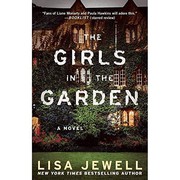
The Girls in the Garden
1,973-word summary 9 min read 320 pages in the book
- First published
- 2015
- Publisher
- Atria Books
- Pages
- 320
- ISBN
- 9781476792231
- Original title
- The Girls
Reading options
What's inside (10 sections)
Jewell writes London the way some writers write ships, as a confined space with its own laws, and her best trick is the discovery that the safest-seeming place in her novels is usually the one with the most wrong with it. The Girls in the Garden, published in 2015 in Britain as The Girls and retitled for the American edition the following year, applies that trick to a gated communal garden in north London, three acres of mown grass and rose beds that the surrounding houses share, and to the summer when a twelve-year-old girl finds her sister bleeding in the roses.
I came to it expecting a standard domestic thriller, the kind where one household's secret detonates on page two hundred, and what I got was something more diffuse and in some ways more interesting, a novel about a whole neighborhood under suspicion. Jewell keeps the cast large and the point of view moving, and the effect is of being inside a community rather than inside a marriage. That is a harder structure to hold than the tighter form, and the book is not equally successful in all its strands. When it works, it works on a specific fear that I suspect is close to universal, which is the fear that you do not actually know the people living twelve feet from your back window.
The party in the rose garden
The novel opens at the community's midsummer party in July, at the height of the garden's beauty, with the picnic tables out and every household in attendance. Then twelve-year-old Pip goes looking for her sister and finds thirteen-year-old Grace in a hidden corner of the rose garden, half-dressed, unconscious, and badly hurt. Grace is taken to hospital and placed in a coma, and the book leaves her there while it rewinds to explain how this family arrived at this party at all.
That structural choice, the crime first and the context afterward, is standard for the genre, and Jewell executes it competently. What makes the opening genuinely unsettling is the ordinariness around it. The party continues. Adults stand in the grass trying to piece together where everyone was. A summer evening that was supposed to be the community's annual high point becomes the night everyone will account for, and the reader is put in the position of the neighbors, scanning faces and trying to work out which of these friendly people is hiding something.
The detail I keep returning to is how quickly the garden changes meaning in the book's first fifty pages. Before Grace is found, it is the reason Clare moved her family here, a green enclosure where children roam between houses and nobody has to watch constantly. Afterward, every path is a place where something could have happened unseen, and Jewell never has to say this directly. The transformation is carried entirely by where characters choose to stand.
Why the Wilds moved in
The family at the center is Clare Wild and her two daughters, Grace and Pip. They have come to the park because their previous life fell apart in the most violent way imaginable: Clare's husband, Chris, burned down their family house during a mental-health crisis and is now being treated in hospital, out of the girls' reach and permanently altered by what he did.
Jewell handles this backstory carefully, rationing it. Pip writes letters to her father about the new flat, the new garden, the new friends, which gives the reader a child's account of the move, cheerful on the surface and heartrending underneath, because what Pip is describing as an adventure is actually a family in pieces. The letters are the book's best device. They let Jewell do exposition as affection, so that the facts about the fire and the hospital arrive disguised as a twelve-year-old showing off her new life.
Clare's decision to move somewhere gated and shared is the novel's quietly devastating detail, and the book knows it. She has just learned that the danger can come from inside a marriage, and her response is to place herself inside a community where everyone can see everyone. The theory is that visibility equals safety. The novel spends its whole length testing that theory to destruction.
Three viewpoints, three versions of the same summer
The narration moves between three women: Pip, Clare, and Adele Howes. Adele is one of the park's long-term residents, married to Leo, with three daughters of her own, Willow, Fern, and Catkin, and Leo's father Gordon living under their roof. Reading the same weeks from Adele's side of the garden is a different experience entirely, because the Howes family has its own frictions and its own reasons for wanting the park to be exactly what it appears to be.
This multiplies the novel's material in a way I mostly enjoyed. Secrets that Clare does not know sit in plain sight in Adele's chapters, and vice versa, and the reader gets the particular pleasure of watching two people in adjacent houses hold incompatible versions of a single event. Jewell is good at the domestic specifics that make each household feel occupied, whose turn it is to worry about which child, where the sleeping pills are kept, which adults are drinking too much in the good weather.
The cost of the approach is that no single voice gets enough room to become gripping. The book is more interested in atmosphere than in any one perspective, and a reader who comes for a single obsessive point of view, the mode Jewell handles brilliantly elsewhere, may find the breadth a little cool. I did not mind it, but I can see the objection, and the middle stretch where the plot thins is where the breadth starts to feel less like generosity and more like delay.
The park's history
Virginia Park has a past, and the novel uses it the way old houses are used in ghost stories, as a supply of precedent. A fifteen-year-old named Phoebe Rednough died in the garden years before the Wilds arrived, and nobody in the community talks about it much, which is to say everyone thinks about it constantly.
The effect on the neighbors is one of the book's sharper observations. When something happens to a child inside the gates, the park's own history becomes the first suspect, and suspicion that would otherwise have to travel outward, to strangers, to the city at large, instead stays home and starts circulating among the people who share a water supply. The dead girl functions as proof that this supposedly sealed world was never sealed at all, and her presence keeps the reader from accepting the residents' comforting premise that the danger must have come from outside.
There is a version of this novel where Phoebe's death connects directly to Grace's, a neat revelation that the two crimes rhyme. Jewell declines that, and I think rightly. The point is not that history repeats in a satisfying pattern. The point is that a community with an unexamined death in its past will produce more of the same silence when the next emergency arrives.
Grace, Tyler, and Dylan
The strand that leads to the attack is handled with restraint, which is both a virtue and a limitation. Grace, at thirteen, is beginning the transition out of childhood that her younger sister has not started, and she is drawn to the older park children, particularly Dylan, and to Tyler Rednough, Phoebe's relative, whose own attachment to Dylan and to Grace's place in the park is more complicated than it first appears.
Jewell builds the motive out of small, recognizable adolescent materials. Jealousy. Status. The rage that arrives when a younger newcomer takes up space you believed was yours. None of the machinery here is exotic, and that is deliberate. The horror of the book's central act is partly that it is produced by ordinary adolescent feelings rather than by an adult predator, which defeats every instinct the community has about where danger comes from.
The act itself, the drugging of Grace with sleeping pills stolen from Gordon's medicine supply, happens offstage, and the novel deals in aftermath rather than in procedure. Grace lies in her coma. The police ask their questions of a neighborhood that answers collectively and evasively. And the reader, who by now has spent time inside several of these households, is left with the uncomfortable knowledge that the person who did this is a child too.
Adele's choice
Without spoiling every turn, the resolution of the mystery is less important to the book than the moral position it puts Adele in. She works her way toward an understanding of what happened, and when she gets there she faces the choice every character in the novel has been facing in miniature: report what she knows and burn the community's remaining privacy, or hold it, protect the person responsible, and live inside the concealment.
That she makes the choice she makes is what gives the novel its unresolved sourness, and what makes it better than a simple puzzle. Jewell refuses the comfort of the case closed. Grace recovers. The legal consequences do not arrive to settle the ledger. What arrives instead is a set of adults who now share a secret, which is precisely the condition the park was supposed to protect them from. The gate kept the danger from leaving.
Where it falls short
The middle third sags, and I want to name that plainly because the book is otherwise well made. There is a stretch of summer where the viewpoint characters orbit, the same small suspicions recur in different kitchens, and the plot does not advance so much as steep. Patient readers will find texture there. Impatient ones will feel the book testing their loyalty.
Some of the peripheral characters are sketches rather than people. The park's teenagers other than Tyler and Dylan mostly function as weather, and Gordon exists mainly as a supply of sleeping pills and gruffness. For a novel so invested in community, the community is unevenly drawn, with the three central households much more solid than the neighbors who fill the party scenes.
There is also a question about the police investigation, which the book treats as background noise. Readers who need procedural credibility will notice that the questions asked inside Virginia Park would not survive contact with a real inquiry. Jewell's interest is in how a community narrates an event to itself, and the investigation is one more narrator in the chorus rather than an authority standing above it.
Who should read it
This is for you if you like your suspense social rather than technical, if a novel about which neighbor is lying interests you more than one about a detective's cleverness. It rewards readers who enjoy large casts and the slow construction of a place, and it will disappoint anyone who wants the engine of a police procedural running from the first chapter.
It sits comfortably alongside Jewell's other work for readers who already know her, and it stands alone for readers who do not, since nothing here depends on continuity with earlier books. The premise carries its own weight: a gated garden, a child hurt inside it, and the discovery that the people you chose to live beside are the people you can least easily escape.
I finished it on a train and then looked up from the page at the row of houses we were passing and wondered, briefly but genuinely, what was going on in the lit windows across the back gardens. That is the exact anxiety the novel is built to produce, and the fact that it outlived the reading experience is the clearest recommendation I can give it.
FAQ
Is The Girls in the Garden based on a true story?
No. It is domestic suspense set in a fictional London community, built around the premise of a gated communal garden where every household can watch the others.
What is the UK title of this book?
The Girls. It was published in the United Kingdom in 2015 as The Girls and retitled The Girls in the Garden for the United States edition the following year.
How does it compare to Lisa Jewell's other thrillers?
It is slower and more communal than her tightly focused domestic suspense, with a large cast of neighbors and a mystery that emerges from the whole park rather than from a single marriage.
Similar books
The Best of Friends
Three lifelong friends discover their teenage sons were hiding more than anyone knew after a night that leaves one dead, one in a coma and one silent.
2,040-word summary · 9 min read
Keep It in the Family
Mia and Finn renovate a long empty house and find seven children hidden in the attic.
2,270-word summary · 10 min read
Pieces of Her
After her mother kills a mall shooter with shocking skill, Andy Oliver uncovers a hidden 1980s past of radicals and wealth.
2,791-word summary · 12 min read
All the Little Houses
In 1980s Longview, Texas, social queen Charleigh and daughter Nellie guard mean-mom secrets when a new family threatens their empire.
2,206-word summary · 10 min read
The Family Remains
Lucy returns to London as bones on the Thames reopen the Chelsea mansion deaths.
2,304-word summary · 10 min read
I Found You
A man with no memory on a beach, a vanished husband, and a 1993 holiday collide in a seaside town.
2,990-word summary · 13 min read
Invisible Girl
A missing teen, a strained marriage and a doxxed loner collide in London.
1,996-word summary · 9 min read
Watching You
A new wife in Bristol fixates on a charismatic neighbor while a teen boy logs every move before a murder.
2,363-word summary · 11 min read
The Family Upstairs
Libby Jones inherits a Chelsea mansion and a past tied to a cult house, two runaways, and a baby left waiting.
3,300-word summary · 15 min read
Then She Was Gone
Ten years after Ellie vanished, her mother finds a link in a new family.
1,956-word summary · 9 min read

Six Years
A professor who promised to forget the woman he loved sees her husband's obituary and discovers that the wedding, the marriage, and the woman herself may never…
2,076-word summary · 9 min read
The Rumor
Two Nantucket best friends, Madeline and Grace, watch a summer of small indiscretions get retold into gossip that reshapes both their households.
2,017-word summary · 9 min read
Ghosted
After seven perfect days with Eddie, Sarah is ghosted, and her search for answers uncovers a secret tied to the accident that changed both their lives.
2,011-word summary · 9 min read

Girl, Forgotten
A rookie US marshal guards a judge with a stalker and ends up reopening the 1982 prom-night murder of the judge's pregnant daughter.
2,111-word summary · 9 min read
The Boy from the Woods
Wilde, found feral in a New Jersey forest in 1986, hunts for a missing teenager while a senator's secrets tear a wealthy town apart.
2,270-word summary · 10 min read
Vanishing Acts
A search-and-rescue worker's perfect life cracks when her past and her father catch up.
2,799-word summary · 12 min read
The Reappearance of Rachel Price
Bel films a doc when her missing mother walks back after years.
2,254-word summary · 10 min read
The House at Riverton
In 1999, ninety eight year old maid Grace Bradley tapes the truth about a 1924 shooting at Riverton Manor, poet Robbie Hunter, two sisters and a lie held for…
2,433-word summary · 11 min read
Every Last Secret
A wealthy wife tracks a possible affair, but dinners, therapy, and a sudden death expose buried secrets across two polished suburban marriages and force her to…
2,687-word summary · 12 min read
Bring Me Back
Finn lost Layla at a French rest stop twelve years ago. Now engaged to her sister Ellen, he faces sightings, emails and Russian dolls that reopen everything.
2,912-word summary · 13 min read
What Lies Between Us
Nina keeps mother Maggie locked upstairs for years, trading lies about sisters and deaths that unravel fast.
2,062-word summary · 9 min read
The Other Mrs.
A Chicago family inherits a house on a Maine island, then a neighbor is found murdered. Kubica's 2020 thriller builds to a final reframe.
2,267-word summary · 10 min read
The Cousins
Three cousins work at their rich grandmother island resort while digging into why their parents were cut off.
2,565-word summary · 11 min read
The Chain
Rachel must kidnap another child to save kidnapped Kylie, entering a chain where parents pass crime forward.
2,021-word summary · 9 min read
Reconstructing Amelia
A grieving lawyer mother reopens her teen daughter's alleged suicide at an elite Brooklyn school, uncovering bullying and secrets.
2,032-word summary · 9 min read
The Storm
A struggling innkeeper, a returning murder suspect, and a true crime writer collide as another hurricane bears down on the Alabama coast.
2,349-word summary · 10 min read
The First Time I Saw Him
Five years after Owen vanished, Hannah and Bailey have rebuilt in California until Owen walks into her exhibition and danger returns.
2,407-word summary · 11 min read
Such a Clever Girl
Fifteen years after the Tanners vanished, Aubrey returns at 30 as a new disappearance forces three women to face old secrets.
2,203-word summary · 10 min read
Anatomy of an Alibi
Two Louisiana women swap lives for twelve hours to spy on a husband, then he turns up murdered and only one of them has an alibi.
2,278-word summary · 10 min read
The Good Sister
Twin sisters share a careful arrangement until a plan to have a baby pulls old family secrets into view.
3,255-word summary · 14 min read