
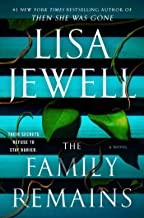
The Family Remains
2,304-word summary 10 min read 384 pages in the book
- First published
- 2022
- Publisher
- Atria Books
- Pages
- 384
- ISBN
- 9781982178895
- Series
- The Family Upstairs (#2)
Reading options
What's inside (8 sections)
I picked up The Family Remains because The Family Upstairs left me unable to forget 16 Cheyne Walk. I wanted to know what happened to Lucy and Henry and Libby after the dust sheets came off. Lisa Jewell published this one in 2022 with Atria Books, 384 pages, ISBN 9781982178895, as book two in The Family Upstairs series. I read it over four nights, slower than the first, because it follows five voices and keeps cutting between London and France.
The hook is grim and simple. Human bones turn up on the banks of the Thames. DCI Samuel Owusu catches the case. At first it looks like one of those sad river finds that may never be named. Then lab work and old files point back to Chelsea and to a house with a bad history. The bones do not match the three kitchen deaths everyone knows about. They suggest someone else died and was hidden, and that the count from thirty years ago was wrong.
That idea carries the book. If you thought the first novel closed the story of Birdie and David Thomsen and the children raised inside their commune, this one says you only saw the front rooms. People walked away from Cheyne Walk with secrets. Some built new lives. Some married badly. Some kept looking for a missing child. Now the river has given one secret back.
Owusu makes a good anchor. He is patient, polite, tired in an ordinary way, without the usual detective clichés taking over. He has a home life. He writes things down. He knocks twice. When he interviews Lucy Lamb, he listens, then checks. When he talks to Henry Lamb, he stays calm even when Henry performs. His chapters move in small steps, a forensic date, an address, a name spelled two ways in two files.
Bones on the Thames
A walker finds what looks like rubbish and turns out to be bone. Jewell does not linger on gore. She gives you tide and cold, police tape, onlookers standing too close. Owusu starts the slow work of identification. Age, rough years since death, dental work, old injuries. The details rule out the known dead from Cheyne Walk and open a new line.
He pulls the old file. Three adults found laid out in the kitchen years ago. A baby found alive upstairs. A commune led in practice by David Thomsen, funded by Birdie Dunlop Evers, watched over by children who had no say. A boy who hid and was never properly counted. Owusu sees gaps at once. Who fed the baby after the deaths. Who washed a cup. Who locked a door. Who left London without giving a statement.
His search leads to property records, a French address, a missing person report that never connected. He learns Lucy Lamb lived in France for years with Stella and Marco. He learns Henry stayed near the house with Phin. He learns other people orbited Cheyne Walk whose names missed the papers. One of them is now dead in another country, in another hidden room.
I found these police chapters steady. Calls, waits, lab backlogs. Owusu drinks tea while people cry or lie. The river bones keep pulling the story back to the body when it drifts.
Lucy Lamb comes home
Lucy is still my favorite voice. In the first book she was the tired mother in France counting coins. Here she is back in London, in a flat too small, with a job that pays too little, with children older and sharper. Stella watches everything. Marco jokes to cover nerves. Lucy loves them fiercely and sometimes lies to protect them. She tells them they are safe when she is not sure. She tells herself she can ignore Cheyne Walk. Then Owusu knocks.
Her chapters hold small, true details. School uniforms needing wash. Late shopping for markdowns. A cracked phone screen. A landlord who will not fix a lock. Jewell writes poor London without spectacle. Lucy works, queues, says thank you. She also remembers France, cleaning jobs, fear that followed her even there. Coming home has only moved the fear closer.
Lucy and Libby share scenes I waited for. Libby Jones, once the baby in the cot, now owns the house and wants a clean line. Papers signed, rooms aired, a life of her own. Lucy wants the same but knows blood makes clean lines hard. They are linked through Birdie and through Henry, and they circle each other with care and irritation. One scene at a kitchen table, tea going cold while Stella does homework, felt more tense than any interview. Two women trying to be sisters without a shared childhood.
Lucy must also handle Henry. He calls, visits, brings the kids gifts that are slightly wrong, too old or too dear. He asks about a boy from the past, a child around the houses and communes who slipped out of records. Lucy does not want to hear it. She told herself that boy found a way out. Henry insists he did not. His need to find him drives the middle of the book, and Lucy gets pulled along because she cannot watch him spiral, even though she fears him.
What I admired is that Lucy may be angry. At Birdie for yielding rooms to David. At David for taking them. At Henry for staying. At herself for leaving Henry as a girl. She does not forgive on cue. She sets rules. No overnight stays without asking. No old stories in front of Marco. No keys. Those bounds make her feel like a parent first, which keeps her likable even when she withholds from Owusu longer than she should.
Rachel Rimmer and the cellar in France
The biggest new thread belongs to Rachel Rimmer. Rachel lives a controlled life with her husband Michael. From outside the marriage looks fine. Inside it is cold. Michael charms others and controls at home. Money, plans, moods. Rachel manages him by staying quiet, keeping lists, seeing friends separately.
Then Michael dies. He is found alone in a cellar in France, in odd circumstances. Rachel flies out for formalities and faces questions she cannot answer. Why was he there. Who owned the place. Why did he have keys. French police stay polite and persistent. Owusu hears about it in London and sees a possible link through old commune contacts and property chains.
Rachel narrates in a flat, careful voice I grew to trust and then to question. She recalls meeting Michael, early romance, small red flags explained away. A joke that was not funny. A friend cut off. A trip taken alone. A rule about the spare room. Jewell builds control through routine. Who drives. Who pays. Who apologizes first. Rachel kept spreadsheets because Michael liked order. She stopped wearing shoes he said made noise. It accumulates until you see why she stayed and why leaving felt harder.
After his death she looks back clearer. She finds papers, a second phone, names. She remembers a weekend in a commune-like place years ago that Michael called fun and that felt off, shared meals, long talks about clean living and cutting ties. She wonders if Michael knew David or someone near him. She wonders if she married Cheyne Walk without ever visiting it.
Her chapters pair well with Lucy's. Both women learn to name what happened long after it happened.
Henry, Phin and the boy who vanished
Henry Lamb remains the strangest figure. Raised inside the commune as a bright boy hungry for David's approval, he stayed as an adult in the upper rooms with Phin, short for Phineas Thomsen, son of David and Birdie, gentle and loyal beyond sense. Here Henry is out in the world more, but not of it. He dresses carefully. He speaks politely. He also steers people without always seeing it.
Henry searches for a boy from the past. During the commune years, children moved between houses and flats in London and France. Adults told different stories about who belonged where. One vulnerable boy slipped out of records. Henry remembers games, a shared room, a promise to look after him. He believes the boy may be the bones, or alive and hiding, and he cannot rest.
Phin follows because he always has. Henry cooks. Phin mends. When their versions of one day differ, read the gap. Henry needs the past to mean something. Phin needs today to be bearable.
The search takes them to old addresses, a French commune with apology posters, a woman who kept letters, a man who drove a van for followers. Some help. Some shut doors. One café meeting, Henry overdressed, Phin quiet over cake, stayed with me because neither knew how to end it. Awkwardness does more work than menace.
Criticism belongs here. Henry reads too knowing and too naive at once. Phin repeats worry, follow, forgive. When he finally pushes back, it lands, but I wished it sooner.
How the past catches the present
In the last third the threads pull tight. Owusu matches dates. Rachel brings papers. Lucy admits what she saw as a girl and hid as a woman. Henry names where the boy was last seen. Phin recalls a night journey and a locked door. The commune network resolves from separate houses into a chain of rooms where the same adults appear under slightly different names.
Jewell is good at property as plot. Who owned which flat. Who paid for a van. Who signed for a child at a clinic. Who held keys to a cellar. A lease with two signatures puts Michael near David's circle. A school record shows a boy enrolled under one name and withdrawn under another. A bank transfer explains an empty French house. Owusu lays it on a board and you feel the old world click.
The violence, when described, is plain rather than showy. No set piece fight. Small cruelties adding up, a punishment too far, a dose measured wrong, a body moved by people who said they had no choice. The bones get a likely name and story, though Jewell leaves doubt that feels honest. Water and time take certainty. Owusu can prove enough to grieve without proving enough to punish everyone. That gap frustrated me in a good way. Cold cases often end there.
Lucy faces Henry in scenes that carry weight. She says she loves him and will not live inside his search. Stella and Marco come first. She repeats what she remembers, milk carried upstairs, a song to stop a baby crying. Henry rewrites as he listens. She repeats louder, plainer. Some siblings never agree on childhood. They only agree on keeping children out of it.
Rachel's choice gives her power back. She hires a solicitor. She changes locks. She tells a friend the truth. She decides what to give police. No transformation montage, just clear steps. Libby airs rooms, pays bills, guards her peace. The house has been talked about enough. Lucy chooses to live near but not inside its pull. Henry lets one search end. Phin picks a smaller routine. Owusu closes what he can.
What works and what sprawls
What works is ordinary people inside abnormal history. Lucy counting change. Owusu waiting for labs. Rachel ironing while afraid. Phin feeding pigeons. Jewell also rhymes married control across time, Birdie yielding room by room to David, Rachel yielding account by account to Michael. Loneliness plus certainty plus a house with rules. That echo gives the sequel reason beyond twists.
Five voices bring breadth. Lucy brings heart. Rachel brings dread. Owusu brings method. Henry brings memory. Phin brings softness. Near the end quick alternation lifts pace. A detail Rachel finds explains a name Henry misremembered. A date Owusu confirms makes Lucy credible after doubt. Those clicks reward readers who recall Stella's age or Phin's surname.
What sprawls is cast. Beyond narrators stand solicitors, neighbours, French officers, old followers, social workers, landlords, teachers. I needed a list by page two hundred. A vital woman vanishes for a hundred pages then returns as if we spoke yesterday. A man with two names gains a nickname that confused me. Readers who liked the first book's tight trio may tire when in-laws and colleagues want scenes.
Pace sags mid-book. Lucy travels. Rachel waits for paperwork. Henry knocks where no one answers. Short chapters try to hold tension, but several end just as someone is about to speak.
David stays thin. We hear rules through others, rarely see doubt. That distance preserves dread, yet after two books I wanted one unguarded moment. Hints only. His absence forces present villains to carry weight they sometimes cannot hold, and Michael can feel like a copy.
Content notes in plain terms. Children go hungry while adults preach purity. A boy is passed between failing adults. Coercive marriage shows through money and isolation. Forensic talk is brief but cold. None is written for shock, but it lingers. Readers wanting a clean victim villain line may struggle because Henry is both, Birdie was both, and even Lucy lies to protect her own. I found that blur honest, though I wanted firmer reckoning for adults who built rooms where children waited.
I closed satisfied but less haunted than by book one. Lucy and Owusu and Rachel earned pages. The river gave back a name. If you read the first, read this for Lucy. If not, start there.
Facts held steady for this post: first published in 2022 by Atria Books, 384 pages in the cited edition, ISBN 9781982178895, author Lisa Jewell, series The Family Upstairs book two. The summary above follows that text with DCI Samuel Owusu finding bones, Lucy Lamb returning with children, Rachel Rimmer losing Michael in France, and Henry with Phin searching for a boy from the past.
FAQ
When was The Family Remains published?
Atria Books published it in 2022. The edition cited here runs 384 pages with ISBN 9781982178895.
Is it part of a series?
Yes, it is book two in The Family Upstairs series, following The Family Upstairs and returning to 16 Cheyne Walk.
Who are the main voices?
Lucy Lamb, Rachel Rimmer, DCI Samuel Owusu, Henry Lamb and Phin carry alternating chapters between London and France.
Similar books
More from The Family Upstairs first, then related titles.
The Family Upstairs
Libby Jones inherits a Chelsea mansion and a past tied to a cult house, two runaways, and a baby left waiting.
3,300-word summary · 15 min read
Watching You
A new wife in Bristol fixates on a charismatic neighbor while a teen boy logs every move before a murder.
2,363-word summary · 11 min read
Keep It in the Family
Mia and Finn renovate a long empty house and find seven children hidden in the attic.
2,270-word summary · 10 min read
What Lies Between Us
Nina keeps mother Maggie locked upstairs for years, trading lies about sisters and deaths that unravel fast.
2,062-word summary · 9 min read
The Chain
Rachel must kidnap another child to save kidnapped Kylie, entering a chain where parents pass crime forward.
2,021-word summary · 9 min read
Pieces of Her
After her mother kills a mall shooter with shocking skill, Andy Oliver uncovers a hidden 1980s past of radicals and wealth.
2,791-word summary · 12 min read
The Good Daughter
Twenty eight years after a home invasion shattered her family, a lawyer witnesses a school shooting that reopens old wounds.
2,505-word summary · 11 min read
The Locked Door
Surgeon Nora Davis hides serial killer father while patients die.
2,465-word summary · 11 min read
A Flicker in the Dark
Psychologist Chloe Davis faces copycat disappearances in Baton Rouge twenty years after her father confessed to murders.
3,074-word summary · 14 min read
I Found You
A man with no memory on a beach, a vanished husband, and a 1993 holiday collide in a seaside town.
2,990-word summary · 13 min read
Invisible Girl
A missing teen, a strained marriage and a doxxed loner collide in London.
1,996-word summary · 9 min read
Then She Was Gone
Ten years after Ellie vanished, her mother finds a link in a new family.
1,956-word summary · 9 min read

What She Knew
Rachel lets her eight-year-old son run ahead in a Bristol park, and the nine-day search turns her into a suspect in the public eye.
2,952-word summary · 13 min read

The Beach House
A young valet is beaten to death at a Hamptons party, and his law-student brother spends a year building a case against the family that covered it up.
2,049-word summary · 9 min read

Six Years
A professor who promised to forget the woman he loved sees her husband's obituary and discovers that the wedding, the marriage, and the woman herself may never…
2,076-word summary · 9 min read

Rules of Prey
Minneapolis detective Lucas Davenport hunts a killer who leaves a new rule at every scene and treats murder as a game of wits.
1,914-word summary · 9 min read

4th of July
Lindsay Boxer shoots two armed teenagers in self-defense, faces a wrongful-death trial, and spends her leave chasing a string of throat-slashing murders in…
2,192-word summary · 10 min read

61 Hours
A bus crash strands Jack Reacher in a snowbound South Dakota town where a drug gang, a corrupt police force, and a single witness are on a collision course.
2,227-word summary · 10 min read

Still Missing
A realtor is abducted at a Vancouver Island open house and held for more than a year. Told through therapy sessions, the novel follows her escape and the hunt…
2,466-word summary · 11 min read

Bad Luck and Trouble
A deposit of $1,030 summons Jack Reacher back to his old army unit, which is being picked off one name at a time.
2,366-word summary · 11 min read

3rd Degree
The third Women's Murder Club novel follows a San Francisco terror cell and a three-day killing schedule, and it costs the club a member.
2,685-word summary · 12 min read

Worth Dying For
Reacher stops for one night in rural Nebraska and finds a family that runs the county, a missing girl and a shipment worth killing for.
2,021-word summary · 9 min read
The Best of Friends
Three lifelong friends discover their teenage sons were hiding more than anyone knew after a night that leaves one dead, one in a coma and one silent.
2,040-word summary · 9 min read

Say You're Sorry
A widowed prosecutor defends the teenager accused of killing her babysitter, uncovering a small town's secrets and a killer hiding in plain sight.
2,116-word summary · 9 min read

Echo Burning
Reacher hitches a ride with a Texas woman who wants her abusive husband killed, then has to prove she did not murder him when he comes home.
2,209-word summary · 10 min read

Girl, Forgotten
A rookie US marshal guards a judge with a stalker and ends up reopening the 1982 prom-night murder of the judge's pregnant daughter.
2,111-word summary · 9 min read

The Woods
Twenty years after two teenagers were murdered and two vanished at summer camp, prosecutor Paul Copeland identifies a fresh corpse as one of the missing.
2,490-word summary · 11 min read
The Boy from the Woods
Wilde, found feral in a New Jersey forest in 1986, hunts for a missing teenager while a senator's secrets tear a wealthy town apart.
2,270-word summary · 10 min read
Without Fail
Reacher is asked to test vice presidential security by planning to kill.
2,084-word summary · 9 min read
Things We Do in the Dark
A comedian kills her husband, then a podcaster digs up her teen murder past.
2,427-word summary · 11 min read