
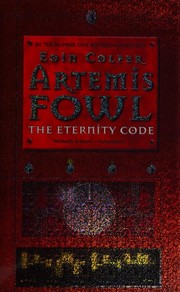
The Eternity Code
2,949-word summary 13 min read 329 pages in the book
- First published
- 2003
- Publisher
- Puffin Books
- Pages
- 329
- ISBN
- 9780670913527
- Series
- Artemis Fowl (#3)
Reading options
What's inside (9 sections)
I came back to this series out of order. I had just finished The Opal Deception because a friend left it behind, and I kept tripping over references to a Chicago job and a wiped mind. I wanted to see the job itself. The Eternity Code by Eoin Colfer is the third book in the Artemis Fowl series, first published 27 April 2003 by Puffin Books in the UK, with the first edition hardback running 329 pages with ISBN 9780670913527. The US edition came from Miramax Books that May. It follows The Arctic Incident from 2002 and comes before The Opal Deception from 2005.
That order matters. At the end of book two Artemis got his father back and kept a little fairy tech for himself. He is thirteen here, rich, rested, and telling himself he will go straight after one last score. His father wants the Fowl name clean. His mother wants quiet mornings. Artemis wants to prove he can outthink anyone on either side of the ground, human or fairy, and then walk away. I read most of it on a train with a bad coffee, and I kept underlining the places where he almost believes his own promise.
Colfer sets this one up as a business meeting that turns into a rescue. Artemis built something. He shows it to the wrong man. His bodyguard pays for it. Then he has to ask old enemies for help and break into a tower in another country with no magic to spare. It is the most human the series had felt up to that point, which is strange to say about a book with centaur tech support and a dwarf who can pop his jaw.
The Cube and the man from Chicago
The trouble starts with the C Cube. Artemis made it from pieces of fairy tech he kept after the Arctic trouble, mostly from Holly Short's helmet. It can read any signal, copy any phone, show any camera feed, and guess passwords faster than any human machine in 2003 could. Colfer has fun with the demo chapters. Artemis sits in Fowl Manor with Butler and runs the Cube through party tricks that feel dated now in a sweet way. He pulls video from a pizza place camera. He clones a mobile call. He talks about microwaves and fiber and fairy batteries in the same breath.
Artemis does not want to sell the Cube. He wants to blackmail Jon Spiro. Spiro runs a Chicago tech empire and fixes problems with lawyers and muscle in equal measure. Artemis invites him to Ireland, shows the box, and names a price for silence. Gold, mostly. Enough to wash the family money and fund straight business. He thinks Spiro will blink because Spiro needs the tech and fears exposure.
He reads Spiro wrong. Spiro brings Arno Blunt, a pale bodyguard who likes guns a little too much, plus two thick enforcers named Pex and Chips who laugh at their own jokes. During the meeting Spiro's people jam the Manor cameras, grab the Cube, and shoot. Butler steps in front of Artemis and takes a bullet in the chest. He goes down hard on the rug while Spiro walks out with the box.
I found this opening sharper than the goblin rebellion in book two. No underground politics yet. Just greed, pride, and a boy who thought a contract would protect him. Spiro is not subtle as a character. He collects companies, threatens families, and calls theft a negotiation. Colfer writes him as pure American muscle money against old Irish house money. It works for pace, though Spiro never gets much past that. He wants the Cube, he wants it now, and he will hurt a kid to keep it. If you want a layered villain here you will wait for Opal later. Spiro is a wall Artemis has to climb, not a mind he has to match.
One small thing bothered me on reread. Artemis is supposed to be a genius at reading people, yet he lets Spiro's team into the Manor with live weapons and a clear exit. Butler flags it. Artemis waves it off. Colfer needs the theft to happen, so Artemis gets careless in a way that felt a touch forced. Kids racing through will not pause. I paused.
Butler on the floor
Butler is the heart of this book. Domovoi Butler, ex soldier, Artemis's guard since birth, the man who can stop a troll with his hands and still make tea right. The bullet should have killed him. His vest catches some of it. Shock and blood loss do the rest. Artemis, who plans for everything, has no plan for watching Butler die. He holds pressure, shouts for help, and cries. Colfer lets him be thirteen for a page. That page hit me more than any gadget chapter.
Artemis calls Holly. It is a risk. Contact breaks his habits. He sends a signal the LEP can trace. Holly Short comes anyway, with Commander Julius Root shouting in her ear and Foaly the centaur already tracing. She brings fairy magic and field medicine. She kneels on an Irish rug in a human house and puts her hands over a dying human chest while Artemis watches.
The healing scene is messy in a good way. Holly cannot just wave and fix him. Butler is big, the wound is bad, his heart keeps stopping. She uses magic to knit and restart and seal, and she burns through her own reserves. She saves him, but he will be out for weeks. He will need Juliet, his sister, to sit with him. He will need time Artemis does not have. I liked that Colfer does not grant a clean save. Butler lives. He is not fine.
Juliet enters here properly. She is younger than Butler, strong, funny, training as a wrestler under the name Jade Princess. She loves her brother and teases him without mercy. She also steps up when Artemis needs muscle in Chicago. Her scenes with Artemis have a snap the earlier books lacked. She does not worship his brain. She calls him out when he acts cold. When she agrees to fly to America to help rob a tower for a brother who can barely sit up, I believed her. Family debt is clearer than fairy law.
My gripe in this stretch is small but real. The magic rules bend to fit the emergency. Sometimes healing needs full ritual and moonlight. Sometimes it needs Holly's hands and will. Colfer explains it as triage plus tech plus fairy power, and Foaly throws terms around to cover the gaps. I went with it because Butler mattered to me by then. Still, if you track the rules closely, you will spot soft edges.
Why Spiro cannot use what he stole
Spiro gets the Cube to Chicago and locks it in Spiro Needle, his tower. He has engineers, money, and threats. He should win. He does not, because Artemis locked the box with what he calls the Eternity Code.
The idea is simple and clever for middle grade. The Cube runs on fairy language and fairy power. Artemis wrapped the core functions in a code that shifts and rewrites itself. Without the key phrase and the right voice and timing, the box shows demos but will not give up its guts. It will play video. It will not hand over weapon plans or fairy secrets. Spiro can wave it at buyers. He cannot mass produce it.
Foaly, back in Haven, respects the trick even while he hates that human hands hold fairy circuits. Root wants the Cube back or destroyed. Holly wants Butler alive and Spiro punished. They strike a deal with Artemis. Help us get the tech back and keep the People hidden, and we will talk about what you keep and what you forget. Nobody says wipe yet. Everyone knows it sits on the table.
I enjoyed these Haven chapters more than I expected. Root yells, Foaly sulks, Holly argues for Artemis when Root calls him a criminal. The banter is the series at its best. Short calls. Bad coffee in the Ops booth. Tech that fails at the wrong second. Colfer writes work friends well. They annoy each other because they trust each other.
The Eternity Code itself gets a fun afterlife in print. In the hardcover the jacket and spine carry a printed code that readers can solve. Crack it and you get a message from Artemis asking for help finding Mulch Diggums, which ties straight into the next book's memory loss plot. My copy talk online says later reprints swapped that code to Gnommish. Either way it is a nice touch. The book about a code comes with a code.
If there is a slow patch, it is here. Code talk, fairy committees, and Artemis sulking in a sickroom while Butler sleeps. Two chapters of planning and arguing. Young readers who came for heists may skim. I did not mind because Root stealing every scene kept me awake, but I can see a ten year old flipping ahead to Chicago.
Chicago, Juliet, and Mulch
Half the book lives in Chicago. Artemis flies in with a thin cover, little money by his standards, and a sick guard he refuses to leave behind. Juliet comes as muscle and cover. Holly comes low and quiet, with limited magic and strict orders not to be seen. Mulch Diggums comes because Mulch always comes when there is a tunnel and a payday.
Mulch is the dwarf thief with the unhinging jaw, the bad manners, and the good heart he hides. He can dig through clay and concrete, eat dirt to make room, and pop locks with his beard hairs and spit. Colfer writes him as comic relief with skills. In Chicago he surveys the Needle from below, maps sewers and service runs, and complains the whole time about American soil taste. I laughed out loud on the train and got a look. Worth it.
Juliet carries a lot. She poses, scouts, lifts, and charms her way past desks. She is not Butler. She is lighter, faster, and less patient. Watching her learn to work with Holly helped me see Holly fresh. Holly is used to Butler, who follows plans and absorbs pain. Juliet improvises and jokes under stress. Their style clash causes one near miss in a service hall that had my stomach tight. A guard turns early. A camera sweeps back. Juliet covers with a wrestling fan story and a smile while Holly holds still in shadow with her Neutrino set low.
Foaly runs support from Haven. He feeds maps, loops cameras, and fusses about human tech. He and Artemis snipe over radio about battery life and signal range. Those exchanges show how far Artemis has come since book one. He used to steal fairy tech and sneer. Now he asks Foaly for help and says thanks without choking on it. Mostly.
Chicago itself feels thin in places. Beyond the Needle, deep dish, and a few street lines, it could be any big US city with a tall tower. Colfer did stronger place work with Fowl Manor and Haven. Here the tower is the city. Corridors, labs, vaults, elevator shafts. If you love break in stories that will please you. If you wanted a sense of Chicago, you will not get much.
Getting into Spiro Needle
The break in is the long middle showpiece, and Colfer stages it well. The team cannot just blast in. Fairy rules block some magic in steel and noise. Human security adds the rest. Key cards. Iris scans. Guards with radios. Pex and Chips at doors, big and dumb and dangerous in the way only bored men with stun batons can be. Blunt roams with a gun and a temper.
Artemis plans in layers. Mulch goes under. Juliet goes through the front with a story. Holly goes where cameras cannot look. Foaly loops and lies to machines. Butler, stuck in bed, runs the clock and the radio and hates every minute he cannot stand beside Artemis. The Cube sits in a lab where Spiro's people poke it and get nowhere. The code holds. Spiro shouts. Engineers sweat.
There are good set pieces. A tunnel that floods. A lift ride that stops one floor too soon. A lab door that needs two passes at once. A moment where Mulch has to choose between grabbing gold and holding a wire still while Holly works. He holds the wire. I noted it because in book one he would have taken the gold. Colfer grows him without speeches. He just has him stay.
Blunt is scary in close quarters. He is not a genius. He is fast and mean and willing. Pex and Chips are the opposite, dumb muscle who follow orders and bicker. Some readers find them funny. They read as useful but flat to me. They exist to guard, slip, and get tricked. Colfer gives them one or two good lines each and then uses them as doors that talk. Against Butler and Juliet they never feel like a fair fight, which lowers the tension a little.
Tech overload is the fair criticism here, and reviewers said it at the time. Iris cameras, Neutrino guns, video loops, battery packs, mesmer tricks, fairy trackers, human alarms, Cube demos inside demos. I had to flip back twice to remember who held which remote. Entertainment Weekly praised the pace but said Colfer seemed dazzled by gear. I felt that in chapter nine and ten. The heist still moves, but the kit list crowds out fear. When Holly hangs in a shaft with charge low and Blunt below, I wanted less talk about volts and more about her hands shaking. Colfer gives both, but the volts get more lines.
The trade and the forgetting
The ending works because it costs Artemis something he cannot buy back.
They get the Cube. They wipe Spiro's files. They leave Spiro with a story no buyer will trust. Blunt gets handled without turning the book into something darker than it is. Butler, still pale, gets to stand for the part that needs him standing. Juliet gets a win she earned. Holly gets the tech out of human hands. Foaly gets to scold everyone and log it.
But the LEP cannot leave a thirteen year old walking around with fairy science in his head and fairy voices on his phone. Too many humans saw too much. Too many cameras caught flickers. Root lays it out plain. For the People to stay hidden, Artemis has to forget them. A promise is not enough. Forgetting is the price.
Artemis agrees. That choice is the turn of the whole series. Book one Artemis would have bargained for gold and kept a copy. Book three Artemis asks for the wipe himself to protect Holly and Butler and the underground he once robbed. He builds a small backup first, a disk hidden in a gold medallion, in case the People ever need him and he cannot remember why. Readers of book four will know that disk. Here it plays as a sad insurance policy. He does not want to forget. He wants them safe more.
The wipe scene is quiet. No battle. Holly does the work. Butler sits with Artemis. They talk about school and fencing and normal things while magic does its soft erasing. Colfer does not milk it. He lets Artemis make a joke that falls flat, lets Holly answer with less snap than usual, lets Butler hold the room steady. Then it is done. A boy goes home knowing he lost something but not what.
I cried a little, which annoyed me on a crowded train. I had liked Artemis best when he was awful. Watching him choose to be smaller so others can stay safe felt bigger than any tower climb.
So who is this for. If you like capers with clear maps and jokes under pressure, this is the best of the first three. If you came for fairy politics, book two has more. If you want Holly front and center the whole time, you share her with Juliet and Foaly here, which I enjoyed but some readers may not. If you dislike stories where tech solves half the knots, the middle will test you. Push through. The last forty pages pay it off.
I closed it thinking about Butler asleep in a chair while Juliet braided something into his hospital band and Artemis pretended not to watch. Criminal genius, bodyguard, sister, fairy cop, centaur on radio, dwarf in the walls. A strange crew held by debt and care. I picked up book four right away to see what forgetting costs them next.
What stays with me
Artemis starts the book selling danger and ends it asking to forget magic to keep people safe. Butler takes a bullet meant for his charge and spends the book healing while his sister takes his place on the job. Holly crosses the line between cop and friend and pays with her reserves. The Cube plot is fun, but those three moves are why I will keep this one on the shelf near book one.
Colfer still leans on gadgets when a look would do. Spiro and his crew stay thin. The Chicago streets stay blurry. None of that spoiled the core for me. A boy who once kidnapped a fairy to get gold now gives up his memories to keep her world whole. That change feels earned because we watched him fail, bleed, ask, and thank. I believed the wipe because I believed the thank you first.
FAQ
Where does The Eternity Code sit in the Artemis Fowl series?
It is book 3, after The Arctic Incident and before The Opal Deception. Start with book one so the C Cube theft, the Butler shooting, and the mind wipe land with full weight.
When was The Eternity Code published, and which edition is cited here?
It was first published 27 April 2003 by Puffin Books. The first edition hardback runs 329 pages with ISBN 9780670913527, while the US edition came from Miramax Books.
Does Artemis lose his fairy memories at the end?
Yes. To keep the People hidden he agrees to have his fairy knowledge wiped, after hiding a backup disk in a medallion that matters in the next book.
Similar books
More from Artemis Fowl first, then related titles.
Artemis Fowl
Twelve-year-old crime heir Artemis Fowl kidnaps fairy officer Holly Short for gold, triggering a siege at Fowl Manor with time-stops, trolls, and a shifting…
2,692-word summary · 12 min read
The Arctic Incident
Artemis ransoms his father in Russia while Holly hunts goblin batteries.
1,952-word summary · 9 min read
The Opal Deception
Mind-wiped Artemis steals a Munich painting while escaped pixie Opal Koboi frames Holly Short for murder and plots exposure.
2,767-word summary · 12 min read
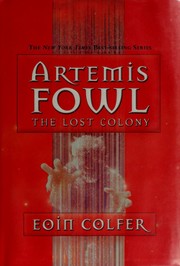
The Lost Colony
Artemis and Holly chase returning demons while a rival genius risks everything for fame.
1,903-word summary · 8 min read
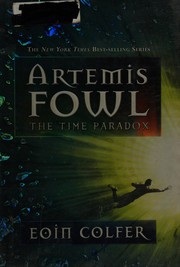
The Time Paradox
When his mother falls ill with a fairy disease, Artemis Fowl travels back in time to find the extinct lemur that can cure her and confronts his younger self.
2,601-word summary · 12 min read

Bone, Vol. 1: Out from Boneville
Three cartoon cousins are run out of Boneville, separated by locusts, and dropped into a valley where rat creatures and an old grudge are waiting.
2,155-word summary · 10 min read

The Icebound Land
Captured and enslaved in Skandia, Will fights a drug that erases him while Halt and Horace cut a bloody road through Gallica to bring him home.
2,088-word summary · 9 min read

The Field Guide
Three siblings move into a creepy Maine estate, anger a brownie, and find a forbidden guide to the fairy world in the first Spiderwick book.
2,033-word summary · 9 min read

Secrets of the Dragon Sanctuary
Kendra is replaced by a plant copy and held by the Society, while Seth steals a unicorn horn so the family can enter a dragon sanctuary.
2,590-word summary · 12 min read
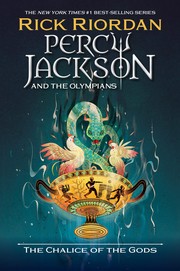
The Chalice of the Gods
Percy needs three recommendation letters from three gods to apply to college, so his first quest is recovering a stolen chalice from the god of old age.
2,106-word summary · 9 min read

Grip of the Shadow Plague
A plague turns Fablehaven's creatures of light into shadows while Kendra hunts an artifact in Arizona and Seth races to find the cause.
2,131-word summary · 9 min read
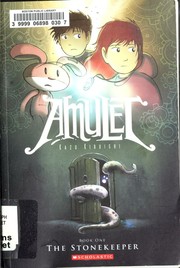
The Stonekeeper
After their father's death, Emily and Navin chase a monster into a hidden world to save their mother, and Emily's great-grandfather's amulet offers power at a…
2,753-word summary · 12 min read
The Republic of Thieves
Locke and Jean rig an election while Locke faces Sabetha, his lost love and rival.
2,433-word summary · 11 min read

The Indian in the Cupboard
Omri learns a key turns plastic Little Bear into a live Iroquois man.
2,228-word summary · 10 min read

Into the Wild
Housecat Rusty joins ThunderClan and learns clan law before war.
2,597-word summary · 12 min read
Gregor the Overlander
Gregor follows Boots down a grate into the Underland and a war prophecy.
2,516-word summary · 11 min read
The Miraculous Journey of Edward Tulane
A china rabbit lost at sea learns to love through owners kind and cruel across many years.
2,002-word summary · 9 min read
The Demigod Files
Three Percy Jackson side quests plus camp maps, cabin guides, interviews, and god profiles set before the final battle.
2,498-word summary · 11 min read

Princess Academy
Miri leaves her Mount Eskel quarry home for Princess Academy, where quarry songs, books, and a bandit siege shape her fight for fair trade, a school, and a…
2,441-word summary · 11 min read
Magyk
A baby found in snow, a lost seventh son, and a run for the Marram Marshes as Marcia Overstrand shields two children from DomDaniel.
2,604-word summary · 12 min read
Rise of the Evening Star
Kendra and Seth return to Fablehaven as the Society of the Evening Star closes in, with a traitor inside the house and a demon prison key at stake.
2,874-word summary · 13 min read
The Wishing Spell
Twins Alex and Conner fall through a book of fairy tales and must gather eight keepsakes to get home.
2,714-word summary · 12 min read
The Serpent's Shadow
Carter and Sadie Kane have three days to bind Apophis by his shadow before the serpent rises and unmakes the world.
2,941-word summary · 13 min read
Fablehaven
Kendra and Seth spend the summer with their grandfather and learn his woods hide Fablehaven, a preserve for fairies, satyrs and darker things.
2,949-word summary · 13 min read

The Throne of Fire
Carter and Sadie Kane have five days to wake the sun god Ra before the serpent Apophis breaks free and eats the world.
2,867-word summary · 13 min read
The Red Pyramid
Siblings Carter and Sadie Kane wake the Egyptian gods and must stop Set from destroying the world.
2,682-word summary · 12 min read
The Son of Neptune
Amnesiac Percy wakes at Camp Jupiter and quests to Alaska with Hazel and Frank to free Thanatos.
2,107-word summary · 9 min read
The Mark of Athena
Seven demigods sail for Rome where Annabeth must follow the Mark to the Athena Parthenos alone.
2,031-word summary · 9 min read
The Titan's Curse
Percy joins a winter quest to save Annabeth and Artemis with Thalia, Grover, Bianca and Zoe, facing Atlas and Luke under a hard Oracle prophecy on Mount…
2,229-word summary · 10 min read
The Sea of Monsters
Percy returns for a second summer as Camp Half-Blood loses its borders, Tyson is claimed as his brother, and the Golden Fleece waits past the Sea of Monsters.
2,056-word summary · 9 min read