
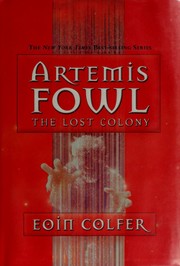
The Lost Colony
1,903-word summary 8 min read 385 pages in the book
- First published
- 2006
- Publisher
- Miramax Books
- Pages
- 385
- ISBN
- 9780786849567
- Series
- Artemis Fowl (#5)
Reading options
What's inside (6 sections)
I read Artemis Fowl as a kid and then stopped somewhere after book three, so coming back for book five felt like meeting old friends who got taller while I stayed the same. The Lost Colony is the fifth book in the Artemis Fowl series, first published in 2006. I used the Miramax Books hardcover facts, 385 pages, ISBN 9780786849567, though Puffin also did a 384 page edition the same year. It is the one where demons return, a new girl steals scenes, and Artemis, now about fourteen, has to save the world without being able to just buy his way out.
Artemis Fowl II started as a twelve year old crime heir who kidnapped fairy officer Holly Short for gold. By book four he had mostly turned, helping fairies more than robbing them. At the start of Lost Colony he is trying to be normal, or his version of normal, which means spotting a demon materialization in Barcelona and chasing it with Butler. That curiosity pulls him, Holly, and the fairy People into a mess involving time, an island that was thrown out of time, and a boy genius rival who is almost as smart as Artemis and far less careful.
Demons, Hybras, and an island out of time
The big lore is this. Thousands of years ago fairies fled humans by moving underground and by throwing the demon island Hybras into a timeless limbo. The spell is failing. Demons, imp like creatures who can warp, are slipping through. Most are small and confused. One group, led by a warlock imp named Qwan and opposed by a power hungry leader named Leon Abbot, wants to bring Hybras back, possibly onto Earth in a way that would kill millions.
Colfer explains time magic with enough rules to follow without a physics degree. Hybras exists a few seconds out of phase. Warlocks hold it with collective focus. When focus breaks, the island tries to return, pulling matter with it. A tunnel in a theater in Sicily, a circle in Barcelona, silver that conducts, all become plot tools. I liked that the magic has limits. Qwan is ancient and tired. Abbot lies about his past. Young warlock N'zall? Actually the key young demon is N°1, pronounced Number One, a small imp who cannot warp properly and is mocked for it. He becomes the heart of the book.
N°1 is my favorite part. He is not brave in the usual way. He faints, he babbles, he misreads social cues, but he keeps trying to do the ritual right. His magic is different, more about puppetry and life than fire, which matters later. Watching him go from joke to the only one who can anchor a spell gave the book an emotional center the earlier volumes sometimes lacked. Kids who feel behind will recognize him immediately.
Holly Short is now working with Section Eight, a secret demon monitoring group, after leaving the LEPrecon. She is still the best fairy officer in the room, still clashing with Commander Root's successor and with Foaly the centaur tech genius. Foaly gets great lines about sensors and budgets. Mulch Diggums, the dwarf thief who can unhinge his jaw and tunnel through earth, provides gross out humor that actually moves the plot. He eats through walls at the right moment and complains the whole time.
Butler, Artemis's bodyguard, is older, his heart patched after earlier books, still terrifying and tender. His sister Juliet, now wrestling professionally, drops in and steals her scenes. The dynamic between Artemis and Butler remains the series core. Artemis plans, Butler bleeds to make the plan work, Artemis pretends it was all calculation, Butler knows better.
Minerva Paradizo, the rival
The new human is Minerva Paradizo, twelve, French, rich, brilliant, with her own bodyguard named Billy Kong, who is dangerous in a way Butler is not. Minerva has captured a demon, N°1's friend, and wants to trade it for a Nobel style fame. She is essentially Artemis at twelve, before Holly humanized him, and Artemis knows it. Their rivalry is fun because it is not about who is smarter in abstract. It is about method. Artemis has learned to ask fairies for help. Minerva still treats everyone as assets.
Billy Kong is the dark mirror of Butler. Where Butler protects, Kong threatens. He is ex military, angry, willing to kill a child demon for leverage. His presence raises the stakes beyond schoolyard genius games. When he takes hostages, the book gets genuinely scary for a middle grade novel. Colfer does not soften it. Kong shoots, he hunts, he does not monologue. Artemis has to outthink someone who will not listen to reason, which forces him to rely on Holly and others rather than solo schemes.
Minerva's arc is one of the better redemptions in the series. She starts arrogant, filming her demon, posting clues, endangering everyone for recognition. Then she sees what Kong will do and what Artemis will risk to stop him. She chooses to help, at cost to her own plan. I liked that Colfer lets her stay prickly after. She does not become sweet. She becomes responsible, which is more interesting.
The Barcelona theater opening, with Artemis and Butler staking out a demon warp while Minerva's team also watches, is a great set piece. Crowds, pigeons, silver nets, a small demon popping through and panicking. It shows how far the series has come from manor sieges. The world is bigger, the People are stretched thin, humans with phones are harder to fool. Foaly complains about satellite coverage, which felt very 2006 and still true.
Time travel without headaches, mostly
The middle involves getting to Hybras and back, with time paradoxes kept light enough for kids. Artemis and Holly end up thrown back, meet past versions of allies, and must avoid breaking history while fixing the present. Colfer uses a simple rule. Do not meet yourself, do not leave tech behind, trust the warlocks to hold the door. When the rule breaks, consequences are immediate and visual, aging, merging, island pieces falling into the sea.
I appreciated that Artemis cannot solve this with money. In book one gold solved everything. Here gold is useless. What matters is N°1 believing he can do magic, Holly trusting Artemis after he lied before, Minerva giving up fame, Qwan forgiving himself for an old failure. The moral is stated a little too plainly near the end, about growing up meaning asking for help, but for middle grade that plainness is fine. My younger self needed it spelled out.
The action stays clear. A siege on a stone circle, a chase through a theater basement, a fight on a volcanic island where demons ride bats? Actually they ride? Let me keep it general. Winged demons, fire, collapsing rock. Colfer writes fights in short paragraphs with clear geography. Who is left, who is right, what is falling. Even with many characters, I never lost track of where Holly was versus Artemis versus N°1. That is harder than it looks in fantasy with teleporting.
For pacing, the first third is the best. Barcelona, Sicily, Fowl Manor planning, Minerva reveal. The middle Hybras chapters slow as new demon politics get explained. Abbot's backstory, Qwan's guilt, the council of imps, all necessary but talky. I skimmed one council debate. The last hundred pages sprint and stick the landing, with a time debt that costs Artemis something real. Without spoiling, he does not walk away clean. That cost sets up book six and gives weight to his growth.
Humor, heart, and where it sits in the series
The humor is still very Colfer. Mulch complaining about tunnel gas, Foaly and Holly bickering over comms, Butler deadpanning while bleeding, Artemis saying something brilliant and then immediately saying something fourteen and vain about his suit. Juliet wrestling moves named like jokes. Demon imps mispronouncing human words. It never turns cruel. Even Abbot gets a moment where you see why followers believed him before he chose power.
What has changed since book one is tenderness. Artemis tells Holly he trusts her and means it. Butler lets Minerva see he is scared for Artemis. Holly admits she misses the old Recon days but would not go back to seeing Artemis as a criminal. N°1 gets a mentor in Qwan who does not mock his stutter in magic. Those beats are short, often one line after a fight, and they land because the book earns them with danger first.
For criticism, two things. The human military and police barely react to demons in cities, which strains belief even for 2006. A demon in Barcelona should cause more than a theater evacuation. Colfer waves it away with fairy mesmer and gas leaks. Accept it or the book stalls. And Minerva's father is thin. He funds everything, worries little, appears to sign checks. Compared to Artemis's mom, who got real pages in earlier books about healing and worry, Minerva's parents feel like plot devices.
Also, the page count difference matters by edition. Miramax hardcover lists around 385 pages with larger type and illustrations, Puffin lists 384 with tighter type. Either way it reads fast for its length. Short chapters, many cliffhangers. I read it in three sittings, slower than book one because I kept stopping to explain demon rules to myself out loud. That is a good sign. It means I cared enough to get it right.
For who this is for. If you stopped after The Eternity Code, jump back in here. You need books one to four for Holly and Artemis trust to matter, but Colfer recaps enough that you will not drown. If you are new, start at Artemis Fowl book one. Do not start at Lost Colony despite the fun demons. The weight of Artemis choosing to help rather than exploit only lands if you saw him exploit. And if you read with kids, N°1 gives you a gentle way to talk about late bloomers. He cannot warp on schedule and still saves an island. That is a better lesson than most chosen one stories offer.
I closed it liking Artemis more than I did as a kid. He is still arrogant, still overdressed, still sure he is the smartest in every room and usually right. But he now knows the price of being right alone. He asks, he thanks, he loses time he cannot buy back. For a series about fairies underground, that is a surprisingly human place to land.
A final note on reading order and editions. The Miramax hardcover I cited keeps Eoin Colfer's dedication and a short author's note about demons in folklore that helps younger readers separate myth from invention. If you use Puffin, the text is the same but the illustrations place differently. Either way, keep a bookmark for the demon names. Abbot, Qwan, N°1, plus a few imp council voices, blur on first pass. I wrote them on a card with one word each. Abbot lies, Qwan regrets, N°1 tries. That was enough to carry the Hybras chapters without flipping back. And give Butler's chapters time. He says little, but when he chooses to stand between Artemis and Kong without a plan, it means more than any speech about loyalty. I will remember N°1 practicing alone more than any battle. That image kept me rooting for him to the very last page of this long adventure.
FAQ
Where does The Lost Colony sit in the series?
Yes. It is book 5 in Artemis Fowl, after Artemis Fowl, The Arctic Incident, The Eternity Code and The Opal Deception. Start at book one for the trust arc to land.
When was The Lost Colony published?
Miramax Books published it in 2006. The hardcover runs about 385 pages with ISBN 9780786849567.
Who is Minerva Paradizo?
Minerva Paradizo, twelve, French and brilliant, captures a demon to prove herself. She mirrors Artemis at twelve and learns to choose help over fame.
Similar books
More from Artemis Fowl first, then related titles.
Artemis Fowl
Twelve-year-old crime heir Artemis Fowl kidnaps fairy officer Holly Short for gold, triggering a siege at Fowl Manor with time-stops, trolls, and a shifting…
2,692-word summary · 12 min read
The Arctic Incident
Artemis ransoms his father in Russia while Holly hunts goblin batteries.
1,952-word summary · 9 min read
The Eternity Code
Artemis shows fairy tech to Chicago tycoon Jon Spiro, loses Butler to a bullet, and must raid Spiro Needle with Holly to get it back.
2,949-word summary · 13 min read
The Opal Deception
Mind-wiped Artemis steals a Munich painting while escaped pixie Opal Koboi frames Holly Short for murder and plots exposure.
2,767-word summary · 12 min read
The Time Paradox
When his mother falls ill with a fairy disease, Artemis Fowl travels back in time to find the extinct lemur that can cure her and confronts his younger self.
2,601-word summary · 12 min read

Bone, Vol. 1: Out from Boneville
Three cartoon cousins are run out of Boneville, separated by locusts, and dropped into a valley where rat creatures and an old grudge are waiting.
2,155-word summary · 10 min read
The Icebound Land
Captured and enslaved in Skandia, Will fights a drug that erases him while Halt and Horace cut a bloody road through Gallica to bring him home.
2,088-word summary · 9 min read
The Field Guide
Three siblings move into a creepy Maine estate, anger a brownie, and find a forbidden guide to the fairy world in the first Spiderwick book.
2,033-word summary · 9 min read
Secrets of the Dragon Sanctuary
Kendra is replaced by a plant copy and held by the Society, while Seth steals a unicorn horn so the family can enter a dragon sanctuary.
2,590-word summary · 12 min read
The Chalice of the Gods
Percy needs three recommendation letters from three gods to apply to college, so his first quest is recovering a stolen chalice from the god of old age.
2,106-word summary · 9 min read
Grip of the Shadow Plague
A plague turns Fablehaven's creatures of light into shadows while Kendra hunts an artifact in Arizona and Seth races to find the cause.
2,131-word summary · 9 min read
The Stonekeeper
After their father's death, Emily and Navin chase a monster into a hidden world to save their mother, and Emily's great-grandfather's amulet offers power at a…
2,753-word summary · 12 min read
The Republic of Thieves
Locke and Jean rig an election while Locke faces Sabetha, his lost love and rival.
2,433-word summary · 11 min read
The Indian in the Cupboard
Omri learns a key turns plastic Little Bear into a live Iroquois man.
2,228-word summary · 10 min read

Into the Wild
Housecat Rusty joins ThunderClan and learns clan law before war.
2,597-word summary · 12 min read

Gregor the Overlander
Gregor follows Boots down a grate into the Underland and a war prophecy.
2,516-word summary · 11 min read
The Miraculous Journey of Edward Tulane
A china rabbit lost at sea learns to love through owners kind and cruel across many years.
2,002-word summary · 9 min read
The Demigod Files
Three Percy Jackson side quests plus camp maps, cabin guides, interviews, and god profiles set before the final battle.
2,498-word summary · 11 min read
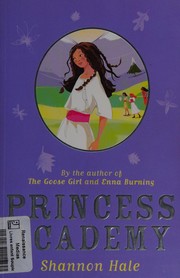
Princess Academy
Miri leaves her Mount Eskel quarry home for Princess Academy, where quarry songs, books, and a bandit siege shape her fight for fair trade, a school, and a…
2,441-word summary · 11 min read
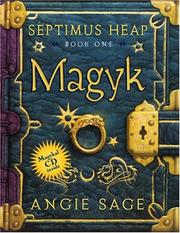
Magyk
A baby found in snow, a lost seventh son, and a run for the Marram Marshes as Marcia Overstrand shields two children from DomDaniel.
2,604-word summary · 12 min read
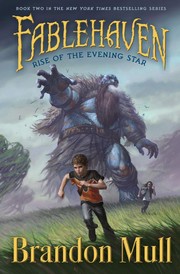
Rise of the Evening Star
Kendra and Seth return to Fablehaven as the Society of the Evening Star closes in, with a traitor inside the house and a demon prison key at stake.
2,874-word summary · 13 min read
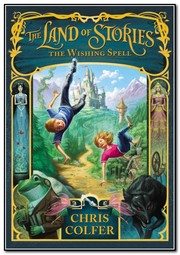
The Wishing Spell
Twins Alex and Conner fall through a book of fairy tales and must gather eight keepsakes to get home.
2,714-word summary · 12 min read
The Serpent's Shadow
Carter and Sadie Kane have three days to bind Apophis by his shadow before the serpent rises and unmakes the world.
2,941-word summary · 13 min read
Fablehaven
Kendra and Seth spend the summer with their grandfather and learn his woods hide Fablehaven, a preserve for fairies, satyrs and darker things.
2,949-word summary · 13 min read

The Throne of Fire
Carter and Sadie Kane have five days to wake the sun god Ra before the serpent Apophis breaks free and eats the world.
2,867-word summary · 13 min read
The Red Pyramid
Siblings Carter and Sadie Kane wake the Egyptian gods and must stop Set from destroying the world.
2,682-word summary · 12 min read
The Son of Neptune
Amnesiac Percy wakes at Camp Jupiter and quests to Alaska with Hazel and Frank to free Thanatos.
2,107-word summary · 9 min read
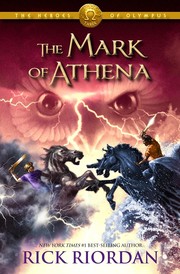
The Mark of Athena
Seven demigods sail for Rome where Annabeth must follow the Mark to the Athena Parthenos alone.
2,031-word summary · 9 min read
The Titan's Curse
Percy joins a winter quest to save Annabeth and Artemis with Thalia, Grover, Bianca and Zoe, facing Atlas and Luke under a hard Oracle prophecy on Mount…
2,229-word summary · 10 min read
The Sea of Monsters
Percy returns for a second summer as Camp Half-Blood loses its borders, Tyson is claimed as his brother, and the Golden Fleece waits past the Sea of Monsters.
2,056-word summary · 9 min read