

The Long Way to a Small, Angry Planet
3,295-word summary 15 min read 443 pages in the book
- First published
- 2014
- Publisher
- Harper Voyager
- Pages
- 443
- ISBN
- 9780062444134
- Series
- Wayfarers (#1)
Reading options
What's inside (8 sections)
I came to this book the way most people seem to, on a tired recommendation from a friend who said, read this when the news is too much. I expected a standard space adventure with lasers and heroic captains. What I got instead was slower, warmer, and stranger, more like moving into a cramped apartment with eight roommates who all breathe different air. That is basically the premise.
First published self-published in 2014 and then in the famous edition from Harper Voyager in 2016 at 443 pages, ISBN 9780062444134, this is Wayfarers 1. It follows a tunneling ship called the Wayfarer and its mixed human and alien crew on a year long job that is supposed to change their lives. There are spoilers ahead because the story only makes sense if we talk about how it ends, but the pleasure here was never really about twists. It was about watching people learn to live together.
Leaving Mars for the Wayfarer
Rosemary Harper is running. She grew up on Mars in a wealthy, political family where every meal felt like a performance and every future step had already been chosen for her. Her father is a powerful man back home, the kind whose name opens doors and also traps you inside rooms, and she wants no part of that script anymore. So she buys passage out, changes her paperwork, keeps her past close to her chest, and takes a low level clerking job on a ship she has barely heard of.
That ship is the Wayfarer, captained by Ashby Santoso, a human man with the calm patience of someone who has spent years keeping fragile people and fragile systems alive at the same time. He is not a swaggering hero. He makes tea. He listens. He remembers birthdays. He hires Rosemary because she is organized and discreet and because she clearly needs a place to disappear for a while.
The Wayfarer is a tunneling ship, which in this universe means something very specific. Ships do not just fly fast. They punch through a layer of subspace called the Link, build stable tunnels through it, and then other ships can travel those tunnels quickly. It is construction work in deep space, blue collar and dangerous and essential, and the Galactic Commons pays well for it. The Wayfarer is old, patched, a little smelly, and held together by habit and affection as much as by welding.
Rosemary arrives wide eyed and polite and completely out of her depth. She meets Lovey, the ship AI, whose voice comes through the walls and who runs everything from air filters to schedules. Lovey is warm and funny and curious in a way that startles Rosemary, who grew up thinking of AIs as tools. On the Wayfarer, Lovey is crew. She has opinions. She teases. She worries when people are late for meals.
That first stretch is all orientation. Rosemary learns where the filters clog, how to file permits for a dozen different species governments, how to knock before entering Sissix's quarters because Aandrisks sleep in a heap and do not care about human modesty. I found these early chapters charming in the way first weeks in a new city are charming. Everything is small and specific. Who likes extra salt. Who needs low gravity to sleep. Who will talk your ear off if you let them.
Learning to Live With Aliens
The heart of the book is the crew, and Chambers takes her time letting us live with them.
Dr Chef is a Grum, a big, many limbed alien who looks a little like a caterpillar crossed with a kindly grandfather. He is both ship doctor and cook, which sounds odd until you see how he thinks about bodies. Food is medicine. Medicine is care. He lost people in a war long before this crew formed, and he carries that grief the way older people sometimes do, not loudly, but in the care he puts into feeding everyone correctly according to species, gut, allergy, and comfort.
Kizzy Shao and Jenks are the techs, the grease under the fingernails pair who keep the Wayfarer breathing. Kizzy is loud, joyful, constantly building or breaking something, the kind of person who will talk to you for an hour about wiring while covered in engine oil. Jenks, full name Marcus Jenks, is quieter, kinder, a little worn around the edges. He does beautiful work with machines because machines make sense to him in a way people sometimes do not.
Sissix is the pilot, an Aandrisk woman with feathers and bright scales and a tail she uses as expressively as a human uses hands. Aandrisks are reptilian, social, touch oriented, hatched in big communal families where children are raised together and affection is open and physical. She takes to Rosemary early, fascinated by primate weirdness, by hair and sweat and human awkwardness about bodies.
Ohan is the Navigator, a Sianat Pair, which means a host plus a symbiotic organism called the Whisper that lets them perceive and steer through subspace. Without a Pair, tunneling ships cannot punch new holes. Ohan is quiet, formal, often ill, set apart by biology and by custom. They keep a careful distance that Rosemary at first mistakes for coldness.
Then there is Corbin, the algaeist, a human man who grows the algae that fuels the ship. He is gruff to the point of rudeness, dismissive of Rosemary, openly hostile to Ohan, obsessed with his tanks. On a ship built on chosen family, he is the one who refuses to choose it.
And Lovey. Lovey deserves her own paragraph because she becomes so central. She is embedded in the ship, disembodied but present everywhere, learning jokes, remembering preferences, flirting a little with Jenks in a way that is sweet and uncomfortable and very human.
Life settles into routine. Small jobs. Short tunnels. Repairs. Shared meals in the galley where Dr Chef insists everyone can eat together even if that means five different versions of stew. Rosemary learns to file, to translate polite bureaucratic lies into permits, to ask Sissix what is okay to ask and what is not. She starts to relax. She starts to laugh loudly in the mess.
This middle everyday part will test some readers. There is no villain. No countdown. Just people fixing toilets in zero g and arguing about movies. I liked it, but I get why a friend told me she almost quit here. If you need propulsive plot, this will feel loose.
She had not known that people could be so kind when they had no reason to be, except that kindness made life easier for everyone.
Port Coriol and the Hatching Grounds
About a third of the way in, the job changes everything. The Wayfarer is offered a massive commission by the Galactic Commons. Build a tunnel to Hedra Ka, a planet in Toremi territory. The Toremi are a new, prickly, isolationist species, birdlike and territorial and recently out of a brutal war. If they link into the Commons network, it could mean peace and trade and a huge payday for a small ship willing to spend nearly a year getting out there.
Ashby says yes. How could he not. It is the kind of money that would let them refit, save, breathe.
Before the long haul, they stop for supplies and rest. One stop is Port Coriol, a rough mixed species station where humans are not special and human rules do not apply. Rosemary, who has been careful and covered up, suddenly has to learn how to be stared at, how to eat food that moves, how to use a bathroom built for six body types. Sissix guides her with delight, holding her hand in public in a way that means friendship to an Aandrisk and something more confusing to human onlookers.
Later Sissix takes Rosemary home to her hatch family. This was my favorite section. Sissix comes from a huge, noisy, loving clutch where parents are communal, siblings number in the dozens, children run wild and naked and happy. Rosemary, raised in a cold house where love meant control, watches Sissix wrestle her siblings and nap in a pile and cry openly when it is time to leave, and something cracks in her. She tells Sissix the truth about Mars, about her father, about why she left. Sissix does not judge. She just stays close, skin to skin the way her people comfort each other, and lets Rosemary shake through it.
Elsewhere on the same shore leave, Ashby slips away to see Pei, an Aeluon woman who works as a cargo runner and who has been his lover for years. Aeluons are color changers, empathic, socially rigid about interspecies contact. Their relationship is illegal by her people's standards and frowned on by his. They meet in cheap hotels and pretend it is casual. It is not casual. He loves her steady, thorny, competent self. She loves his softness. They both know it cannot last the way they want it to, and they keep choosing it anyway.
These detours give the book its shape. It is not one road. It is a series of ports, each one teaching Rosemary, and us, a different way to be a family.
Love in Strange Bodies
Back on board for the long cruise, Chambers turns to intimacy in all its forms, and this is where the book gets bold and tender and a little messy in a good way.
Jenks is in love with Lovey. Not as a joke. Truly. He talks to her all day through the walls, he knows her humor and moods, she knows his bad dreams and his bad habits. For him, her lack of a body is a technical problem, not a moral one. He has been saving for years to buy her an illegal body kit, a humanoid frame she could download into, so they could walk side by side, touch, be seen as a couple.
Lovey feels the same, as much as an AI built to run a ship can feel. She worries she is not enough. She worries she is too much, too dependent on the ship, too limited. Their late night conversations are some of the most moving in the book. They are careful with each other. They ask for consent constantly. They laugh.
Rosemary and Sissix grow closer too, in a friendship that keeps tipping toward something physical because Aandrisks show affection through touch and sex is friendly to them, not loaded the way it is for Rosemary. There is a scene where they do sleep together, and it is written with such gentleness. No drama. No grand coming out. Just two lonely people finding comfort, and then talking honestly the next day about what it meant and did not mean. Sissix can compartmentalize. Rosemary cannot, quite. They stay friends, a little bruised, a lot kinder.
Corbin gets a backstory that almost redeems him. He grew up in a poor colony, lost a sister to a plague carried by a species he now distrusts, and threw himself into algae work because algae does not lie or leave. He resents Ohan because Sianats remind him of everything he cannot control. It does not excuse his cruelty, and the book does not pretend it does, but it explains the shape of his fear.
Ohan is getting sicker. The Whisper that makes navigation possible is killing its host by degrees, causing slips, fevers, pain. Sianat Pairs know this going in. It is a holy calling to them, a short life in exchange for touching the underlying structure of space. Ohan accepted that price years ago. Now the price is coming due right in the middle of the most important job of their life. Dr Chef monitors quietly, adjusts meds, says nothing to Ashby until he must, because Ohan begs him not to be grounded.
And Dr Chef himself is aging. Grums do not live as long as humans wish they would. His joints ache. He naps more. He tells Rosemary stories about his youth as a battlefield surgeon, about holding dying soldiers of species he had been taught to hate and learning that bodies are just bodies when they are scared. He is the moral center of the ship without ever preaching. He just feeds people and patches them and tells the truth when asked.
I admired how Chambers writes sex and gender here. Different species have different norms, different bodies, different ideas of family, and she never makes humanity the default. At times it can feel a little earnest, like a workshop on tolerance tucked inside a space opera, but the sincerity won me over more often than it annoyed me.
The Year Long Push to Hedra Ka
With the Hedra Ka contract signed, the Wayfarer settles in for the long transit. This is not a quick jump. It is months of travel to reach the staging point, hopping between established tunnels, rationing fuel, growing extra algae, running drills.
Tunneling itself is explained in lovely tactile detail. Ohan goes into a tank, connects, feels for the thin places between space, and with the ship's punch system tears a hole and holds it while the crew stabilizes the edges and maps the exit. It is painful for Ohan, exhausting for the engineers, terrifying for everyone the first time you feel the ship stretch. Chambers makes it feel like deep sea diving and surgery at once.
Tensions rise with confinement. Kizzy picks fights to blow off steam and then cries about it. Jenks works double shifts to afford the body kit and snaps at Kizzy. Corbin and Ohan have a shouting match in the algae bay that Ashby has to break up, and Ashby, usually so even, loses his temper because he is scared about Pei, scared about money, scared about leading people he loves into Toremi space where humans are barely tolerated.
Rosemary grows up in this stretch. She stops being the new girl who apologizes for asking questions. She handles customs officers who try to shake them down. She learns to lie well for the ship. She calls her father once, in secret, and the call goes badly. He wants her home. He says he misses her. She hears the control under the softness and hangs up shaking and does not regret leaving. Sissix finds her afterward and just sits with her, no fixing, no advice. That quiet support felt true to me.
They pick up supplies at way stations, trade stories with other tunnelers, hear rumors about the Toremi. Some say the Toremi council that invited the Commons is split. Some say a faction sees the tunnel as invasion. Some say Hedra Ka itself is a small, angry planet, resource poor, scarred by civil war, lashing out because it is afraid. Ashby reports the rumors to his contact and is told not to worry. He worries anyway.
By the time Hedra Ka appears on the scopes, red and storm wrapped and bristling with unfamiliar ships, the Wayfarer feels like a home that is about to be tested. The crew is tired, fond, frayed. They have spent a year learning each other's sounds in the walls. Now they have to do the one thing they came to do.
Tunneling, Loss, and What Family Keeps
The arrival and the punch go wrong in a way that still upsets me to think about.
The Toremi faction that opposed the Commons link attacks during the tunneling operation. Whether it is a misunderstanding, a political coup, or simple fear does not fully matter in the moment. Missiles tear through the work zone. The Wayfarer, caught with its punch field open and its power routed to construction instead of shields, takes the full force to protect the tunnel mouth.
What follows is fast and brutal after so much slowness. Hull breaches. Fire in low oxygen. Kizzy screaming for pressure doors. Jenks carrying Ohan to the tank because only Ohan can hold the tunnel open long enough for the Commons ships waiting on the other side to lock on. Ashby shouting orders he hates giving. Sissix flying manually when assist fails, feathers singed, hands steady.
They succeed. Ohan holds. The tunnel to Hedra Ka punches through and stabilizes. It is a triumph that costs everything.
Lovey dies. Her core, housed in the section that takes a direct hit, is destroyed. One moment she is there counting down shield failure, talking Jenks through a bypass, and the next there is static. Jenks feels it like a death because it is one. He has an old backup from months earlier, but it is not her, not the Lovey who learned his jokes and chose a body and planned a future. He sits in the wreck of the comm room holding a dead drive and cannot speak.
Dr Chef dies too, from wounds taken while shielding Ohan and then refusing treatment until Ohan is stable. He is very calm about it, in the way he has always been calm. He asks Ashby to make sure everyone eats. He tells Rosemary she did well. He asks Sissix to sing something, and she does, an Aandrisk mourning trill that vibrates through the floor.
Ohan survives the punch but is broken by it. The effort burns out what little strength the Whisper had left. In the aftermath, Ohan chooses to go to the Sianat home world to die among their own kind or to transform, depending on belief. It is left respectful and strange, not fully explainable to outsiders, which felt right.
The ship is a ruin. The Commons pays out, apologizes, offers a new ship, medals, therapy. None of it fills the empty spaces where Lovey's voice used to be.
And yet the ending is not bleak. Ashby, shaken, uses the payout to buy a new ship and invites anyone who wants to stay to stay. Most do, because where else would they go. Rosemary, who started as a runaway clerk, chooses to remain, not from fear but from love. She calls her family one last time to say she is alive and she is not coming back, and then she turns to the work of rebuilding. Jenks decides to install that old Lovey backup into the body kit he bought, knowing she will wake as someone new, with gaps, needing to learn herself again. It is ethically thorny and the book knows it. Is a restored backup the same person. Does she consent. He decides to ask her when she wakes and to accept no as an answer.
That coda sets up the next books without cheapening this loss.
Now for fair criticism, because I liked this book a lot and still saw its seams. The pacing sags in the middle year. Chambers loves daily life so much that external stakes vanish for long stretches, and Corbin's arc resolves too quickly to feel earned. The Toremi work better as idea than as characters. We hear about their anger and pride but meet almost none of them as people, so the climax feels sudden, tragedy arriving from offstage. The prose is plainspoken and warm, which I mostly loved, but it sometimes tells feelings directly instead of letting scenes breathe. If you want hard science fiction with rigorous physics, the Link and tunneling will feel soft. If you want moral complexity where good people do bad things, everyone here is almost too decent, too quick to apologize.
Still, I closed the book feeling fond of every survivor. It is a comfort read that does not pretend loss is not real. It says family can be built from strangers who feed you correctly and remember how you like your air.
FAQ
Do I need to like hard science fiction to enjoy this?
No. The science of tunneling stays light while focus stays on relationships, culture, and daily ship life.
Is this a romance or an adventure?
Both in small doses, but mainly a found family story with threads for Ashby and Pei and for Jenks and Lovey.
Does it end on a cliffhanger?
No. The Hedra Ka job concludes with real loss, and survivors start fresh so the next book stands alone.
Similar books
More from Wayfarers first, then related titles.
Network Effect
Murderbot's contract job turns into a rescue mission when a hijacked research ship and a colony of corrupted colonists appear.
2,256-word summary · 10 min read
Children of the Mind
Ender's children split across worlds as Jane faces shutdown and Lusitania flees.
2,532-word summary · 11 min read
Ringworld
Bored Louis Wu joins alien crew to explore a vast ring habitat around a star.
2,370-word summary · 11 min read

Xenocide
Lusitania faces a fleet with planet death while Ender, Jane, and families debate virus, souls, and law.
2,647-word summary · 12 min read

Childhood's End
Silver ships end war and want while Overlords midwife humanity's children into something beyond human.
2,054-word summary · 9 min read
Speaker for the Dead
Ender speaks whole truths for alien deaths on a fenced colony where biology confuses murder.
1,992-word summary · 9 min read

Prelude to Foundation
A young Hari Seldon arrives on Trantor with a theory he cannot yet prove, and a hunt through the planet-city forces him to turn psychohistory into a real…
2,013-word summary · 9 min read

Starsight
Spensa Nightshade goes undercover aboard the Superiority space station Starsight to steal a hyperdrive, and finds a frightened bureaucracy where she expected…
2,568-word summary · 11 min read

Saving the World and Other Extreme Sports
Max and the flock split in two to take down the lab behind their lives, one half in California and the other in Europe.
2,175-word summary · 10 min read

Out of the Silent Planet
A Cambridge philologist is kidnapped and taken to Mars, where the natives are civilized and the humans are the dangerous invaders.
2,612-word summary · 12 min read
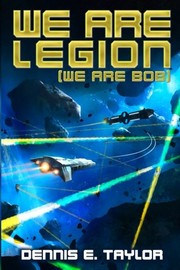
We Are Legion (We Are Bob)
A dead software engineer wakes up as a self-replicating space probe, clones himself into a squabbling fleet of Bobs, and tries to keep a ruined Earth alive.
2,357-word summary · 10 min read
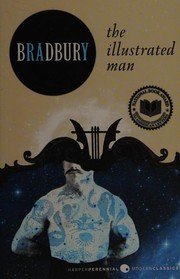
The Illustrated Man
A tattooed drifter's moving pictures retell eighteen Bradbury stories of children, rockets, Mars and the last night of the world.
2,791-word summary · 12 min read

The Rise of Nine
John, Six and Nine race to India to find Eight before the Mogs strike.
2,321-word summary · 10 min read

Redshirts
Ensigns realize they die to serve a bad TV show's narrative.
2,152-word summary · 10 min read
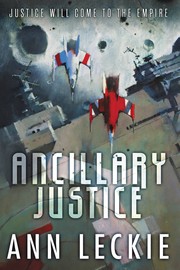
Ancillary Justice
A ship mind trapped in one human body hunts the emperor who betrayed her across frozen worlds.
2,595-word summary · 12 min read

Solaris
Kelvin reaches a silent station above Solaris and finds grief made solid when the ocean returns his dead wife Rheya, testing memory, science, and the limits of…
2,548-word summary · 11 min read
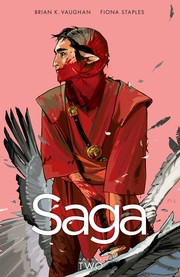
Saga, Volume 2
Alana and Marko flee with baby Hazel while exes, princes, and ghosts close the net.
2,028-word summary · 9 min read

Iron Gold
Ten years after victory, Darrow and new rebels face peace that feels like another war.
2,158-word summary · 10 min read

Exit Strategy
Murderbot returns to help its humans as corporate hunters close in and old friends risk all.
2,088-word summary · 9 min read

Cibola Burn
Settlers and a company fight over a new world while Holden tries to stop a war.
2,011-word summary · 9 min read
Seveneves
Stephenson 880-page William Morrow epic, May 2015: the Moon shatters, the Cloud Ark fails, seven women restart humanity, and heirs meet survivors on Earth.
2,389-word summary · 11 min read

Across the Universe
Frozen teen Amy wakes early on ship Godspeed and joins heir Elder to stop cryo murders and expose Eldest's drugged rule in this January 2011 Razorbill series…
2,430-word summary · 11 min read

The Moon Is a Harsh Mistress
In 2076 Lunar colonists led by Mannie, Wyoh, Prof, and computer Mike revolt against Earth with rocks and rhetoric.
2,003-word summary · 9 min read
The Fall of Hyperion
Keats persona Severn dreams pilgrims to the Time Tombs as Hegemony falls and TechnoCore war breaks the farcasters.
2,115-word summary · 9 min read

Rogue Protocol
Murderbot hunts GrayCris evidence on a dead colony world and befriends a trusting pet robot in this third Murderbot Diaries novella.
2,213-word summary · 10 min read
Mostly Harmless
Arthur makes sandwiches on Lamuella while Ford steals a Guide Mk II that wipes Earths across realities.
2,059-word summary · 9 min read

Armada
Gamer Zack learns Armada game trains real defense against alien Europans.
2,004-word summary · 9 min read
The Power of Six
John and Six run from the FBI and Mogs while Marina plots escape from a Spanish convent.
2,904-word summary · 13 min read
The Infinite Sea
Cassie and Squad 53 wait out winter in a hotel while Ringer is retaken and learns the truth behind the 5th Wave.
2,985-word summary · 13 min read

Skyward
Spensa dreams of flying for Detritus though her father was branded a coward, until a crashed ship, a talking AI, and flight school force out the truth.
2,865-word summary · 13 min read