

Across the Universe
2,430-word summary 11 min read
- First published
- 2011
- Publisher
- Razorbill
- ISBN
- 9781595143976
- Series
- Across the Universe (#1)
Reading options
What's inside (9 sections)
I started Across the Universe on a night flight, which turned out to be perfect and slightly unnerving. The book was first published in January 2011 by Razorbill as the opening volume in the Across the Universe series, and it traps you on a ship the way a plane traps you in a cabin, except the flight lasts centuries. Beth Revis sets her story aboard Godspeed, a huge generation ship carrying one hundred frozen settlers and a living crew toward a distant earth-like planet. Seventeen-year-old Amy, frozen with her parents for the voyage, wakes early to find a society she never agreed to join. With Elder, the ship's only teenager and its leader in training, she has to solve a string of murders before the killer finishes the frozen cargo. I read past my landing.
Amy's opening chapters are claustrophobic in the best way. She remembers the freeze lab on Earth, the cold gel, her father's hand, her mother's voice telling her to think of swimming. Then she wakes to noise and heat and pain, pulled out of cryo decades too soon by someone who wanted her dead or wanted to send a message. Her red hair is cut off by people who say it clogs filters. Her clothes are taken. Her parents remain frozen in their boxes, unreachable, while she stumbles through corridors that smell of metal and old food. Revis writes displacement well. Amy cannot run to anyone. She cannot call home. She can only learn the ship's rules fast enough to stay alive.
A ship with one boy her age
Godspeed is not the clean starship of old shows. It is crowded, farmed, and tired. Fields and orchards fill wide decks under lamps that pretend to be sun. People live in tight compartments, work assigned jobs, eat in halls, and obey Eldest, the aging leader who controls information and medicine and movement. The crew descendants have lived aboard for generations. Many have never seen Earth except in lessons. Many believe Earth was poisoned and vile and that the ship is the only decent place left. That belief is not an accident. It is taught.
Elder is sixteen, the only teenager born on the ship, raised from birth to replace Eldest. He is bright, restless, and sheltered in a way that makes him both powerful and naive. He has friends among the crew, duties that bore him, and questions he is not supposed to ask. When he meets Amy, he sees the first new person of his lifetime, a girl with strange speech and strange manners who remembers oceans. He is drawn to her at once, partly from kindness and partly from hunger for anything outside his scripted future. Amy is wary of him at once, partly because he stares and partly because his uniform marks him as part of the system that shaved her head and locked her parents in ice.
Their early scenes together swing between help and friction. Elder shows Amy where food comes from, how the lifts run, which decks to avoid. Amy shows Elder what snow felt like, what choice felt like, what it meant to argue with a parent and still be loved. Revis alternates their viewpoints chapter by chapter, Amy in first person, Elder in a close third that loosens as he doubts more. The two voices keep the long middle from stalling, even when the plot pauses to explain ship systems. I liked that neither teen is written as wise. Amy panics and judges too fast. Elder repeats slogans he has not examined. They correct each other badly and then better.
The unpluggings begin
The murder thread starts with cold horror. Someone is unplugging frozen settlers, pulling their cryo boxes from power so they melt and die before anyone can save them. The victims cannot scream. The crew finds water and silence. Amy realizes with growing dread that she was meant to be first, only her box malfunctioned in a way that let her survive. Her parents are still under ice, still targets. She begs Eldest for guards, for locks, for truth about who has access. Eldest offers calm and little else. He says the ship must not panic. He says resources are tight. He says Amy will adjust.
Elder refuses to accept that answer. He starts walking the cryo bay at odd hours, counting lights, checking seals, asking the engineers who maintain the tanks what normal looks like. Amy follows with a notebook, writing down times and names the way her father, a military man, taught her to log facts under stress. They find signs of insider work: doors opened with codes rather than forced, logs wiped, a pattern that points to someone who knows routines. Suspicion falls on different crew at different times, a jealous worker, a frightened nurse, a leader protecting rations. Revis plants those suspects fairly without tipping the real answer too early.
The tension sharpens because Amy cannot grieve in private. The ship stares at her difference, her pale skin, her height, her habit of speaking her mind to men three times her age. Some crew mock her. A few threaten her. One older man tries to assault her in a corridor, and only Elder's arrival stops it. That scene is ugly and necessary for what the book wants to say about power on a closed ship. When no new people can arrive and no one can leave, the worst behavior curdles unless leaders check it. Eldest does not check it. He manages it.
Harley and the hidden colors
Amy finds one real friend outside Elder, a young man named Harley who paints. Harley is gentle, erratic, beloved by many and protected by few. He shows Amy his murals in unused shafts, bright fish and faces and skies no one aboard has ever seen. He tells her he remembers things he should not, or imagines them too strongly. Through Harley, Revis shows what Godspeed does to sensitive people. The ship doses its crew with a drug called Phydus in the water and food, meant to keep tempers even and obedience smooth. Harley either misses doses or reacts badly. He feels too much in a place built to feel little.
Harley gives Amy cover to move and gives Elder a mirror. Elder likes Harley but has been taught to see him as weak. Watching Harley paint helps Elder understand that sameness is not peace. Watching Harley sink helps Amy understand that waking early may have saved her from a slower erasure. Their afternoons in the painting shafts are the warmest pages in the book, full of color talk and shared fruit and jokes about Elder's stiff uniforms. That warmth makes what follows hurt more. Harley's fate turns the middle of the novel from mystery toward tragedy and pushes Elder to stop trusting Eldest's explanations.
I should note that Revis keeps the science soft here on purpose. The cryo rules bend for plot. The Phydus dosing works as neatly as the story needs. Readers who want hard physics will frown. Readers who accept the ship as a small town with walls will keep going, because the human experiment is the point: what happens to choice when one man controls memory, medicine, and mating.
The Season and the lies beneath
The most disturbing discovery is not the killer's identity but the system around it. Godspeed runs a period called the Season, when men and women are paired for breeding with little say, guided by Eldest and by drugs and by custom. Amy learns about it in pieces, from whispers and from a girl her age who treats it as normal weather. To Amy, raised on Earth with parents who chose each other, the Season sounds like assault organized by calendar. To many shipborn, it sounds like duty. Elder has been told he will lead the Season one day, choosing matches for others while taking no real partner himself until Eldest allows. He has never questioned it until Amy asks why no one says no.
Eldest's answers, when pressed, are smooth and final. The ship cannot afford love chaos. Genetic variety must be managed. Earth was selfish and dirty and free in ways that killed it. Therefore Godspeed must be clean and controlled and safe. Elder repeats those lines early in the book without hearing them. By the middle he hears them and feels sick. Amy keeps a list of what Eldest will not show: full maps of the ship, true history files, unedited communications from Earth, medical records for the frozen. Every locked door has the same guard, a story about protection that ends with Eldest holding the key.
Orion enters here as a quiet, scarred man who works in the cryo bay and seems to know more than his rank allows. He watches Amy with something like guilt. He leaves her clues, a book, a warning, a direction to look behind a panel. Amy does not know whether he is bait or help. Elder does not know whether to arrest him or thank him. Orion's presence keeps the last third humming, because he clearly understands the unpluggings and clearly fears Eldest more than he fears the killer.
Chasing the killer through the walls
Amy and Elder narrow the field by thinking like crew rather than like police. Who benefits from fewer mouths. Who hates the frozen for their claim on the new planet. Who can move at night without questions. Who knows Amy's box failed and whose did not. They set watches, mark doors with hair and wax, compare stories about alibis during power dips. The ship's size works against them. Godspeed is big enough to hide in and small enough that rumors outrun feet. Twice they corner the wrong person and have to apologize while losing time.
The reveal, when it comes, reframes earlier kindnesses. The killer has been close to the cryo bay all along, using access and grievance to decide who deserves the future. Orion knows because he helped create the conditions years earlier and has been trying, in secret and clumsy ways, to atone without being caught by Eldest. The confrontation happens among the tanks, with Amy's parents a few feet away behind ice, which raises the stakes past puzzle into panic. Elder has to choose between orders and action in front of witnesses. He chooses action. Someone dies. Someone else is exposed as weaker than his title. The unpluggings stop, but the cost is written on Amy's hands and Elder's face.
Revis stages this climax well, keeping it cramped and loud. Alarms, cold vapor, boots slipping on wet grates, a weapon that matters less than a code. Amy does not turn into a fighter. She turns into a witness who refuses to leave, which forces the adults to behave as if watched. Elder does not turn into a hero from stories. He turns into a boy who disobeys his father figure for the first time and finds the world does not end, though people bleed.
Eldest falls and Elder rises
With the killer stopped, the larger lie cannot hold. Eldest, who dosed and edited and paired his people like livestock, loses control in front of the very crew he numbed. Some still defend him. Many stare like people waking from naps. Elder, who was bred to continue the same rule, refuses it. He orders Phydus out of the system, opens records, and tells the ship plain truths: Earth was not a hell he described, the frozen are people not cargo, the new planet is real and will need builders not sheep. It is a bold speech from a sixteen-year-old, and Revis lets it wobble. Elder's voice cracks. People laugh and then stop.
Eldest dies in the fallout, undone by his own tools and by age and by a boy who finally says no. Power passes not with ceremony but with urgent work. Pumps must be reset. Crops must be tended without drugs in the water. The Season is canceled, which brings both relief and confusion. Couples who were paired must decide what they actually want. Parents must tell children what was hidden. Amy stands in the middle of it as proof that another way of living exists, though she is grieving too. Her parents remain frozen, still waiting for a world none of them chose together.
The last chapters settle into repair rather than triumph. Amy and Elder are not a settled couple. They are two tired teens who have seen deaths and lies and who hold hands while arguing about what to plant and what to teach. Amy records Earth memories for shipborn kids who have never felt rain. Elder learns to ask instead of command. Godspeed still flies toward its target, still years from landing, but it flies with awake people for the first time in generations. The book closes the murder plot fully while leaving the colony plot open, which is exactly what a first volume should do.
What strains and what holds
No honest account can skip the drag in the middle. Life aboard Godspeed repeats: hall meals, field work, lessons from Eldest, another tour of ducts and decks. Revis needs to teach the ship, but she teaches it twice. Some info dumps about engines and crops and history files read like guided tours with dialogue hooks. Readers who love world detail will enjoy them. Readers who came for the killer may skim until the next unplugging.
The love triangle also stalls momentum. A second boy's attention pulls Amy into jealous scenes and hallway misunderstandings that feel imported from Earth high school rather than grown from ship life. Elder broods. Amy snaps. Pages pass without new clues. I understood why Revis wanted romance to humanize the vast setting, but the jealousy beats slow a thriller that otherwise moves well. The Harley friendship does more emotional work with fewer pages.
Even with those dips, the book holds where it counts. Amy's voice stays specific, funny about her own panic, precise about cold and hunger and fear for her parents. Elder's growth from obedient heir to questioning leader feels earned because Revis lets him be wrong for a long time first. The central moral, that safety without choice is a cage, is stated often but also shown in small cruelties and kindnesses. I closed the book wanting the next volume, not to see who kisses whom but to see whether a drugged town can learn to choose and whether Amy's parents will wake to a ship worth living on.
FAQ
What is Godspeed in Across the Universe?
Godspeed is a generation ship carrying one hundred frozen settlers to a distant earth-like planet, plus families born aboard over generations.
Who is killing the frozen settlers?
Someone with bay access is unplugging cryo boxes so settlers die. Amy and Elder trace the pattern to an insider tied to ship secrets.
Is Across the Universe the first book in a series?
Yes. The January 2011 Razorbill novel is book one in the Across the Universe series, followed by A Million Suns and Shades of Earth.
Similar books
More from Across the Universe first, then related titles.
Illuminae
Exes flee invasion on ships with rogue AI, told in chats and files.
1,959-word summary · 9 min read

Anatomy: A Love Story
In 1817 Edinburgh, a noblewoman who wants to be a surgeon disguises herself to study anatomy and falls for the grave robber who supplies her with bodies.
2,031-word summary · 9 min read

Archenemies
Nova steals for the Anarchists while Adrian hides his Sentinel identity, and a serum that erases prodigy powers puts them both at risk.
2,485-word summary · 11 min read

Cross My Heart and Hope to Spy
Cammie Morgan returns to Gallagher Academy for a second year of spy training, only to fall for a boy from a rival spy school and hunt a mole in her own school.
2,567-word summary · 11 min read

Carve the Mark
On a planet divided between conquered and conqueror, the tyrant's sister and a kidnapped oracle's son discover that their gifts make them useful to everyone…
2,340-word summary · 10 min read

I Kissed Shara Wheeler
Shara Wheeler kisses her rival Chloe Green at prom and disappears, leaving a scavenger hunt that forces Chloe to rethink everything she knew about her.
2,083-word summary · 9 min read

Starsight
Spensa Nightshade goes undercover aboard the Superiority space station Starsight to steal a hyperdrive, and finds a frightened bureaucracy where she expected…
2,568-word summary · 11 min read

Last Night at the Telegraph Club
The 2021 National Book Award winner follows Lily Hu, a Chinese American teenager in 1954 San Francisco, as she falls for Kath and learns what it costs to be…
2,336-word summary · 10 min read
Stars Above: A Lunar Chronicles Collection
Nine Lunar Chronicles stories fill in the histories of Cinder, Wolf, Thorne, Cress, Winter, and Jacin, and end with a wedding after the war.
2,230-word summary · 10 min read

Reveal Me
A Shatter Me novella told by Kenji, set between Defy Me and Imagine Me, as the rebels learn Anderson has taken hostages and Juliette faces Emmaline.
2,098-word summary · 9 min read

Paranormalcy
A teenage agent who can see through glamour falls for a shape-shifter and learns the agency she works for is hiding her true nature.
2,041-word summary · 9 min read
House of Salt and Sorrows
Annaleigh Thaumas investigates her sister's death in a cursed island manor where the balls are illusions and the sea god is always listening.
2,025-word summary · 9 min read

Wither
In a future where women die at twenty, sixteen-year-old Rhine is sold as a bride to a wealthy stranger and plots an escape from a beautiful prison.
2,395-word summary · 11 min read

The Evolution of Mara Dyer
Back in Miami after the asylum collapse, Mara Dyer is treated at Horizons while Jude, who should be dead, stalks her. Noah stays close as the experiments…
2,577-word summary · 11 min read
The Brothers Hawthorne
Jameson infiltrates an underground London gambling club for the father he never knew while Grayson protects his half-sisters in Phoenix from a dead man's…
2,019-word summary · 9 min read

Under the Never Sky
Exiled from her Pod, Aria crosses a storm-scarred wilderness with Outsider Perry to find family and the fabled Still Blue.
2,572-word summary · 11 min read


Shadow Me
Kenji Kishimoto narrates for the first time as he joins Nazeera on a quiet mission after Restore Me, carrying painful secrets into Defy Me.
2,512-word summary · 11 min read

Belladonna
Poison-immune orphan Signa Farrow hunts a gothic killer at Thorn Grove with Death as ally and suitor, while cousin Blythe fades and her ghost mother asks for…
2,868-word summary · 13 min read

Requiem
Lena fights in the Wilds while cured Hana marries into Portland power.
2,232-word summary · 10 min read
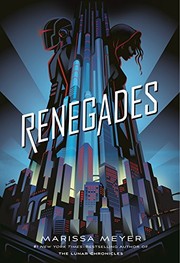
Renegades
Villain Nova infiltrates heroes while Adrian questions justice.
2,453-word summary · 11 min read
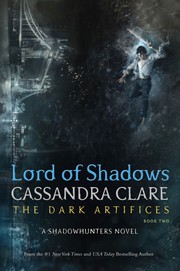
Lord of Shadows
Emma and Julian face faerie war and forbidden love as the Cohort rises.
2,496-word summary · 11 min read

Blue Bloods
At an elite Manhattan school, Schuyler Van Alen learns she is a forbidden half-vampire as someone starts killing her kind.
2,725-word summary · 12 min read

Stalking Jack the Ripper
Lord's daughter Audrey Rose studies corpses in secret while the Ripper works Whitechapel beside Thomas.
2,030-word summary · 9 min read


The Unbecoming of Mara Dyer
Sole survivor of a collapse that killed her friends, Mara Dyer moves to Miami, where visions that come true suggest her grief hides something darker.
2,152-word summary · 10 min read

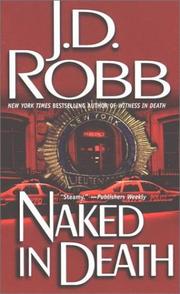
Naked in Death
In 2058 New York, Lt. Eve Dallas hunts the killer of a senator's granddaughter and collides with suspect Roarke.
2,470-word summary · 11 min read

I'd Tell You I Love You, But Then I'd Have to Kill You
Cammie Morgan trains at a secret spy school and falls for a town boy she can never tell the truth.
2,179-word summary · 10 min read
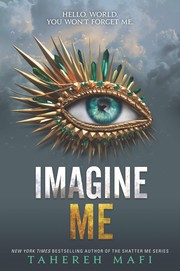
Imagine Me
Juliette remembers who she was and storms the capital to end the Reestablishment for good.
2,090-word summary · 9 min read