
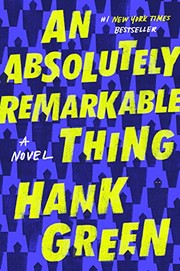
An Absolutely Remarkable Thing
2,699-word summary 12 min read 352 pages in the book
- First published
- 2018
- Publisher
- Dutton
- Pages
- 352
- ISBN
- 9781524744137
- Series
- The Carls (#1)
Reading options
What's inside (9 sections)
I picked up An Absolutely Remarkable Thing because I kept seeing it described as a first contact story about fame, and I wanted to know how those two ideas could fit in one book. I read it in two sittings on my couch with my phone face down, which felt right for a novel that spends a lot of time thinking about phones. Published in September 2018 by Dutton, it runs 352 pages, and it is narrated by a twenty three year old New York artist named April May who is about to learn that going viral is a lot like being struck by weather. You do not control it, and you do not get to stay dry.
April at the start is broke, talented, and restless. She works odd jobs, makes art from thrift store finds, shares an apartment with her friend Andy, and stays up too late. She has another close friend, Miranda, a doctoral researcher who loves puzzles and data. She knows Maya, a smart and steady woman who will matter more later. April is funny in narration, quick with asides, honest about wanting to be seen.
One night around three in the morning, walking home in Manhattan, April and Andy find something blocking the sidewalk. It is huge, about ten feet tall, like a robot samurai in armor, utterly still. No plaque. No construction crew. April does what a twenty three year old artist in 2018 would do. She climbs on it for fun while Andy films her on his phone. They call it Carl on the spot, because it needs a name for the video. They post the clip, go to sleep, and wake to a changed world.
A robot on 23rd Street
Green writes the discovery scene with the kind of concrete detail that made me trust him. The Carl in New York stands near 23rd Street, still and seamless, with joints that do not look jointed and a surface that does not look cast. April notices the lack of seams first. Andy notices the scale. They knock on it. It sounds dull. They look for projectors, for cranes, for a prank crew. The street is empty except for a taxi passing. Andy keeps filming because filming is what Andy does. April poses, points, does a little routine about first contact. They laugh. They go home. The whole encounter takes maybe twenty minutes.
What sells it is how ordinary they are after. April worries about rent. Andy edits on a laptop with a cracked corner. They argue about titles and thumbnails. They fall asleep with clothes on. Green captures that early internet moment when you post and wait, refreshing counts, telling yourself it does not matter while your thumb keeps moving. I remembered doing the same with far smaller stakes. That small truth helped the large premise land.
The next morning, the Carl is still there, but now it is guarded. Police tape. Crowds. April's phone will not stop buzzing. The video is everywhere. A morning show wants her. Strangers recognize her on the subway. Miranda calls and says, slow down, think. Andy, who shot and cut the video, watches the view count climb and starts to calculate what this could mean. Neither of them yet knows that identical Carls have appeared in cities all over the globe on the same night.
The video that breaks the internet
April becomes, overnight, the Carl girl. Green is very good on the mechanics of this. Agents call. Brands send boxes. A talk show books her and tells her to wear something bright. Twitter, YouTube, and Reddit threads spawn theories: art stunt, ad campaign, government weapon, alien arrival. April and Andy do interviews where they say they know nothing, which is true and which no one believes. Miranda, more careful, starts to look at the data. She maps Carl locations. She checks arrival times. She finds patterns that suggest placement rather than crash landing.
The friendship dynamics shift fast. Andy wants to build a channel and a business. He talks about merch, about access, about striking while the iron is hot. April wants to be taken seriously as a maker, not only as a reactor. She starts to speak in interviews about art and attention, and some of it lands. Miranda warns both of them that attention has a cost. Maya, who enters April's life more fully around this time, sees April clearly and likes her without worshipping her. That steadiness will matter when the noise gets loud.
Green gives April a voice that is chatty, self aware, and sometimes defensive. She tells the story in first person, looking back, and she admits when she handled things badly. She admits she liked the rush. She admits she checked follower counts in bathrooms at parties. I liked that honesty. It kept me on her side even when she made choices I winced at.
The early fame chapters move quick. April gets an apartment upgrade she cannot quite afford. She meets a literary agent. She starts to receive strange messages, some kind, some cruel, some threatening. A rich tech figure named Peter Petrawicki, who runs a company called Altus and talks constantly about improving the world through data and order, takes an interest in April and in the Carls. He offers help, access, and protection. April is flattered and wary. Miranda is openly doubtful. Andy is tempted by the resources.
Carls everywhere and the Dream
Then the book tilts from fame satire into science fiction. People who have touched or spent time near Carls start to share the same dream. Not similar. The same. In the dream, they stand in a long hallway of rooms, each room holding a Carl, each Carl presenting a puzzle or a sequence. They wake with fragments: numbers, symbols, chess moves, song lyrics. Miranda builds a spreadsheet. Others build forums. Someone notices that the dreams progress when people cooperate across cities. The Carls, silent in daylight, are talkative at night.
Green handles the Dream well because he keeps it procedural. April describes falling asleep with a notebook by the bed. She wakes, writes half legible strings, texts Miranda. Miranda correlates. A Carl in Seoul yields a piece that only makes sense with a piece from a Carl in Lagos. The puzzle structure rewards teamwork and punishes hoarding. That design choice becomes plot. Countries and companies try to lock down their Carl, to solve alone, to win. Online groups try to share. April, as the public face, is asked to bless one approach or the other. She tries to choose sharing, with mixed results.
Maya becomes more central here as April's partner and as a grounding presence. Maya works, pays bills, and tells April when she is performing. Their scenes together are quiet: cooking, laundry, walking without phones. Miranda, meanwhile, dives into the work with joy. She is a scientist who has waited her whole life for a real puzzle. She sets up whiteboards, argues about hex and amino acids, tests whether the Carls respond to music or touch. Andy films, edits, and grows frustrated that his role shrinks as the story grows beyond two kids and a statue.
The Dream sequences are eerie without being gory. Green describes tiled floors, soft light, the sense of being watched kindly. April meets other dreamers there without knowing their names. They point, they trade clues, they wake. After, no one can prove what happened. That lack of proof splits the public. Some call it mass hysteria. Some call it contact. Petrawicki's Altus funds research but wants control of findings. Governments post guards. A group calling itself the Defenders starts to argue that the Carls are invasion tools and must be attacked. April receives threats that mention her address.
Puzzles, codes, and the Defenders
The middle of the book is a long puzzle run, and your patience for it will decide how you feel about the novel. April, Miranda, and a loose network of solvers work through Carl sequences that look like riddles left by a teacher who assumes you are smart. One involves prime numbers hidden in short melodies. One involves visual patterns that resolve when overlaid. One involves a set of hands shown in dream panels that map to letters. Miranda explains the steps in plain terms, often with April translating for non technical readers. I enjoyed three or four of these and skimmed two.
While they solve, pressure builds outside. The Defenders grow louder. They picket Carl sites. They harass April at events. Petrawicki uses the fear to argue for order, for monitoring, for giving Altus more access to data in exchange for safety. April is invited to debates where hosts want heat, not light. She tries to say that curiosity is better than panic. Clips of her get cut to make her look smug.
There are strong set pieces in this stretch. A live event where April tries to unite solvers across time zones and the stream lags, then catches, then floods with answers. A night when Miranda realizes two Carls give complementary halves and shouts so loud she scares the cat. A subway ride where April wears a hat and sunglasses and still gets spotted, and a teen asks her to say the line from the video, and April does, and both feel embarrassed. A visit to a Carl site where the crowd is half pilgrims and half protesters, singing and shouting at once.
Green also shows how fame warps help. Money arrives with strings. A brand wants April to wear a shirt near a Carl. A conference wants her to cry on stage. Strangers send art, which moves her, and send cruel edits, which rattle her. Maya tells her to log off for a day. April tries and fails, then tries again. Miranda tells her the puzzle needs her brain, not her face. April believes it for an hour. That push and pull felt true to the era Green is writing about, when being known and being useful kept getting confused.
Fame turns sharp
The back third turns darker. April makes mistakes with real costs. She trusts the wrong person with a location. She posts before thinking. She speaks sharply to Andy in a recorded interview and cannot take it back. Andy, hurt and ambitious, drifts toward Petrawicki's orbit, where he is praised and paid. Miranda stays loyal to the work and to April, but even she gets tired of cleaning up after press cycles. Maya holds steady longest, until a scare makes clear that loving a public person means accepting risk you did not choose.
The Defenders stop being background noise. They plan actions against Carls and against people linked to them. April gets police advice about routes and doors. She starts to vary her walk. She sleeps badly even without the Dream. Green writes this stretch without relish. The threats are not thrilling. They are draining. April describes deleting apps only to reinstall them, blocking accounts only to check them from another login. I recognized that loop. Most readers who have been online much will too.
Petrawicki sharpens into the book's human antagonist. He is not a cartoon villain. He speaks calmly about safety, about unity, about the need for strong hands when the world meets something new. He funds labs. He hires moderators. He also collects data, steers narratives, and nudges Andy toward content that paints April as reckless. April sees through parts of this and misses other parts because she is tired and because she wants to believe help is just help. Miranda sees it more clearly and says so in a scene that crackles. Science, she argues, needs open hands. Altus keeps closing fists.
April's lowest point comes after a public failure that I will not detail fully. An event meant to show cooperation turns chaotic. People are hurt. The Dream shifts tone. April blames herself, with reason and beyond reason. She fights with Maya. She fights with Andy. She sits with Miranda among whiteboards and cold coffee and asks whether first contact was supposed to feel like this. Miranda answers that contact is not a feeling. It is a task. Do the next piece. That line steadied the book for me when the plot wobbled.
The end and the cliffhanger
The final chapters move fast and do not tie everything. The solvers reach a stage in the Carl puzzle that demands a choice in the physical world, not only in dreams. April must show up in person, be seen, and accept danger she has been avoiding. Andy must decide whose story he is telling. Miranda must trust work she cannot fully verify. Maya must decide whether to stand beside April when standing close is unsafe. Green stages this without long speeches. People carry things, stand where they are told, run when told to run.
I will keep the exact mechanics light, because the book is built to surprise you in the last fifty pages and because it ends on a bridge to its sequel. What I can say is that April pays a high price for being the face of the Carls, that the puzzle's purpose becomes clearer without becoming simple, and that the last twist reframes who the Carls might be speaking to and why. April narrates the close with unusual calm. She looks back at the girl who climbed a statue for a joke and does not mock her. She thanks Andy, Miranda, and Maya by name for what each gave. The final pages point directly to a second book, and they earned the turn. I ordered the sequel the same night.
That sequel hook matters for how you judge this book. An Absolutely Remarkable Thing is the first volume in The Carls series, listed as book one, and it reads that way. Threads about Petrawicki and Altus, about the Defenders, about governments holding Carls behind fences, are left open. The Dream is not fully explained. If you need every answer now, you will be frustrated. If you like a first volume that sets a table and then flips part of it, you will be fed.
What dates and what holds
Green wrote this in the thick of the Twitter era, and some pages show it. App names, meme formats, and platform jokes pile up. Characters say things like smash that follow and talk about trending as if trending were weather. In 2018 that felt current. Now parts read like a time capsule. Readers who live online will smile and wince. Readers who do not may feel shut out. A glossary would not help. The tone is the point. Green wanted a novel that felt posted, not printed.
The fame argument can also feel repeated. April learns that attention rewards heat, forgets it, learns it again. She gives three or four versions of the same speech about being real online. Each version is well written. Together they blunt each other. At 352 pages, the book does not overstay much, but the middle puzzle run sags when solutions arrive in bursts and then stall. I wanted fewer Dream briefings and more scenes like April and Maya doing dishes while the world shouts.
Still, the core holds. April May is a strong narrator, funny and flawed and specific. Miranda is a joy, the friend who brings snacks and spreadsheets to the end of the world. Andy is written with fairness rather than scorn, a young man who wants credit and finds worse. Maya gives the book heart without speeches. The Carls themselves are great objects, strange and still and patient. Their puzzles ask for cooperation in a culture built for competition, and that idea never feels forced.
I closed the book thinking about the question April keeps circling. When something truly new arrives, do we meet it together or do we sell tickets to our own panic. Green clearly hopes for together. He also knows tickets sell. That tension gives the novel its charge. If you like science fiction about people more than ships, mysteries solved by groups rather than geniuses, and humor that admits fear underneath, start here. Then keep book two close. You will want it.
FAQ
Who finds the first Carl in An Absolutely Remarkable Thing?
Twenty-three-year-old artist April May and her friend Andy find the New York Carl and post the viral video.
What is the Dream in the book?
People near Carls share the same hallway dream where each Carl offers puzzle pieces that only work when combined.
Is this book the start of a series?
Yes, it is book one in The Carls series and ends with open threads that lead into the sequel.
Similar books
More from The Carls first, then related titles.

Heist Society
A teenage art thief gets expelled from boarding school, then has two weeks to steal five paintings back from a London museum and clear her father.
2,781-word summary · 12 min read
We Are Legion (We Are Bob)
A dead software engineer wakes up as a self-replicating space probe, clones himself into a squabbling fleet of Bobs, and tries to keep a ruined Earth alive.
2,357-word summary · 10 min read
A Connecticut Yankee in King Arthur's Court
Hank Morgan, a Connecticut factory man, wakes in King Arthur's England, rises to chief adviser, and rebuilds the kingdom until his own inventions turn on him.
2,193-word summary · 10 min read

The Penultimate Peril
Baudelaires as concierges in a hotel sort friends from foes before the end.
2,234-word summary · 10 min read
The End
Baudelaires wash on an island where others decide what safe means.
2,320-word summary · 10 min read

The Slippery Slope
Violet and Klaus climb icy peaks to rescue Sunny while Quigley and V.F.D. ruins change what they know.
2,678-word summary · 12 min read
The Eyre Affair
Literary detective Thursday Next chases a villain who kidnaps Jane Eyre from her own novel in an alternate 1985 England.
1,929-word summary · 9 min read

The Carnivorous Carnival
Baudelaires hide as carnival freaks to find V.F.D. clues, facing lions, Olaf, and a fateful cliff split.
2,027-word summary · 9 min read

Abaddon's Gate
A dead detective guides Holden, an assassin hunts him, and a pastor walks unarmed into a mutiny as the Ring opens new worlds.
2,672-word summary · 12 min read
Sphere
A Navy team finds a centuries-old spacecraft on the Pacific floor, and psychologist Norman Johnson faces what its sphere wakes in minds.
2,275-word summary · 10 min read

The City of Ember
Two twelve-year-olds trade jobs and chase a chewed-up note to save their fading underground city before its lights fail.
2,998-word summary · 13 min read

Leviathan Wakes
A destroyed ice hauler, a missing heiress, and an alien growth pull a crew and a tired detective toward war across the solar system.
3,653-word summary · 16 min read

Holes
Stanley Yelnats digs holes at Camp Green Lake while a broken promise, a buried outlaw, and a boy named Zero close in around him.
2,456-word summary · 11 min read

Size 12 Is Not Fat
Former teen pop star Heather Wells investigates two dorm elevator deaths while juggling her ex, her crush, and a size-12 wardrobe.
2,805-word summary · 12 min read

First Grave on the Right
Charley Davidson is a private investigator in Albuquerque and the grim reaper. When three murdered lawyers come back as ghosts, her two jobs collide.
2,770-word summary · 12 min read

Bone, Vol. 1: Out from Boneville
Three cartoon cousins are run out of Boneville, separated by locusts, and dropped into a valley where rat creatures and an old grudge are waiting.
2,155-word summary · 10 min read

Prelude to Foundation
A young Hari Seldon arrives on Trantor with a theory he cannot yet prove, and a hunt through the planet-city forces him to turn psychohistory into a real…
2,013-word summary · 9 min read

Authority
The new director of the Southern Reach takes over an agency that is hiding the truth about Area X, and the building starts to change around him.
2,029-word summary · 9 min read

Archenemies
Nova steals for the Anarchists while Adrian hides his Sentinel identity, and a serum that erases prodigy powers puts them both at risk.
2,485-word summary · 11 min read
The First Fifteen Lives of Harry August
Harry August dies and is born again into the same life, again and again, until a warning from a child tells him the world is ending faster with each pass.
2,189-word summary · 10 min read
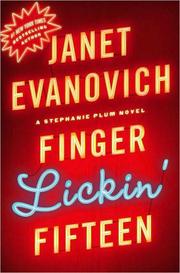
Finger Lickin' Fifteen
Lula sees a celebrity chef decapitated and talks Stephanie into entering a barbecue contest to lure the killers, while Ranger hires her to find a security leak…
2,248-word summary · 10 min read
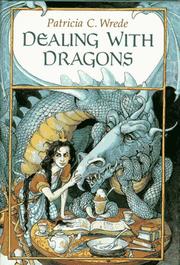
Dealing with Dragons
A princess who hates embroidery runs away to become the cook and librarian for a dragon, then has to outthink wizards, knights, and a plot against the dragon…
2,563-word summary · 11 min read

Carve the Mark
On a planet divided between conquered and conqueror, the tyrant's sister and a kidnapped oracle's son discover that their gifts make them useful to everyone…
2,340-word summary · 10 min read
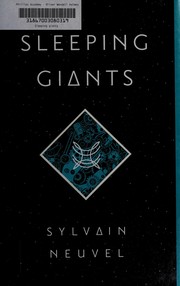
Sleeping Giants
A girl falls into a field and lands in a giant metal hand. Years later a secret team assembles the rest of the machine, and it chooses its own pilots.
2,466-word summary · 11 min read
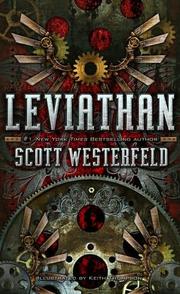
Leviathan
In an alternate 1914, a prince on the run and a girl disguised as a soldier meet aboard a living airship.
2,406-word summary · 11 min read
Consider Phlebas
The first Culture novel follows a spy for the opposing side, a man hired to hunt a fugitive through a war between an anarchist post-scarcity utopia and a…
2,350-word summary · 10 min read
Nettle & Bone
Marra, a princess in a convent, leaves to save her abused sister, but first she must finish three impossible tasks: a bone dog, a nettle cloak, moonlight in a…
2,061-word summary · 9 min read

Starsight
Spensa Nightshade goes undercover aboard the Superiority space station Starsight to steal a hyperdrive, and finds a frightened bureaucracy where she expected…
2,568-word summary · 11 min read

Saving the World and Other Extreme Sports
Max and the flock split in two to take down the lab behind their lives, one half in California and the other in Europe.
2,175-word summary · 10 min read