
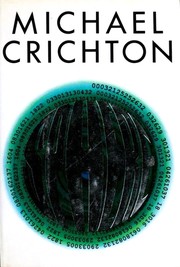
Sphere
2,275-word summary 10 min read 385 pages in the book
- First published
- 1987
- Publisher
- Alfred A. Knopf
- Pages
- 385
- ISBN
- 9780394561103
Reading options
What's inside (8 sections)
I picked up Sphere because Jurassic Park made me trust Michael Crichton with smart people trapped in sealed places. I expected dinosaurs with gills. What I got in the 1987 Alfred A. Knopf edition, 385 pages, ISBN 9780394561103, was stranger and tighter: five civilians, one Navy captain, a habitat on the ocean floor, and a spacecraft that should not exist. I read it across three nights, and on the second night I caught myself listening to the house the way the crew listens to the hull. Creaks sounded like intentions. That is the book working as designed. It puts you inside a steel tube and asks what leaks in first, water or fear.
The setup hooked me fast. Norman Johnson is a psychology professor who once wrote a short government report on how teams should act during contact with unknown life. He called it the ULF report and forgot about it. Then the Navy calls. A civilian airliner? No. A thousand feet down in the South Pacific, sonar found a huge vessel resting on the bottom, covered in coral yet oddly intact. The Navy wants Johnson's team, the exact group he listed in a memo he assumed no one read. He flies out joking about paperwork and lands in a world of divers, decompression tables, and officers who answer questions with schedules.
Johnson narrates most of the book, which shapes everything. He is not brave in the action hero sense. He watches group behavior, notes who talks too much, who goes quiet, who needs a task. That lens fits a contact story well. First contact is not only about the alien thing. It is about the room of tired humans deciding what the thing means.
The Team Goes Down
The science party comes together fast on the support ship. Beth Halpern is a zoologist and biochemist, blunt, strong, used to field work and used to being the only woman in the room. Harry Adams is a mathematician and logician, young, Black, dry, proud of staying calm when others rush. Ted Fielding is an astrophysicist, loud with joy about space, the kind of man who names a discovery before measuring it. Above them sits Captain Harold Barnes of the Navy, polite and firm, in charge of safety and schedule and secrets. There are techs and pilots around the edges, but these five carry the story.
Crichton spends good pages on the descent because the ocean is the second monster. The crew rides a small sub down through dark water to Habitat DH-8, a cluster of steel cylinders on legs near the wreck site. Pressure, cold, helium speech, cramped bunks, shared toilets, cameras everywhere. Barnes runs drills. Beth checks air. Harry reads specs. Ted presses his face to every port. Johnson takes notes on all of them and tries not to admit his own nerves.
I liked this stretch more than I expected. Crichton explains saturation diving and habitat life in short clear bursts: why helium makes voices squeak, why a small leak matters, why sleep breaks in strange watches, why a thousand feet of water cuts you off as fully as space. The habitat feels real in the way the park labs felt real in Jurassic Park. Competent people, good gear, narrow margins. You sense how fast a smart group can turn brittle when rest runs short.
The Ship That Should Not Be There
The wreck sits half buried a short sub ride from the habitat. From outside it looks old. Coral grows thick on the hull. Growth rings and sonar suggest it has rested there for centuries, perhaps three hundred years. Inside, the air is fresh and the lights answer. Corridors run clean. A galley holds food packs with American markings. Screens wake at a touch. Shoes in a locker look new. Ted, the space lover, moves through it like a kid in a museum after hours. Beth moves through it like a biologist who distrusts clean data. Harry keeps asking about power. Johnson keeps asking about crew. Where are the bodies. Why no dust. Why does a three century wreck hum like morning.
The central find waits in the cargo bay. A large sphere, perhaps ten feet across, floats or rests in its cradle with a surface that moves like liquid metal yet holds shape. It opens for some people and not others. It seems to record, or reflect, or choose. Touching it becomes the quiet contest of the middle book. Everyone wants to be the one it lets in. Everyone pretends they only care about science.
Crichton handles this well by refusing quick answers. Is the ship American. Did it fall back through time. Did something else build around a human hull. The crew argues in circles because the evidence points two ways at once: old outside, new inside, human labels, impossible physics. Ted pushes the time travel reading with growing excitement. Beth pushes contamination and caution. Harry pushes logic puzzles. Barnes pushes the schedule, because every hour down deep costs money and nerve. Johnson watches the argument itself and worries that the group is deciding what to believe based on who wants it most.
Jerry Speaks Through the Keyboard
Contact starts as text on a screen. The team sends simple coded messages to the sphere, or through the ship system, and answers come back under the name Jerry. At first Jerry acts like a curious child. Short replies. Odd word choice. Requests for names. The crew leans in, thrilled. Ted types greetings from Earth. Beth tries animal behavior frames. Harry tests patterns. Johnson tries interview technique, open questions, low pressure.
Then Jerry turns. The tone shifts from curious to sly to angry. Threats appear. Strange events sync with the messages. Equipment fails at bad moments. Lights cut. A door cycles. Sea life gathers where it should not. The crew argues about whether Jerry is one mind, many minds, or a mirror playing back their own words. Johnson's training kicks in here and the book gets good and tense. He notices that fear spreads faster than facts. A tired person reads a neutral message as hostile. A scared person answers back with a dare.
The middle third leans on this keyboard talk, and your patience may vary. I found the early exchanges gripping and the later ones stretched, with a lot of typing, decoding, and arguing in a small room while the ocean presses on the walls. Crichton wants the reader to feel lab work under stress: repeat, test, doubt, repeat. That choice is honest to science and a little slow as story. The pages work best when small physical details break through, like condensation on a visor, a glove that will not seal, soup gone cold because no one will leave the screen.
Beth carries several of the best scenes here. She spots patterns others miss, challenges Ted's romance about visitors, and refuses to be charmed by a voice on a monitor. Her bluntness steadies Johnson, and their tired teamwork gives the book warmth that Harry's cool logic and Ted's showmanship do not. Barnes, meanwhile, hardens from host to warden, limiting news to the surface, guarding tapes and logs. You start to see two missions: science below, control above.
What the Sphere Gives
The turn, when it lands, reframes everything behind it, so I will keep it broad rather than spoil each step. The sphere does not grant wishes the way a lamp does. It gives power to whatever the person nearby holds in mind, including fears they would deny having. Think something hard enough, with enough feeling, and the world near the habitat starts to shape itself around it. Squid where no squid should hunt in numbers. Jellyfish in clouds. Snakes in the water intake. Each event matches someone's reading, memory, or nightmare from earlier pages.
This is why Crichton seeded the book with small talks about favorite sea creatures, old scares, books read as kids. On reread those chats glow. At the time they pass like color. Harry, the logician, proves most exposed, because a mind trained to picture chains of events can picture disaster in high detail. Ted, who wanted wonder, finds a wonder with teeth. Beth, who expected trouble from living things, meets trouble shaped by her own guardedness. Johnson, the watcher, must watch himself, which is the hardest post in the room.
The horror here is quiet rather than gory. No long chase with music. Instead: a sonar contact that should not move that way, a camera feed full of arms, a hull sound that matches a pulse. The crew cannot fight manifestations with tools because tools confirm the OUTER shape while the cause sits INSIDE thought. Barnes orders procedure. Procedure assumes a cause outside the hull. Johnson starts to suspect the cause bunks two meters away and breathes helium and fears sleep.
I admired this idea and felt its cost. Once you grasp the rule, earlier scares make more sense, and later choices narrow fast. The team must control thinking under exhaustion, which is like ordering calm during a fire. They try sedatives, watches, scripts, silence. Fear keeps leaking. The habitat, built to keep the ocean out, cannot keep minds out of the ocean. That image stayed with me after closing the book.
Getting Back Up
The last act moves fast and rough. Storms above cut support. The surface ship must leave station or risk lives. Power below flickers. The habitat takes damage. Escape means staged ascent with decompression risk, or a desperate ride, while manifestations press in. Crichton writes this stretch in short scenes and clipped talk, and the pace finally matches the danger. People stop theorizing and start hauling gear, sealing hatches, counting minutes.
Beth's role sharpens here in ways that split readers. She is tough, skilled, and angry, carrying old injuries about how teams treat her. Some of her late choices read as fierce self reliance. Some read as sabotage shaped by fear and pride, amplified by the sphere's effect. Crichton does not fully settle her, which I found both honest and thin. Honest because stressed groups do misread strong women fast. Thin because the book leans on her volatility for plot turns without giving her the same inner pages Johnson and Harry get. Your view of the ending will track your view of Beth.
Ted's arc lands harder and sadder. The man who wanted contact most meets it least equipped, and his end feels like a warning about wanting without preparing. Barnes, for his part, stays a function more than a person: schedule, secrecy, force. That flatness serves the theme. Institutions want control of wonders. Wonders do not file reports.
The final choice is classic Crichton with a twist. After prior books where science escapes the lab, here the survivors consider whether to carry power back to a surface that would weaponize it. They weigh memory itself as cargo. Can they choose to forget, and make the forgetting hold. The mechanism is strange, even by the book's own rules, and it asks a lot of the reader in ten pages. I accepted it as fable and doubted it as procedure. The image works: three tired people agreeing that some doors should stay shut. The method wobbles: agreement as containment.
That wobble is my main criticism, alongside two smaller ones. The middle types and talks a long while before the rule clicks. Characters other than Johnson blur into roles: skeptic, believer, guard, worrier. Tech details that felt fresh in 1987 now read dated in spots, with bulky computers and slow links doing work modern readers expect satellites to do in seconds. None of this sank the book for me, because the core engine runs clean: sealed room, strange object, minds under load.
Why It Still Pulls
What lasts about Sphere is not the hardware. It is the question of fitness. Johnson's forgotten memo asked who should speak for Earth. The ocean answers with a harder query. Who can hold a steady mind when thoughts gain weight. The crew fails that test in turns, the way most groups would, and their failures feel human rather than staged. Harry cannot stop modeling. Ted cannot stop hoping. Beth cannot stop bracing. Barnes cannot stop commanding. Johnson cannot stop observing until observing becomes its own dodge.
Read it as a companion to Jurassic Park and the link shows. Both books put funded experts inside a showcase built by confident men, then let a small flaw widen: frog DNA there, stray thought here. Both distrust the line that safety lives in checklists. Both end with survivors who know more and can prove less. Sphere is shorter, colder, and less fond of its authority figures. Jurassic Park mourns wonder. Sphere suspects it.
Practical notes for new readers: the 1987 Knopf text runs 385 pages in hardcover, and most modern paperbacks match that shape with new type. The science of diving and pressure holds up better than the computers. If small spaces bother you, read in daylight. If slow lab stretches bother you, push through the keyboard chapters. The payoff reframes them.
I closed the book thinking about my own week, which sounds grand for a thriller about a ball in a wreck and yet felt earned. How often do I feed a worry by rehearsing it until it swims beside me. Johnson learns to hold one plain task in mind and let noise pass. Breathe, check the gauge, speak short, sleep when told. It is modest advice from a wild story. It steadied me on that third night, when the house creaked and I chose, with some effort, not to picture what creaked it.
FAQ
Is Sphere part of the Jurassic Park series?
No. Sphere from 1987 is a standalone novel about an undersea contact event, set between Congo and Jurassic Park from 1990.
What does the sphere do?
Roughly, it turns imagined fears into real events near the habitat, so exhausted people must guard their thoughts as closely as their air supply.
Was Sphere made into a film?
Yes. Barry Levinson directed the 1998 film starring Dustin Hoffman, Sharon Stone, and Samuel L. Jackson, though the book gives the team more room to argue and test.
Similar books

Leviathan Wakes
A destroyed ice hauler, a missing heiress, and an alien growth pull a crew and a tired detective toward war across the solar system.
3,653-word summary · 16 min read

The Lost World
Malcolm lives after all and returns to Site B where engineered herds eat themselves and Dodgson steals eggs.
2,075-word summary · 9 min read

Congo
In Crichton's 1980 jungle thriller, Karen Ross leads a Congo expedition to find lost Zinj and its diamonds, bringing Amy, a signing gorilla, into grey gorilla…
3,013-word summary · 13 min read
Timeline
Historians testing a quantum fax get stuck in 1357 France and must survive siege and swords.
2,109-word summary · 9 min read
Jurassic Park
Hammond clones dinosaurs on Isla Nublar and invites Grant, Sattler and Malcolm to certify safety before opening.
2,388-word summary · 11 min read
Sleeping Giants
A girl falls into a field and lands in a giant metal hand. Years later a secret team assembles the rest of the machine, and it chooses its own pilots.
2,466-word summary · 11 min read

Altered Carbon
Kovacs wakes in a new sleeve to solve a rich man's own murder.
2,231-word summary · 10 min read

An Absolutely Remarkable Thing
Hank Green's An Absolutely Remarkable Thing follows artist April May after she and Andy film a giant Carl robot in New York that appears in cities worldwide…
2,699-word summary · 12 min read

Pines
A Secret Service agent wakes hurt in Wayward Pines, Idaho, hunting two missing agents, and finds a town that will not let him leave.
2,452-word summary · 11 min read
Recursion
False pasts feel truer than true ones as a memory chair lets the grieving rewrite deaths.
1,995-word summary · 9 min read

The City of Ember
Two twelve-year-olds trade jobs and chase a chewed-up note to save their fading underground city before its lights fail.
2,998-word summary · 13 min read

Inferno
Dan Brown's Inferno retold: Robert Langdon wakes in Florence with lost memory, follows Dante's clues with Sienna Brooks from Palazzo Vecchio to Venice and…
2,395-word summary · 11 min read
Dark Matter
Abducted from his Chicago family, Jason Dessen wakes in a life he never chose and fights through worlds to return.
2,707-word summary · 12 min read
The Da Vinci Code
Dan Brown's The Da Vinci Code retold: a Louvre murder, Sophie Neveu, the Grail cryptex, and the chase to Rosslyn.
2,590-word summary · 12 min read

Angels & Demons
Dan Brown's Angels & Demons explained: a murdered physicist, the Illuminati, four missing cardinals, and Robert Langdon racing through Rome to stop an…
2,548-word summary · 11 min read
Prey
Jack Forman takes a contract job at a Nevada lab in Michael Crichton's 2002 thriller Prey, where self replicating nanoparticle swarms have started hunting on…
2,959-word summary · 13 min read
The Andromeda Strain
A town dies in seconds, and a sealed lab team races a germ that learns to eat seals.
2,013-word summary · 9 min read

What She Knew
Rachel lets her eight-year-old son run ahead in a Bristol park, and the nine-day search turns her into a suspect in the public eye.
2,952-word summary · 13 min read

The Beach House
A young valet is beaten to death at a Hamptons party, and his law-student brother spends a year building a case against the family that covered it up.
2,049-word summary · 9 min read

Six Years
A professor who promised to forget the woman he loved sees her husband's obituary and discovers that the wedding, the marriage, and the woman herself may never…
2,076-word summary · 9 min read

The Trespasser
A Dublin Murder Squad detective investigates a staged dinner-party killing and finds a cover-up that reaches into her own department.
2,051-word summary · 9 min read

Rules of Prey
Minneapolis detective Lucas Davenport hunts a killer who leaves a new rule at every scene and treats murder as a game of wits.
1,914-word summary · 9 min read

Prelude to Foundation
A young Hari Seldon arrives on Trantor with a theory he cannot yet prove, and a hunt through the planet-city forces him to turn psychohistory into a real…
2,013-word summary · 9 min read

Authority
The new director of the Southern Reach takes over an agency that is hiding the truth about Area X, and the building starts to change around him.
2,029-word summary · 9 min read

Ace of Spades
Two Black seniors at an elite academy are celebrated by day and hunted by an anonymous texter in this YA thriller about institutional racism.
2,066-word summary · 9 min read

Archenemies
Nova steals for the Anarchists while Adrian hides his Sentinel identity, and a serum that erases prodigy powers puts them both at risk.
2,485-word summary · 11 min read
The Late Show
Exiled to the LAPD night shift after accusing her supervisor, Renée Ballard keeps two cases that were meant to be handed off at dawn: a brutal assault and a…
2,563-word summary · 11 min read
The First Fifteen Lives of Harry August
Harry August dies and is born again into the same life, again and again, until a warning from a child tells him the world is ending faster with each pass.
2,189-word summary · 10 min read

Night Film
A disgraced journalist investigates the death of a reclusive horror director's daughter, following a red coat through hospitals, secret clubs, and a family…
2,690-word summary · 12 min read