
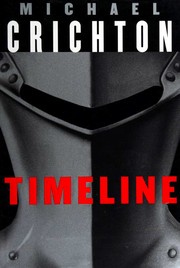
Timeline
2,109-word summary 9 min read 464 pages in the book
- First published
- 1999
- Publisher
- Alfred A. Knopf
- Pages
- 464
- ISBN
- 9780679444817
Reading options
What's inside (7 sections)
Crichton books feel like rides with footnotes, and this is one of his fastest. Timeline by Michael Crichton was first published in November 1999 by Alfred A. Knopf, a 464 page hardcover with ISBN 9780679444817. A tech company finds a way to fax people to 1357 France. Historians go to study a monastery and get stuck in a siege. I read it in three sittings, learning a lot about medieval warfare between chases. If you like Jurassic Park pace with castles, start here.
The setup is classic Crichton. ITC, a New Mexico quantum company, claims to do telecom research. In truth it found many worlds and a way to travel to them, which looks like time travel. A historian working for ITC in France, Professor Johnston, goes back to check a monastery site and does not return. His team of young researchers, Chris, Kate, Marek, and Stern, plus a guide, must follow to fetch him. They have 37 hours, period costumes, and translators in their ears. No guns. No modern talk. Stay out of history way.
What hooked me is the team mix. Chris is the boss son, decent and out of depth, in love with Kate from afar. Kate is an athlete climber who actually reads castles like buildings. Marek is a medievalist who loves the period a little too much and speaks Occitan like a native. Stern is the tech who believes in math over swords and refuses to go until he must. Johnston is the father figure who knows more than he told them. Their skills matter more than Myers Briggs. Who can ride. Who can sew a wound. Who can lie in French.
Quantum fax
Crichton spends the first hundred pages on science that sounds plausible if you do not poke. Quantum foam. Many worlds. A machine that scans you, sends the pattern, and rebuilds you there, while here you are just data. Side effects include transcription errors that kill. ITC hides deaths with money and desert land. The board wants a medieval theme park. The scientists want papers. The lawyers want waivers. It is Jurassic Park logic with new paint, and it works because greed plus curiosity always signs the form.
The rules for the trip create tension. Go together. Stay together. Do not bring modern objects that do not fit. Do not speak modern English where priests listen. Your return window is fixed. Miss it and you are stuck. Each rule will break, which is the fun. A pen in a pocket. A pair of glasses. A cough at the wrong prayer. History notices.
Stern stays behind at first because someone must run the machine and because he is scared, which Crichton treats with respect rather than scorn. His chapters among engineers, watching screens and arguing about power, give breath between sword scenes. He also figures out the company lied about safety. That knowledge raises stakes. Rescue is not guaranteed even if the team reaches the site.
A fair note. The science will not survive a physicist reading. Many worlds does not work like a fax. Transcription errors as plot device are hand wavy. If you need hard SF, this will annoy. I took it as adventure license, like the dino DNA in Jurassic Park. The medieval research, by contrast, is solid and cited. Crichton lists sources. Monasteries, mills, and manuscripts get real detail. Trust the history more than the physics.
The launch scene is great. Naked scans. Cold rooms. Counting down. Marek grinning like a kid. Kate checking knots. Chris trying not to vomit. Then mud, bells, and smoke. Arrival disorients smartly. No heroic poses. Just coughing in a field while men with spears stare.
1357 Dordogne
France in 1357 is not a fair. It is mud, hunger, and war. The Hundred Years War grinds. England holds bits of Aquitaine. France fights itself as much as England. A local lord, Oliver, holds Castelgard with an English captain, Arnaut, as muscle. A French force under La Hire moves to retake it. Between them stands Castelgard monastery, with a mill, a scriptorium, and a secret passage the team needs.
Marek is in heaven and trouble from minute one. He speaks the language, knows the songs, and admires knights who would kill him for accent. He corrects a herald on blazons and nearly gets hanged as a spy. Chris has to save him by playing a squire, which he does badly until fear teaches fast. Kate reads the castle like a climber reads rock. Where is the garderobe chute. Which wall is new. Where would a smart abbot hide a tunnel.
Johnston is already there, held as a clerk because he can read plans and because Oliver thinks he is useful. He warns his students to watch, not change, but history is already changing around them. A battle delayed by weather. A mill burned early. A woman, Lady Claire, who should die in records but lives because Marek warns her. Each small mercy ripples. Crichton uses this to argue with time travel logic. You cannot touch nothing. Touch gently or not at all.
The monastery chapters are my favorite. Monks copying, arguing about a mill that should not exist yet. A librarian who notices Kate hands are wrong for a peasant. A secret crypt with ITC footprints. The team finds proof the company came before and lied. That betrayal lands harder than any sword. Their bosses sent a professor to die for a theme park.
If there is a drag, it is heraldry lectures. Marek explains coats, ranks, and who owes whom for pages while arrows wait. Interesting once, repetitive twice. I skimmed one feast seating debate and missed nothing. The siege makes up for it. Ladders, Greek fire, a trebuchet built wrong then right. You will learn how castles fall.
Siege and survival
The last act is a long siege with clear geography. Castelgard on a rock. A town below. A river with a mill that controls flour and movement. The French attack at dawn after a night rain. The team must find Johnston, reach the machine site in the monastery, and leave before the window closes, all while armies close roads.
Kate climbs. Of course she climbs. A wall at night with rope made from altar cloths, feeling for mortar gaps while guards pass. Her chapters are physical and smart. Test, breathe, move. She maps the secret passage from inside by touch and by listening for water. Chris, who cannot fight, learns to use a crossbow badly and a lie well. He pretends to be a messenger, then a priest helper, then a madman. Each lie buys minutes.
Marek choice is the emotional core. Offered a place among knights he idolizes, praised for sword work, loved by Lady Claire for warning her, he must decide whether to stay in a world that fits him better than laptops ever did. Crichton lets him feel the pull without romanticizing. Teeth rot. Wounds fester. Honor means killing peasants who cannot fight back. Marek loves the songs but hates the costs. His decision, to help friends leave rather than stay for glory, feels earned.
Johnston proves why he is the professor. He reads the battle like a text, predicts where Oliver will commit reserves, and trades that foresight for his students lives. He also destroys ITC notes so the company cannot repeat the trip cheaply. A teacher protecting both past and future. His farewell to Marek, in Occitan, had me tearing up. Go home and write true books, it says in effect. Do not live in footnotes.
The return is messy in a good way. Wrong people at the site. Power flickers. One person must stay behind to hold a door. Stern, who finally crossed over because math could not save friends from afar, gets to be brave with tools rather than swords. He hot wires a water wheel to power the machine, getting soaked and shocked. Nerd heroism at its best.
What wears is body count without weight. Extras die fast. An archer with one line. A monk with a kind face. Crichton moves on to keep pace. After Jurassic Park you expect this, but the monastery deaths deserved a beat more. The main cast survives mostly intact, which feels kind after such odds. I accepted it because the theme is knowledge, not sacrifice. They bring back truth, not corpses.
People under helmets
It is worth pausing on the team as people, because Crichton is often accused of writing types, and here types gain enough quirk to carry. Chris Hughes starts as the reader stand in who asks dumb questions so we learn. He is not brave with swords and knows it. His growth is not becoming a knight. It is learning to lie kindly and to run toward friends rather than away from fear. His crush on Kate stays respectful, which matters in a book full of medieval entitlement. He asks before assuming.
Kate Erickson is the standout and the most competent person on site. An architect and climber, she reads buildings the way Marek reads Latin. She notices that a wall joint is new, that a stair was added for defense, that a mill wheel was repaired with green wood that will fail. Those observations solve as much as any sword. Crichton lets her be athletic without making her superhuman. She gets tired, bleeds, and misjudges a jump. She also refuses to be left behind with the wounded while men talk.
Marek is the tragic fanboy. A scholar who loves the Middle Ages with embarrassing purity, he speaks Occitan and wants knights to be noble. Meeting real knights cures him without killing love. He sees kindness to horses alongside cruelty to peasants. He hears songs sung off key by drunk soldiers. His arc from worship to clear eyed respect mirrors what good history study does. Love the period enough to see its dirt.
Stern, the physicist who stays back, gets a quiet hero turn that engineers will love. He does not pick up a sword. He reads power outputs, floods a wheel, and holds a door with math. His fear of travel is treated as rational risk assessment, not cowardice. When he finally crosses because friends will die without him, his hands shake the whole time and he still works. Johnston, the professor, trades foresight for students lives and destroys notes so the company cannot repeat the trip cheaply. A teacher protecting both past and future.
A small complaint. Lady Claire, the noblewoman Marek saves, is thin beyond kindness and beauty. One scene where she manages servants during siege hints at more steel. I wanted another scene of her running the castle while men fight. The book gestures at women laboring to keep water and bread moving, then returns to knights. A fuller Claire would have balanced the testosterone.
History you can touch
The best reason to read Timeline over watching a castle movie is tactile history. A trebuchet built from memory fails because ropes stretch differently in rain. A mill stops and bread stops, which matters more than banners. A manuscript copied wrong sends the team to the wrong crypt. Monastery life gets real pages. Lauds at dark. Ink that freezes. A librarian who tracks parchment like a miser because sheep cost money. Kate trades architectural advice for access. Marek trades songs. Chris trades labor carrying wood. Knowledge here is social, not downloaded.
Warfare is similarly grounded. Arrows stick in shields and make them heavy. Swords blunt fast on mail. Horses panic at fire and decide battles more than orders. Arnaut wins not by brilliance but by keeping routines while others posture. Feed men. Post watches. Check ground after rain. Crichton respects competence in any century. If there is a lecture lull, it is the ITC boardroom chapters back home where lawyers argue about liability while the team bleeds. I skimmed one meeting and missed nothing.
Still, as a ride it delivers. Short chapters. Maps. Diagrams. A bibliography that invites further reading. You finish knowing how trebuchets work, why mills mattered, and how quantum hype can sell anything. Crichton moral is steady across books. Clever tools without humility eat their makers. Here the tool eats history itself if left running.
Read it if you like smart pulp with real research. Do not read for deep character change. Chris grows braver, Kate gets seen, Marek chooses home, but no one transforms. They survive and learn. Sometimes that is enough, especially with arrows flying. And after, visit a local castle or museum. Touch a stone wall and think of Kate fingers finding holds. Past feels closer when you use your hands.
FAQ
When was Timeline published?
Alfred A. Knopf published it in November 1999. It runs 464 pages and the hardcover ISBN is 9780679444817.
Is it part of a series?
No. It stands alone, though it shares Crichton interest in tech hype and research detail.
Similar books
The Lost World
Malcolm lives after all and returns to Site B where engineered herds eat themselves and Dodgson steals eggs.
2,075-word summary · 9 min read
Congo
In Crichton's 1980 jungle thriller, Karen Ross leads a Congo expedition to find lost Zinj and its diamonds, bringing Amy, a signing gorilla, into grey gorilla…
3,013-word summary · 13 min read
Sphere
A Navy team finds a centuries-old spacecraft on the Pacific floor, and psychologist Norman Johnson faces what its sphere wakes in minds.
2,275-word summary · 10 min read
Jurassic Park
Hammond clones dinosaurs on Isla Nublar and invites Grant, Sattler and Malcolm to certify safety before opening.
2,388-word summary · 11 min read
A Connecticut Yankee in King Arthur's Court
Hank Morgan, a Connecticut factory man, wakes in King Arthur's England, rises to chief adviser, and rebuilds the kingdom until his own inventions turn on him.
2,193-word summary · 10 min read
Recursion
False pasts feel truer than true ones as a memory chair lets the grieving rewrite deaths.
1,995-word summary · 9 min read
Leviathan Wakes
A destroyed ice hauler, a missing heiress, and an alien growth pull a crew and a tired detective toward war across the solar system.
3,653-word summary · 16 min read
Dark Matter
Abducted from his Chicago family, Jason Dessen wakes in a life he never chose and fights through worlds to return.
2,707-word summary · 12 min read
Prey
Jack Forman takes a contract job at a Nevada lab in Michael Crichton's 2002 thriller Prey, where self replicating nanoparticle swarms have started hunting on…
2,959-word summary · 13 min read
The Andromeda Strain
A town dies in seconds, and a sealed lab team races a germ that learns to eat seals.
2,013-word summary · 9 min read
Prelude to Foundation
A young Hari Seldon arrives on Trantor with a theory he cannot yet prove, and a hunt through the planet-city forces him to turn psychohistory into a real…
2,013-word summary · 9 min read

Archenemies
Nova steals for the Anarchists while Adrian hides his Sentinel identity, and a serum that erases prodigy powers puts them both at risk.
2,485-word summary · 11 min read
The Time Paradox
When his mother falls ill with a fairy disease, Artemis Fowl travels back in time to find the extinct lemur that can cure her and confronts his younger self.
2,601-word summary · 12 min read
The First Fifteen Lives of Harry August
Harry August dies and is born again into the same life, again and again, until a warning from a child tells him the world is ending faster with each pass.
2,189-word summary · 10 min read

Carve the Mark
On a planet divided between conquered and conqueror, the tyrant's sister and a kidnapped oracle's son discover that their gifts make them useful to everyone…
2,340-word summary · 10 min read
Sleeping Giants
A girl falls into a field and lands in a giant metal hand. Years later a secret team assembles the rest of the machine, and it chooses its own pilots.
2,466-word summary · 11 min read
Leviathan
In an alternate 1914, a prince on the run and a girl disguised as a soldier meet aboard a living airship.
2,406-word summary · 11 min read
Consider Phlebas
The first Culture novel follows a spy for the opposing side, a man hired to hunt a fugitive through a war between an anarchist post-scarcity utopia and a…
2,350-word summary · 10 min read

Starsight
Spensa Nightshade goes undercover aboard the Superiority space station Starsight to steal a hyperdrive, and finds a frightened bureaucracy where she expected…
2,568-word summary · 11 min read
Saving the World and Other Extreme Sports
Max and the flock split in two to take down the lab behind their lives, one half in California and the other in Europe.
2,175-word summary · 10 min read
Network Effect
Murderbot's contract job turns into a rescue mission when a hijacked research ship and a colony of corrupted colonists appear.
2,256-word summary · 10 min read
Heir to the Empire
Grand Admiral Thrawn returns from the Unknown Regions and outmaneuvers the New Republic while Luke, Leia, Han and smuggler Talon Karrde race him toward…
2,323-word summary · 10 min read
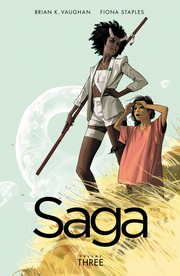
Saga, Volume 3
Marko, Alana, and Hazel hide on the planet Quietus with the reclusive author who inspired their romance, while assassins and a prince close in.
1,989-word summary · 9 min read

Out of the Silent Planet
A Cambridge philologist is kidnapped and taken to Mars, where the natives are civilized and the humans are the dangerous invaders.
2,612-word summary · 12 min read
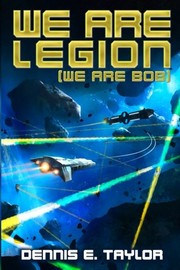
We Are Legion (We Are Bob)
A dead software engineer wakes up as a self-replicating space probe, clones himself into a squabbling fleet of Bobs, and tries to keep a ruined Earth alive.
2,357-word summary · 10 min read
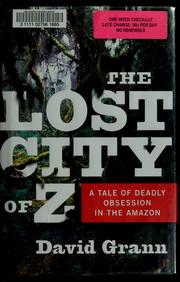
The Lost City of Z: A Tale of Deadly Obsession in the Amazon
David Grann retraces Percy Fawcett's 1925 disappearance in the Amazon and finds that the lost city he sought was not entirely a fantasy.
2,493-word summary · 11 min read
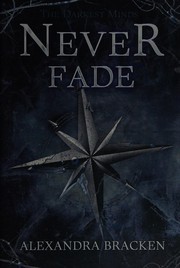
Never Fade
Ruby, now a leader in the Children's League, must track down the boy whose memories she erased, because he holds the only proof of what caused the disease that…
2,188-word summary · 10 min read
Nemesis Games
The Rocinante crew scatters across the solar system just as Marco Inaros and the Free Navy bombard Earth. The Expanse reaches its turning point.
2,506-word summary · 11 min read
Upgrade
A Gene Protection agent is infected with an upgrade virus that makes him stronger and faster than human, and only he can stop his sister from releasing it on…
2,166-word summary · 10 min read
Stormbreaker
A fourteen-year-old boy loses his uncle, then his ordinary life, when MI6 sends him undercover to a Cornish computer plant where the giveaway machines hide a…
2,822-word summary · 13 min read