
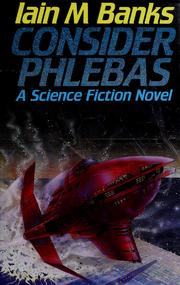
Consider Phlebas
2,350-word summary 10 min read 471 pages in the book
- First published
- 1987
- Publisher
- Macmillan
- Pages
- 471
- ISBN
- 9780333441381
Reading options
What's inside (11 sections)
Most books about utopias are written from inside them. You get a resident, usually a slightly discontented one, and the reader is walked through the customs of the good society and invited to admire. Consider Phlebas does something far more interesting. It opens in the middle of a war between the Culture, which is the utopia, and a theocratic empire called the Idirans, and it follows a man who works against the Culture. He is an agent, a spy, a saboteur, a shape-shifter of a sort, employed by a coalition of species that regard the Culture as an insufferable machine-run parasite expanding under the guise of benevolence. He is the good guy of his own story, and the Culture is the enemy.
That is the book's first and best trick, and it is worth pausing on how much it buys. By putting the reader inside the head of someone who hates the Culture, Banks gets to show his utopia from an angle that its own citizens could never provide. The Culture is vast, powerful, smug, and in the habit of winning, and it is also, by most of the book's own evidence, genuinely better than the alternatives. Holding both of those at once is the novel's real subject, and the chase plot is mostly a delivery system.
The plot, which is a chase
The story is straightforward on its surface. A Mind, one of the Culture's vast machine intelligences, has gone rogue, apparently defecting to the Idiran side and carrying with it secrets that could matter enormously to the war. The Culture wants it found, or destroyed. The agent, named Bora Horza Gobuchul, is hired by the Idirans to retrieve it. What follows is a picaresque journey through a war zone, with Horza dropping into one improbable situation after another.
Banks is a generous plotter, and the novel gives you a great deal. There is a prison called the Vole, from which Horza has to escape. There is a vast orbital ring habitat called Vavatch, scheduled for destruction, where much of the action takes place. There are pirates, there are religious cultists, there is a memorable sequence aboard a ship crewed by a dying man's preserved ancestors. The book moves fast and it is not stingy with incident.
The weakness of the chase structure, and it is a real weakness, is that it occasionally feels episodic in a way that blunts momentum. Several of the set pieces could be removed without much damage to the whole, and there are passages where the sense of forward motion gives way to a kind of restless tourism. This is a first novel in the series, and Banks was still working out how much incident a novel can hold. Later Culture books are tighter.
Horza, and the problem of the wrong side
The agent is a man called Bora Horza Gobuchul, and he belongs to a species, the Chelgrians, that has biological reasons to distrust the Culture. He is, by the standards of his own people, honorable, and by the standards of the Culture, something between a relic and a fanatic. What makes him interesting is that he is not wrong about everything. His objections to the Culture are substantive, and the novel takes them seriously rather than dismissing them as the complaints of a sore loser.
The Culture, Banks is careful to establish, really does interfere. It really does treat other civilizations as projects. It really does assume that its way of living is correct and that its expansion is a favor. Horza has seen this from the inside and it has made him bitter, and his bitterness is legible. When he describes the Culture as a machine-run culture that consumes everything it touches, the reader has seen enough of the war to know there is a case to be made.
And yet the Culture, on balance, is better. That is the tension the novel refuses to resolve, and it is the reason the book is worth reading long after the plot has faded from memory. Banks does not let the reader settle into either comfortable position. If you came for utopian propaganda, you will be annoyed. If you came for a takedown, you will be equally annoyed. The truth is somewhere in the middle, and Banks leaves you standing in the middle with nowhere comfortable to sit.
There is a particular kind of scene that recurs in the memory of anyone who has read the book, in which Horza finds himself aboard a Culture vessel and is treated to the relaxed, faintly amused condescension of one of its Minds. It is simultaneously infuriating and completely correct. The Culture's condescension is real. Its accuracy is also real. Those two facts sitting side by side is Banks's method in miniature.
The Minds, and machine characters
One of the great inventions of the Culture series is the Minds, the enormous artificial intelligences that actually run the place, and they get their best early introduction here. A Mind is not a tool. It is a person, with a personality, a sense of humor, a capacity for what looks from the outside like genuine affection, and motives that are only partly legible to the humans aboard.
The novel is generous with them, and the ship Minds get some of the funniest and most human dialogue in the book. This is deliberate. Banks is arguing, implicitly and repeatedly, that the Culture's machine population has more genuine character than the biological species that look down on it. The Minds are sardonic, patient, occasionally petty, and deeply invested in their human cargo. They are also capable of acts of violence so disproportionate that the reader, and the Culture itself, has to reckon with what they are.
There is a strand here about the limits of utopia that Banks develops across the whole series. A society run by benevolent superintelligences is a society in which the residents have given up a great deal of agency, and Banks never pretends otherwise. The humans in the Culture are happy, and they are also, in a specific sense, pets. Whether that is a fair trade is the question the series keeps returning to, and this book poses it more sharply than most because Horza is there to point at it.
The title, and what it is doing
The title comes from T. S. Eliot's The Waste Land, specifically from the passage that begins, "Phlebas the Phoenician, a fortnight dead, / Forgot the cry of gulls, and the deep sea swell." That is not an arbitrary literary flourish. Eliot's Phlebas is a drowned man whose death is described in a tone of strange serenity, and the poem uses him as a figure for the death that runs underneath everything, the death that comes for merchant and diver alike.
Banks signals through the epigraph that this is not simply an adventure. Underneath the chase, underneath the war, there is a meditation on annihilation, on the fact that all the striving in the novel is happening inside a universe that will eventually dispose of everything. This gives the book a melancholy that sits oddly with its pace, and the oddness is productive. You are being entertained and unsettled at the same time, and you are not allowed to forget which is which.
The Shakespeare connection runs underneath Eliot. The full phrase in Eliot's source is a paraphrase of a passage from The Tempest, in which Prospero contemplates the dead man and says, "Nothing that is so, is so." The novel is saturated, at a low level, with questions about appearances and about the unreliability of any single vantage point. Horza thinks he knows what the Culture is. The Culture thinks it knows what the war is. Both are partly wrong, and the reader is left to triangulate.
The Idirans, and religious war
The opposing empire, the Idirans, are a theocracy, and Banks uses them to write about religious conviction at scale. They are genuinely formidable, physically and spiritually, and their faith is not presented as a disguise for something else. They believe what they believe, they are willing to die for it, and their war against the Culture is a war between a society that has outgrown religion and one that is organized entirely around it.
This was written in 1987, well before the current discourse about faith and modernity, and it is notable how much of that conversation Banks anticipated. The Idirans are not cartoonish. They have a coherent metaphysics. They treat conquest as a form of worship, and they treat the Culture's secular abundance as a kind of spiritual sickness. The Culture, for its part, treats the Idirans as an anachronism to be managed. Neither side fully understands the other, and the war grinds on.
There is a cost to this that the novel tracks, and it is not abstract. Banks gives you the body counts. He gives you the ruined worlds. He gives you the sequences in which ordinary people are ground up by a conflict between two civilizations neither of which will ultimately miss them. The scale of the thing is the point, and it is what separates this from a space opera that enjoys its battles.
What the book argues about power
Read as a political novel, Consider Phlebas is about what happens when a genuinely superior power expands into the lives of people who did not ask for it. The Culture is not an empire in any traditional sense. It does not want tribute. It wants to help, and its help has a way of becoming permanent. Horza's objection, stripped of his personal anger, is essentially the objection of anyone who has been on the receiving end of a benevolent intervention he did not consent to.
Banks does not dismiss that objection. He takes it seriously enough to build a novel around it. But he also does not endorse Horza's alternative, because the Idirans are a slaving theocracy and the choice between them and the Culture is not a difficult one on the ground. The result is a book that holds a genuinely uncomfortable position. The utopia is real, its condescension is real, and the people it steamrolls are also real. There is no synthesis available.
That unresolved quality is, I think, why the book has aged well. It is not a polemic. It is a novel that has figured out where the genuine tension in its world lies and has declined to relieve the reader of it.
The writing, and its excesses
Banks writes with enormous energy and a corresponding lack of restraint. The prose is witty, digressive, and occasionally intoxicated with its own possibilities. There are passages of genuine brilliance, and there are passages where a sharper editor would have removed a page and lost nothing. This is characteristic of him generally, and here, as a first entry in a long series, it shows.
The humor is a particular strength and a particular risk. Banks is very funny, sometimes very funny indeed, and the jokes are doing thematic work, since the Culture's flippancy is one of its defining and most irritating features. But the humor also sits uneasily with the body counts, and a reader who does not share his sensibility may find the tonal shifts jarring. He will describe a massacre and follow it with a quip. Whether that is a failure of tone or an accurate rendering of a universe in which both are constantly present is, again, a question the book declines to settle.
The structure suffers from the episodic problem I mentioned. There are sections where Horza moves from one set piece to the next without the accumulation of momentum that a tighter novel would achieve. The Vole prison sequence and the Vavatch orbital sequence are both strong in isolation, and both could be shorter. A reader who has come from the later, leaner Culture books should adjust expectations accordingly.
How it sits in the series
Consider Phlebas is the first Culture novel published, and it is the one most likely to divide readers. Some people love it precisely because it is scrappy and hostile to the Culture. Some people find it the weakest entry and go on to prefer The Player of Games, which is shorter, cleaner, and far more sympathetic to its subject. Both positions are defensible.
What the book establishes, and what every later novel inherits, is that the Culture is not to be taken at its own estimation. That is an unusual thing for an author to do with his own utopia, and it is the single most impressive thing about the series. Banks loves the Culture enough to build it, and respects his readers enough to let someone stand up and call it unbearable.
I would not call it the best place to start, on grounds of pace and polish. But I would call it the most important one to read, because it establishes the terms. Everything the series does afterward, the explorations of what utopia costs and what it cannot fix, is present here in rougher and more confrontational form. It is a first novel that is swinging hard, and it lands enough blows to justify the effort.
What stayed with me
What I remember, years later, is not the plot. It is the feeling of being inside a war that neither side fully comprehends, and of watching a man defend a position he cannot make good on while being entirely sincere. That is a rare thing in fiction, and it is the reason the book matters more than its imperfections suggest.
The Culture series is ultimately an argument conducted across several novels about what a post-scarcity society owes the rest of the universe. This is the book that poses the question in its hardest form, by giving the microphone to the man who thinks the answer is nothing. He is wrong, mostly. That he has a case at all is what makes the series worth the twenty years it takes to read all of it.
FAQ
Do I need to read the Culture novels in order?
No. They are loosely connected and can be read in any order. Consider Phlebas is simply the first one published and a common entry point.
Is Consider Phlebas a good starting point for the Culture series?
It is a reasonable one, though some readers find the later Player of Games a more accessible introduction. Consider Phlebas is more action-driven and less interested in the Culture's internal logic.
What does the title Consider Phlebas mean?
It is a line from T.S. Eliot's The Waste Land, itself drawing on Shakespeare's Tempest. The full phrase, Consider Phlebas, who was once as fair as thou, is a meditation on death and impermanence.
Similar books
The Fall of Hyperion
Keats persona Severn dreams pilgrims to the Time Tombs as Hegemony falls and TechnoCore war breaks the farcasters.
2,115-word summary · 9 min read
Foundation's Edge
Exiled councilman Golan Trevize hunts for the Second Foundation and the lost world of Earth, and finds a planet with one mind waiting to change the galaxy.
2,335-word summary · 10 min read

Carve the Mark
On a planet divided between conquered and conqueror, the tyrant's sister and a kidnapped oracle's son discover that their gifts make them useful to everyone…
2,340-word summary · 10 min read
Leviathan
In an alternate 1914, a prince on the run and a girl disguised as a soldier meet aboard a living airship.
2,406-word summary · 11 min read
Network Effect
Murderbot's contract job turns into a rescue mission when a hijacked research ship and a colony of corrupted colonists appear.
2,256-word summary · 10 min read
Heir to the Empire
Grand Admiral Thrawn returns from the Unknown Regions and outmaneuvers the New Republic while Luke, Leia, Han and smuggler Talon Karrde race him toward…
2,323-word summary · 10 min read
Saga, Volume 3
Marko, Alana, and Hazel hide on the planet Quietus with the reclusive author who inspired their romance, while assassins and a prince close in.
1,989-word summary · 9 min read
We Are Legion (We Are Bob)
A dead software engineer wakes up as a self-replicating space probe, clones himself into a squabbling fleet of Bobs, and tries to keep a ruined Earth alive.
2,357-word summary · 10 min read
Nemesis Games
The Rocinante crew scatters across the solar system just as Marco Inaros and the Free Navy bombard Earth. The Expanse reaches its turning point.
2,506-word summary · 11 min read
Ancillary Justice
A ship mind trapped in one human body hunts the emperor who betrayed her across frozen worlds.
2,595-word summary · 12 min read
Iron Gold
Ten years after victory, Darrow and new rebels face peace that feels like another war.
2,158-word summary · 10 min read
Cryptonomicon
Codebreakers in World War II and hackers in the 1990s chase gold, ciphers, and a secret data haven.
2,280-word summary · 10 min read

Cibola Burn
Settlers and a company fight over a new world while Holden tries to stop a war.
2,011-word summary · 9 min read
Ringworld
Bored Louis Wu joins alien crew to explore a vast ring habitat around a star.
2,370-word summary · 11 min read
Abaddon's Gate
A dead detective guides Holden, an assassin hunts him, and a pastor walks unarmed into a mutiny as the Ring opens new worlds.
2,672-word summary · 12 min read
Caliban's War
Ganymede burns, Bobbie survives it, Avasarala curses through politics, and Prax hunts daughter Mei.
2,080-word summary · 9 min read
Old Man's War
At 75, John Perry joins the army for a new body and a brutal war over colonies.
2,636-word summary · 12 min read
Morning Star
Broken in a box by the Jackal, Darrow rises with Howlers to open Mars mines to sky.
2,009-word summary · 9 min read
Leviathan Wakes
A destroyed ice hauler, a missing heiress, and an alien growth pull a crew and a tired detective toward war across the solar system.
3,653-word summary · 16 min read

The Blinding Knife
Kip trains to join the Blackguard while the Prism hides his true identity, loses his colors, and fights a war against a rogue drafter who wants to birth a god.
2,049-word summary · 9 min read

Heretics of Dune
Fifteen centuries after Leto II, the Bene Gesserit raise a new Duncan Idaho while the Honored Matres return and Rakis burns.
2,673-word summary · 12 min read
Prelude to Foundation
A young Hari Seldon arrives on Trantor with a theory he cannot yet prove, and a hunt through the planet-city forces him to turn psychohistory into a real…
2,013-word summary · 9 min read
The Secret of the Nagas
Shiva hunts the Naga who attacked Sati, discovers her hidden twin sister and lost son, and follows the trail to the Naga capital of Panchavati.
2,442-word summary · 11 min read

Archenemies
Nova steals for the Anarchists while Adrian hides his Sentinel identity, and a serum that erases prodigy powers puts them both at risk.
2,485-word summary · 11 min read

Starsight
Spensa Nightshade goes undercover aboard the Superiority space station Starsight to steal a hyperdrive, and finds a frightened bureaucracy where she expected…
2,568-word summary · 11 min read
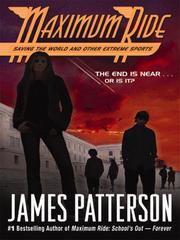
Saving the World and Other Extreme Sports
Max and the flock split in two to take down the lab behind their lives, one half in California and the other in Europe.
2,175-word summary · 10 min read
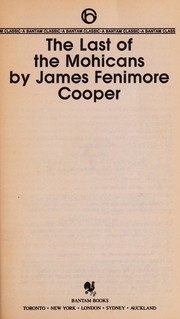
The Last of the Mohicans
During the French and Indian War, Hawkeye and two Mohican warriors try to save two British sisters from a Huron chief whose revenge will end the Mohican line.
2,017-word summary · 9 min read
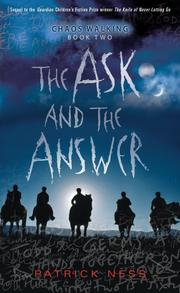
The Ask and the Answer
Todd and Viola are separated in occupied Haven, where the Mayor's Ask tortures suspects and the Answer plants bombs in the name of freedom.
2,265-word summary · 10 min read

Out of the Silent Planet
A Cambridge philologist is kidnapped and taken to Mars, where the natives are civilized and the humans are the dangerous invaders.
2,612-word summary · 12 min read

The Battle for Skandia
Will and Evanlyn are still hiding in the Skandian mountains when Halt and Horace arrive with word of a Temujai invasion that could roll on to Araluen next.
2,248-word summary · 10 min read