
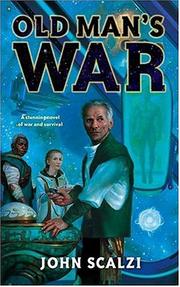
Old Man's War
2,636-word summary 12 min read 320 pages in the book
- First published
- 2005
- Publisher
- Tor Books
- Pages
- 320
- ISBN
- 9780765309402
- Series
- Old Man's War (#1)
Reading options
What's inside (8 sections)
A neighbor kept leaving this book on my porch with sticky notes that said read the first ten pages. I finally did because the hook sounded like a prank. A 75 year old man joins the army and gets a young body for it. That was enough to make me skip my normal pile for a night. I expected a grim satire or a slow meditation on aging. What I got instead was a chatty, fast military story that kept me up past one in the morning arguing with myself about whether I would sign up.
Old Man's War by John Scalzi was first published in 2005 by Tor Books, a 320 page hardcover with ISBN 9780765309402. It is book one of Old Man's War. The narrator is John Perry, a retired advertising writer from Ohio. His wife Kathy has died after decades together. On his birthday he visits her grave and then reports to the Colonial Defense Forces. He knows almost nothing about what service means except that no one who leaves Earth ever comes back.
The setup hooked me because Scalzi withholds explanations the way the army would. Earth is a backwater. The Colonial Union runs the colonies and the war, and it tells people on Earth very little. You can sign papers at 65 giving DNA and intent. At 75, if you are still alive, you can go up. In return you serve two years at the front. Survive and you get land on a colony world. Perry signs because his life in Columbus feels finished and because curiosity beats fear that week. That rationale felt painfully believable to me.
The lift and the Old Farts
Perry rides a space elevator with other recruits and I loved this part for how ordinary it feels. These are not buff cadets. They are sore kneed, widowed, retired people who joke about medications and compare grandchildren. He falls in with a lunch table crowd that calls itself the Old Farts. Harry Wilson becomes his closest friend, a clever man with a dry patter that carries through the whole book. The group teases each other to cover nerves. It works as characterization because their humor sounds like people who have sat in a lot of waiting rooms together.
Saying goodbye has weight because the terms are absolute. No visits home. No letters that explain much. Earth gets propaganda and silence. Perry looks down at Ohio and tries to memorize it. I found myself thinking about my own dad at that age and what it would take for him to get on that elevator. Scalzi does not overplay it. One short scene of Perry packing a bag he will never unpack says more than a speech would.
Training starts after a shock that I will not spoil in detail, except to say the CDF does not keep your old body. Perry wakes up changed and the book shifts into fish out of water comedy for a stretch. Old habits in a young frame. Stairs taken too fast. Reflexes that overshoot. The tone here reminded me of basic training stories from uncles, except the drill instructors are explaining biology instead of pushups. I laughed more than I expected.
A fair gripe already. If you want hard physics with diagrams, this is not that book. Skip drives jump ships across space and no one on Perry level understands them. Scalzi keeps explanations at user manual level. That bothered me for about twenty pages until I accepted the trade. The focus stays on people learning to function, not on engineering lectures.
Green skin and the voice in your head
Everyone gets a new body grown from their own DNA and improved for war. Green skin for better blood flow. Eyes that see wider spectra. Blood packed with tiny machines that clot fast and keep you alive through wounds that would kill a normal human. Strength and speed far past anything Perry knew at thirty, let alone at 75. He describes looking in a mirror and seeing himself plus a stranger. Vanity wars with gratitude. He misses Kathy and wishes she could see him, then feels guilty for caring about looks when friends are dying.
The BrainPal is the part that stuck with me most. It is a computer wired into the brain that talks to you, shows data on your vision, and links soldiers silently. Perry learns to think commands instead of speaking them. At first he treats it like a phone assistant and asks dumb questions. Later he uses it to share targeting info and to message Harry during drills. The banter between Perry and his BrainPal gives the middle chapters a buddy feel. I could hear the dry beeps in my head.
The Ghost Brigades hover at the edge of these chapters as rumor. Regular soldiers whisper that Special Forces are different. They are grown entirely in tanks, never children, never old, never from Earth as adults. They go straight from decanting to war with implanted training. Perry hears that they do not laugh the same way. That detail chilled me a little because the regular recruits still tell dad jokes while waiting for dropships. The contrast sets up the second half without spelling it out.
Training deaths happen and Scalzi does not look away. People wash out because new reflexes plus live weapons punish mistakes. Perry loses acquaintances before he learns last names. The casualty math gets stated plainly by officers. Most of you will not see your homestead. That bluntness lands harder coming from polite administrators than it would from a shouting sergeant. I kept thinking about signing that paper at 65 without knowing this part.
If there is a drag here, it is the manual pages. Scalzi prints specs for bodies and guns and fields. Some readers will eat that up. I skimmed one long passage about smart blood and missed nothing later. The human scenes carry the book. The spec sheets just pause it.
First drops and the Covandu
Combat starts as a string of planetary drops against species fighting for the same scarce habitable worlds. Perry sees the Whaid and others in quick rotations and learns how fast plans collapse. One fight that stayed with me involved the Covandu, who are tiny, roughly an inch tall, with full artillery and pride. Humans step on their cities by accident. The image is absurd until Perry has to clear a Covandu position and realizes he is killing people who built nurseries and radio towers at ankle height.
I did two things on my seventy-fifth birthday.
Perry admits afterward that he felt sick in a way the bigger battles had not caused. That reaction sold me on him as a narrator. He is not a natural killer working through a cool arc. He is a copywriter who keeps noticing details like enemy helmets painted for kids. He jokes because stopping to think would freeze him. Harry pulls him aside after one drop and talks him through it without macho posturing. Their friendship feels earned here, built from shared nausea rather than heroics.
The Rraey enter as a uglier problem. They are strong, territorial, and they value the coral reefs on human held worlds. They also eat people. Scalzi does not linger on gore for shock. He shows enough to explain why troops fear capture by them more than death in a firefight. Perry watches a briefing video once and refuses to watch again. I understood that choice completely and did not need more detail.
Perry gets promoted in the field because he keeps people calm when comms fail. He is not the best shot. He checks corners, counts heads, and remembers to ask the BrainPal for maps when pride tells others to guess. Leadership here looks like admin work under fire. That rang true to anyone who has managed a chaotic shift. The person who writes things down lives longer.
My criticism of this stretch is that battles blur together if you read fast. Planet, aliens with hard names, drop, casualties, debrief. Two engagements in a row follow the same beats. Slowing down helped me. When I gave each fight its own night, the differences stood out more. Bingeing turned them into noise.
Coral goes wrong
Coral is where the book stops being episodic and turns into a single bad day. Humans hold a colony there. The Rraey want the reefs for mining and they want the colonists as food. The CDF plans a fast counterstrike before the Rraey dig in. Perry ships in expecting another hard drop. Instead the fleet walks into a trap that should have been impossible. Ships appear from skip and get hit instantly, as if someone knew exactly when and where they would arrive.
Perry survives the ground part barely and then watches his unit get shredded. He ends up alone in wreckage playing dead while a Rraey search party picks through bodies. The detail that saves him is grotesque and practical. Modified CDF blood tastes wrong to them, so they toss his supposed corpse aside as inedible. He lies there listening to them eat other people and forces himself not to move. I had to put the book down and walk around the kitchen after that chapter. It is the least funny passage in the novel and Scalzi knows it.
He is found by soldiers who move wrong in a way he notices even half conscious. Fast, quiet, coordinated without hand signals. That is his first contact with the Ghost Brigades. Their officer kneels by him and Perry thinks he is hallucinating because she has Kathy face at twenty five, green and fit and calm. He says her name out loud. She corrects him without cruelty. She is not Kathy. Her name is Jane Sagan.
The loss of Coral matters beyond Perry because the CDF cannot explain the ambush. Skip emergence was supposed to be unpredictable. If the enemy can predict it, every colony is exposed. Perry gets pulled from the regular casualty chain because he saw the aftermath up close. Officers ask what he heard on Rraey channels. He has almost nothing except timing. That almost nothing becomes the thread for the rest of the book.
I thought this was the strongest section by far. The horror works because Scalzi spent a hundred pages making me like these old people. When their dropships burn on arrival, it does not feel like pieces moving. It feels like that lunch table emptying out.
Jane Sagan asks what it means to be born
Jane Sagan commands the Ghost Brigades rescue team and she carries the book second half. She was grown from Kathy Perry DNA after Kathy death, which makes her Perry genetic daughter in a weird sideways sense, though she is only six years old with an adult soldier body. She has no childhood memories. She has skills, orders, and questions she is not supposed to ask. Perry becomes her window into what Kathy was like and what a normal life outside the CDF might feel like.
Their conversations walk a careful line. Perry does not treat Jane as his wife returned. He tells stories about Kathy as a young woman, stubborn about garden beds and bad at parallel parking, and watches Jane try to map those stories onto herself. Jane asks blunt questions about marriage and aging and why realborn people keep photos. She is intelligent but socially new, like someone who read manuals about families without ever sitting at a table. I found those scenes tender without turning sentimental. Perry gets a second chance to talk about Kathy, not to reclaim her.
Sagan uses her pull to get Perry a temporary advisory posting as a lieutenant so he can sit in on a strange diplomatic ritual with the Consu. The Consu are far ahead of everyone, ancient and ritual bound, and they grant audiences as games where humans can ask questions if they survive the ceremony. Perry goes because he is expendable and observant, a good witness. What he learns there reframes Coral. The Rraey did not invent skip detection. They were given a borrowed Consu system that tracks the tachyon pulse of an arriving ship.
Perry also pushes paper to protect the last of his Old Farts friends, getting Harry and one other shifted toward research work where their brains matter more than their aim. It is a small bureaucratic win and Scalzi plays it as one. No grand rescue. Just forms filed fast and a call made before the next manifest locks. That modesty made me trust Perry more. He helps where he can reach.
A note on the romance question readers ask about. There is affection and curiosity between Perry and Sagan, but this is not a love story in book one. He is seventy five in his head with grief intact. She is six with questions. Scalzi keeps them respectful and a little awkward. Anyone wanting a sweeping reunion will find it thin. I thought restraint was the right call.
Stealing the manual and going home changed
The finale is a Special Forces raid to grab or wreck the Consu detection setup before the CDF tries to retake Coral. Perry goes along because he can identify what matters and because Sagan requests him. The Ghost Brigades fight at a speed Perry can barely follow even with his improved body. His BrainPal floods with tracks and his job narrows to staying out of lanes and marking targets. That humility works. He narrates himself as luggage with a useful memory.
The station fight is messy in a good way. Consu tech does not behave like human tech. Fields bend. Doors think. The Rraey guards fight hard because they know what losing the system means. Perry ends up carrying a physical technical manual when the system itself gets destroyed, which feels like a joke about backup procedures until you realize paper cannot be jammed the same way. He also drags a badly wounded Sagan to extraction after she takes hits covering him. He saves her life with field blood and stubbornness while calling for pickup in plain language because fancy codes leave his head.
He never sees her again after handing her to a shuttle crew. That separation ached more than any battle death because the book denies a tidy goodbye. Orders split them. The Ghost Brigades vanish back into classified channels. Perry gets promoted to captain for Coral and for the manual, which will let the CDF adapt. He accepts the rank the way he accepted the new body, grateful and uneasy. He holds onto hope that when their service terms end they might meet as civilians on a colony. It is a thin hope and he knows it.
What stays with me is how the book treats age as skill rather than costume. Perry wins fights by noticing, listing, and asking. He remembers names, checks supplies, and writes after action notes others skip. Youth in this universe is issued. Judgment has to be carried over from a long life. That idea flatters older readers a bit, sure, but Scalzi earns it by showing Perry wrong often. He misreads aliens, freezes once, and needs rescue twice. Experience helps. It does not make him superhuman.
Read this if you want military science fiction that moves fast and talks like a person. Expect banter, body horror lite, and politics kept simple. Do not expect deep alien culture studies or a hard physics lesson. The Consu stay mysterious on purpose. The Colonial Union stays shady on purpose. Book two digs into both. I closed this one tired in the good way, thinking about Harry Wilson jokes and Jane asking what snow looks like on a real porch. That image has not left me.
FAQ
When was Old Man's War published?
Tor Books published it in 2005. The hardcover runs 320 pages and the ISBN is 9780765309402.
Is it part of a series?
Yes. It is book one of Old Man's War, followed by The Ghost Brigades. Start here for Perry and Sagan.
Do I need military science fiction experience to follow it?
No. The book explains BrainPals and skip drives as Perry learns, so new readers can follow.
Similar books
More from Old Man's War first, then related titles.
Consider Phlebas
The first Culture novel follows a spy for the opposing side, a man hired to hunt a fugitive through a war between an anarchist post-scarcity utopia and a…
2,350-word summary · 10 min read
Network Effect
Murderbot's contract job turns into a rescue mission when a hijacked research ship and a colony of corrupted colonists appear.
2,256-word summary · 10 min read
The Forever War
Drafted in 1997, physics student William Mandella fights Taurans across collapsars while centuries slip past back on Earth.
3,136-word summary · 14 min read
Heretics of Dune
Fifteen centuries after Leto II, the Bene Gesserit raise a new Duncan Idaho while the Honored Matres return and Rakis burns.
2,673-word summary · 12 min read
Foundation's Edge
Exiled councilman Golan Trevize hunts for the Second Foundation and the lost world of Earth, and finds a planet with one mind waiting to change the galaxy.
2,335-word summary · 10 min read
Carve the Mark
On a planet divided between conquered and conqueror, the tyrant's sister and a kidnapped oracle's son discover that their gifts make them useful to everyone…
2,340-word summary · 10 min read
Leviathan
In an alternate 1914, a prince on the run and a girl disguised as a soldier meet aboard a living airship.
2,406-word summary · 11 min read
Heir to the Empire
Grand Admiral Thrawn returns from the Unknown Regions and outmaneuvers the New Republic while Luke, Leia, Han and smuggler Talon Karrde race him toward…
2,323-word summary · 10 min read
The Ask and the Answer
Todd and Viola are separated in occupied Haven, where the Mayor's Ask tortures suspects and the Answer plants bombs in the name of freedom.
2,265-word summary · 10 min read
Saga, Volume 3
Marko, Alana, and Hazel hide on the planet Quietus with the reclusive author who inspired their romance, while assassins and a prince close in.
1,989-word summary · 9 min read
We Are Legion (We Are Bob)
A dead software engineer wakes up as a self-replicating space probe, clones himself into a squabbling fleet of Bobs, and tries to keep a ruined Earth alive.
2,357-word summary · 10 min read
Nemesis Games
The Rocinante crew scatters across the solar system just as Marco Inaros and the Free Navy bombard Earth. The Expanse reaches its turning point.
2,506-word summary · 11 min read
The Rise of Nine
John, Six and Nine race to India to find Eight before the Mogs strike.
2,321-word summary · 10 min read
Children of the Mind
Ender's children split across worlds as Jane faces shutdown and Lusitania flees.
2,532-word summary · 11 min read
Ancillary Justice
A ship mind trapped in one human body hunts the emperor who betrayed her across frozen worlds.
2,595-word summary · 12 min read
Iron Gold
Ten years after victory, Darrow and new rebels face peace that feels like another war.
2,158-word summary · 10 min read
Cryptonomicon
Codebreakers in World War II and hackers in the 1990s chase gold, ciphers, and a secret data haven.
2,280-word summary · 10 min read
Cibola Burn
Settlers and a company fight over a new world while Holden tries to stop a war.
2,011-word summary · 9 min read
The Fall of Hyperion
Keats persona Severn dreams pilgrims to the Time Tombs as Hegemony falls and TechnoCore war breaks the farcasters.
2,115-word summary · 9 min read
Ringworld
Bored Louis Wu joins alien crew to explore a vast ring habitat around a star.
2,370-word summary · 11 min read
Armada
Gamer Zack learns Armada game trains real defense against alien Europans.
2,004-word summary · 9 min read
The Power of Six
John and Six run from the FBI and Mogs while Marina plots escape from a Spanish convent.
2,904-word summary · 13 min read
The Infinite Sea
Cassie and Squad 53 wait out winter in a hotel while Ringer is retaken and learns the truth behind the 5th Wave.
2,985-word summary · 13 min read
Skyward
Spensa dreams of flying for Detritus though her father was branded a coward, until a crashed ship, a talking AI, and flight school force out the truth.
2,865-word summary · 13 min read
Children of Time
Humanity's ark ship Gilgamesh reaches a terraformed world, only to find intelligent spiders raised over millennia by a lost terraformer's virus.
2,976-word summary · 13 min read
Abaddon's Gate
A dead detective guides Holden, an assassin hunts him, and a pastor walks unarmed into a mutiny as the Ring opens new worlds.
2,672-word summary · 12 min read
Xenocide
Lusitania faces a fleet with planet death while Ender, Jane, and families debate virus, souls, and law.
2,647-word summary · 12 min read
The Long Way to a Small, Angry Planet
Runaway clerk Rosemary joins the Wayfarer crew for a year long tunnel job that tests family and love.
3,295-word summary · 15 min read


Ice Planet Barbarians
Crashed women meet blue hunters on ice and a parasite forces a mating choice.
1,983-word summary · 9 min read