
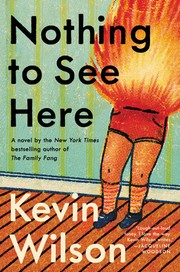
Nothing to See Here
2,167-word summary 10 min read 254 pages in the book
- First published
- 2019
- Publisher
- Ecco
- Pages
- 254
- ISBN
- 9780062913463
Reading options
What's inside (8 sections)
I picked up Nothing to See Here because the premise sounded like a dare. Two kids who burst into flames when they get upset, and a broke young woman hired to watch them for a summer. I expected a gimmick. What I got was one of the warmest books about friendship and patchwork family I have read in years. It was first published in 2019 by Ecco, and the hardcover runs 254 pages. It is a standalone novel, so you can walk in knowing nothing about Kevin Wilson and be fine.
The voice is the first thing that grabs you. Lillian Breaker narrates, and she talks the way funny tired people talk when they trust you. She is twenty-eight, working a cash register, living with her mom, and carrying a chip from high school that never quite wore off. Her old best friend Madison has money, polish, and a husband in politics. Lillian has jokes and a temper she tries to keep folded up. Wilson lets Lillian tell the story straight, with dry asides and sudden soft moments, and that mix keeps the wild setup grounded.
A job offer from Madison
Lillian and Madison were close as teenagers, the kind of close where you know each other's houses better than your own. Then something broke between them. Lillian took the blame for trouble Madison caused, and it cost Lillian more than it cost Madison. They drifted. Lillian stayed in their hometown. Madison married Jasper Roberts, a wealthy Tennessee politician with a career on the rise, and moved into a world of fundraisers and guest houses.
So when Madison calls out of nowhere with a job, Lillian is suspicious for good reason. Madison needs someone to look after her husband's ten-year-old twins for the summer. The pay is far beyond anything Lillian could earn at the store. Part of Lillian wants to hang up on the spot. The register shifts have worn her down to a nub, and pride tells her to say no to the friend who got away with everything. Curiosity wins, plus the plain fact of rent and bills, so she stays on the line.
The catch is strange enough that Lillian assumes it is a joke. The twins, Bessie and Roland, catch fire when they get agitated. Real flames, off their skin. They do not get hurt. Their clothes do. The furniture does. Anyone standing close might.
The setup should feel silly, and instead it feels sad. Lillian says yes partly for the money and partly because Madison is the one asking. She moves to the estate outside the city, into rooms nicer than anywhere she has lived, with the understanding that nobody outside the family can know what the twins do. A campaign season is coming. Reporters are sniffing around. The family needs quiet, and Lillian needs a win.
The twins who catch fire
Bessie and Roland are not props. Wilson gives them distinct shapes, and Lillian learns them the way any good sitter does, by watching and messing up. Bessie is bright and talkative, quick to fill a silence, hungry for attention she does not always get. Roland is quieter, watchful, slower to trust. He keeps his feelings packed down until they come out as heat. Both of them are ten and tired of being treated as problems to manage.
The fire works by simple rules. Strong feeling sets it off. Anger, fear, shame, even excitement pushed too far. The flames rise off their bodies without burning them, which Wilson treats as plain fact rather than a puzzle to solve. There is no lab chapter explaining the science, and I was glad. The point is what the fire does to a normal day. Bath time, bedtime, play dates, swimming pools, all of it has to bend around the chance that a bad mood turns into a blaze.
Lillian starts out scared, which makes her good at the job. She does not pretend the fire is fine. She learns the tells. A certain stillness in Roland. A rising pitch in Bessie. She keeps water close, keeps exits clear, keeps her voice low. Calm becomes a skill she practices out loud. Count to ten. Name what you feel. Step outside. The twins have heard this kind of advice before from adults who said it like a lecture. Lillian says it like someone who also needs to hear it.
Hiding in plain sight
Much of the middle is about secrecy, and Wilson makes secrecy feel heavy instead of fun. The family story is that the twins are away at camp or staying with relatives, depending on who asks. Staff come and go. A political aide checks in. Madison smiles through lunches while Lillian keeps the kids out of sight. Every normal errand becomes a small operation. Groceries, doctor visits, a trip to the store for clothes that will probably burn anyway.
What I liked here is how Wilson ties the hiding to money and power. The Roberts household can afford lawyers, fences, private rooms, and silence. Lillian grew up without any of that padding, and she notices what wealth can buy and what it cannot. It can buy privacy. It cannot buy patience. It cannot make two grieving kids feel safe. Jasper is often absent, busy with donors and speeches, and his absence has a temperature of its own. Madison loves the twins, in her polished and anxious way, but love plus fear makes her grip too tight.
Lillian's rough edges turn out to be useful. She has no training in childcare theory, but she knows what it feels like to be the kid everyone watches for trouble. She eats with the twins instead of above them. She swears in front of them and then apologizes badly. She lets them be bored. Slowly the house rules shift from containment to routine. Meals at the same time. Reading before bed. A plan for bad afternoons. The fires do not stop, but they get shorter, and the fear around them gets smaller.
School lessons and small fires
With regular school off the table, Lillian becomes a summer teacher by default. She is honest about being unqualified, which the twins find funny and then sort of sweet. They read together. They do math at the kitchen table. Bessie writes stories with dramatic endings. Roland draws and does not show anyone at first. Lillian grades easy and praises specific things, and you can feel the twins lean into it. Someone is paying attention without flinching.
The swimming pool becomes the heart of the book. Water is the one place the fire does not matter as much, and Wilson uses it without pushing the symbol too hard. The twins swim like they were made for it. Lillian watches from the edge at first, then gets in. There are afternoons of races and cannonballs and burnt towels drying on chairs, and for stretches the estate stops feeling like a hiding place and starts feeling like a home.
Something quiet happens to Lillian in these weeks that has little to do with the twins. She has spent years telling herself she is the friend who ruins things, the one who jokes through bad news and leaves before she can be asked to leave. Being needed on a daily schedule scrambles that story. She learns she can hold her temper when Bessie screams about nothing, and that she can sit with Roland's silence without filling it. None of this arrives as a speech. It shows in small choices, like getting up early to make the breakfast they like, or staying calm when a towel catches and everyone laughs from relief.
Not everything goes smoothly, because that would be a lie. There are bad days. A phone call from the campaign sets everyone on edge. A neighbor drops by unannounced. Bessie has a meltdown in a store and Lillian has to talk fast while smoke curls off a sleeve. Roland shuts down for two days after a visit with his father leaves him cold. Wilson does not turn these into action scenes. They play as stress tests for the fragile trust Lillian has built. Some days she passes. Some days she snaps and has to apologize, which turns out to matter more than getting it right the first time.
Madison and Lillian circle each other through all of this. Old hurt keeps surfacing. Madison wants forgiveness but asks for it sideways, through gifts and favors. Lillian wants an apology she can believe, and she is not sure Madison knows how to give one. Their talks in kitchens and cars have the stop-start rhythm of real reconciliations. Funny, then sharp, then quiet. I found myself rooting for them without needing them to go back to being fifteen again.
What it costs to keep secrets
As summer wears on, the cost of the cover story climbs. The twins are getting older and asking harder questions. Why can they not have friends over. Why does every plan need a backup plan. Why does being upset make them dangerous to the family image. Bessie in particular starts pushing at the walls. She wants to be seen, fire and all, and Lillian understands the hunger even as she fears what it could bring.
The campaign pressure sharpens everything. Politics runs on clean pictures, and two kids who ignite are the opposite of clean. Aides talk about optics. Jasper talks about timing. Lillian hears the way adults discuss the twins when they think she is just the help, and it makes her protective in a way that surprises her. She came for a paycheck. She stays because leaving feels like handing the twins back to people who love them but keep filing them under problems.
Without spoiling the exact turns, the last stretch forces a choice between safety through hiding and honesty with real risk. A public event goes wrong in the way you fear from page one. Flames, witnesses, panic. What matters is not the blaze itself but who stands where when it happens. Lillian puts herself between the twins and the crowd in every sense. Madison has to decide what kind of mother and what kind of public person she wants to be. Jasper has to decide whether his children are part of his story or a footnote he manages.
I will not lay out the final pages beat by beat. The shape is hopeful without pretending everything is fixed. Someone tells the truth on the record. Someone loses a talking point and gains something better. The twins do not get cured, because there is nothing to cure in Wilson's eyes, only something to live with. Lillian ends the summer changed in ways that feel earned. She still jokes. She still doubts herself. But she has proof now that she can be steady for other people, and that proof changes how she moves through rooms.
What works and what wears thin
What works is the tone. Wilson holds a hard balance for almost the whole book. The premise invites jokes, and he tells them, but he never makes the twins the joke. The humor comes from Lillian's narration and the clash between grand political houses and small daily messes. Burnt sheets. Melted toys. A serious talk about feelings delivered while everyone smells faintly of smoke. I laughed a lot, and I teared up twice, once at the pool and once near the end, and neither moment felt forced.
The class thread gives the story weight. Lillian's past with Madison is not backstory decoration. It shapes every decision about money, loyalty, and who gets to ask for help. Madison is written with care rather than scorn. She is flawed, sometimes cowardly, sometimes generous, always recognizable. Jasper stays more distant, which fits his role but left me wanting one more scene where he drops the candidate voice.
The fair criticism is that the middle repeats its loop. Hide, near miss, calm down, bond, repeat. Around the two-thirds mark I felt the pattern, and a couple of aide-and-schedule scenes blur together. Readers who want the fire explained will also walk away hungry. Wilson never tells you why the twins burn, where it came from, or what it means beyond the human level. I made my peace with that, since an explanation would shrink the book, but I can see it bugging some people.
Still, the pages move. Short chapters, plain sentences, talky scenes that play like summer afternoons. If you like books about odd families finding their shape, or narrators who sound like someone you know, this one earns its buzz. It is funny about serious things and serious about funny things, and it trusts you to hold both at once. I closed it thinking about the twins on their best behavior, which is to say loud, damp, and entirely themselves, and about Lillian finally getting to be the adult she needed when she was their age.
FAQ
Who are the twins in Nothing to See Here?
Bessie and Roland are the ten-year-old twins of Lillian's old friend Madison and her husband Jasper. They ignite when strong feeling hits them, without getting burned, which the family hides during a campaign season.
Is this fantasy or literary fiction?
It reads as literary fiction with a freaky premise rather than rule-based fantasy. Wilson never explains the science of the fire, and the story stays on friendship, class, and care.
Do I need to read Kevin Wilson's other books first?
No. It is a standalone novel, and everything you need about Lillian, Madison, and the twins is on the page.
Similar books

Little Earthquakes
Four Philadelphia women meet during pregnancy and discover that new motherhood is nothing like the plan, while friendship becomes the thing that holds them…
1,997-word summary · 9 min read

Hard Luck
Rowley has a girlfriend, so Greg turns to a Magic 8 Ball, a family Easter hunt and the school yearbook for answers.
2,586-word summary · 11 min read
Cabin Fever
Greg Heffley gets snowed in with his family before Christmas while dodging blame for school property damage.
2,221-word summary · 10 min read
The Ugly Truth
Greg faces puberty, a school lock-in and Uncle Gary's wedding while Mom returns to college in Wimpy Kid book five.
2,766-word summary · 12 min read

About a Boy
An idle London bachelor invents a toddler son to meet women, then builds a real friendship with a lonely twelve year old.
2,750-word summary · 12 min read

My Grandmother Sends Her Regards and Apologises
Seven-year-old Elsa loses her granny and best friend, then delivers apology letters to neighbours while holding onto fairy tales of Miamas and the Land of…
2,311-word summary · 10 min read

Go the Fuck to Sleep
A rhyming bedtime book for adults in which an exhausted father narrates the fourth hour of a toddler's stalling, one profane couplet at a time.
2,291-word summary · 10 min read

Five Point Someone: What Not to Do at IIT
Three friends at IIT drift to a five-point GPA, mock the system, and break into a professor's office for an exam paper.
2,458-word summary · 11 min read
Summer Island
A radio advice host hides a scandal, and the estranged daughter hired to write about it agrees to care for her at the family's island house.
2,325-word summary · 10 min read

Heist Society
A teenage art thief gets expelled from boarding school, then has two weeks to steal five paintings back from a London museum and clear her father.
2,781-word summary · 12 min read

Click, Clack, Moo: Cows That Type
Cows learn to type, demand electric blankets, and go on strike in a deadpan picture book about negotiation and withheld labor.
2,617-word summary · 12 min read

Bet Me
A sharp actuary agrees to dinner with a charming serial bettor, then spends the next month pretending the wager does not matter.
2,710-word summary · 12 min read

Act Your Age, Eve Brown
Eve Brown crashes into a Lake District bed and breakfast, breaks the owner's arm, and talks her way into his kitchen. A grumpy-sunshine romance about work,…
2,474-word summary · 11 min read
George's Marvellous Medicine
George stirs a brew of dozens of household chemicals and gives it to his grumpy grandmother, and the medicine works far better than anyone planned.
2,014-word summary · 9 min read

We Are Okay
Marin fled San Francisco after her grandfather vanished and stopped answering anyone. When Mabel visits her college dorm, she has to say what happened.
2,253-word summary · 10 min read

Big Swiss
A transcriptionist for a sex coach falls for one of his clients, the tall Swiss gynecologist she calls Big Swiss, in a funny novel about work and secrets.
2,523-word summary · 11 min read

2 States: The Story of My Marriage
A Punjabi boy from Delhi and a Tamil Brahmin girl from Chennai meet at IIM Ahmedabad, and turn a love marriage into a campaign to convince two families.
2,634-word summary · 12 min read
The Third Wheel
Greg tries to find a date for the Valentine's dance, ends up the third wheel in his own plan, and watches Rowley get the girl.
2,019-word summary · 9 min read
The Second Summer of the Sisterhood
Four friends share the traveling pants through a summer of grandmothers, first loves, and mothers who are learning to let go.
2,209-word summary · 10 min read
Killers of a Certain Age
Four sixty-year-old assassins discover their retirement cruise is a trap and turn their skills on the agency that trained them.
2,014-word summary · 9 min read
In an Instant
After a family camper crashes down a snowy mountain, sixteen-year-old Finn watches from the afterlife as survivors make impossible choices and try to live with…
2,130-word summary · 9 min read

Days at the Morisaki Bookshop
Heartbroken Takako moves into her uncle's tiny secondhand bookshop in Jimbocho, and the shop and its regulars slowly give her back her life.
2,011-word summary · 9 min read

Aristotle and Dante Dive into the Waters of the World
Ari and Dante return for senior year in El Paso, navigating first love, AIDS, family grief, and the cost of being openly gay in 1987 Texas.
2,188-word summary · 10 min read
Olive, Again
Elizabeth Strout returns to Crosby, Maine, as Olive Kitteridge marries Jack Kennison, confronts her son, and faces old age, grief, and small-town judgment.
2,333-word summary · 10 min read
The Road Trip
Two exes squeeze into one small car for the drive to a Scottish wedding, with four years of history and one photograph between them.
2,418-word summary · 11 min read

Someone Like You
Halley and her best friend Scarlett face a summer of grief, a surprise pregnancy, and Halley's dangerous first romance in Sarah Dessen's 1998 young adult novel.
2,218-word summary · 10 min read
Dial A for Aunties
A wedding photographer accidentally kills her blind date, and her mother and three aunties help her hide the body during the biggest wedding of their careers.
2,076-word summary · 9 min read

Cold Sassy Tree
In 1906 Georgia, fourteen-year-old Will Tweedy watches his widowed grandfather marry a much younger woman three weeks after his grandmother's funeral.
2,154-word summary · 10 min read
Beezus and Ramona
Nine year old Beezus tries to be a good older sister while four year old Ramona turns every ordinary day into a disaster, until a tenth birthday forces honesty.
2,062-word summary · 9 min read
Vanishing Acts
A search-and-rescue worker's perfect life cracks when her past and her father catch up.
2,799-word summary · 12 min read