
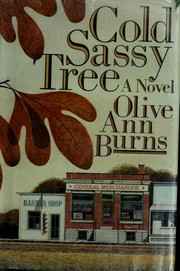
Cold Sassy Tree
2,154-word summary 10 min read 391 pages in the book
- First published
- 1984
- Publisher
- Ticknor & Fields
- Pages
- 391
- ISBN
- 9780899193090
Reading options
What's inside (10 sections)
The summer a grandfather broke the rules
Every family has one story that gets told at every reunion, and Olive Ann Burns built a whole novel out of her family's. Cold Sassy Tree, published by Ticknor & Fields in 1984, came out when Burns was in her sixties, after a career in journalism, and it reads like a woman finally writing down the things her relatives said around kitchen tables in Georgia. The novel takes place in 1906, in the small Georgia town of Cold Sassy, and it is narrated by Will Tweedy, who is fourteen when the book opens and not at all equipped for what is about to happen to his family. That gap between Will's understanding and the reader's is the engine of the book, and Burns runs it for nearly four hundred pages without a false note.
The first thing Will tells us is that his grandmother, Mattie Lou, has died, and that his grandfather is going to do something about it that the whole town will call indecent. He is right.
A funeral, then a wedding
Enoch Rucker Blakeslee, known to everyone as Rucker or Grandpa, has buried his wife of thirty-six years and waited all of three weeks before announcing that he intends to marry Miss Love Simpson, the milliner at his general store, a woman young enough to turn heads and independent enough to have a career of her own. The daughters of the household respond in character. Mary Willis, Will's mother, is scandalized in the way that mothers scandalize best, worried about what the town will think. Loma, married to Camp Williams, joins her in the general family collapse. And the town does think plenty. In a place where grief had a dress code and mourning had a calendar, Rucker's announcement is closer to a public stunt than a personal choice.
Will's own July 5 is even more eventful than the family meeting. Skipping out on mourning and chores, he goes fishing with a friend and walks across a high, narrow railroad trestle, which is where the day stops being a day and becomes legend. A train comes. There is nowhere to run. Will does the only thing possible: he lies flat on the ties between the rails and lets the train pass directly over his body, a few inches above his back. He survives. The town, which had been busy judging his grandfather, drops everything to celebrate the boy who outlived a train. In the middle of the party that same evening, Rucker arrives with his new bride on his arm, and Will's world officially changes.
The deal nobody says out loud
Will likes Miss Love almost immediately, and the book is smart about it. She is candid in a town that punishes candor, she treats Will like a person, and she is in over her head in a way nobody else in the family has the eyes to see. Will, who has a boy's crush on her and a boy's ability to be invisible in doorways, ends up spending a lot of time at the Blakeslee house, and he pieces together the truth that the adults cannot or will not say: the marriage is an arrangement. Rucker gets a housekeeper without paying wages. Miss Love gets the house and the furniture deeded to her name, security in a world that has offered her very little of it. There is no romance in the house. They keep separate rooms, and Will notices.
The town, of course, supplies the romance the couple lacks. Clayton McAllister, a former fiancé from Texas, appears with full charm and an offer to take Miss Love away, planting a kiss on her for good measure. She sends him off with a dismissal so complete it stings through the page, and the scene does something important for the book: it shows that Miss Love chose her situation on purpose, and that the story will not be a rescue.
Cars, kin, and the trip that was not
The year's next scandal is mechanical, which suits a town where the arrival of a single automobile is a civic event. Will's father Hoyt buys a brand-new Cadillac, making the Tweedy family the first car owners in Cold Sassy, and the thing glows like a second sun. Around the same time Rucker throws another grenade into the family dinner by claiming the New York trip. The tickets were bought so Hoyt could make the annual buying run for the store, with Mary Willis along for the adventure. Rucker, deciding the trip would suit the newlyweds better, announces his intention to take Miss Love to New York instead. Mary Willis is crushed in front of everyone, and her resentment of her father's young wife hardens into something that lasts most of the book.
The New York trip is the hinge, though, and the marriage that emerges from it is not the one that left. Rucker and Miss Love come home flirtatious and affectionate, and Will, watching through a kitchen window like a professional, has to revise his theory. By then Rucker has bought a car of his own and hung out a shingle as the town's first car dealer, which is what prosperity looks like in 1906: a dusty storefront with a Ford delivery truck parked behind it, and a grandfather who suddenly wants to take driving lessons.
Lightfoot, and the first punishment
Will's own story runs parallel to the grown-ups the whole way, and the most important thread of it is a girl. Lightfoot McLendon lives in Mill Town, the mill workers' side of Cold Sassy, which in this town is a country of its own. She is poor, she is bright, and Will is in love with her in the way fourteen-year-olds have always been in love, which is completely and without a plan. One day he takes her for a car ride to the cemetery, where a boy can be alone with a girl and pretend the destination is sentimental. He kisses her. A neighbor woman sees it, and before the sun sets twice, both families know.
Will's parents respond exactly as the book has trained you to expect and exactly as Will has learned to dread. The offense is not the kissing. The offense is the class line: a Tweedy does not ride with a McLendon. Will loses the Cadillac for two months, and he obeys the letter of the sentence while ignoring the spirit, because Grandpa Rucker's car is not technically the family Cadillac and Rucker, who has never once cared about the town's opinion, is happy to hand him the keys. That loophole takes Will, Rucker, and Miss Love on a country drive one Sunday, which is where the year's secret comes out.
On the way back, Will swerves to avoid a Ford wrecked in the middle of the road and puts the car into a creek bed. The radiator gives up. They take shelter with a nearby family while repairs are arranged, and that night, sleepless in a strange house, Will overhears his grandfather through the wall. Rucker is telling Miss Love that he loves her, and that he wants the marriage to be real. Miss Love tells him it cannot be, and lays out why. Her secret is the worst kind of old story: her father raped her when she was a child, and she has carried it for her whole life because believing herself ruined was somehow easier than believing the world could be trusted. Rucker, reported through a boy's ears, says the only decent thing anyone says in the whole book. He tells her he does not care what happened to her before, and that he will love her anyway.
The dark turn
The love story is real by this point, which is why the book can afford to hurt you. Camp Williams, Loma's husband and a steady, kind presence through the first half of the novel, kills himself, and the reason is never explained to anyone's satisfaction, least of all the family's. The suicide drops a weight onto the town that the book does not try to lift quickly. Rucker, more pragmatic than anyone comfortable with, hires Hosie Roach, Will's personal nemesis, to fill Camp's place at the store. The job makes Hosie respectable enough to marry Lightfoot, which he does, and Will's heart breaks in the particular way that only happens at fourteen, when you learn you were never in a race you thought you were running.
Loss by loss, the book turns into what it always was under the humor: a story about a boy learning that the adults around him are not in control of anything.
What the novel understands better than most small-town books is that scandal and grief use the same channels. The same porch gossip that carried the news of Rucker's wedding carries the news of Camp's death, and the same women who refused to visit Miss Love will bring food to Loma's door without noticing the contradiction. Will registers the hypocrisy the way a boy registers weather, constantly and without a name for it, and that unlabeled recognition is the quiet engine of his growing up.
The last winter
The ending arrives through blood and bad weather, not through plot machinery. A pair of robbers attack Rucker, beating him badly enough that his recovery is slow and partial, and then, before he can be fully himself again, pneumonia settles into his lungs. The household reorganizes around the sickbed, and Will, still spending his days in the house, overhears his grandfather speaking to Miss Love the way old men are allowed to speak when they are dying. He says that God provides strength and comfort to the faithful in hard times, and the book lets the statement stand without decorating it. Miss Love pulls Will aside and tells him something he has to hold alone for now: she is pregnant, and Rucker does not know.
Rucker dies without knowing. The funeral gathers the town that never accepted his wife, and the novel's last movement belongs to Miss Love, who has been called names by most of the women from here to the county line. She decides to stay in Cold Sassy, and her reasoning is one of the coldest, wisest sentences Burns writes. The town may not accept her, but it will accept a baby Blakeslee, and she can raise a child here that would be a stranger in a city. Will ends the book carrying his grandfather's last lesson, which is less about God than about standing up straight in a world that will not, and the town keeps its name and its stories.
Religion runs under this stretch of the book like a creek under a road, and it is worth being honest about how much of the ending rests on it. Burns was writing about a time and place where faith was furniture, not a debate, and she lets Rucker's belief sit beside his stubbornness and his appetites without apologizing for any of it. The God in these pages is the one Will absorbs through his grandfather, a source of strength for people who have run out of their own, encountered mostly in hard rooms. Readers allergic to devotional writing should know it is here. Readers who grew up around it will recognize it as the realest thing in the novel.
What makes the book last
Cold Sassy Tree lives on its voice. The dialect is thick and carries, the humor is dry and constant, and the novel is structured as a series of episodes that hang on the calendar of one town, which means readers who need a plot spine may find the middle lazy. It is worth pushing through, because the episodes accumulate into a portrait in a way that tighter books never manage.
The history behind the fiction matters too. Burns drew the novel from her own family's stories of Harmony Grove, Georgia, a town that is now called Commerce, and the manuscript was pulled together while she was fighting cancer, which might explain the book's tenderness about time. A sequel, Leaving Cold Sassy, was unfinished when Burns died and was published in 1992. The novel was also turned into a 1989 television movie, with Richard Widmark as Rucker, Faye Dunaway as Miss Love, and a very young Neil Patrick Harris as Will Tweedy, which is the kind of casting fact that books like this earn.
If you want a doorstopper of a classic with a warm voice and an honest heart, this is a good one to spend a season with. It will make you laugh at a funeral and then quietly take the laugh back, and the last hundred pages do more with a half-finished family than most novels do with all the endings they can fit in.
FAQ
Is Cold Sassy Tree based on a real place?
Yes. Burns based it on her family's stories, and the fictional Cold Sassy is modeled on Harmony Grove, Georgia, which is now called Commerce.
Are there sequels or adaptations?
A sequel called Leaving Cold Sassy was unfinished when Burns died and was published in 1992. A 1989 television movie starred Richard Widmark, Faye Dunaway, and Neil Patrick Harris.
What happens to Rucker and Miss Love?
The marriage starts as a deal over the house and furniture, but it becomes real. Rucker dies of pneumonia after a robbery, and Miss Love, pregnant and unknown to him, chooses to stay in Cold Sassy for the child's sake.
Similar books
Ordinary Grace
In 1961 Minnesota, thirteen-year-old Frank Drum faces a summer of deaths that tests his minister family and forces him to weigh truth, guilt, and mercy.
2,948-word summary · 13 min read

Little Town on the Prairie
In the spring after the Long Winter, fifteen-year-old Laura sews shirts, studies for a teaching certificate, and helps send her blind sister Mary to college.
2,071-word summary · 9 min read

Act Your Age, Eve Brown
Eve Brown crashes into a Lake District bed and breakfast, breaks the owner's arm, and talks her way into his kitchen. A grumpy-sunshine romance about work,…
2,474-word summary · 11 min read
A Painted House
In 1952 Arkansas, seven-year-old Luke Chandler picks cotton with his family and learns how quickly poverty, violence, and adult secrets can end a childhood.
2,060-word summary · 9 min read
Tell the Wolves I'm Home
A grieving fourteen year old secretly befriends her late uncle's boyfriend in 1980s New York, testing family loyalty and love.
3,014-word summary · 13 min read
Summer of '69
Four Levin siblings split for summer 1969 as Vietnam, pregnancy and first love pull the family apart.
2,886-word summary · 13 min read
The Cider House Rules
Homer Wells grows up in a Maine orphanage under Dr. Larch, who delivers babies and performs illegal abortions.
2,985-word summary · 13 min read
Hotel on the Corner of Bitter and Sweet
A Chinese American boy befriends a Japanese American girl in wartime Seattle, then loses her to the internment camps.
2,973-word summary · 13 min read
Running with Scissors
A boy sent to live with his mother's psychiatrist grows up in a chaotic house with no rules.
2,036-word summary · 9 min read
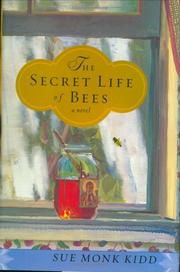
The Secret Life of Bees
Lily runs from her father with Rosaleen to Tiburon, finding shelter with beekeeping sisters.
2,207-word summary · 10 min read

What Happened to Goodbye
Mclean has reinvented herself in four towns since her parents divorced. In Lakeview she uses her real name, and for the first time staying put becomes a choice.
2,796-word summary · 12 min read

The Long Winter
Dakota Territory, 1880: seven months of blizzards cut a town off from the railroad, and a family survives on twisted hay, ground wheat, and a dangerous wheat…
2,210-word summary · 10 min read

The Japanese Lover
A Polish refugee and the son of a Japanese gardener fall in love in San Francisco in 1939, then keep the affair secret for nearly seventy years.
2,286-word summary · 10 min read

The Idiot
A Turkish-American freshman at Harvard falls in love through email with a Hungarian math student and spends a summer in Hungary trying to turn correspondence…
2,019-word summary · 9 min read
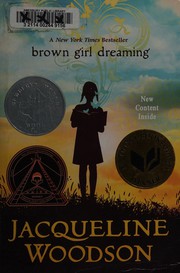
Brown Girl Dreaming
Jacqueline Woodson retells her childhood in verse, moving from Ohio to South Carolina to Brooklyn while the civil rights movement reshapes the world around her.
2,727-word summary · 12 min read

The Shadow Sister
Star D'Apliese steps out of her sister's shadow and follows a bookshop clue into the Edwardian life of Flora MacNichol, a woman who gave up love for duty.
2,260-word summary · 10 min read
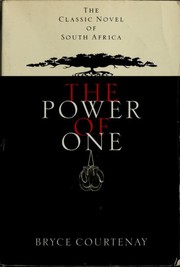
The Power of One
A boy in apartheid South Africa decides to become welterweight champion of the world, and the novel follows every mentor, fight, and loss that gets him there.
2,145-word summary · 10 min read

Mrs. Everything
Two Jewish sisters in Detroit grow up, apart and together, across seven decades of American life, from the 1950s to the 2016 election.
2,362-word summary · 10 min read

Hard Luck
Rowley has a girlfriend, so Greg turns to a Magic 8 Ball, a family Easter hunt and the school yearbook for answers.
2,586-word summary · 11 min read
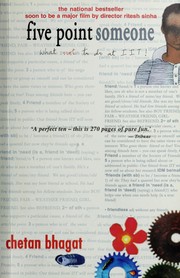
Five Point Someone: What Not to Do at IIT
Three friends at IIT drift to a five-point GPA, mock the system, and break into a professor's office for an exam paper.
2,458-word summary · 11 min read

The Age of Miracles
A California girl grows up while the Earth's rotation slows, and ordinary adolescence continues alongside slow catastrophe.
2,417-word summary · 11 min read
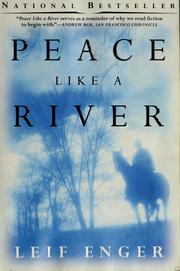
Peace Like a River
An asthmatic boy in the early 1960s narrates his family's search for his older brother, who is accused of two killings and has escaped custody.
1,969-word summary · 9 min read
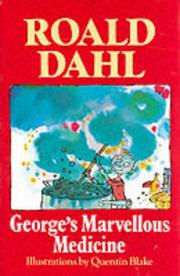
George's Marvellous Medicine
George stirs a brew of dozens of household chemicals and gives it to his grumpy grandmother, and the medicine works far better than anyone planned.
2,014-word summary · 9 min read

The Chosen
A shattered pair of glasses in a 1944 Brooklyn softball game starts a friendship between a Hasidic boy and his Orthodox neighbor, and their fathers pull them…
2,443-word summary · 11 min read
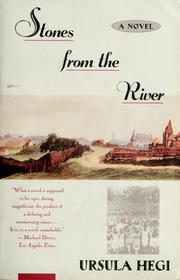
Stones from the River
Trudi Montag is born a dwarf in a small German river town in 1915 and grows up to keep the town's library and its secrets, from the First World War to the…
2,818-word summary · 13 min read
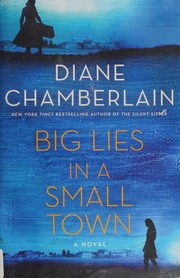
Big Lies in a Small Town
A 22-year-old woman leaves prison to restore a 1940 mural, and Edenton, North Carolina, starts talking.
2,187-word summary · 10 min read

At First Sight
Jeremy and Lexie are married and expecting a baby when anonymous emails tell him the child may not be his.
2,317-word summary · 10 min read

2 States: The Story of My Marriage
A Punjabi boy from Delhi and a Tamil Brahmin girl from Chennai meet at IIM Ahmedabad, and turn a love marriage into a campaign to convince two families.
2,634-word summary · 12 min read
What the Wind Knows
Annie scatters her grandfather's ashes on Lough Gill and is pulled into 1921 Ireland, where she becomes the missing Anne Gallagher and falls for Dr. Thomas…
2,056-word summary · 9 min read

The Second Summer of the Sisterhood
Four friends share the traveling pants through a summer of grandmothers, first loves, and mothers who are learning to let go.
2,209-word summary · 10 min read