
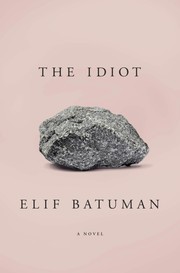
The Idiot
2,019-word summary 9 min read 423 pages in the book
- First published
- 2017
- Publisher
- Penguin Press
- Pages
- 423
- ISBN
- 9781594205613
Reading options
What's inside (10 sections)
Selin Karadağ arrives at Harvard in 1995 with a suitcase, a vague plan to study linguistics, and no idea how to talk to people. She is eighteen, the daughter of Turkish immigrants, and she has the particular earnestness of a very smart person who has read a lot of books and been in very few rooms. Elif Batuman's novel follows her through freshman year and the summer after it, and it is one of the funniest books I know about being young and unable to say the thing you mean.
The plot, such as it is, is simple. Selin takes a Russian language class, meets a Hungarian graduate student named Ivan, and falls in love with him through email. They barely touch. They hardly even talk in person. The relationship exists mostly as text on a screen, and Batuman uses that to write about language, desire, and the gap between the two. It is a campus novel, a travelogue, and a very long joke about semiotics, and somehow it works.
Harvard, 1995
The first third of the book is Selin's freshman year, and it is full of the small humiliations of arriving somewhere you thought you belonged. She fails to make the orchestra. She does not get into the classes she wants. Her roommates are a loud Korean-American woman named Hannah and a shy religious African-American woman named Angela, and Selin spends most of her time not understanding them. She befriends Svetlana, a Serbian student who is neurotic and brilliant and becomes the closest thing the novel has to a confidante.
Batuman is very good at the texture of that year: the dining hall, the lecture halls, the email terminals, the way everyone is performing an identity they have not finished inventing. Selin is an observer by temperament. She notices the things people say and the things they mean, and she is constantly confused by the distance between them. That confusion is the engine of the book. She wants to understand how language works, and she keeps discovering that it does not work the way she wants it to.
She also reconnects with Ralph, a young man she met at a summer program in high school. Their friendship is warm and slightly awkward, and it gives Selin a model of intimacy that is not romantic. Ralph is one of the few people in the book who talks to her without an agenda. He is also, in his way, as lost as she is.
Russian class
The Russian class is where the novel's central relationship begins. The textbook contains a story called Nina in Siberia, in which a girl named Nina is abandoned by a man named Ivan. Selin finds the story bizarre and compelling, and when she starts emailing Ivan, the Hungarian student, she writes to him in the voice of Nina. He writes back. The correspondence becomes a game, then a habit, then the most important thing in her life.
Ivan is older, a mathematician, and he has a girlfriend named Eunice. He is also, in the way of many brilliant young men, oblivious to the effect he has. He writes to Selin about math, about language, about his childhood in Hungary, and the emails are playful and intimate in a way their real conversations are not. When they meet in person, they are awkward. The screen is where they are brave.
Batuman reproduces the emails at length, and this is either the best or the worst thing about the book, depending on your patience. They are funny, self-conscious, and full of the particular pleasure of finding someone who will take your thoughts seriously. They are also long, and they circle. The novel is not in a hurry, and it expects the reader to enjoy the circling.
The emails
The correspondence with Ivan is the novel's formal experiment, and it takes up more space than any other element. Batuman reproduces the messages in full, complete with subject lines, quoted text, and the strange formality of early email. At the time, email was new enough to feel like a literary form. People wrote to each other the way they wrote letters, but faster, and the speed made them confess things they would never have said out loud.
Selin and Ivan write about language, about the meaning of "the girl with the hat," about whether a person can be translated. The emails are flirtatious without ever admitting it. They are also a way of being intimate without being present, and Selin prefers that. In person, Ivan is distracted and a little condescending. On screen, he is attentive, playful, and hers. The novel understands that this is not a lesser form of love. It is a different one, and it has its own rules.
The emails are also where Batuman's humor is sharpest. Selin writes long, earnest paragraphs and then worries that she has said too much. Ivan replies with something oblique and clever. The power imbalance is obvious to the reader and invisible to Selin, which is the source of both the comedy and the ache. She is learning to read him, and she is not very good at it yet.
The summer
At the end of the year, Selin flies to Paris with Svetlana, then to Hungary to teach English in a village. She takes the teaching job partly because Ivan suggested it, and partly because she has no better plan. The Hungarian chapters are the best in the book. Selin is dropped into a small town where she is a curiosity, and the novel relaxes into comedy. Her fellow teachers are eccentric. The villagers are kind and baffling. A blunt local teacher named Rózsa calls her idiotic, and means it affectionately.
She meets Ivan in Budapest, and the encounter is a disappointment in the way real encounters often are. His friends are rude. His family is strange. He is not the person from the emails, or rather he is, but the person from the emails is not enough in a room. They go canoeing on the Danube, they get lost, they spend a night at his parents' house, and they finally have the conversation they have been avoiding. He has no plans for her. He is still with Eunice. He is going to California. They were never really together, and now they are breaking up.
Selin's heartbreak is not dramatic. She goes back to the village, finishes her teaching, puts on a fashion show and a play with her students, and says goodbye. Then she flies to Istanbul to stay with her mother and her aunts, and she gets sick for several days. The illness is the emotional climax of the book. All the feeling she has been holding at arm's length arrives at once, and her body has to process it.
The village
The Hungarian village chapters are the book's comic peak and its emotional turning point. Selin is assigned to a small town where she teaches English to students who are polite, baffled, and occasionally brilliant. She is lonely in the specific way of a person who has chosen solitude for a reason and then forgotten the reason. She eats meals with strangers. She walks. She waits for Ivan to call, and he does not, until his friend Peter tells her to call him.
The villagers are drawn with affection and a little satire. There is Reni, a woman with a much younger boyfriend who takes Selin to a natural history museum. There is Rózsa, the blunt English teacher who calls Selin idiotic and means it as a compliment, or at least as a fact. The students put on plays and a fashion show. Selin is good at teaching, which is a surprise to her, and the novel lets her be good at something without making a fuss about it.
That matters because the book is so focused on Selin's interior life that it can forget she has an effect on other people. In Hungary, she does. She is a stranger who is welcomed, and the welcome is not conditional on her being clever or pretty or interesting. The village likes her because she shows up. It is a simple thing, and it is the first time in the novel that Selin is loved without having to earn it.
Language and the world
The novel's big idea is that language is not a transparent window. Selin studies linguistics, and the more she learns, the less the discipline explains. Syntax and semantics do not tell her why Ivan's emails made her feel chosen, or why his silence in person felt like a verdict. She starts to suspect that the things that matter most are exactly the things that cannot be formalized.
That sounds heavy, and the book is not. Batuman is a comic writer first. The jokes are dry and constant: the absurdities of academic life, the pretensions of graduate students, the way a foreign language makes everyone sound like a child. Selin's narration is deadpan, and the funniest passages are the ones where she reports something outrageous without comment. She is not naive, exactly. She is honest in a way that makes other people look ridiculous.
The novel is also a portrait of a particular kind of immigrant family. Selin's parents are divorced, her mother is anxious, her aunts are formidable. Turkey is not a backdrop. It is a place with its own weather, its own politics, its own way of loving people. The last chapters in Istanbul are some of the warmest in the book.
What it costs
The Idiot is long. It is nearly four hundred pages of a young woman thinking, and it has no conventional plot to pull you forward. Some readers will find the emails exhausting and the lack of incident frustrating. Batuman is not interested in the usual novelistic payoffs. There is no crisis, no revelation, no moment when Selin understands everything. There is just a girl growing up slowly, and a summer that ends.
The ending is deliberately anticlimactic. Selin decides to quit linguistics and become a writer. She does not know what that means yet. She has no boyfriend, no plan, and no certainty, and the book closes on a note of tentative hope. It is the right ending for this character, but it may leave readers who wanted a resolution feeling cheated.
The other criticism is that the book is too pleased with its own intelligence. Selin is surrounded by people who talk in essays, and Batuman clearly loves that world. The satire is affectionate, but it is still satire, and some of the minor characters exist mainly to be laughed at. The novel is kinder to Selin than to almost anyone else.
Why it lasts
What makes The Idiot worth its length is the accuracy of the feeling. Batuman remembers what it is like to be eighteen and in love with someone you have never really touched. She remembers the way a single email can reorganize a day, the way a silence can become a text you reread, the way a summer can feel like the whole future and then be over. The book is funny about that feeling without making fun of it.
It is also, quietly, a book about learning to write. Selin wins a prize for a short story. She takes a class called Constructed Worlds. She discovers that she can make things with language even if she cannot use language to understand her own life. That discovery is the real plot, and it is why the novel ends where it does. She does not get the boy. She gets the sentences.
If you like plot, this will test you. If you like voice, it is a gift. Batuman writes like someone who has been saving up observations for years, and Selin is the perfect vehicle for them: curious, stubborn, and just naive enough to say the true thing out loud. The book is a comedy about a girl who cannot read the room, written by a woman who can read every room in it.
FAQ
Is The Idiot autobiographical?
It is semi-autobiographical. Elif Batuman studied linguistics and Russian at Harvard in the 1990s, and Selin's experiences draw closely on her own, though the novel is fiction.
Does Selin end up with Ivan?
No. They meet in Hungary, admit there is no future for them, and part. Ivan remains with his girlfriend Eunice and leaves for California while Selin goes to Turkey.
Is The Idiot hard to read?
It has little conventional plot and long email exchanges, so it rewards readers who enjoy voice and observation more than story. The prose itself is clear and often very funny.
Similar books
Five Point Someone: What Not to Do at IIT
Three friends at IIT drift to a five-point GPA, mock the system, and break into a professor's office for an exam paper.
2,458-word summary · 11 min read
I Capture the Castle
Cassandra journals six months of love and money trouble in a castle.
2,402-word summary · 11 min read
The Namesake
Jhumpa Lahiri follows Gogol Ganguli from a hated namesake to adult loss, marriage, and family reckoning between Calcutta and Boston.
2,878-word summary · 13 min read

The Beach
A young backpacker follows a dead man's map to a hidden island community, then discovers what the people there are willing to do to keep it secret.
2,067-word summary · 9 min read

Less Than Zero
Clay returns to Los Angeles for Christmas and drifts through parties, drugs, and old friends, including one who is selling himself to survive.
1,926-word summary · 9 min read

Ms. Marvel, Vol. 1: No Normal
Kamala Khan, a Jersey City teenager and Carol Danvers fan, gains shapeshifting powers and has to decide what kind of hero she wants to be.
2,579-word summary · 11 min read
Unaccustomed Earth
Lahiri’s second story collection follows Bengali families in America and abroad, tracing the quiet distances between parents and children, spouses, and the…
2,333-word summary · 10 min read

The House of the Scorpion
A clone raised in a drug lord's poppy fields learns what he was made for and chooses what to do with the life he was given.
2,527-word summary · 11 min read

The Age of Miracles
A California girl grows up while the Earth's rotation slows, and ordinary adolescence continues alongside slow catastrophe.
2,417-word summary · 11 min read
Peace Like a River
An asthmatic boy in the early 1960s narrates his family's search for his older brother, who is accused of two killings and has escaped custody.
1,969-word summary · 9 min read

The Chosen
A shattered pair of glasses in a 1944 Brooklyn softball game starts a friendship between a Hasidic boy and his Orthodox neighbor, and their fathers pull them…
2,443-word summary · 11 min read
Infinite Jest
A film that kills its viewers, a tennis academy, a halfway house for addicts, and a future America where corporations name the years, all tangled together.
2,084-word summary · 9 min read
Eligible
Austen's Bennet sisters move to modern Cincinnati, where marriage is a reality show and the house is losing its value.
2,293-word summary · 10 min read

Big Swiss
A transcriptionist for a sex coach falls for one of his clients, the tall Swiss gynecologist she calls Big Swiss, in a funny novel about work and secrets.
2,523-word summary · 11 min read

American Born Chinese
Three stories, a monkey king, a Chinese-American boy and a sitcom cousin, converge in a graphic novel about shame, assimilation and learning to accept yourself.
2,107-word summary · 9 min read

The Story of Edgar Sawtelle
A mute boy on a Wisconsin dog-breeding farm relives Hamlet as his uncle returns, his father dies in the barn, and the dogs inherit what is left.
2,392-word summary · 11 min read
The Orphan Master's Son
Adam Johnson's Pulitzer-winning novel follows Pak Jun Do from a North Korean orphanage to a deadly identity swap, under a state whose loudspeakers never stop…
2,219-word summary · 10 min read
The False Prince
A nobleman buys four orphans and tells them only one will survive to impersonate the missing prince. The narrator, a defiant thief named Sage, has other plans.
2,044-word summary · 9 min read
Luster
Edie, twenty-three and adrift in New York, falls into an affair with an older white archivist in an open marriage, and into the orbit of his wife and adopted…
2,049-word summary · 9 min read
Foster
A girl spends a summer with relatives on a Wexford farm and is cared for properly for the first time. A spare novella about family and what children notice…
2,043-word summary · 9 min read

Cold Sassy Tree
In 1906 Georgia, fourteen-year-old Will Tweedy watches his widowed grandfather marry a much younger woman three weeks after his grandmother's funeral.
2,154-word summary · 10 min read
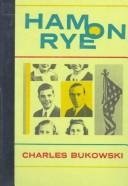
Ham on Rye
Henry Chinaski grows up rough in Depression Los Angeles and finds writing.
2,244-word summary · 10 min read
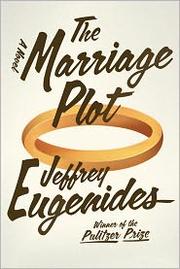
The Marriage Plot
At Brown in 1982, Madeleine loves Austen while torn between brilliant Leonard and steady Mitchell.
2,804-word summary · 12 min read
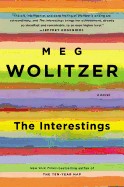
The Interestings
Meg Wolitzer follows Jules Jacobson from 1974 arts camp into middle age, as friendship with Ethan and Ash turns into envy, money gaps, marriage strain, and…
2,990-word summary · 13 min read
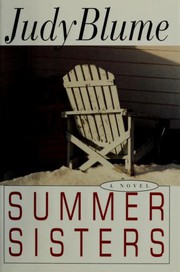
Summer Sisters
Vix and Caitlin share Martha's Vineyard summers from age twelve into adulthood, through first love, grief, marriage, and a disappearance that still haunts Vix.
3,633-word summary · 16 min read
Purple Hibiscus
Kambili, fifteen, watches her devout factory-owner father rule the Enugu house through fear until a Nsukka visit teaches her speech and freedom.
2,595-word summary · 12 min read
Post Office
Chinaski drifts through postal shifts, cheap rooms, horse tracks and rough love in Bukowski's 1971 debut about work, drink and survival.
2,444-word summary · 11 min read
Angus, Thongs and Full-Frontal Snogging
Fourteen-year-old Georgia Nicolson journals boys, friends, parents, and Angus the cat in a frank, funny first year of teen chaos.
2,005-word summary · 9 min read
All the Pretty Horses
John Grady and Rawlins ride to Mexico for ranch work, finding love, prison, and a code that costs all.
2,677-word summary · 12 min read
This Is Not About Us
Sisters Sylvia and Helen Rubinstein feud over apple cake in linked stories spanning divorces, bat mitzvahs and three generations of family life.
2,064-word summary · 9 min read