

The Guest
2,165-word summary 10 min read 304 pages in the book
- First published
- 2023
- Publisher
- Random House
- Pages
- 304
- ISBN
- 9780812998627
Reading options
What's inside (9 sections)
The first thing you notice about Alex is how quickly she reads a room. She knows which woman at the party is insecure about her house, which man wants to be treated like an authority, which teenager will hand over a bottle if you act bored enough. She is twenty-two, she is broke, and she is very good at being whatever the person in front of her needs. Emma Cline builds the whole novel on that skill and then takes away the one setting where it was working.
When the book opens, Alex is at the end of a summer stay at Simon's house in a gated community on Long Island. Simon is fifty-five, wealthy, and not especially curious about her. He likes having her around the way he likes the pool. Alex has been living inside his routine, his kitchen, his car, his friends, and she has started to believe that this arrangement might turn into something with a floor under it. Then a dinner party goes wrong. Alex drinks too much, says something she should not, and damages Simon's car. By morning he has decided she has to go. He does not yell. He has his assistant drive her to the train station and buy her a ticket back to the city. The efficiency of it is the cruelty.
Alex does not get on the train. She has five days until Simon's Labor Day party, and she decides that if she can just stay in the area and reappear at the right moment, she can undo the damage. What follows is a slow drift through other people's houses, other people's accounts, other people's hospitality. She has a phone that will not hold a charge, a bag with a couple of outfits, and no plan beyond the next few hours. The novel is essentially a survival story in a place designed to make survival look effortless.
The shape of the summer
Cline keeps the geography narrow. This is not the Manhattan party scene of her first novel, The Girls. It is the North Fork and the Hamptons, the part of Long Island where the hedges are high and the driveways are long and everyone has a story about how they got the house. Alex moves through it like a ghost with a good haircut. She crashes a party thrown by teenagers in an empty mansion, and the scene is funny and awful at once. The kids are bored and careless, and Alex, who is only a few years older, is already a different species. She drinks their alcohol, watches them pair off, and takes what she can use.
Then she finds a house manager, a woman who runs a property for absent owners, and talks her way into a room. The woman is lonely and wants to be useful, and Alex gives her a reason. Later Alex uses a small boy at a beach club to get past the front desk, then charges lunch and drinks to his parents' account. The boy is delighted to have an adult paying attention to him. His mother is somewhere else. The scene is one of the clearest in the book about what Alex actually does: she finds the gap in someone's life and steps into it.
There is also a young man she meets along the way, a local with a job and a family and a car, and a woman whose house she borrows for an afternoon. Alex keeps almost getting caught and keeps talking her way out. Each escape is a little narrower than the last. Cline is good at the mechanics of this: the moment when a lie has to become a story, the way a stranger's suspicion can be converted into sympathy if you look embarrassed enough, the small theft that feels like a tip.
What Alex wants
The novel is careful never to let Alex explain herself. We get her observations, her calculations, her memory of a bruise on her wrist, but not a confession. That withholding is the point. Alex is not a grifter with a master plan. She is someone who has learned that charm is a currency and that the future is a thing other people have. Her relationship to Simon is not exactly love and not exactly work. It is closer to a lease.
Cline lets us see the cost of that life in small details. Alex cannot afford to be sick. She cannot afford to be boring. She cannot leave a bag anywhere or trust a phone to hold a charge. When she is alone, the prose gets flat and watchful, and you feel how much energy goes into being pleasant. The book is often described as a thriller, but most of its tension comes from social exposure rather than violence. The fear is not that Alex will be hurt. It is that she will be seen.
There is a scene where she swims, and another where she lies in a bed she does not own, and both are written with a kind of suspended pleasure. Alex is happiest in the gap between one arrangement and the next, when nothing has been decided yet. That is also where she is most dangerous to herself. The novel understands that the fantasy of being taken care of and the reality of being disposable can live in the same house.
The people she uses
Cline has a sharp eye for the way wealthy people perform generosity. Simon's friends ask Alex questions that are really statements about themselves. They want to be told that their lives are good, that their taste is good, that the world they have built is deserved. Alex tells them. She is not lying, exactly. She is giving them the version of themselves they already believe in, and they pay for it in meals and rides and a place to sleep.
The teenagers are a different kind of mark. They have no money of their own and no real power, but they have houses and keys and parents who are away. Alex is closer to them in age than to Simon, and the novel is honest about how little that matters. Class is the real distance. The kids can afford to be reckless because someone will clean it up. Alex cannot.
The house manager is the most sympathetic of the people Alex exploits. She is doing a job, she is lonely, and she wants to believe that helping Alex is a decent thing to do. When Alex leaves, you feel the woman's small betrayal more than Alex does. That pattern repeats. The people Alex uses are not villains. They are ordinary people with a little more room than she has, and she takes the room.
The beach club
The beach club sequence is the novel's best set piece, and it is worth slowing down for. Alex needs to get inside, and she does not have a membership or an invitation or a plausible reason to be there. What she has is a child. She finds a boy whose family belongs to the club, attaches herself to him, and lets the front desk assume she is the mother or the nanny or the friend. The boy is happy to have someone pay attention to him. He talks too much. He is a little lonely. Alex listens to him the way she listens to everyone, which is to say she listens for the thing she can use.
Inside, she orders food and drinks and charges them to his parents' account. She sits by the pool in the sun and looks like she belongs. The scene is a small masterpiece of social engineering, and it is also deeply uncomfortable, because the reader knows that the boy will eventually be asked where his mother is, and that Alex will be gone by then. Cline does not moralize. She lets the reader do the math.
The club is a good example of how the novel uses institutions. The gate, the desk, the wristband, the account: these are all systems designed to keep people out, and Alex defeats them with nothing more than confidence and a child's borrowed name. It is a reminder that class is not only money. It is the assumption that you have a right to be somewhere, and Alex has learned to perform that assumption better than the people who actually hold the right.
The men
Simon is not the only man in the book, but he is the one who matters. He is fifty-five, divorced, rich, and used to being catered to. He does not love Alex, and he does not pretend to. What he offers her is access: the house, the car, the food, the parties, the sense of being inside a life that has walls around it. Alex mistakes access for intimacy, which is the central error of her life and the engine of the plot.
The younger men she meets are different and not different enough. There is a local man with a job and a family and a car, and there is a boy at the party who is almost her age and completely out of his depth. Alex flirts with them because flirting is a tool, and the novel is honest about how little she feels. She is not looking for love. She is looking for a place to sleep and a phone charger and someone who will not ask too many questions.
Cline writes sex without heat. That is deliberate. Alex's body is a resource, and the novel treats it as one, which is both the point and a limitation. The reader understands the economics of her situation, but the interior life that would make the sex complicated is kept at a distance. Alex does not let us in, and the book respects her refusal so completely that it sometimes feels like a hole in the middle of the story.
The ending
The last stretch of the novel narrows to the Labor Day party. Alex has been circling Simon's house for days. She has cleaned herself up, found something to wear, and rehearsed what she will say. The plan is not complicated. She will appear at the party, look like she belongs, and let Simon decide that the summer was not so bad after all. The reader knows by then that this is a fantasy, but Alex does not, or will not.
The party scene is crowded and loud and full of people who have already forgotten her. Simon is polite. That is worse than anger. Alex goes out to the pool at night, and the novel ends with her in the water, sinking or floating, and Cline does not tell us which. The ambiguity has annoyed some readers and struck others as the only honest ending available. Alex has spent the whole book refusing to be pinned down, and the book refuses to pin her down in turn.
I think the ending works, but it works as a mood rather than a resolution. Cline is not interested in whether Alex drowns. She is interested in the moment when the performance stops and there is nothing underneath it but a body in cold water. The image is beautiful and a little too neat, and it is the one place where the novel's control feels like a pose.
What the book is doing
The Guest is a short novel with a long shadow. It is about the service economy of intimacy, the way people with money rent the attention of people without it and call the arrangement friendship. It is also about a woman who has turned that arrangement into a personality and then discovers that the personality does not travel. Alex is not a symbol of anything, which is why she is hard to look away from. She is specific. She has opinions about food and clothes and the right way to enter a room. She notices things.
Cline's prose is cool and precise, and she withholds judgment almost entirely. That is a strength in the first half, when the social comedy is sharp, and a limitation in the second, when the novel needs Alex to want something badly enough to risk everything. The drift becomes repetitive. There are only so many times a reader can watch a woman talk her way into a house before the pattern starts to feel like a technique rather than a life.
Still, the book does something most novels about class do not. It lets the poor character be unlikeable without punishing her for it. Alex is not a victim with a heart of gold and she is not a monster. She is a person who has learned the rules of a game that was rigged before she sat down, and she plays it as well as she can for as long as she can. The summer ends. The pool is cold. The party goes on without her.
FAQ
What happens to Alex at the end of The Guest?
She returns to Simon's house on Labor Day, is received politely, and goes into the pool at night. The novel ends with her in the water without saying whether she drowns, leaving her fate deliberately unresolved.
Is The Guest a thriller?
It is usually shelved as literary fiction with suspense elements. The tension comes from social exposure and small deceptions rather than violence or a chase.
Do I need to read The Girls first?
No. The Guest is a standalone novel with different characters and setting, though both books share Emma Cline's interest in young women navigating wealthy, careless worlds.
Similar books

Howards End
Forster's 1910 novel follows two families, a house in Hertfordshire, and a burned note, asking whether money and feeling can ever be connected.
2,187-word summary · 10 min read

The Rumor
Two Nantucket best friends, Madeline and Grace, watch a summer of small indiscretions get retold into gossip that reshapes both their households.
2,017-word summary · 9 min read

The Girls in the Garden
Clare moves her daughters to a gated London garden where the community feels safe; at the midsummer party, twelve-year-old Pip finds her sister bleeding in the…
1,973-word summary · 9 min read

Ghosted
After seven perfect days with Eddie, Sarah is ghosted, and her search for answers uncovers a secret tied to the accident that changed both their lives.
2,011-word summary · 9 min read

The House of Mirth
Lily Bart, beautiful and penniless at twenty-nine, navigates New York's marriage market until a Dorset yacht scandal strips her of the only currency she has.
2,468-word summary · 11 min read

Trust
Four rival accounts of one Wall Street fortune collide: a 1930s novel, a tycoon's memoir, a secretary's story, and a wife's diary.
2,217-word summary · 10 min read

The Tenth Circle
After Trixie accuses Jason of rape and he dies off a bridge, parents Daniel and Laura hide guilt and grace in Alaska flight.
2,164-word summary · 10 min read

House of Sand and Fog
A foreclosed California house pits recovering addict Kathy against Iranian immigrant Behrani, with a deputy whose obsession turns fatal.
2,008-word summary · 9 min read

Handle with Care
Parents of brittle bone daughter Willow sue best friend OB for wrongful birth, splitting marriage and friendships.
2,231-word summary · 10 min read

All We Ever Wanted
A Nashville photo of a drunk boy over a passed out girl splits three families along money and race lines.
2,278-word summary · 10 min read

My Life Next Door
A senator's daughter climbs down to the loud family next door and stays.
2,038-word summary · 9 min read

Leave the World Behind
Two families share a Long Island rental during a blackout no one can explain.
2,015-word summary · 9 min read

I'm Thinking of Ending Things
A woman drives out to meet her boyfriend's parents while planning to leave him, and the night turns quietly wrong.
2,754-word summary · 12 min read

The White Tiger
A poor driver writes to the Chinese Premier about rich masters, corruption, and murder.
2,251-word summary · 10 min read

The Paper Palace
Elle faces Jonas choice at Cape Cod while assault memory returns.
2,588-word summary · 12 min read
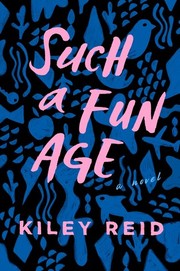
Such a Fun Age
A late-night grocery store clash pulls sitter Emira Tucker and her employer Alix Chamberlain into a tense fight over race, money, and good intentions.
2,339-word summary · 10 min read

Heart Bones
Poor Beyah spends summer in Texas with distant father and falls for secretive Samson.
2,072-word summary · 9 min read

Normal People
Normal People retold: Connell and Marianne from Sligo school to Trinity, class and love.
2,066-word summary · 9 min read

What She Knew
Rachel lets her eight-year-old son run ahead in a Bristol park, and the nine-day search turns her into a suspect in the public eye.
2,952-word summary · 13 min read

Violeta
A woman born in 1920 writes her life story to her grandson, from one pandemic to another, through wealth, ruin, passion, and dictatorship in South America.
2,555-word summary · 11 min read

The Only Good Indians
Four Blackfeet men who killed a pregnant elk are hunted by her spirit a decade later, and the only person who can end the cycle is a teenage girl who was not…
2,010-word summary · 9 min read

The Idiot
A Turkish-American freshman at Harvard falls in love through email with a Hungarian math student and spends a summer in Hungary trying to turn correspondence…
2,019-word summary · 9 min read

The Crying of Lot 49
A California woman named executor of her ex-lover's estate follows a muted post horn into a possible centuries-old postal conspiracy, and Pynchon refuses to…
2,003-word summary · 9 min read

The Beach House
A young valet is beaten to death at a Hamptons party, and his law-student brother spends a year building a case against the family that covered it up.
2,049-word summary · 9 min read

The Art Forger
A disgraced Boston painter agrees to copy a Degas stolen from the Gardner Museum, then begins to suspect the original she is copying is itself a forgery.
2,117-word summary · 9 min read

Six Years
A professor who promised to forget the woman he loved sees her husband's obituary and discovers that the wedding, the marriage, and the woman herself may never…
2,076-word summary · 9 min read

Silas Marner
A falsely accused weaver hoards gold in Raveloe until a stolen hoard and an abandoned child remake his narrow life.
2,699-word summary · 12 min read

Revolutionary Road
A Connecticut couple who believe they are too good for the suburbs plan to move to Paris, and the plan slowly exposes everything they cannot say to each other.
2,085-word summary · 9 min read

Lisey's Story
Two years after her novelist husband dies, Lisey Landon follows a trail of clues into his childhood and the other world that made him a writer.
1,998-word summary · 9 min read

Alone With You in the Ether
Two people in Chicago agree to six conversations, and the experiment becomes a love affair that is also a study of bipolar disorder, obsession, and the shape…
2,713-word summary · 12 min read