

Violeta
2,555-word summary 11 min read 336 pages in the book
- First published
- 2022
- Publisher
- Bloomsbury Publishing
- Pages
- 336
- ISBN
- 9781526648341
Reading options
What's inside (11 sections)
Violeta del Valle is born in 1920, during the Spanish flu, in a house her father has sealed against the world. She dies in 2020, during a different pandemic, after spending her last months writing her life down for her grandson. Isabel Allende places those two plagues at either end and lets the century sit between them, announcing the symmetry on the first page and closing it on the last. It is not subtle, but it works: a woman who has outlived almost everyone she loved has reason to think in circles.
The country is never named. Allende has said she wanted freedom from a strict record of dates, and the book is both freer and vaguer for it. Still, the place is unmistakably Chile: the capital, the far south, the leftist government, the coup, the disappeared, the exiles in Norway. Anyone who knows the region will spend the book filling in the names she leaves out.
The letter is addressed to Camilo, and the novel withholds exactly how he is related to Violeta for a long time. What we know early is that she loves him more than anyone left alive and that she wants him to have the story from her rather than from the family's edited version. The del Valles replace unbearable facts with acceptable ones, and the letter is her attempt to stop doing that.
The house and the crash
Arsenio del Valle believes in expansion. He has five sons and then a daughter, and he spoils the daughter the way men of his class spoil a girl: she is a pet, not an heir. Her mother, María Gracia, is delicate and often ill, worn out by pregnancies and retreating into her room. The aunts, Pilar and Pía, do the emotional work of the household, one practical and one half mystical.
Violeta is a difficult child, and Allende does not pretend otherwise: she throws tantrums, invents illnesses, and tests every adult within reach. When she is five, Arsenio hires an Irish governess, Josephine Taylor, who arrives expecting a quiet position and gets a small war. Miss Taylor refuses to be managed. She sets rules and gives the girl the first experience of authority that is not simple indulgence. The governess and the girl become each other's family in a way the novel treats as ordinary and rare at once.
Then 1929 arrives. Arsenio's fortune turns out to be a stack of debts: stocks, a sawmill, vineyards, building projects, all of it borrowed against the next deal. He tries to hold the line with new borrowing, and when the creditors close in, the family loses the house and a warrant is issued for his arrest. He shoots himself in the library. Violeta, eleven years old, finds the body. The family reports a heart attack and buries him quickly, and the lie becomes the first thing she knows about how her people survive.
Santa Clara
Her mother takes the children south, to Santa Clara, a farm near Nahuel where the Rivas family takes them in. This is the part of the book I like best: the cold, the animals, the long table, the way status evaporates but manners do not. Bruno Rivas runs the place with a decency that is never sentimentalized. His relatives Abel and Lucinda travel a circuit of rural schools, and Violeta goes with them, teaching children in places the state has effectively forgotten. She sees poverty at close range for the first time and does not yet know what to do with it.
The farm also gives her Torito. Apolonio Toro is a huge, gentle man who works the land and is treated by most people as a joke or a beast of burden. He is patient with animals and children, and he attaches himself to Violeta without asking for anything. When she is fourteen, a drunk ranch hand corners her in a cabin, and Torito pulls him off her and throws him out. Later the man is found dead by a river, and the police arrest Torito. José Antonio, back from the capital, talks the local officers into releasing him, but Torito comes home beaten. Nobody ever establishes what happened, and the uncertainty becomes a debt Violeta carries for the rest of her life.
At Santa Clara, Miss Taylor falls in love with Teresa Rivas, a feminist organizer who dresses as she likes and says what she thinks. Their relationship is a fact of the household, and José Antonio, who had hoped to marry Miss Taylor, has to absorb the refusal.
Fabian, and the discovery of money
The man she marries is not the man she wants. Fabian Schmidt-Engler is a veterinarian, the son of prosperous German immigrants, shy, methodical, and persistent. He courts her with cakes and careful attention, and she says yes in 1945 because he is safe. The marriage is not cruel. It is small. Fabian wants a wife who will keep a house and a schedule, and Violeta keeps discovering that she wants more.
What saves her is work. Her brother José Antonio and his Croatian partner Marko Kusanovic have started Rustic Homes, a company that sells prefabricated houses, and Violeta joins them. She has an eye for design and a head for numbers. She learns to price a job, negotiate, and keep her own accounts. Allende is better on this than on most of the love scenes: the moment a woman realizes that her independence has a bank balance is the real turning point of the book. Fabian does not hit her. He simply cannot imagine that her ambition is legitimate, and that is enough to end the marriage in slow motion.
Then Julián Bravo walks into the Hotel Bavaria, which belongs to Fabian's family, and the careful life collapses. Julián is a decorated pilot, a man with a beautiful entrance and an appetite for risk. He takes Violeta to the beach, and the affair is immediate and physical in a way her marriage never was. She leaves Fabian, who refuses to agree to an annulment, and she lives for a time under her brother's roof. Julián does not marry her. He is not the marrying kind, or so he says, and she has his son, Juan Martín, and then his daughter, Nieves, outside wedlock, which costs her socially and costs him nothing.
The years with Julián
The Julián section is the hardest to read and the most honest. He is charming, generous, and thrilling, and then he is rageful, possessive, and violent. The cycle is exact: an explosion, a bruise, an apology, a reconciliation, a stretch of tenderness, another explosion. Violeta knows what is happening and keeps returning anyway. Allende does not let her off with a simple explanation. She is not trapped by money, because she has her own. She is trapped by desire, by the version of herself he reflects back, and by the belief that she can manage him. Only later, with help, does she see that managing him was the addiction.
Julián's business is a shadow version of hers. He flies contraband, works with mobsters and Cuban exile groups and, eventually, people close to the security services. He keeps ledgers. He has a long affair with Zoraida, a Puerto Rican woman who runs his finances and loves him in a way that is both clear-eyed and compromised. Violeta tolerates Zoraida, which is its own kind of compromise. The children grow up inside this weather. Juan Martín is bookish, cautious, and political. Nieves is fearless, performative, and her father's favorite, and the attention damages her in ways nobody names at the time.
The political education comes late. Juan Martín takes his mother to a poor neighborhood and introduces her to people whose lives are nothing like hers, and he tells her, more or less, that she lives in a bubble. She has a defense ready: she saw the poverty, she just did not think she could do anything about it. That sentence is the moral center of the novel. Violeta is not a villain. She is a comfortable woman who has arranged her life so that the consequences of other people's suffering do not reach her, and the book is honest about how ordinary that arrangement is.
Nieves, and the birth of Camilo
Nieves's story runs alongside the political one and eventually overtakes it. She goes to Las Vegas with Joe Santora, a gangster who treats her as a possession, and from there into drugs and street life. Julián hires Roy Cooper, a private detective with a prison record, to find her. Roy finds her, gets her into treatment, and helps her when she runs again, this time to Los Angeles. Violeta follows. For a short time there is a reconciliation: Nieves is pregnant, she has stopped using, and she is trying to be careful. Then she goes into labor, has a seizure, and dies after an emergency cesarean. Her son, Camilo, survives.
Roy claims paternity on the birth certificate so that Violeta can take the baby home without a custody fight. It is a lie told for a good reason. Violeta raises Camilo as her grandson, and the novel is careful about what that means: she is not his mother and never pretends to be, but she is the person who keeps him. Roy becomes her lover for a while, a gruff, decent man who dies of cancer he has kept secret.
One earlier scene shows what Nieves is made of. During an earthquake, when the house catches fire, she runs back inside to save Teresa. She acts before she calculates, and that quality is both her courage and her doom.
The coup, the cave, and the reckoning
Eleven months after Camilo is born, the military takes power. Juan Martín is on a list. He is a student leader and a journalist, and he hides in a warehouse owned by the family business while Violeta tries to find a way out. She asks Julián for help. He refuses at first, then produces travel permits, which is typical of him: the gesture looks like rescue and is also a way of keeping everyone in his debt. Violeta disguises her son as a nanny, puts the baby in the car, and drives south through checkpoints where soldiers look at her class and her confidence and wave her through. It is the first time her privilege is useful for something other than comfort.
At Santa Clara, Torito takes Juan Martín over the mountain paths and into exile. Juan Martín eventually reaches Norway, where he rebuilds a life as a journalist and reports on the dictatorship from a safe distance. Torito does not come back. For years there is no news, only the absence. Then investigators find bodies in a cave near Nahuel, and Facunda, the old housekeeper, takes Violeta to look at the belongings. Among them is a wooden cross Violeta carved for Torito as a girl, with her own name still on it. That scene is the best thing in the book. It turns a private debt into evidence, and it does it with an object instead of a speech.
After the cave, she stops being a spectator. She joins the mothers and wives who demand information about the disappeared, and she learns that her money is most useful when she stops deciding what the women need and starts paying for what they have already organized. The workshops where women embroider panels of arrests and prisons become a way to sell testimony abroad. Later the same network turns toward violence that does not make headlines: a woman beaten by a police officer, a shelter that needs a roof. The foundation that grows out of this work is not a monument to Violeta. It is a machine other women run.
The reckoning with Julián comes after that. At dinner he asks Violeta, too casually, whether she found anything of Torito's, and she understands that he knew more than he ever admitted. She cannot prove he caused the death, but she can see the shape of his complicity. She tells Zoraida about his hidden accounts and his other life, and Zoraida, who has her own reasons, hands his records to the investigators. The case costs Julián the network that protected him. Years later he asks Violeta to marry him, and she refuses. It is not a grand gesture. It is the first time she has said no to him without negotiating.
The last years
Harald and Camilo
Harald Fiske arrives late, a retired Norwegian diplomat on a birdwatching trip, tall and awkward and calm. He is the opposite of Julián in every way, and Violeta marries him, and is happy, or as happy as she allows herself to be. When Camilo is arrested as a teenager for defying the regime, Harald's contacts get him out. Then Camilo announces that he wants to be a Jesuit priest. Violeta resists, then accepts, and the acceptance is the last real change in her. She has spent a century trying to arrange the lives of the people she loves, and she finally stops.
The last movement returns her to Santa Clara. Harald dies. Violeta keeps working, falls, has hip surgery, and ends up in a wheelchair. Then the coronavirus arrives, and she begins the letter in earnest, with Etelvina looking after her. The book ends with her death. She sees the dead gathering, Nieves among them, and the cross goes to Camilo, along with the instruction to keep caring for other people. It is a sentimental ending, and Allende means it to be. Whether it earns the sentiment depends on how much you have invested in the voice.
What the book is worth
My problem with the novel is that the voice explains too much. The letter form gives Allende permission to summarize decades in a paragraph, and she takes it. The men are types: the cold husband, the macho pilot, the saintly Norwegian. The political history arrives on schedule, and Violeta's late awakening is described more often than it is dramatized. Plenty of readers have found the book slow, and I understand the complaint. There are stretches where the prose is doing the work of a timeline rather than a scene.
What survives those stretches is the specificity of a woman's material life. The money she keeps, the houses she builds, the servants she depends on, the friendships that outlast the men, the way she learns to see her own complicity without drowning in it. The best scenes are small and physical: her father's body in the library, the cross in the cave, Nieves running into the burning house, Violeta learning to keep her own accounts. Those scenes do not need the frame, and they are why the book stays with me.
It is not Allende's best novel, and it is not a failure. It is the work of a writer who has spent fifty years thinking about how families tell lies to survive, and who here lets one woman tell the truth late, in a letter, to the one person she trusts to keep it. The last page is less a summing up than a handover. She gives Camilo the cross, not the money, and that is the closest the book comes to a verdict on her life.
FAQ
Is Violeta based on a real person?
No. Allende has said the character reflects the woman she would have liked her mother to be, and the novel's country is unnamed but closely follows Chilean history.
How is the book structured?
It is a long letter from Violeta to her grandson Camilo, written during the 2020 pandemic and moving chronologically from 1920 to 2020.
Does Violeta die at the end?
Yes. She dies at Santa Clara in 2020 after finishing the letter, and she leaves Torito's cross to Camilo.
Similar books

Mrs. Everything
Two Jewish sisters in Detroit grow up, apart and together, across seven decades of American life, from the 1950s to the 2016 election.
2,362-word summary · 10 min read
The Lowland
Two brothers grow up beside a marshy lowland in Calcutta, and the choices of the younger one draw the older into a life of duty, distance, and quiet grief that…
2,213-word summary · 10 min read
Stones from the River
Trudi Montag is born a dwarf in a small German river town in 1915 and grows up to keep the town's library and its secrets, from the First World War to the…
2,818-word summary · 13 min read
Euphoria
Three anthropologists in 1930s New Guinea turn fieldwork into a love triangle, and a real history breathes behind them.
2,048-word summary · 9 min read
Bring Up the Bodies
Thomas Cromwell sets out to destroy Anne Boleyn, building a case from rumor and revenge while Henry VIII waits to marry Jane Seymour.
2,066-word summary · 9 min read

Edge of Eternity
Five families cross civil rights, Cold War and Berlin Wall to the eighties.
2,489-word summary · 11 min read
Midnight's Children
Saleem Sinai, born at India's independence midnight, narrates his family's saga as his life mirrors the new nation's history.
2,734-word summary · 12 min read

Winter of the World
Five families from Berlin to Moscow live through the Nazis, World War II, and the atomic age in Follett's second Century volume.
2,402-word summary · 11 min read
The Covenant of Water
Three generations of a Kerala family face a drowning affliction from 1900 to 1977, from child bride Big Ammachi to physician Mariamma who seeks its cause.
2,955-word summary · 13 min read
Snow Flower and the Secret Fan
Footbound Lily and Snow Flower share laotong bond through 19th century Hunan hardship.
2,557-word summary · 11 min read
My Brilliant Friend
Elena and Lila grow up in 1950s Naples bound by rivalry and love.
2,584-word summary · 11 min read
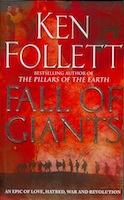
Fall of Giants
Five families from Wales to Russia live through World War I, the Russian Revolution, and the fight for women's votes.
2,255-word summary · 10 min read

A Long Petal of the Sea
A pregnant widow and her brother-in-law marry for passage on a ship of Spanish exiles bound for Chile, then spend decades building and losing homes together.
2,016-word summary · 9 min read
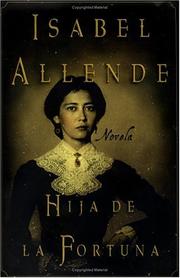
Daughter of Fortune
Eliza Sommers flees Chile for California gold rush San Francisco, disguised and searching for her lover, finding freedom with Tao Chi'en.
2,009-word summary · 9 min read
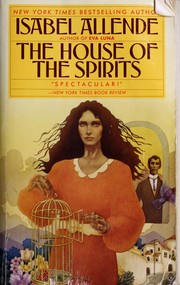
The House of the Spirits
Three generations of the Trueba family face love, ghosts and a coup, from Rosa's strange death to Alba's prison cell.
2,867-word summary · 13 min read

The Stationery Shop
Two teenagers fall in love in a Tehran stationery shop in 1953, are separated by the coup and a family deception, and meet again sixty years later.
2,024-word summary · 9 min read

The Shadow Sister
Star D'Apliese steps out of her sister's shadow and follows a bookshop clue into the Edwardian life of Flora MacNichol, a woman who gave up love for duty.
2,260-word summary · 10 min read

The Only Woman in the Room
A novel about Hedy Lamarr's escape from an arms-dealer husband, her Hollywood career, and the frequency-hopping patent the Navy ignored.
2,067-word summary · 9 min read
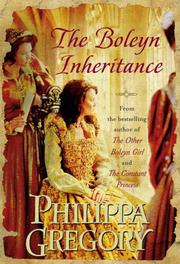
The Boleyn Inheritance
Three women narrate Henry VIII's fourth and fifth marriages: a foreign bride who survives, a teenage queen who does not, and the widow who opens the door.
2,391-word summary · 11 min read

Sophie's Choice
A young Southern writer in 1947 Brooklyn befriends a brilliant, unstable couple and slowly learns the story of the Polish Catholic woman at the center of their…
2,798-word summary · 12 min read
Only Time Will Tell
A Bristol dockworker's son wins a scholarship, falls in love with the daughter of the family that owns the shipyard, and learns that his father's death was not…
2,082-word summary · 9 min read

Fathers and Sons
Arkady brings the nihilist Bazarov home to his father's estate, and a generational argument turns into love, a duel, and an early death.
2,192-word summary · 10 min read

The Storyteller's Secret
A New York journalist goes to India to learn why her grandmother loved a British officer, and why a family servant kept the truth for forty years.
2,270-word summary · 10 min read

Ivanhoe
A disinherited Saxon knight, a great tournament, a besieged castle and a trial by combat. Scott's most famous novel, set in England in 1194.
2,834-word summary · 13 min read

A Spool of Blue Thread
Four generations of the Whitshank family in Baltimore, and the silences, resentments and quiet love they hand down without ever saying so.
2,408-word summary · 11 min read

Wide Sargasso Sea
Jean Rhys gives the first Mrs. Rochester a Caribbean childhood, a marriage built on money and suspicion, and a voice that Charlotte Bronte left in the attic.
2,021-word summary · 9 min read
The Sisters Brothers
Two hired killers ride from Oregon to Gold Rush California to murder a prospector, and find their trade, their brotherhood, and the frontier myth coming apart.
2,095-word summary · 9 min read
The Silence of the Girls
Briseis, queen of Lyrnessus, is captured by Achilles and narrates the Trojan War from inside the Greek camp, where women are prizes and survival is its own…
2,098-word summary · 9 min read

The Queen's Fool
A young Jewish refugee with second sight becomes a court fool to Edward VI, Mary I, and Elizabeth, and learns what it costs to tell the truth.
2,412-word summary · 11 min read

The Birth of Venus
A Florentine merchant's daughter trains as an artist, marries a man who hides a secret, and survives Savonarola's bonfire of the vanities.
2,404-word summary · 11 min read