
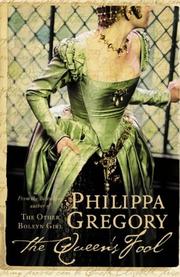
The Queen's Fool
2,412-word summary 11 min read 400 pages in the book
- First published
- 2003
- Publisher
- HarperCollins
- Pages
- 400
- ISBN
- 9780007147281
- Series
- The Plantagenet and Tudor Novels (#12)
Reading options
What's inside (12 sections)
I came to The Queen's Fool after reading The Other Boleyn Girl, which is the book most people know Philippa Gregory for. I wanted something from the same world but with a smaller lens. The Tudor court is usually written from the throne outward. This novel writes it from the floor, where a young woman is paid to be amusing and is therefore allowed to say things that would get anyone else killed.
HarperCollins published the novel in the United Kingdom in 2003. The edition I read runs 400 pages and carries the ISBN 9780007147281. The American edition came from Touchstone in 2004 and is longer, around 512 pages. The story is set between 1548 and 1558, during the last years of Edward VI, the nine days of Lady Jane Grey, the reign of Mary I, and the beginning of Elizabeth I's ascent. It is part of Gregory's loose Tudor series, but it stands on its own. You do not need to know the other books to follow it.
A girl with the Sight
Hannah Green is fourteen when the novel begins. She lives above her father's bookshop on Fleet Street with a secret. Her family are Marranos, Jews who converted to Christianity in Spain but continued to practice their faith in private. Hannah's mother was burned at the stake by the Inquisition. Hannah and her father escaped to England, where they keep their heads down and their doors closed.
Hannah has the Sight. She sees things before they happen, or sees truths that other people cannot see. The gift is not a metaphor. It is a practical problem. When she is nine, she delivers books to Thomas Seymour and sees a scaffold behind him. Within a year, Seymour is executed. The vision is treated as a childish fantasy, but it marks her as strange. Her father calls her a fool to protect her. The word sticks.
The novel's best idea is that a fool is the one person at court who can tell the truth. Hannah is hired by Robert Dudley and his tutor, John Dee, who recognize her gift. They present her to Edward VI as a holy fool, a girl who sees angels and speaks in riddles. The king is amused. Hannah is given a place at court, a costume, and a role. She is also given a job: she is expected to spy for the Dudleys, and later for Mary, and later for Elizabeth. Everyone wants to use her eyes.
The Dudleys and the court
Robert Dudley is the center of Hannah's emotional life. He is the son of the Duke of Northumberland, a powerful and ruthless politician. He is handsome, charming, and entirely willing to use Hannah for his family's advantage. Hannah falls in love with him almost immediately. The novel is honest about how bad an idea this is. Robert is already married to Amy Robsart. He is also a political operator who sees people as instruments. Hannah knows both things, and she loves him anyway.
John Dee is the other figure who shapes her early life. He is a scholar, an astrologer, and a man who takes the occult seriously. He recognizes Hannah's gift because he has his own interest in the hidden world. Their relationship is one of the novel's quieter pleasures. Dee is not a villain. He is a curious man in a dangerous time, and he helps Hannah when he can.
The court scenes are full of the details that Gregory writes well: the clothes, the food, the elaborate rules of precedence, the way a room changes when the king enters. Edward VI is a sickly boy who knows he is dying. His court is a place of Protestant reform and political maneuvering. Hannah's visions give her a strange authority. She can say things that would be treason from anyone else, because she is a fool and fools are not held to the same rules.
The novel's version of the Lady Jane Grey episode is especially good. Jane is a pawn, used by her father-in-law and then abandoned. Hannah watches the adults arrange a queen and then undo her. The nine days are not treated as a romantic tragedy. They are treated as a political failure with a young woman at the center. That is closer to the historical record than most fictional versions.
Serving Mary
The heart of the novel is Hannah's relationship with Mary I. When Edward dies and Mary claims the throne, Hannah becomes her fool. Mary is often written as a fanatic, the queen who burned Protestants and lost Calais. Gregory gives her a fuller portrait. She is devout, stubborn, and deeply wounded by the way her father treated her mother and by the long years of uncertainty about her own legitimacy. She is also capable of great kindness to the people she trusts.
Hannah loves Mary, and the novel makes that love believable. Mary is the first person at court who treats Hannah as a person rather than a tool. She asks about her family. She worries about her safety. She gives her a place to belong. That kindness makes the later chapters harder to read. Mary's persecution of Protestants is not excused, but it is shown as the action of a woman who believes she is saving souls. The novel does not ask the reader to agree with her. It asks the reader to understand how conviction can become cruelty.
The Mary sections also show the limits of Hannah's position. She can warn Mary about plots, but she cannot change her mind. She can see the future, but she cannot make other people act on what she sees. The gift becomes a burden. Hannah is useful to everyone and powerful to no one. That is the novel's central irony.
The marriage to Daniel
Hannah's father arranges her betrothal to Daniel Carpenter, a printer and a widower. Daniel is steady, practical, and not Robert Dudley. Hannah is not in love with him, but she agrees to the match because her father wants it and because marriage offers a kind of safety. The novel treats the arrangement with the complexity it deserves. Daniel is not a romantic hero. He is a man with a past.
The past arrives in Calais, where Hannah and her family flee as the Inquisition spreads to England. Hannah and Daniel marry. Then she learns that he has a son with another woman. He had the child while Hannah was at court. He offers to give up the boy and never see the mother again. Hannah cannot forgive him. She leaves, takes her father, and starts a printing shop of her own.
This section is the novel's strongest argument for Hannah as a character. She has spent years being moved around by other people. Leaving Daniel is the first decision she makes for herself. It costs her security and respectability. It also gives her a life. The printing shop is a small, concrete freedom, and Gregory writes it with affection. Hannah is good at the work. She likes the smell of ink and the order of the pages.
Her father's death leaves her the business, and Daniel, as her husband, inherits it. He signs everything over to her. That gesture is the beginning of their reconciliation, though it takes most of the novel to get there. Daniel is not forgiven quickly. He has to prove that he can see Hannah as a person rather than a wife-shaped absence.
Calais and the fall
The fall of Calais in 1558 is the novel's best historical set piece. Hannah is trapped in the city as the French army approaches. She flees with her stepson, the child of Daniel's other relationship, after the boy's mother is killed by a soldier. The scene is chaotic and frightening. Gregory is good at the texture of a city under siege: the crowds at the gates, the rumors, the sudden violence.
Robert Dudley reappears during the escape. He protects Hannah and the baby, and the reunion revives her old feelings. For a moment, it looks as if the novel might give her the romance she has wanted since the beginning. It does not. Hannah refuses to become Robert's mistress. She has spent the book watching women destroyed by powerful men. She chooses something else.
The refusal is the moral climax of the novel. Robert is disappointed, but he accepts her decision. Hannah realizes that Daniel is the love of her life, not because he is exciting, but because he is honest. The ending brings them back together as a Jewish family. Hannah's faith, which she has hidden for most of the book, becomes the foundation of her adult life. The final scenes are quiet and domestic, and they feel earned.
Robert and the limits of fantasy
Robert Dudley is a fascinating problem. He is charismatic, and Gregory writes him as genuinely attractive. He is also selfish, and the novel does not pretend otherwise. Hannah's love for him is a young woman's fantasy of being chosen by the most powerful man in the room. The book lets her have the fantasy and then shows its cost. Robert's attention is not a gift. It is a claim.
The historical Robert Dudley is a complicated figure. He was a Protestant, a soldier, and a trusted advisor to Elizabeth I. His wife, Amy Robsart, died in suspicious circumstances in 1560, after the period of this novel. Gregory does not use that mystery here, which is a relief. The book is not interested in solving Amy's death. It is interested in what it means for Hannah to love a man who is already owned by someone else.
The romance is also a lesson in the difference between intimacy and power. Robert knows Hannah's secrets, but he does not know her. Daniel knows her less glamorously, but he sees her. The novel's ending argues that the second kind of knowledge is more valuable. That is a mature conclusion for a historical romance, and it makes the book more than a costume drama.
Faith and concealment
The Jewish thread is the novel's most original element. Most Tudor fiction treats religion as a contest between Catholics and Protestants. Hannah's family adds a third position: people who have been forced to hide their faith and have learned to perform whatever identity keeps them alive. The novel is careful about the difference between belief and practice. Hannah's father keeps the laws in private. Hannah herself is less certain. She has inherited a religion she has never been allowed to live openly.
The Inquisition follows them to England. Hannah is arrested for heresy at one point and saved by John Dee, who pretends not to know her. The scene is a reminder that the danger is not abstract. The novel does not overstate the number of Jews in England, and it does not turn Hannah into a symbol. It keeps her faith personal. When she finally lives openly as a Jewish woman, the ending feels like a release.
What works and what does not
The voice is strong. Hannah is observant, funny, and sometimes naive. She is a good narrator because she is close to power without being powerful. She notices the small signs that reveal what the great people are thinking. She is also honest about her own mistakes. The first-person narration keeps the novel grounded, even when the plot is moving through huge historical events.
The portrait of Mary I is the best thing in the book. Gregory resists the temptation to make her a monster. She is a woman who has been hurt by her family, betrayed by her country, and left with a faith that demands terrible things. The novel does not forgive her, but it understands her. That is more than most historical fiction manages.
The domestic details are excellent. Hannah's printing shop, the food, the clothes, the smell of the streets: all of it feels lived in. Gregory is good at showing how politics enters a household through gossip, letters, and the arrival of unexpected guests.
What does not work
The plot relies on coincidences. Hannah is present at almost every major event of the period. She sees Thomas Seymour's execution coming. She is at court for Edward's death. She is with Mary during the succession crisis. She is in Calais when it falls. The novel is aware of the convenience and tries to justify it through her role as a fool, but the seams show. History happens where Hannah happens to be standing.
Hannah is also passive for long stretches. She is moved between households, told what to do, and used by people with more power. That is realistic for a woman in her position, but it makes her a reactive protagonist. The novel is more interesting when she makes choices, and those choices are concentrated in the last third.
The love story with Robert is repetitive. Hannah knows he is unavailable. She loves him anyway. She learns better. The cycle repeats a few times too many, and the middle of the book sags under it. The ending is satisfying, but it takes a long route to get there.
Who it is for
This is a book for readers who love Tudor historical fiction and want a perspective from below the throne. It is for people who are interested in Mary I and want a more sympathetic portrait than the usual "Bloody Mary" caricature. It is also for readers who like a slow, character-driven plot with a strong sense of place.
It is not a fast-paced thriller, and it is not a romance in the conventional sense. The romance is one thread in a larger story about faith, power, and survival. Readers who want a straightforward love story may be frustrated by Hannah's refusal to take the easy path. Readers who want a thoughtful novel about what it costs to stay true to yourself in a dangerous world will find a lot to admire.
I finished the book with a better understanding of the Tudor court as a workplace. The great men and women are still great, but they are also employers, landlords, and neighbors. Hannah sees them up close, and what she sees is not always flattering. That is the value of the fool's perspective. She can laugh at the powerful, and she can tell the truth. The novel lets her do both.
FAQ
Is The Queen's Fool part of a series?
Yes. It is part of Philippa Gregory's Plantagenet and Tudor Novels, and the list places it at book 12.
Who is the fool in The Queen's Fool?
Hannah Green, a fictional Marrano refugee with second sight, serves as a fool at the Tudor court.
Does The Queen's Fool cover Elizabeth I's reign?
It ends as Elizabeth is becoming queen, but the novel focuses on Edward VI and Mary I.
Similar books
More from The Plantagenet and Tudor Novels first, then related titles.
The White Queen
Elizabeth Woodville secretly marries Edward IV and fights to keep her children safe as earls turn and kings fall. Told in her voice, it mixes court politics…
2,926-word summary · 13 min read
The Constant Princess
Catalina of Spain becomes Katherine, outlasts poverty and spies, and wins Flodden as Henry's queen.
2,065-word summary · 9 min read
The Boleyn Inheritance
Three women narrate Henry VIII's fourth and fifth marriages: a foreign bride who survives, a teenage queen who does not, and the widow who opens the door.
2,391-word summary · 11 min read
Bring Up the Bodies
Thomas Cromwell sets out to destroy Anne Boleyn, building a case from rumor and revenge while Henry VIII waits to marry Jane Seymour.
2,066-word summary · 9 min read
Exodus
Leon Uris's sweeping 1958 novel follows Jewish refugees, Haganah fighters, and Holocaust survivors from Cyprus to the founding of Israel and the 1948 war.
2,529-word summary · 11 min read
A Column of Fire
Spies and lovers cross Tudor England as Mary and Elizabeth fight for the crown and faith.
2,029-word summary · 9 min read

Violeta
A woman born in 1920 writes her life story to her grandson, from one pandemic to another, through wealth, ruin, passion, and dictatorship in South America.
2,555-word summary · 11 min read

Heretics of Dune
Fifteen centuries after Leto II, the Bene Gesserit raise a new Duncan Idaho while the Honored Matres return and Rakis burns.
2,673-word summary · 12 min read

The Shadow Sister
Star D'Apliese steps out of her sister's shadow and follows a bookshop clue into the Edwardian life of Flora MacNichol, a woman who gave up love for duty.
2,260-word summary · 10 min read

Infidel
Ayaan Hirsi Ali's memoir of a Somali childhood, a forced marriage, a Dutch asylum claim, and the political fight that followed the murder of Theo van Gogh.
2,041-word summary · 9 min read
Only Time Will Tell
A Bristol dockworker's son wins a scholarship, falls in love with the daughter of the family that owns the shipyard, and learns that his father's death was not…
2,082-word summary · 9 min read
American Assassin
Before he became the CIA's most feared counterterrorist, Mitch Rapp was a Syracuse student mourning his girlfriend, killed on Pan Am Flight 103. Then came…
2,114-word summary · 9 min read
The Birth of Venus
A Florentine merchant's daughter trains as an artist, marries a man who hides a secret, and survives Savonarola's bonfire of the vanities.
2,404-word summary · 11 min read
Death Comes to Pemberley
P.D. James drops a murder onto the Pemberley estate and sends Wickham to trial, reading Austen's most famous marriage through the machinery of Georgian justice.
2,318-word summary · 10 min read
The War That Saved My Life
Ten-year-old Ada has never left her London flat, hidden away because of her clubfoot. Wartime evacuation sends her to Kent, where a reluctant guardian and a…
2,252-word summary · 10 min read
The Last Kingdom
Kidnapped by Danish raiders as a boy and raised in their halls, Uhtred of Bebbanburg must choose what he is when the fight for England begins.
1,997-word summary · 9 min read
Edge of Eternity
Five families cross civil rights, Cold War and Berlin Wall to the eighties.
2,489-word summary · 11 min read
The Book of Longings
In first-century Galilee, Ana marries Jesus of Nazareth and fights to write women's stories in a world set against her voice.
2,368-word summary · 11 min read
Midnight's Children
Saleem Sinai, born at India's independence midnight, narrates his family's saga as his life mirrors the new nation's history.
2,734-word summary · 12 min read
God Emperor of Dune
Worm god Leto II rules 3500 years to force humanity free through his Golden Path.
2,006-word summary · 9 min read
People of the Book
Conservator Hanna traces Sarajevo Haggadah stains back to 1480 Seville.
2,479-word summary · 11 min read

Abaddon's Gate
A dead detective guides Holden, an assassin hunts him, and a pastor walks unarmed into a mutiny as the Ring opens new worlds.
2,672-word summary · 12 min read
Winter of the World
Five families from Berlin to Moscow live through the Nazis, World War II, and the atomic age in Follett's second Century volume.
2,402-word summary · 11 min read
The Marriage Portrait
Fifteen year old Lucrezia Medici marries Ferrara's duke and sits for a portrait shadowed by menace.
2,031-word summary · 9 min read
Eye of the Needle
German spy Faber races D Day photos to a U boat while MI5 hunts and Storm Island Lucy stands last.
2,083-word summary · 9 min read
Year of Wonders
A maid in plague-hit Eyam nurses neighbors, loses her sons, and finds skill and doubt in 1666.
2,563-word summary · 11 min read
The Secret Keeper
A girl watches her mother kill a stranger in 1961; fifty years later she digs into her mother wartime London past.
2,262-word summary · 10 min read
Shogun
An English pilot wrecked in 1600 Japan becomes a pawn in Lord Toranaga's patient bid for power, and slowly becomes Japanese himself.
2,251-word summary · 10 min read
Wolf Hall
In Mantel's Booker winner, Thomas Cromwell rises from a Putney forge to Henry VIII's council, steering the annulment crisis past Wolsey's fall toward a break…
2,911-word summary · 13 min read

World Without End
Four children witness a killing, then plague, war, and church shape builder, healer, peasant, lord.
1,999-word summary · 9 min read