
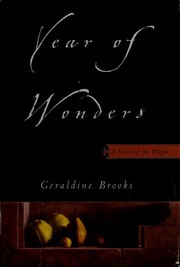
Year of Wonders
2,563-word summary 11 min read 308 pages in the book
- First published
- 2001
- Publisher
- Viking
- Pages
- 308
- ISBN
- 9780670910212
Reading options
What's inside (8 sections)
I picked up Year of Wonders because I wanted a plague book that was not about our last few years. A friend said this one would still get under my skin. She was right. The book came out in 2001 from Viking. It runs 308 pages in that first hardcover. It follows Anna Frith, a young widow and maid in Eyam, a small lead mining village in Derbyshire, through 1665 and 1666 when plague reaches them and they choose to shut themselves in.
What surprised me was how plain Anna sounds at first and how much she changes. She starts as someone who cleans and cooks and tries to keep two small boys fed. By the end she is delivering babies and mixing remedies and arguing with the rector. That shift never feels sudden. It happens chore by chore.
A maid, a tailor, and a box from London
When we meet Anna in spring 1665, life is tight but steady. Her husband Sam died in a mining accident. She has Jamie and Tom, both little, loud, hungry. She works as a maid and cook for the rector, Michael Mompellion, and his wife Elinor. The rectory pay helps. Taking in a boarder helps more.
That boarder is George Viccars. He is a tailor, young, friendly, full of London stories. He lodges with Anna and plays with her boys. He even talks about marrying her one day. Anna is tempted. She likes his company. She likes that he treats her sons with patience.
Then a box arrives from London. Cloth for orders. George opens it, handles the fabric, and within days he is burning with fever. He has the swelling in the groin and armpit that people fear. He knows what it is. He begs Anna to burn everything he brought, cloth and clothes and bedding. She does burn his things after he dies, but his customers do not. They come to collect shirts and coats they paid for. They carry them home.
I found this part chilling because no one acts cruel. They just act normal. A woman wants the coat for her husband. A man wants his altered doublet. Anna warns them. They smile and take the clothes anyway. Around the same time Anna serves dinner up at Bradford Hall for Colonel Bradford and his family. A visitor from London talks about sickness in the city as if it is gossip from far away. That contrast stuck with me. Down in the village, a tailor is dead. Up at the big house, plague is table talk.
When the dying starts
At first there is a pause. Maybe, Anna thinks, it stopped with George. Then children next door fall sick. The Hadfields lose little ones fast. Then Jamie gets hot and listless. Then Tom. Anna nurses them through nights that seem to stretch. She cools foreheads. She prays. She loses them both.
Brooks does not rush these deaths. She stays in the cottage with Anna. The rooms smell of sweat and herbs and smoke. Anna keeps working because work is what she knows. She goes back to the rectory. She scrubs. She weeps while she scrubs.
Blame moves fast in Eyam. People point at Mem Gowdie and her niece Anys Gowdie. They are the local herb women and midwives. They know pennyroyal and rue and how to turn a baby. To some neighbors that knowledge looks like witchcraft. One night Anna chases a stray sheep and finds a crowd around Mem near the water. They push her in to see if she floats. Anys runs in, pulls her aunt out, breathes into her. The crowd turns on Anys instead and hangs her. Mompellion arrives too late and rails at them, but Mem dies soon after from what was done to her.
With the only real healers dead, fear grows. Mompellion calls the village together. He is young, handsome in the way people trust, a strong speaker. He says they should close Eyam to the outside. No one leaves until the sickness passes. No market trips to spread seeds of plague to nearby towns. He frames it as duty to God and neighbor. Almost everyone agrees. Only the Bradfords refuse. They pack carriages and ride to their other house to wait it out.
I believed this scene while also doubting it a little. Would a whole village agree? Brooks makes it feel possible for a day. Mompellion catches them in grief and pride. Later, when staying hurts, some regret it. That regret hums under the rest of the book.
Learning to be the village nurse
With Mem and Anys gone, Elinor Mompellion takes on sick visits. She asks Anna to come with her. Anna has no training. She learns by doing.
Her first test is Mary Daniel in labor. Anna has had babies herself but never caught one for someone else. She talks herself through it, remembers what Anys once told her, and gets mother and child through. After that, people call for Anna. She becomes nurse and midwife by default. She and Elinor spend days in the Gowdies old physick garden, crushing leaves, sniffing, guessing doses. Elinor can read Latin on old packets. Anna knows smells from cooking and cleaning. Together they make a rough team.
Their friendship is my favorite part of the book. Elinor is high born, married down to a country rector. Anna is a servant. At the rectory table that gap matters. Out in sickrooms it fades. They hold basins for each other. They laugh once over burnt soup. Elinor admits pieces of her past in small bits, not all at once. Anna tells Elinor about Sam and the boys and money worries. It feels like two tired women finding steadiness in each other.
Work piles up. The sexton drops dead from heart strain after digging grave after grave. Anna talks her father Josiah Bont into taking the job. Josiah is a hard man, cold at home, quick with a strap when Anna was a girl. He takes the pay but starts cheating. He overcharges grieving families. He takes goods from empty houses. He even tries to take payment to bury a man who is still breathing. The village holds a Barmote court, the old mining law court, and sentences him to be pinned by knives through the hands in the mine. Custom says family should pull the knives after a time. His wife Aphra, who is Anna's stepmother, has sick children at home and does not come. Anna does not come either. Josiah dies exposed.
Anna also helps Merry Wickford, a young Quaker girl whose family dies and leaves her a mine share she cannot work alone. Anna and Elinor go down into the workings to help her meet quota. It is dark and wet. Anna nearly gets herself killed trying to blast loose rock. Elinor drags her out. That chapter left me dusty mouthed. I could hear water dripping.
If I have a complaint here, it is that the middle can feel like one burial after another. That is honest to plague, I guess. Still, some nights blur. A neighbor sickens. Anna visits. Prayers. Death. Another cottage. I had to put the book down and walk around, then come back. That rhythm is the point, but it wears you.
Faith cracks in different ways
As deaths pass half the village, people look for reasons and fixes. John Gordon and his wife Urith starve themselves and whip their own backs to win favor. Others buy charms from a voice in the dark said to be Anys returned. John has read some London tract about scourging and sin. He hangs crude crosses around his house. Mompellion rides out with Anna to stop him, worried this fever will spread faster than plague. On the way they find Jane Martin drunk on the roadside with a man. Mompellion lashes Jane with words, calls her whore and sinner. He lets the man walk off with a mild warning. Anna calls him on it. She helps Jane up. He says sorry and asks her not to tell Elinor. I liked Anna in that moment. She does not yell for long. She just names what she saw.
Mompellion then tells the village to bring goods to a great fire. Burn clothes and bedding that might hold sickness. Make a clean break. People pile coats and curtains and mattresses. While the fire eats, two lads drag Aphra Bont forward. She has been selling fake cures, pretending to be Anys ghost, charging high for paper spells and foul drinks. The crowd wants trial next day. For the night they drop her in an old manure pit. She nearly drowns in filth. When they pull her up she is broken and babbling. Punishing her further seems pointless.
Anna checks on Aphra after. Aphra shuts the door. Through cracks Anna glimpses little Faith, Aphra's last living child, inside. Then Faith vanishes from view. One day Anna hears wild music and pushes in to find Aphra dancing with a snake near the hearth while Faith's small body hangs from the beams, dead of plague and kept too long. It is awful. Brooks does not soften it. Aphra will not give the body up for burial. No reason reaches her.
This stretch shows Brooks at her best and also where she risks too much. The church talks, the cures, the crosses, the charms, it all fits. People grasp. What wobbles for me is how fast Mompellion swings between mercy and harshness. One hour he comforts. The next he shames. Maybe that is grief and strain. It sometimes read to me as the plot needing him stern in one scene and tender in the next.
Thanksgiving that breaks
After long months, no new cases come. Elinor begs Mompellion to give thanks. He resists, scared to hope. Then he agrees. Villagers gather in a field in August for an outdoor service. They are thin. They are tired. They pray.
Aphra comes out of the trees with Faith's rotted corpse in her arms and Josiah's knife in her hand. She screams. Mompellion speaks soft and steadies her for a breath. Elinor steps forward to hug her. In the struggle Faith's head parts from the body and rolls. Aphra swings and cuts Elinor's throat, then turns the blade on herself. She crawls to the child's head and holds it as she dies.
Elinor's death hits hard because she steadied so much. Mompellion falls apart. He stops eating. He stops praying. He drops a Bible on the floor in front of Anna and Elizabeth Bradford when Elizabeth comes begging help for her mother, and tells Elizabeth to ask God and see what poor listening she gets. Faith has left him. Grief has hollowed him.
Anna tries to keep him alive with broth and chores. She promised Elinor she would look after him. Loneliness and shared sorrow pull them together. They sleep together in the rectory kitchen and then in his bed. For a short while Anna thinks maybe comfort can grow into something lasting.
Then Mompellion talks. He says he never lay with Elinor as husband and wife. Years before, Elinor was seduced as a girl and ended a pregnancy herself. He married her to save her name but decided she must pay through love without touch. He courted her feeling while withholding his body, to keep her humble before God. He calls it penance. He sounds almost proud, then says it was all empty because there is no God to please.
Anna feels sick. I did too. Not because of the sex. Because of the cold plan behind it. To use marriage as punishment for a scared teenager, then preach mercy on Sundays, is cruel. Anna leaves his bed and walks out. She cannot look at him the same. I think Brooks wants us to feel that snap. The hero rector is not a hero. Some readers may find the reveal too sharp, coming so late. I found it harsh but earned, since his harsh streak showed earlier with Jane and with his talk of sacrifice. Still, the scene lands like a slap. You may need a minute.
Leaving Eyam for the sea
Anna runs to the church to be alone and finds Elizabeth Bradford there, frantic. Elizabeth said her mother had a tumor. The truth is Anne Bradford is in labor with a child that is not her husband's. She is bleeding and scared at Bradford Hall while the family hides its shame. Anna, with all her months of sickroom work, goes.
The birth scene is tense and well done. Anna works clean and quick. She saves mother and baby. Then Elizabeth tries to drown the newborn in a bucket to protect the family name. Anna stops her. Colonel Bradford would not let a bastard live under his roof. Anna makes a hard bargain. Give her the baby and money enough to get far, and she will vanish and take the secret with her. Elizabeth agrees. Old Mrs Bradford presses an emerald ring and necklace into Anna's hand for the girl when she is grown.
Anna packs what little she has. Mompellion meets her at the door, ashamed, asking pardon. She does not grant it in words. He gives her his horse Anteros to outrun the Colonel's people. She rides out with the infant tied close, past the boundary stone where guards once stood, past fields she gleaned as a girl.
The epilogue jumps years ahead and across water. Anna makes for Plymouth, dodges pursuit when the Colonel's son calls her thief, takes ship, and lands in Oran on the North African coast. There she seeks Ahmed Bey, a doctor known for skill. She talks him into teaching her. To live and work beside him without scandal, she becomes his wife in name only. They never share a bed. He trains her in midwifery and physick far beyond what Eyam allowed. She raises two girls by the sea. One is the Bradford baby, named Aisha, a word for life. One is her own daughter by Mompellion, named Elinor for her friend.
I have mixed views on Oran. On one hand it gives Anna a future where her skill is prized and no one calls her witch. Sun, sea air, study, work that matters. On the other hand it moves fast. A dangerous trip, a new tongue, a strange city, all smoothed over in pages. After 250 pages of mud and grief in England, the close feels bright and quick. I wished for more struggle there, more time to believe it. A friend told me she loved the lift at the end. I get that. I just wanted the same slow care Brooks gave Eyam.
Who should read this? If you like historical fiction grounded in chores and bodies, bread and blood and herbs, you will find much to hold. If you want a cozy plague tale with heroes intact, skip it. People die. Good people do ugly things. The rector fails. The ending asks Anna to start over with nothing but skill and two children. That start feels both fragile and brave.
I closed the book thinking of Anna washing her hands between visits, trying to remember which leaf eased cough and which brought sleep. Small acts, repeated, while everything fell. That image stayed longer than any sermon.
FAQ
Who is Anna Frith at the start?
Anna is a young widow with two small sons who cooks and cleans for rector Michael Mompellion and his wife Elinor.
Did Eyam really quarantine during the plague?
Yes. The Derbyshire village of Eyam closed itself in 1666 to slow plague, and Brooks builds Anna's story around that choice.
When was Year of Wonders published?
It was first published in 2001 by Viking in a 308-page edition. The summary follows that text.
Similar books

World Without End
Four children witness a killing, then plague, war, and church shape builder, healer, peasant, lord.
1,999-word summary · 9 min read

The Long Winter
Dakota Territory, 1880: seven months of blizzards cut a town off from the railroad, and a family survives on twisted hay, ground wheat, and a dangerous wheat…
2,210-word summary · 10 min read

The Shadow Sister
Star D'Apliese steps out of her sister's shadow and follows a bookshop clue into the Edwardian life of Flora MacNichol, a woman who gave up love for duty.
2,260-word summary · 10 min read
The Power of One
A boy in apartheid South Africa decides to become welterweight champion of the world, and the novel follows every mentor, fight, and loss that gets him there.
2,145-word summary · 10 min read
The Valley of Horses
Exiled from the Clan, Ayla survives alone in a hidden valley, tames a horse and a cave lion, and nurses a wounded stranger back to life.
2,311-word summary · 10 min read
The Boleyn Inheritance
Three women narrate Henry VIII's fourth and fifth marriages: a foreign bride who survives, a teenage queen who does not, and the widow who opens the door.
2,391-word summary · 11 min read
Only Time Will Tell
A Bristol dockworker's son wins a scholarship, falls in love with the daughter of the family that owns the shipyard, and learns that his father's death was not…
2,082-word summary · 9 min read
A Long Walk to Water
Two eleven-year-olds in southern Sudan, twenty-three years apart: a Dinka boy fleeing war and a Nuer girl walking hours for water, until their stories meet at…
2,217-word summary · 10 min read
The Queen's Fool
A young Jewish refugee with second sight becomes a court fool to Edward VI, Mary I, and Elizabeth, and learns what it costs to tell the truth.
2,412-word summary · 11 min read
Bring Up the Bodies
Thomas Cromwell sets out to destroy Anne Boleyn, building a case from rumor and revenge while Henry VIII waits to marry Jane Seymour.
2,066-word summary · 9 min read
A Voice in the Wind
A young Christian slave in Rome serves a spoiled patrician daughter and catches the eye of her brother, while a captured German gladiator fights for freedom.
2,322-word summary · 10 min read
Death Comes to Pemberley
P.D. James drops a murder onto the Pemberley estate and sends Wickham to trial, reading Austen's most famous marriage through the machinery of Georgian justice.
2,318-word summary · 10 min read
The War That Saved My Life
Ten-year-old Ada has never left her London flat, hidden away because of her clubfoot. Wartime evacuation sends her to Kent, where a reluctant guardian and a…
2,252-word summary · 10 min read
The Last Kingdom
Kidnapped by Danish raiders as a boy and raised in their halls, Uhtred of Bebbanburg must choose what he is when the fight for England begins.
1,997-word summary · 9 min read
A Column of Fire
Spies and lovers cross Tudor England as Mary and Elizabeth fight for the crown and faith.
2,029-word summary · 9 min read
The Book of Longings
In first-century Galilee, Ana marries Jesus of Nazareth and fights to write women's stories in a world set against her voice.
2,368-word summary · 11 min read
Fever 1793
Philadelphia, 1793: fourteen year old Mattie Cook nurses family, buries neighbors, and keeps a coffeehouse through yellow fever.
2,259-word summary · 10 min read
Desperation
Travelers on Highway 50 are hauled into empty Desperation, Nevada, where a possessed deputy serves an old thing in the mine.
2,993-word summary · 13 min read
The Constant Princess
Catalina of Spain becomes Katherine, outlasts poverty and spies, and wins Flodden as Henry's queen.
2,065-word summary · 9 min read
Schindler's List
Womanizing profiteer Schindler spends a fortune typing over a thousand Jews onto factory lists.
2,048-word summary · 9 min read
We Were the Lucky Ones
Based on her own family, Hunter follows the Kurc family of Radom as war scatters five siblings from Siberia to Brazil and back toward reunion.
2,805-word summary · 12 min read
The White Queen
Elizabeth Woodville secretly marries Edward IV and fights to keep her children safe as earls turn and kings fall. Told in her voice, it mixes court politics…
2,926-word summary · 13 min read
The Secret Keeper
A girl watches her mother kill a stranger in 1961; fifty years later she digs into her mother wartime London past.
2,262-word summary · 10 min read
Ordinary Grace
In 1961 Minnesota, thirteen-year-old Frank Drum faces a summer of deaths that tests his minister family and forces him to weigh truth, guilt, and mercy.
2,948-word summary · 13 min read
The Things We Cannot Say
A Florida mother travels to Poland to answer her silent grandmother's plea, uncovering a wartime love story and a decades-old identity swap.
2,365-word summary · 11 min read
Cilka's Journey
After surviving Auschwitz, Cilka Klein is sentenced to a Siberian labor camp, where she trains as a nurse and fights to stay human.
2,365-word summary · 11 min read
Salt to the Sea
Four refugee teens cross frozen Prussia toward a doomed ship that history barely remembers.
2,094-word summary · 9 min read
Cold Mountain
Wounded deserter Inman walks home to Ada as the Civil War ends, while she learns to keep a mountain farm in North Carolina with tough Ruby.
2,314-word summary · 10 min read
Between Shades of Gray
In 1941, fifteen-year-old Lina is deported from Lithuania to Siberia and uses her drawings to survive and send word to her father.
2,263-word summary · 10 min read
The Clan of the Cave Bear
A Cro-Magnon girl orphaned by disaster grows up with a Neanderthal clan, learning their medicine and customs while testing their limits.
3,684-word summary · 16 min read