
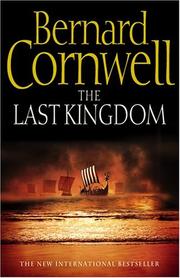
The Last Kingdom
1,997-word summary 9 min read 400 pages in the book
- First published
- 2004
- Publisher
- HarperCollins
- Pages
- 400
- ISBN
- 9780007149902
- Series
- The Saxon Stories (#1)
Reading options
What's inside (9 sections)
The Last Kingdom is the book Bernard Cornwell wrote after twenty years of Sharpe novels, and you can feel him using everything he learned. It opens in the ninth century, with the Danish Great Army carving up the kingdoms of England, and it follows one boy through the wreckage. I read it after watching the television adaptation, which turns out to be the right order for once. The show is good. The book is better, harder, and stranger, and it does not flinch from how ugly this period actually was.
What surprised me most is the voice. Uhtred tells his own story from a distance of decades, an old man looking back, and he is honest about being arrogant, lucky, and slow to learn. Historical fiction usually gives you either a modern person in period clothing or a marble statue. Uhtred is neither. He is a warrior raised by enemies, loyal to people he should hate, and the novel trusts you to sit with the contradiction instead of resolving it for you.
A boy with two names
The story begins in 866 in Northumbria, at the fortress of Bebbanburg, where Osbert is the second son of Ealdorman Uhtred. The Danes are raiding the coast, and when Osbert's older brother, also named Uhtred, is killed while scouting, the father does something that changes everything. He renames Osbert as Uhtred, son of Uhtred, so the family name will survive.
It is one of those small decisions that historical fiction lives on. A name is an inheritance. It is also a target, and within a year it becomes exactly that. The ealdorman and his raised army attack the Danish-held town of Eoferwic, which the English know as York, and the attack is a disaster. Most of the army dies. The ten-year-old Uhtred is captured by Jarl Ragnar the Fearless, who is amused that the boy attacked him with a stick or a small sword rather than screaming. Ragnar keeps him and raises him as one of his own.
Uhtred's uncle Ælfric takes Bebbanburg in the meantime, which means the boy grows up knowing two things with perfect clarity. His real home is in the hands of a thief, and his new family loves him. That is the setup for the entire series, and this first book makes it hurt.
Ragnar's hall
Life with Ragnar is where the novel does its best work. Uhtred learns the Danish language, the gods, the oaths, and the fighting techniques, and he learns them so completely that his countrymen later see a Dane when they look at him. He grows up alongside Ragnar's children, becoming close to Rorik, the youngest son, and to Thyra, the daughter. Brida, an East Anglian Saxon girl taken in a raid, becomes his closest friend and later his lover, and their bond is one of the warmest threads in the book.
Then there is Sven, son of Kjartan, one of Ragnar's shipmasters, who is the kind of villain Cornwell writes better than almost anyone. Sven kidnaps Thyra and rips her clothes in an attempt to assault her. Uhtred, still a boy, charges him, takes his sword, and fights him off, and he and Rorik get Thyra back to the hall. Ragnar's response is swift and very Danish. He banishes Kjartan from his service and crushes one of Sven's eyes with the hilt of his sword, noting that he would have taken both eyes if Sven had gone further.
The scene is horrifying and satisfying at once, and it plants the mine that the rest of the book steps toward. Kjartan and Sven do not disappear. They wait, they gather strength, and they come back.
The burning of the hall
When Uhtred is fifteen, in 872, he spends a night away from the hall with Brida after an argument with Ragnar's wife, Sigrid. While he is gone, Kjartan and his men set fire to Ragnar's hall and kill everyone trying to escape. Ragnar himself stays inside rather than die on Kjartan's terms. Thyra is taken and given to Sven.
I will not pretend the scene is easy to read. It is the hinge of the whole novel, and Cornwell gives it the weight it deserves without dwelling. One night of childish sulking costs Uhtred the only family he chose, and he carries that guilt the way he carries everything else, quietly and with a lot of anger underneath.
His response is to go to King Alfred in Wessex, which he does in 874, and this is where the book's second half picks up. Alfred is not yet the legendary figure the history books love. He is a nervous, sickly, deeply pious king with a kingdom on the edge of extinction, and he sees in Uhtred a weapon worth sharpening.
In Alfred's service
The relationship between Uhtred and Alfred is the intellectual core of the series, and The Last Kingdom sets its terms. Alfred needs warriors, but he wants them literate, because a commander who cannot read written orders is useless to him. So Uhtred, who can already read runes and thinks little of Christian learning, is forced to learn letters. He resents it. He also uses it for the rest of the series, and the novel quietly makes the point that this forced education is one of the great gifts of his life.
Alfred gives Uhtred command of a small new fleet, twelve ships, and a mission to fight the Danes at sea. That is how Uhtred ends up meeting Ragnar the Younger, the dead earl's eldest son, on neutral ground. Uhtred tells him how his father died and that Thyra was taken by Sven, and the two of them swear something that will echo through every later book. One day they will take revenge on Kjartan and rescue Thyra.
The novel's portrait of Alfred deserves its own mention, because this is not the saint of the schoolbooks. Cornwell's king is chronically ill, embarrassed by his own body, and convinced that his suffering is a lesson from God, and his piety is both sincere and political. He uses faith the way the Danes use ships. He reads Uhtred more clearly than Uhtred reads himself, and the strategy he pursues, ships and walls and bought time, is unglamorous competence of the kind that actually saves kingdoms. When Uhtred complains that Alfred will never be the hero the songs will make him, the reader smiles, because the book has just shown us the raw material those songs will spin.
Then Alfred does what Alfred does. He arranges a marriage for Uhtred to Mildrith, an orphaned girl from a respectable West Saxon family, to bind the young warrior to Wessex. Uhtred is not told one detail, which is that marrying her also means inheriting her father's enormous debt to the Church. It is a dirty trick and the novel treats it as one. Uhtred's fury at being managed is one of the most believable things about him. He is not angry about the girl. He is angry that everyone keeps using him as a piece in their game.
Hostages and the broken peace
The middle of the novel concerns a peace between Alfred and Guthrum, the Danish leader, secured by an exchange of hostages. Uhtred is among the Saxon hostages sent to live with the Danes over the winter, which is either a punishment or a gift depending on how you look at it. He sees Ragnar again. Then Guthrum breaks the peace and murders the other Saxon hostages, and Uhtred survives only because Ragnar hides him.
He escapes back toward Wessex to find his wife and discovers she has been taken north by Odda the Younger, a rival ealdorman who has his own designs on her. Every institution in the novel is corrupt somewhere, and Uhtred's education in politics continues. He is learning that the Saxons he is fighting for are frequently as treacherous as the Danes he grew up with, and that loyalty is something you give to individuals, not to flags.
The Battle of Cynwit
The novel builds to 877 and the Battle of Cynwit, one of the genuine turning points of the period. Uhtred is twenty by now, and it is his actions that matter most. He kills Ubba, the most feared of the Danish leaders, in single combat. For a man who grew up in a Danish hall, killing the most famous Danish warlord of the age is not just a military achievement. It is the moment his two identities finally split open, and the book lets the ambiguity sit there unexamined.
After the battle, instead of riding to Alfred to report the victory, as everyone tells him he should, Uhtred rides to Exanceaster to find his wife and his newborn son. The novel ends there, on the edge of consequences. Alfred is not a man who forgives slights, and Uhtred knows it.
The historical scaffolding deserves a word too. Cynwit is a real battle, and Cornwell builds his version around what the sources support while filling the gaps with invention that he never hides. That method is the series' signature. The famous names, the shires, the peace terms, and the long pressure toward a single English kingdom all track the records closely, while Uhtred's presence at every great event is the fiction that keeps the story personal. Purists argue about the wish fulfillment, but the texture is closer to the archaeology than most historical fiction dares, and the result reads less like a lesson and more like a report from the inside.
It is a strange place to end a book, and I mean that as praise. Most first entries in a series close with a clean victory and a promise of more. Cornwell closes with a decision that could cost his narrator everything, made for reasons that are entirely selfish and entirely human. That is the mark of a writer who has been doing this a long time.
What works and what does not
The strengths are obvious and they are everywhere. Uhtred's first-person voice is superb, dry and self-aware and full of contempt for the people who raised him and the people who employ him in roughly equal measure. The battle writing is some of the best in the genre, fast and physical and free of fantasy. The period detail, from the names to the ships to the way oaths work, feels lived in rather than researched. And the novel refuses to turn anyone into a saint. Alfred is clever and petty. The Danes are brutal and generous. Ragnar the Fearless is the closest thing the book has to a good man, and he dies well. The humor is another underrated element, dry and constant, and it keeps the brutality from becoming a slog.
The weaknesses are the weaknesses of the whole series, visible in miniature here. Uhtred is frequently the best fighter in any room, and the plot occasionally bends to save him from the consequences of his own stupidity. The women around him mostly exist to be taken, protected, or avenged, and while Brida is better than most of the era's writing allows, she deserved more pages. The timeline jumps can be disorienting, with years passing in a sentence, and the book expects you to keep the Danish names straight without much help. And readers who want the two halves of the novel, the childhood with Ragnar and the service under Alfred, to connect more tightly will find the middle section episodic.
None of that stops The Last Kingdom from being a great start to a great series. Cornwell writes the birth of England as a personal story about a boy with two names and one grudge, and the result is a novel that moves like a raid and lingers like an oath. Whether you come to it from the show or from the Sharpe books, this is the right place to begin.
FAQ
How does The Last Kingdom end?
The book ends after the Battle of Cynwit in 877, where Uhtred kills the Danish leader Ubba in single combat, then rides to Exanceaster to find his wife and newborn son instead of reporting to Alfred as ordered.
Is The Last Kingdom historically accurate?
It mixes a fictional narrator and family with real events and figures of the ninth century, including King Alfred, Guthrum, Ubba, and the Battle of Cynwit. The history is researched, but Uhtred's role in it is invented.
Do I need to read the book before watching the TV series?
No. The BBC and Netflix adaptation covers the same story with changes, so either order works. The book gives Uhtred's own voice and more of the history behind the events.
Similar books
More from The Saxon Stories first, then related titles.

Ivanhoe
A disinherited Saxon knight, a great tournament, a besieged castle and a trial by combat. Scott's most famous novel, set in England in 1194.
2,834-word summary · 13 min read
The Last of the Mohicans
During the French and Indian War, Hawkeye and two Mohican warriors try to save two British sisters from a Huron chief whose revenge will end the Mohican line.
2,017-word summary · 9 min read
The Battle for Skandia
Will and Evanlyn are still hiding in the Skandian mountains when Halt and Horace arrive with word of a Temujai invasion that could roll on to Araluen next.
2,248-word summary · 10 min read

Cryptonomicon
Codebreakers in World War II and hackers in the 1990s chase gold, ciphers, and a secret data haven.
2,280-word summary · 10 min read
Shogun
An English pilot wrecked in 1600 Japan becomes a pawn in Lord Toranaga's patient bid for power, and slowly becomes Japanese himself.
2,251-word summary · 10 min read

World Without End
Four children witness a killing, then plague, war, and church shape builder, healer, peasant, lord.
1,999-word summary · 9 min read
The Orphan's Tale
A Dutch teenager rescues a Jewish baby from a death train and joins a German circus, where a Jewish aerialist teaches her to fly.
2,943-word summary · 13 min read

The Blinding Knife
Kip trains to join the Blackguard while the Prism hides his true identity, loses his colors, and fights a war against a rogue drafter who wants to birth a god.
2,049-word summary · 9 min read

The Shadow Sister
Star D'Apliese steps out of her sister's shadow and follows a bookshop clue into the Edwardian life of Flora MacNichol, a woman who gave up love for duty.
2,260-word summary · 10 min read
The Valley of Horses
Exiled from the Clan, Ayla survives alone in a hidden valley, tames a horse and a cave lion, and nurses a wounded stranger back to life.
2,311-word summary · 10 min read
The Boleyn Inheritance
Three women narrate Henry VIII's fourth and fifth marriages: a foreign bride who survives, a teenage queen who does not, and the widow who opens the door.
2,391-word summary · 11 min read

Sophie's Choice
A young Southern writer in 1947 Brooklyn befriends a brilliant, unstable couple and slowly learns the story of the Polish Catholic woman at the center of their…
2,798-word summary · 12 min read
Only Time Will Tell
A Bristol dockworker's son wins a scholarship, falls in love with the daughter of the family that owns the shipyard, and learns that his father's death was not…
2,082-word summary · 9 min read
A Long Walk to Water
Two eleven-year-olds in southern Sudan, twenty-three years apart: a Dinka boy fleeing war and a Nuer girl walking hours for water, until their stories meet at…
2,217-word summary · 10 min read
Leviathan
In an alternate 1914, a prince on the run and a girl disguised as a soldier meet aboard a living airship.
2,406-word summary · 11 min read

Consider Phlebas
The first Culture novel follows a spy for the opposing side, a man hired to hunt a fugitive through a war between an anarchist post-scarcity utopia and a…
2,350-word summary · 10 min read
The Sisters Brothers
Two hired killers ride from Oregon to Gold Rush California to murder a prospector, and find their trade, their brotherhood, and the frontier myth coming apart.
2,095-word summary · 9 min read
The Silence of the Girls
Briseis, queen of Lyrnessus, is captured by Achilles and narrates the Trojan War from inside the Greek camp, where women are prizes and survival is its own…
2,098-word summary · 9 min read
The Queen's Fool
A young Jewish refugee with second sight becomes a court fool to Edward VI, Mary I, and Elizabeth, and learns what it costs to tell the truth.
2,412-word summary · 11 min read
Doctor Zhivago
A doctor and poet lives through revolution, war, and love in Pasternak's novel of private life under the pressure of Russian history.
2,213-word summary · 10 min read
Bring Up the Bodies
Thomas Cromwell sets out to destroy Anne Boleyn, building a case from rumor and revenge while Henry VIII waits to marry Jane Seymour.
2,066-word summary · 9 min read
A Knight of the Seven Kingdoms
Three novellas follow Ser Duncan the Tall and his squire, Egg, through tourneys, feuds, and conspiracies in Westeros ninety years before A Game of Thrones.
2,059-word summary · 9 min read

Exodus
Leon Uris's sweeping 1958 novel follows Jewish refugees, Haganah fighters, and Holocaust survivors from Cyprus to the founding of Israel and the 1948 war.
2,529-word summary · 11 min read
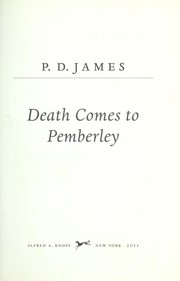
Death Comes to Pemberley
P.D. James drops a murder onto the Pemberley estate and sends Wickham to trial, reading Austen's most famous marriage through the machinery of Georgian justice.
2,318-word summary · 10 min read
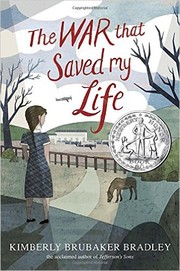
The War That Saved My Life
Ten-year-old Ada has never left her London flat, hidden away because of her clubfoot. Wartime evacuation sends her to Kent, where a reluctant guardian and a…
2,252-word summary · 10 min read
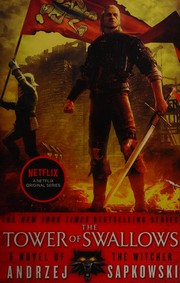
The Tower of the Swallow
Ciri flees as a bandit while Geralt gathers allies to find her.
2,580-word summary · 11 min read
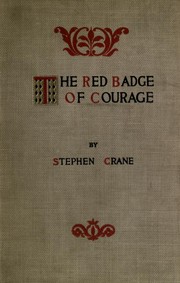
The Red Badge of Courage
Henry Fleming runs at Chancellorsville, then returns to stand.
2,486-word summary · 11 min read
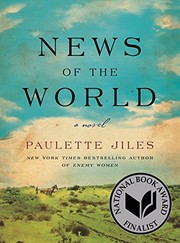
News of the World
Captain Kidd carries captive Johanna home across 1870 Texas.
2,571-word summary · 11 min read
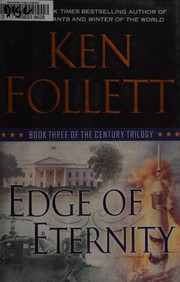
Edge of Eternity
Five families cross civil rights, Cold War and Berlin Wall to the eighties.
2,489-word summary · 11 min read
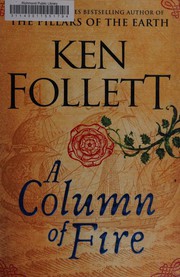
A Column of Fire
Spies and lovers cross Tudor England as Mary and Elizabeth fight for the crown and faith.
2,029-word summary · 9 min read