
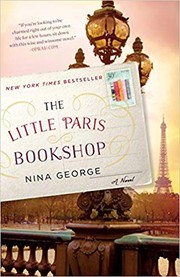
The Little Paris Bookshop
2,050-word summary 9 min read 416 pages in the book
- First published
- 2013
- Publisher
- Ballantine Books
- Pages
- 416
- ISBN
- 9780553418798
- Original title
- Das Lavendelzimmer
Reading options
What's inside (9 sections)
I came to The Little Paris Bookshop expecting a gentle book about books and got something stranger and better: a novel about a man who has spent twenty one years punishing himself with a bricked up room. Nina George published it in German in 2013 as Das Lavendelzimmer, and Simon Pare's English translation arrived in 2015. It sold in the millions, spent more than forty weeks on the New York Times list and was translated into thirty six languages, which is the kind of success that makes literary readers suspicious. The suspicion is half right, and I will get to that.
The man is Jean Perdu, fiftyish, a Parisian bookseller whose surname means lost in French, which the novel is not subtle about. He runs a bookshop on a barge moored on the Seine, below his apartment at 27 Rue Montagnard, and he has turned prescribing books into a craft. He reads a customer's emotional ailment the way a pharmacist reads a prescription and hands over the exact novel that will treat it. He refuses to sell books to people who do not need them, a policy that loses money and wins loyalty. The neighborhood treats him as a fixture, a bachelor with a useful gift and no visible life of his own.
The literary apothecary
The bookshop is the novel's best invention, and George knows it. The barge is called the Literary Apothecary, and its catalog is organized by feeling rather than genre, so a heartbroken man gets a different novel than a lonely one. Perdu prescribes with the confidence of someone who has not treated his own condition since 1992, which is exactly when his lover Manon left him. He never learned why. He wrote it off as abandonment and bricked off the lavender-scented room where they had been happy, hiding it behind a bookcase, a shrine and a wound at the same time.
The building above the barge matters more than the plot summary suggests. Rue Montagnard is a little vertical village of tenants who borrow each other's tools, argue about the courtyard and assemble their own provisional families, and Perdu is its resident oracle because he can name the right novel for any sorrow. When Catherine arrives with almost nothing after a divorce, the community's instinct is to furnish her, and Perdu's contribution comes from the one room he has been protecting from the world. The novel's theme is delivered by furniture: a table carried down a staircase is a locked door opening, and everyone watching knows it except the man carrying the table.
The novel's inciting event is furniture. A new neighbor, Catherine, moves into the building after a bitter divorce with almost nothing, and the residents persuade Perdu to contribute a table and chairs. The table comes from the hidden room, and when Catherine opens its drawer she finds a letter from Manon that Perdu never opened. It has sat there for two decades. She insists he read it, and the letter detonates his carefully managed life. Manon did not leave him for someone else. She left because she was dying of cancer and could not bear to make him watch, and by the time she wrote again, asking him to come to her, he was still not reading his mail.
The journey south
What follows is a road novel on water. Perdu unties the barge on impulse and steers it down the canals of France toward Provence and Manon's home, a journey he should have made twenty one years earlier. He does not get far alone. Max Jordan, a young literary prodigy who lives in the same building and is paralyzed by his second novel, leaps aboard as the barge pulls away from the quay, and the two men become an accidental family of sorts, one running from grief, one from fame.
They pay for diesel and food by selling books at every stop, which turns the barge into a passing book club and gives George a chance to stage small portraits of French towns and the readers in them. Some of the stops exist mainly to change the light and the menu, and the book is untroubled by that. This episodic middle could sag, and for some readers it does, but the travel writing is the point. George is good at canals, mist, meals and the particular smell of secondhand paper in a damp hold, and she writes food the way other novelists write weather.
Cuneo, Samy and the truth about Southern Lights
Along the way they collect Salvatore Cuneo, an Italian chef who roams the waterways in his own boat and cooks like a man settling a debt. Cuneo has spent years searching for a woman he spent a single night with, and when he finally finds her, she does not remember him. The scene is played for comedy and lands as heartbreak, which is George's best trick throughout the book. Cuneo's search is also a mirror held up to Perdu, a man chasing a relationship that only ever existed in one direction, and the barge gets noticeably heavier with meaning whenever the two of them are in the same room.
Later they stop in Cuisery, a town built around books, where Samy runs the business guild with an iron will. Samy turns out to be the real author of Southern Lights, the novel Perdu has prescribed to hundreds of patients and treated as scripture. The revelation complicates Perdu's faith in his own medicine. His favorite book was not written by the famous American author he assumed, and the woman who wrote it lives in a small town and manages a market. There is a detour to visit the famous author P.D. Olson, who is not the hidden hand behind the novel either, and the scenes around that visit include tango lessons and more trouble than Perdu can prescribe his way out of. Every stop chips at his authority as a healer until the only patient left is himself.
Manon's diary
Interleaved with the journey are Manon's diary entries, beginning in July 1986 on a train from Avignon to Paris. She is a winemaker's daughter on the way to spend a few months in the city before marrying her fiance Luc, and she meets a bookseller who ruins her plan without meaning to. The diary is the novel's emotional counterweight, because it shows the love from her side: real, impossible, and interrupted by a life she had already promised to someone else. She loved both men, married Luc, and kept seeing Perdu, and the entries gradually reveal what she never told him. The hints about a child pointed at a daughter, Victoria, and a scene early in the trip plants her name without any of the men noticing.
George handles this material with a light hand until she does not. The last fourth of the book leans hard into reunion and lesson, and readers who prefer fiction to resolve with a whisper rather than a toast will roll their eyes at least once. I rolled mine twice. But the journey had earned enough goodwill by then that I let it land.
Luc is the character who surprised me most, because the book gives the other man in the triangle an ordinary dignity. He is not a villain and not a fool. He married the woman Perdu loved, raised the daughter Perdu did not know about, and grieved the same death Perdu has been refusing to grieve for twenty years. When the two men finally meet, the scene is not a duel. It is two aging men comparing the same story from opposite banks, and Luc's gift of Manon's travel diary is the most generous act in the novel. The reunion with Victoria is quieter still, and I will not spoil how it is staged except to say that George resists the easy fireworks and the payoff is better for it.
Sanary and the ending
The ending answers the question the whole book has been asking, whether a person can hold old grief and new love at the same time. Perdu gives the barge to Samy and Cuneo, quits moving, and spends a summer in Sanary-sur-Mer working in another bookshop and swimming and finally mourning Manon properly, which no amount of prescribing had ever done for him. He invites Catherine to join him for a month, and their romance is quiet, adult, and free of fireworks, which suits a novel about second attempts. Meanwhile Max has fallen for Victoria, and when Perdu finally meets Luc, he receives Manon's travel diary, the last piece of her he did not have. At her grave he makes room for everything at once.
The epilogue gives readers a Christmas card: Perdu and Catherine buy a country house, Max and Victoria marry, Max finds his voice as a children's author, and the extended family, including Luc, gathers yearly and remembers Manon together. It is sentimental. It is also consistent. This is a novel that believes in the healing properties of fiction, romance and a summer in the south of France, and it says so on the first page and the last.
What works and what strains
What works is atmosphere and a genuine love of bookselling. The prescriptions, the village sales, the stubbornness of refusing to sell someone a book they do not need, all of it reads like a writer's affection rather than a marketing hook. The setup with the letter is one of the cleanest engines I have seen in a bestseller: one object, twenty one years of character revealed, a journey that cannot be refused. Cuneo and Samy are a delight, and Manon's diary gives the love story the second voice it needs.
What strains is prose. Publishers Weekly called the writing overwrought and noted that the heal-thyself arc has been done to death, and both complaints are fair. George reaches for wisdom on nearly every page, and some of the aphorisms about books and hearts are more greeting card than insight. Several characters exist to deliver lessons, and the second half schedules its revelations too evenly. If you dislike sentimental European bestsellers on principle, this will confirm your priors. Kirkus, for its part, called it charming and warmhearted, with the qualifier that it is occasionally sentimental, which is a fair verdict delivered gently.
Simon Pare's translation deserves a note of its own, because the book's charm survives the crossing from German without the stiffness that often comes with it. The original, Das Lavendelzimmer, sells lavender as a smell memory rather than a plot device, and the English keeps the warmth while losing a little of the precision, which is the usual tax. What remains is a novel that reads as French even though it was written by a German author and translated for an English audience, a stack of layers that suits a book about loving a country you do not live in. If you read it in English and love it, the French edition is a lovely object, and if you read German, the original is measurably better on the page.
Who it is for
Read it if you liked A Man Called Ove or The Elegance of the Hedgehog, or if you have ever wanted to quit your life and float down a canal with a boatload of novels. Read it in summer if possible. Content notes: terminal illness, prolonged grief, an affair with a married man presented sympathetically, and one heart attack scare, all handled gently. It was nominated for the 2017 Dublin Literary Award, an honor decided by librarians, which feels right for a novel whose hero would rather hand you the correct book than sell you the expensive one.
One last argument for reading it slowly. The novel alternates between chapters that are two pages and chapters that wander for an hour, and it rewards being taken in small doses, where the short entries land like notes passed between longer conversations. However you take it in, the book wants to be read the way Perdu dispenses books, by mood rather than by schedule. Take it on a trip, a commute, or a bad week. It was built for exactly one of those and works for all three.
FAQ
What is The Little Paris Bookshop about?
A bookseller on a barge in Paris opens a letter from the lover who left him decades earlier and sails through the canals of France toward Provence to make peace with her death.
Was The Little Paris Bookshop originally written in German?
Yes. It was first published in 2013 as Das Lavendelzimmer, and Simon Pare's English translation appeared in 2015.
Is The Little Paris Bookshop part of a series?
No. Nina George's later novels share themes and settings but not characters, so this one stands alone.
Similar books
The Accidental Tourist
Grieving Macon writes travel guides for haters of travel, then Muriel intrudes.
2,252-word summary · 10 min read
Writers & Lovers
A broke waitress in Boston grieves her mother, finishes a novel, and chooses between two men.
2,473-word summary · 11 min read
Love & Gelato
After her mother dies, Lina spends a summer in Tuscany, follows a journal through Florence, and learns who Howard is.
2,768-word summary · 12 min read
Less
A novelist facing fifty runs from a wedding invite through world travel, and learns what his funny sad trip means.
2,458-word summary · 11 min read
The Storied Life of A.J. Fikry
A widowed bookseller on Alice Island adopts abandoned toddler Maya, rebuilds Island Books, and finds love with sales rep Amelia before illness closes in.
2,972-word summary · 13 min read
Norwegian Wood
Toru recalls 1969 Tokyo, torn between fragile Naoko and lively Midori after a friend's suicide.
2,051-word summary · 9 min read

Lisey's Story
Two years after her novelist husband dies, Lisey Landon follows a trail of clues into his childhood and the other world that made him a writer.
1,998-word summary · 9 min read

Alone With You in the Ether
Two people in Chicago agree to six conversations, and the experiment becomes a love affair that is also a study of bipolar disorder, obsession, and the shape…
2,713-word summary · 12 min read

The Beach
A young backpacker follows a dead man's map to a hidden island community, then discovers what the people there are willing to do to keep it secret.
2,067-word summary · 9 min read
My Life in France
Julia Child's memoir of learning to cook in Paris, testing recipes for nine years, and becoming the teacher who changed how America thought about French food.
2,038-word summary · 9 min read
The Bookshop on the Corner
A Birmingham librarian loses her job, buys a van, and moves to the Scottish Highlands to run a mobile bookshop. Warm and bookish, with uneven pacing.
2,557-word summary · 11 min read

Sam's Letters to Jennifer
A grieving journalist reads her grandmother's letters and finds a decades-long love affair that changes how she sees her family.
2,310-word summary · 10 min read

Amy & Roger's Epic Detour
Amy Curry has not driven since the crash that killed her father. With Roger at the wheel and a box of maps between them, a cross-country trip becomes a slow…
3,034-word summary · 13 min read

We Are Okay
Marin fled San Francisco after her grandfather vanished and stopped answering anyone. When Mabel visits her college dorm, she has to say what happened.
2,253-word summary · 10 min read

Two by Two
Sparks's twentieth novel turns from first love to a marriage breaking up: Russell Green loses his wife and his job, then rebuilds his life around his…
2,192-word summary · 10 min read

The First to Die at the End
On the night Death-Cast launches, a boy with a bad heart meets a model with everything ahead of him, and one of them gets the call.
2,908-word summary · 13 min read

The Dharma Bums
Ray Smith rides freight trains, climbs Matterhorn Peak and argues about Zen with the poet Japhy Ryder in Kerouac's 1958 road novel.
2,729-word summary · 12 min read
On Chesil Beach
Two newlyweds spend one terrible night on Chesil Beach in 1962, and the rest of their lives is decided by it.
2,456-word summary · 11 min read

Ivanhoe
A disinherited Saxon knight, a great tournament, a besieged castle and a trial by combat. Scott's most famous novel, set in England in 1194.
2,834-word summary · 13 min read
Euphoria
Three anthropologists in 1930s New Guinea turn fieldwork into a love triangle, and a real history breathes behind them.
2,048-word summary · 9 min read
Eligible
Austen's Bennet sisters move to modern Cincinnati, where marriage is a reality show and the house is losing its value.
2,293-word summary · 10 min read

Big Swiss
A transcriptionist for a sex coach falls for one of his clients, the tall Swiss gynecologist she calls Big Swiss, in a funny novel about work and secrets.
2,523-word summary · 11 min read

At First Sight
Jeremy and Lexie are married and expecting a baby when anonymous emails tell him the child may not be his.
2,317-word summary · 10 min read

A Spool of Blue Thread
Four generations of the Whitshank family in Baltimore, and the silences, resentments and quiet love they hand down without ever saying so.
2,408-word summary · 11 min read
Wedding Night
Lottie marries an old flame days after a breakup, then flies to a Greek island while her sister quietly works to sabotage the honeymoon. A farce about memory,…
2,213-word summary · 10 min read

This Is How You Lose Her
Yunior cycles through love affairs and betrayals in nine linked stories, tracing the damage he does and the family history behind it.
2,195-word summary · 10 min read

The Pilot's Wife
Kathryn Lyons's husband dies in a plane crash, and the investigation reveals a secret life that forces her to rethink their marriage.
2,006-word summary · 9 min read

Delilah Green Doesn't Care
Delilah returns to Bright Falls to photograph her stepsister's wedding and falls for Claire, a bookstore owner and single mother, while a cruel bet threatens…
2,315-word summary · 10 min read
And Every Morning the Way Home Gets Longer and Longer
An elderly grandfather, his son, and his grandson share memories and fears as the old man's mind begins to fade, in a short novel about grief and love.
2,078-word summary · 9 min read

The Tiger's Wife
A young doctor in a war-scarred Balkan country chases the stories her grandfather left behind, including a deathless man and a deaf girl who loved an escaped…
2,232-word summary · 10 min read