
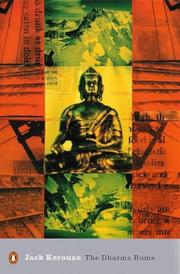
The Dharma Bums
2,729-word summary 12 min read 240 pages in the book
- First published
- 1958
- Publisher
- Viking Press
- Pages
- 240
- ISBN
- 9780141184883
Reading options
What's inside (9 sections)
I came to The Dharma Bums through On the Road, the way most people do, and the second book puzzled me more than the first. Where On the Road accelerates, this one lingers. It opens on a freight train north out of Los Angeles, and for a long stretch not much happens except that people talk, drink, and walk up into the mountains. No one is in danger, no one is transformed, and there is nothing to look forward to except the next conversation. And yet I kept reading, mostly because Ray Smith keeps telling you what he is doing while he does it, and what he is doing is trying to find a way to live.
Viking Press published the novel on 2 October 1958, a year after On the Road and the same year as The Subterraneans. The edition I read is the Penguin Modern Classics reissue, first issued in 2000 with an introduction by Ann Douglas, which runs 240 pages and carries the ISBN 9780141184883. Later editions are sometimes titled Dharma Bums, without the "The". The book is dedicated to Han Shan, the Chinese hermit poet of the sixth century, which is a fair summary of the whole enterprise.
A freight train out of Los Angeles
The first-person narrator is Ray Smith, who is Kerouac with the names changed. Viking's lawyers insisted on the substitutions, and the habit stuck: the poet Gary Snyder becomes Japhy Ryder, Allen Ginsberg becomes Alvah Goldbook, Kenneth Rexroth becomes Rheinhold Cacoethes, the mountaineer John Montgomery becomes Henry Morley, and Neal Cassady, who was in San Francisco that autumn, becomes Cody. The book is autobiography wearing a borrowed coat, and it is much more honest in the coat than Kerouac usually was.
Ray hops onto a freight at Los Angeles in late September 1955, lies down in a gondola with his duffel bag under his head, and watches the clouds roll north toward Santa Barbara. He buys a bottle of cheap Tokay wine in a small town and shares it with a thin old man who climbs into the same gondola. The old man has nothing but sardines. They eat, drink, and talk. The old man produces a slip of paper with a prayer by Saint Teresa printed on it, which he has carried for years because he believes that after her death she will return to earth showering it with roses.
This is the book's whole method in miniature. A stranger, a scrap of paper, some wine. Kerouac calls the man "the little Saint Teresa bum" and says he was the first genuine Dharma Bum he ever met. He also tells us, in the same breath, that he was a perfect Dharma Bum himself at that time, an "oldtime bhikku in modern clothes" walking the long arc from New York to Mexico City to San Francisco, "in order to turn the wheel of the True Meaning, or Dharma." And then, before the reader has settled into any of this, the narrator adds that since those days he has become "a little hypocritical about my lip-service and a little tired and cynical." That double voice runs through the entire novel, and it is the reason the book still holds up. The Kerouac of 1957 is not a narrator who believes everything he says. He is a man reporting on his own earlier certainty from a slight remove.
The title, incidentally, is not a publisher's invention. By the second chapter Ray tells us that the phrase belonged to Japhy Ryder, the number one Dharma Bum of them all, "who coined the phrase." You have to meet the person who coined it before the phrase means anything.
Japhy and the poetry scene
Japhy walks into the story the way the old bum climbed into the gondola, without announcement. He is a kid from eastern Oregon who grew up in a log cabin with his parents and his sister, farmed and chopped wood, studied anthropology, then Chinese and Japanese, and ended up in San Francisco writing poems and translating more of them. Kerouac makes him the model of the thing the book is about: a man who has read enough to know that Zen exists, and has gone to the woods to find out what it actually asks of him.
The center of gravity in those months was the poetry scene, and Kerouac puts himself in the middle of it. The famous reading at the Gallery Six in October 1955, where Ginsberg gave the first public performance of "Howl", appears here as the night the San Francisco Poetry Renaissance was born. In Kerouac's version the poem is called "Wail", a change he made for the book, and the story he tells is about collecting dimes and quarters from a stiff audience in the doorway and coming back with three gallon jugs of California Burgundy. By eleven o'clock Goldbook is reading drunk with his arms outspread and the room is yelling go, go, go, and old Rheinhold Cacoethes is wiping his eyes with gladness.
Away from the readings, the book settles into the daily business of the Beat bohemia. Ray works on the railroad, lives in a rented shack in Berkeley with Goldbook, meditates, drinks, and sleeps with a woman who calls herself a Bodhisattva and is not shy about the arrangement. Japhy holds court in his own shack, cooking, chopping firewood, reading Chinese poetry, and conducting the strange sexual experiments that the book refers to as yabyum. The arguments between them are the real plot. Japhy thinks Buddhism means practice and study in the mountains. Ray thinks it means a flash of experience you can live on. Neither converts the other, and Kerouac does not pretend otherwise.
The conversation that has aged best is the one about television. Japhy and Ray imagine a country that stops consuming, and in the middle of that imagining Ray sees a future that is not far off:
I see a vision of a great rucksack revolution thousands or even millions of young Americans wandering around with rucksacks, going up to mountains to pray, making children laugh and old men glad.
He goes on to call the people who do this Zen Lunatics, and the phrase is Kerouac's, not the counterculture's. The beatniks of the sixties are in this paragraph, ready-made. Kerouac's fear of television is the fear of his own decade, people in separate houses staring at the same glowing rectangle and "thinking the same thing," and it sounds dated now. It also sounds like a premonition.
The mountain and the road east
The book's central adventure is a climb. Ray, Japhy and Henry Morley go up Matterhorn Peak in the Sierra, and the chapter is funny and slightly chaotic. Morley brings far too much equipment, rants, yodels, and turns back early to fix his car's engine, leaving the other two to talk about Buddhism on the trail. Above the treeline Japhy shows Ray the poems of Han Shan, the recluse of Cold Mountain, and the whole project of the book comes into focus: a modern American walking uphill toward a version of himself that a Chinese monk would recognize.
Then Ray goes east. He rides freight and buses to North Carolina for Christmas, and the winter section is the quietest and strangest part of the novel. He meditates in the woods near his mother's house in Rocky Mount, North Carolina, and the prose changes register completely. He describes what he calls "Samapatti", which he glosses as Transcendental Visits, and then reports a vision of Dipankara Buddha, the Buddha who never spoke, standing in a snowy field like a pyramid. A couple of pages later he cures his mother's cough. He goes into a trance, sees a bottle of Heet, sees white flowers, and tells his mother to rub the liniment on her neck. The cough goes. Later a nurse friend says it sounds like an allergy to the flowers.
That is the book in miniature: a set of small, silly, precise observations sitting next to a claim about the universe, with no effort to keep them separate.
Spring brings the road again. Ray rides down through El Paso, camps in the desert, crosses into Ciudad Juárez, then works his way back to San Francisco and the shack at Corte Madera, where Japhy is living in a cabin behind Sean Monahan's house. There are parties, and there is a bad night. Cody's girlfriend Rosie has been cracking, and Ray finds her thin as a skeleton, with her arms cut up, telling him she has written out a list of everyone's names and sins and is about to be arrested. She dies soon after. The scene is sudden and unpleasant and the book does not recover from it immediately, which is to its credit.
The other thing Ray brings back from the east is a decision. Japhy is leaving for Japan, where he plans to study Zen seriously, and he has arranged for Ray to take a job as a fire lookout in the North Cascades in Washington state. It is the last thing the two friends do together, and it is the pivot of the novel.
Desolation Peak
The final stretch is the summer of 1956, and it is the only part of the book that looks like a conventional novel ending. Ray trains at the ranger station, rides a mule up the trail with two men named Happy and Wally, and settles into a lookout shack on Desolation Peak. The other lookouts talk to him on a two-way radio, which he describes as a kind of ritual, and they trade bear stories across the mountains.
Then there is nothing but the mountain. For sixty days there is fog, then sun, then more fog. There is an outhouse built on the edge of a gulch. There are the twisted trees that seem to grow out of the rock. There is a lake a mile below. The prose slows to the pace of a man who has run out of people to talk to, and it turns out to be the most convincing writing in the book, because the vision gets more precise as the company thins out.
On the last day a green and rose rainbow shafts down into the ridge and rings his shadow. He says what he has come to say, which is a thank you, to God and to Japhy and to the mountain. And then, kneeling on the trail, he tells the shack "Thank you, shack" and adds "Blah", with a grin, because he knows that shack and that mountain will understand what that meant, and goes down the trail "back to this world".
The last line is a joke and a benediction at once. The structure closes where it opened: with a bum sharing something small and ordinary with a stranger on a train, and now with a man alone giving thanks to a shack. Nothing is resolved. Ray is not enlightened, and the book does not claim that he is.
How it was written, and how it was received
Kerouac typed the whole novel in about eleven days, from 26 November to 7 December 1957, at his mother's house in Orlando, Florida. He used a rented typewriter and a 61-foot scroll of teletype paper joined with tape, so he would not have to stop and reload. The sessions ran eighteen hours at a stretch, and he was drinking coffee, alcohol and Benzedrine. The material had been collected for years, and he had drafted a first part of it back in 1956 while living with his family in North Carolina, but the book itself came out in that single burst. The scroll is also the most reproduced of Kerouac's manuscripts.
Then the publishers got hold of it. Viking wanted another On the Road, and the house made the usual adjustments. Malcolm Cowley was involved, Helen Taylor did the line editing, and there is a Viking internal report on the book by an editor named Catharine Carver. Kerouac hated the result, wrote letters protesting about thousands of changes to his punctuation, and restored his own text at his own expense, noting on the typescript that the manuscript carried "Viking Press changes I rejected." The published novel is a compromise, and it sits closer to Kerouac's restored galleys than to the copy-edited version the house wanted.
The reception in 1958 was mixed and mostly cold. The New York Times announced the book with the line "Mr. Kerouac has done it again," and Ginsberg defended it as a record of a genuine religious experience, but many reviewers dismissed it as shallow, and the sharpest attacks came from people who knew Buddhism, notably Alan Watts and Ruth Fuller Sasaki, who thought Kerouac had grabbed a tradition he did not understand. It sold modestly in hardcover, and Viking did not publish Kerouac again for many years.
What changed the book's fortunes was the decade that followed. The rucksack revolution Ray predicted arrived in the streets, and the book found a large new readership among people who wanted to travel light and sit still at the same time. A group of young men wearing jackets with DHARMA BUMS printed across the back turned up at Kerouac's house in Northport, Long Island, about a year after publication. Gary Snyder, whom the book made famous, called it "a beautiful book" and said the period had been a great process of learning from Kerouac. He also told Philip Whalen privately that he wished Jack had taken more trouble to smooth out the dialogues, and that the transitions were sometimes abrupt. Later he chided Kerouac for the book's misogynistic reading of Buddhism and for the way it uses its women.
What works and what does not
The best of this novel is the observation. Kerouac can give you a bottle of wine shared on a steel floor, a man who yodels for hours, Japhy teaching Ray to chop firewood, or the way a foggy mountain looks from a lookout tower. When his characters talk about Zen in the middle of a party, the talk is often literally about Zen, and the philosophy can be thin, secondhand, and slightly embarrassing. But the book is also honest about the embarrassment, which is what keeps it from being embarrassing.
The female characters are the weak point. They are named and they are funny, but they mostly function as scenery for the male business of drinking and meditating. Princess, the self-styled Bodhisattva, and Rosie, whose death is the book's one real shock, would be more interesting if the book had looked at them from the inside. Snyder's complaint about this is fair.
The prose has a habit of explaining itself: Ray will deliver a paragraph on emptiness and then deliver it again in different words. The book's chronology also wanders, and the plot is largely set aside once Ray reaches the mountain. And the Buddhism is a young man's Buddhism, a patchwork of Zen, Chinese poetry, Thoreau and his own Catholic temperament, which the later books show him paying for. Desolation Angels, published in 1965, is the same summer told with more honesty and much less joy.
Who it is for
This is a book for readers who liked On the Road and found the girls tiring and the speed exhausting. It is for readers of Gary Snyder, of travel writing about walking, and of books about trying to be better than you are and doing it in public. It is also for readers who want to see a literary movement at the exact moment it is inventing itself, because the argument in these pages about mountains and consumption became the argument of the sixties.
It is not for readers who want a plot, and it is not for readers looking for accurate Buddhism. Bring patience and a tolerance for talk that circles.
I still think about the "Blah". It is the only ending the book could have earned, because the whole enterprise is a man asking whether any of it matters and then refusing to answer. Kerouac wrote it in eleven days, fought his publisher over every comma, and left a line that admits the joke while keeping the prayer. That combination, silly and sincere at once, is the book's best argument for itself.
FAQ
Is The Dharma Bums a sequel to On the Road?
Not a formal one. It is set in the years after On the Road, and Kerouac wrote it as a companion to his first bestseller, with the same friends renamed at the request of the publisher.
Do I need to know about Buddhism to read it?
No. Ray mixes Zen Buddhism, Chinese poetry, Thoreau and plain kindness, and the book explains itself as it goes, though the doctrine is a young man's patchwork rather than anything orthodox.
Was the book well received when it came out?
Mixed at best. The New York Times announced it warmly, but many reviewers dismissed it, and Alan Watts and Ruth Fuller Sasaki attacked its use of Buddhism. It sold modestly and became a counterculture touchstone in the 1960s.
Similar books

Revolutionary Road
A Connecticut couple who believe they are too good for the suburbs plan to move to Paris, and the plan slowly exposes everything they cannot say to each other.
2,085-word summary · 9 min read

Fathers and Sons
Arkady brings the nihilist Bazarov home to his father's estate, and a generational argument turns into love, a duel, and an early death.
2,192-word summary · 10 min read
By the River Piedra I Sat Down and Wept
Pilar, 29, meets her childhood friend again in Madrid and finds a rumored miracle worker. One winter week through the Pyrenees to the river Piedra, and the…
2,845-word summary · 13 min read

The Fall
A fallen Paris lawyer confesses in an Amsterdam bar, tracing guilt from Paris success to a bridge he failed to face.
2,220-word summary · 10 min read
Demian
Hesse's 1919 German classic of Emil Sinclair, from Kromer blackmail to Demian, Abraxas, Beatrice and Frau Eva, ending in war: a short, strange guide to growing…
2,510-word summary · 11 min read
Nausea
Historian Roquentin in Bouville catalogs dread as objects turn strange in Sartre diary novel.
2,134-word summary · 9 min read
Tao Te Ching: Annotated & Explained
Eighty one brief verses on the Way and effortless action, with Lin's translation and facing notes.
2,140-word summary · 10 min read
Steppenwolf
Harry Haller, half man and half wolf in his own mind, dances, loves, and enters a magic theatre in Hesse's strange 1927 novel.
3,181-word summary · 14 min read
Sophie's World
Sophie gets philosophy lessons by mail, then finds she is fiction in a father birthday book for Hilde.
2,013-word summary · 9 min read
The Lincoln Highway
Emmett and Billy plan California in 1954, but two escapees steal their car and drag them east to New York.
2,954-word summary · 13 min read
The Karamazov Brothers
Dmitri, Ivan, and Alyosha Karamazov face their father, murder, faith, and doubt in Dostoevsky's final novel.
2,512-word summary · 11 min read
The Picture of Dorian Gray
Dorian Gray retold: Basil paints, Henry talks, wish holds youth while canvas bears years.
2,061-word summary · 9 min read

The Crying of Lot 49
A California woman named executor of her ex-lover's estate follows a muted post horn into a possible centuries-old postal conspiracy, and Pynchon refuses to…
2,003-word summary · 9 min read
Silas Marner
A falsely accused weaver hoards gold in Raveloe until a stolen hoard and an abandoned child remake his narrow life.
2,699-word summary · 12 min read
The Beach
A young backpacker follows a dead man's map to a hidden island community, then discovers what the people there are willing to do to keep it secret.
2,067-word summary · 9 min read
Rosencrantz and Guildenstern Are Dead
Stoppard's 1966 play retells Hamlet from the wings, where two minor courtiers wait, joke, and walk toward a death they cannot see.
2,021-word summary · 9 min read

Howards End
Forster's 1910 novel follows two families, a house in Hertfordshire, and a burned note, asking whether money and feeling can ever be connected.
2,187-word summary · 10 min read

Sophie's Choice
A young Southern writer in 1947 Brooklyn befriends a brilliant, unstable couple and slowly learns the story of the Polish Catholic woman at the center of their…
2,798-word summary · 12 min read
Naked Lunch
Burroughs's banned 1959 collage novel follows Bill Lee through addiction, Tangier, and the nightmare bureaucracy of the Interzone.
2,082-word summary · 9 min read

The Chosen
A shattered pair of glasses in a 1944 Brooklyn softball game starts a friendship between a Hasidic boy and his Orthodox neighbor, and their fathers pull them…
2,443-word summary · 11 min read

Ivanhoe
A disinherited Saxon knight, a great tournament, a besieged castle and a trial by combat. Scott's most famous novel, set in England in 1194.
2,834-word summary · 13 min read

Wide Sargasso Sea
Jean Rhys gives the first Mrs. Rochester a Caribbean childhood, a marriage built on money and suspicion, and a voice that Charlotte Bronte left in the attic.
2,021-word summary · 9 min read
Travels with Charley
Steinbeck drives across America with his poodle Charley, looking for the country he remembers and finding a place that has changed.
2,039-word summary · 9 min read
The Road Less Traveled: A New Psychology of Love, Traditional Values and Spiritual Growth
M. Scott Peck argues that maturity begins with accepting difficulty, then builds discipline, love, and spiritual growth through honest, often painful work.
2,200-word summary · 10 min read
The Gambler
Dostoevsky's roulette novella: Alexei loses Polina, wins a fortune, loses everything, and promises himself one more bet tomorrow.
2,022-word summary · 9 min read
Out of the Silent Planet
A Cambridge philologist is kidnapped and taken to Mars, where the natives are civilized and the humans are the dangerous invaders.
2,612-word summary · 12 min read
Orlando
A young Elizabethan nobleman becomes a woman and lives for centuries, moving through English history while writing a single poem about an oak tree.
2,030-word summary · 9 min read
Mother Night
Howard W. Campbell Jr., a Nazi propagandist and American spy, tells the story of his double life from an Israeli prison cell while waiting to be tried for war…
1,988-word summary · 9 min read
The House of Mirth
Lily Bart, beautiful and penniless at twenty-nine, navigates New York's marriage market until a Dorset yacht scandal strips her of the only currency she has.
2,468-word summary · 11 min read
Beyond Good and Evil: Prelude to a Philosophy of the Future
A guide to Friedrich Nietzsche's Beyond Good and Evil: its attack on moral prejudice, the will to power, master and slave morality, and the philosopher of the…
2,597-word summary · 12 min read