
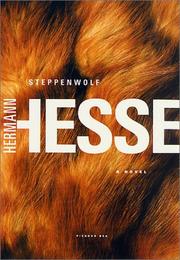
Steppenwolf
3,181-word summary 14 min read 224 pages in the book
- First published
- 1927
- Publisher
- S. Fischer Verlag
- Pages
- 224
- ISBN
- 9780312278670
- Original title
- Der Steppenwolf
Reading options
What's inside (9 sections)
I came to Steppenwolf sideways, through Siddhartha, which I had read a few months earlier and liked for its calm. A friend warned me this one was less calm. He was right. Hermann Hesse published it in German in June 1927 with S. Fischer Verlag in Berlin under the title Der Steppenwolf, and it reads like a man arguing with himself at high volume. The Picador paperback I used, in Basil Creighton's English translation, runs 224 pages. Creighton's version was the first English rendering, back in 1929. Hesse was nearing fifty when the book appeared, his second marriage falling apart, his nerves frayed, and he poured all of it onto the page. Decades later the novel became a counterculture emblem, gave its name to a rock band and a Chicago theatre company, and helped carry Hesse to the Nobel Prize in 1946. Hesse himself later wrote that it was the most misunderstood of his books, because readers camped on the despair and skipped the joke. Having finished it, I think he had a point, though I also think he made the despair so vivid that nobody should blame readers for pitching their tents there.
The premise fits on an index card and then refuses to stay there. Harry Haller is a middle aged man living in a rented room, learned, solitary, disgusted by bourgeois life and dependent on its comforts. He believes he is two creatures in one skin, a respectable man of culture and a wolf of the steppes who wants to bite everything. He has decided, privately, that he will allow himself until his fiftieth birthday and then take his own life. Then, in the course of a few strange months, he meets a young woman named Hermine, a gentle lover named Maria, and a saxophonist named Pablo, and he is led into something called the Magic Theatre, where his neat two part theory of himself comes apart in public. That is the plot. The experience of reading it is stranger than the summary, sometimes thrilling, sometimes tedious, never quite like anything else on my shelves.
A manuscript left behind
The book opens with a frame, and the frame matters. A young man, the nephew of Harry's landlady, tells us about the odd lodger who moved into his aunt's house. Harry Haller keeps strange hours, owns too many books, stares at the Goethe bust in the hallway with complicated feelings, and radiates the particular loneliness of someone who has stopped expecting company. The nephew watches, pities, and grows fond of him in a distant way. Then Harry vanishes, leaving behind a manuscript, and the nephew publishes it with a short preface. Everything after that preface is Harry's own record, written for madmen only, as he puts it. This device lets Hesse have it both ways. We see Harry from outside as a sad aging tenant, and from inside as a mind on fire. The gap between those views is where the novel lives.
Harry's days before the story turns are rendered with sour precision. He walks the city at night. He attends a dull evening at the home of an old academic friend and commits social murder by insulting the man's sentimental Goethe engraving and his nationalist opinions over dinner. He returns to his room intending to end things, puts off the act, wanders out again, and keeps meeting small signs that seem addressed to him. A man with advertisements. A doorway sign promising a magic theatre. A little printed booklet, the Treatise on the Steppenwolf, that names him and describes him with insulting accuracy. Hesse writes these episodes in a half dream state where coincidence feels like correspondence. Is someone guiding Harry, or is a collapsing mind arranging the street into messages. The book never settles the question, and I liked it better for the refusal. Harry is the kind of narrator who would read fate into a tram ticket, and Hesse knows it.
One detail worth carrying forward. Harry has fixed his death to his fiftieth birthday, the way some people fix a dentist appointment, to make the unbearable postponable. The date gives him permission to keep living in the meantime, since the exit is scheduled. Hesse, born in 1877, turned fifty in July 1927, weeks after the book appeared, which tells you how thin the membrane was between author and character. Everything in the early chapters has that pressurized quality. A man tidying his despair into a plan, and the plan starting to leak.
Man, wolf, and the treatise
The Treatise is the novel's famous centerpiece, and it is also its biggest gamble. Hesse prints the whole pamphlet inside the story, an essay that explains Harry to himself. Its argument runs like this. Harry thinks he is two beings, man and wolf, spirit and appetite, Mozart and mud. The Treatise says this is self flattery disguised as self hatred. He is not two. He is hundreds, a whole crowd of selves, and his misery comes from forcing that crowd into a cheap pair of costumes. The pamphlet also classifies him among the suicides, meaning not people who will certainly kill themselves but people who regard suicide as a standing option, a door left ajar. And it introduces the Immortals, the great Laughing ones like Goethe and Mozart, who achieved serenity not by solving life but by seeing through its solemnity. Above all it prescribes humor. Learn to laugh at yourself, the Treatise says, not bitterly but with real lightness, and the wolf and the man can stop their stupid war.
Reading it, I swung between admiration and impatience, sometimes in the same paragraph. On one hand the idea is genuinely freeing, and ahead of its time. Identity as a crowd rather than a coin with two sides. Suffering as a posture you can put down. Laughter as a spiritual practice. On the other hand the Treatise lectures. For twenty odd pages the story stops and a voice explains Harry the way a naturalist explains a beetle. Harry reads it and feels exposed, which is dramatically useful, but the reader has to sit through the seminar. Hesse clearly loved these ideas and could not bear to dramatize them slowly when he could state them fast. The result is the novel's first real test. Readers who enjoy being lectured by a genius will underline half of it. Readers who came for story will fidget. I underlined a fair amount and fidgeted too.
What the Treatise sets up, though, is essential for everything after. It tells Harry, and us, that the cure is not choosing man over wolf or wolf over man. It is multiplication and laughter. Become many. Stop posing. Every later scene with Hermine, Maria, and Pablo is the practical course for which the Treatise was the syllabus. Hesse the novelist knew what Hesse the essayist kept forgetting, that nobody learns to laugh from a pamphlet. So he sends his hero out to take lessons in the field.
Hermine
She appears at a dance hall late at night, a young woman who spots Harry across the room the way a teacher spots the difficult new pupil. Hermine, which is close enough to a feminine form of Hermann to raise an eyebrow, takes charge of Harry within minutes. She mocks his self pity, orders him to obey her, and extracts a promise that he will do as she says. What she says, mostly, is this. Learn to dance. Learn to laugh. Take pleasure seriously. Stop acting as if a love of Mozart exempts you from dinner invitations. Harry protests that he is too old, too stiff, too far gone. Hermine ignores all of it with the serene confidence of someone handling a solvable problem.
The dancing lessons are the heart of the middle book, and they are lovely. Harry, the man of books, submits to the foxtrot. He counts steps, treads on toes, sweats through his dignity, and slowly finds that his body knows things his mind denied. Hermine is strict and tender by turns. She teases him when he retreats into gloom and rewards him when he stays on the floor. Under her direction he also learns to use modern music, the jazz and gramophone tunes he had dismissed as noise, as something other than evidence of decline. I found these chapters the most human in the novel. The great metaphysical sufferer reduced to a beginner with two left feet is comedy Hesse clearly enjoyed, and it lets the reader like Harry for the first time instead of merely pitying him.
Hermine also gives Harry the harder assignment. She tells him, calmly, that one day she will ask him to kill her, and that he must do it. The line lands like a stone in a pond, and the ripples spread through everything after. Is she serious. Is this a test. Is she naming something about how men consume the women who save them. Hesse leaves the remark hanging, and Harry half forgets it amid dancing and wine, which is exactly how dread works. You pocket the terrible sentence and go on with your evening. I will say more about how this resolves when we reach the theatre, because it does resolve, after a fashion. For now note the structure of Hermine's role. She commands, Harry obeys, and obedience turns out to be his salvation. A man who thought himself too deep for ordinary life learns to take instruction from a girl in a dance hall. Pride bends. Something in him starts to breathe.
Maria, Pablo, and the ball
Hermine does not work alone. She presents Harry with Maria, a beautiful young woman with a soft laugh, and essentially gifts her to him as a tutor in tenderness. Maria likes comfort, perfume, good food, naps in the afternoon, and Harry, and she asks very little in return except presence. Their affair is the warmest sustained passage in the book. Harry, who had treated the senses as the wolf's department, discovers that pleasure taken without guilt feels different from pleasure stolen in contempt. Maria teaches with her whole manner that the body is not the enemy of the spirit but its slower sibling. She has no theories. That is her theory, and for Harry it works like rain on dry soil.
Then there is Pablo, the saxophonist, and Pablo is a harder gift to accept. He plays jazz, talks in cheerful riddles, smiles at everything Harry finds serious, and represents everything Harry's cultural snobbery despises. Harry first dismisses him as a shallow entertainer. Slowly, helped by wine and late nights and Hermine's insistence, he starts to hear what Pablo is actually saying. Seriousness is also a drug. Solemnity is also an escape. The man who plays for dancers may understand joy better than the man who writes about Goethe. Pablo drugs Harry's certainties more effectively than any substance in the book, though there is drink and smoke enough in these chapters to keep the air hazy. Hesse, who discovered jazz clubs in this period of his life, writes the music scenes with convert's enthusiasm. Brass as liberation. Rhythm as argument against despair.
All of this builds to the masked ball, the novel's great set piece before the theatre. Harry goes in costume, dances with strangers, loses Hermine in the crowd, finds her, loses her again, drinks, laughs, and for one evening actually lives the multiplied self the Treatise described. He flirts. He plays. He stops observing the party and joins it. By dawn something in him has loosened past the point of return. Pablo gathers him up, promises the Magic Theatre at last, and leads him through a door. Harry follows, half drunk, half awake, fully committed for the first time in the book. The ball matters because it proves the lessons took. Dancing worked. Maria worked. Pablo's smiling acid worked. The man who could not enter a room without judging it has spent a night inside the celebration. What comes next could only happen to that man, not to the one who rented the room.
The magic theatre
Pablo's theatre is a corridor with mirrors on one side and many doors on the other, and Harry enters five of them. Behind each door waits a staged fantasy drawn from his obsessions. Old loves. Old wars. Old gods. In one room he finds versions of his desires acted out without consequence. In another he hunts and is hunted. The episodes blur deliberately, dream logic with the lights half up, and summarizing them door by door would betray the effect. What matters is the pattern. Each room shows Harry a self he disowned, lets him live it for a while, then dissolves it. The wolf gets its hunts. The gentleman gets his minuet. The lover gets his hours. None of them is the whole of him. All of them are him. The corridor teaches by exhaustion what the Treatise taught by argument. You are many. Stop picking two.
The night ends in the scene readers argue about. Harry finds Hermine lying beside a sleeping Pablo, picks up a knife, and stabs her. Pablo covers her body, leaves, returns wearing the mask of Mozart, and subjects Harry to a long laughing scolding. You took the game for reality, Mozart says in effect. You murdered a chess piece out of jealousy and called it fate. You still confuse the theatre with life because you will not learn the one art that matters, which is laughter. Harry looks closer and sees Pablo inside the Mozart costume, grinning. Hermine's body has shrunk to the size of a chess piece, which Pablo pockets. Harry is sentenced, if that is the word, to keep living, to listen to Mozart, to laugh at himself properly. The hallucination thins. Morning presumably comes.
What to make of this. On a literal level nothing happened. Nobody died. On the level the book cares about, everything happened. Harry acted out the Treatise's warning in the most extreme form, treating a fluid self as a fixed enemy and destroying what he loved. Hermine's old request is fulfilled and exposed at once. Yes, he killed her in the dream. No, killing solved nothing, which was Mozart's point. The chess piece image is the novel's final thesis in miniature. People, including the self, are pieces to be moved in play, not problems to be solved with knives. I found the sequence bewildering on first read and clearer on reflection, which seems to be the standard career of this chapter. Hesse wants you lost in the corridor. Getting lost is the lesson. Readers who demand clean symbolism will grind their teeth. Readers willing to be disoriented will come out the other side with Harry, blinking, corrected, and weirdly hopeful.
What creaks and what holds
Fair criticism first, because this book needs it. The women exist for Harry. Hermine, for all her wit and command, functions as his therapist, dance instructor, procurer, and sacrificial victim. Maria functions as his comfort. Neither gets an interior life comparable to his. A modern reader will notice, and should notice, that the novel's great doctrine of multiplicity somehow never extends to granting its women a crowd of selves. They are roles in Harry's cure. Hesse probably did not see it. We can see it while still valuing what the book attempts.
Second, the middle lectures. The Treatise is the worst offender but not the only one. Mozart's closing scolding runs long too. Hesse trusts ideas stated plainly in a way that slows fiction. When characters speechify, the dream thins and the classroom appears. Third, the bourgeois bashing gets repetitive. Harry despises ordinary life for a hundred pages, then discovers ordinary pleasures and acts as if he invented them. The arc is real but the early contempt can exhaust sympathy. And Harry's self pity, however honestly rendered, sometimes curdles. There were passages where I wanted Hermine to slap him harder, metaphorically speaking, and move the lesson along.
There is also the afterlife problem. The novel became scripture for a generation of young seekers in the 1960s, and some of that fondness attached to the despair rather than the humor, the exact misreading Hesse complained about in his 1960 preface. The American novelist Jack Kerouac publicly dismissed the book, and the dismissal stung because it named something true. Taken as a lifestyle manual, Steppenwolf can license wallowing. Taken as Hesse meant it, as a comedy about a man cured of solemnity, it is sharper and kinder.
What holds, though, holds firmly. The humor doctrine feels earned because Hesse paid for it in his own crisis years, the broken marriage, the therapy with a Jung pupil, the doubts that brought him to the edge. The dancing chapters remain charming nearly a century on. The corridor still disorients, which is more than most experimental passages of its era manage. And the book's central image, the respectable citizen who discovers he contains multitudes, has aged well. We have better vocabularies for it now, but Hesse got there early and with style. The 224 pages of the Creighton translation move fast when Hesse trusts scenes and slow down only when he trusts speeches. On balance the scenes win.
Who should read it
Read Steppenwolf if you are, or have recently been, Harry. Middle years approaching, certainties wobbling, pleasures feeling either compulsory or forbidden, the suspicion growing that your personality is a smaller box than you are. This is a book for that season. It pairs naturally with Siddhartha, and reading the two together shows Hesse's range. The calm river tale and the loud city tale are brothers, one whispering and one shouting the same news. That the self is larger than its habits, and that laughter is a way through.
Skip it, or at least postpone it, if you want plot in the conventional sense. Almost nothing happens for long stretches except talk, dancing, and doors. If manifestos irritate you, the Treatise will try your patience. If you need your classics to share your politics on women, this one will fail the test in ways worth discussing but not worth ignoring. And if you are very young, consider waiting. Hermine's lessons land differently once you have been the stiffest person in a room yourself. I read it at an age where Harry's complaints sounded familiar, which probably helped.
I finished the Picador paperback late at night, which fit the book's hours, and sat with the chess piece image for a while. A pocketed Hermine, a laughing Mozart, a man sentenced to live. Hesse asks less than the self help shelf and more than the entertainment shelf. Stop insisting you are two things at war. Admit you are many things in motion. Learn the steps. Take the lover's hand. Hear the music you claimed to hate. And when the night turns strange, laugh, because the alternative is the knife, and the knife only ever cuts the dreamer. For a strange little novel from 1927, that is a lot to carry out of a corridor of mirrors. I am glad I went in.
FAQ
When was Steppenwolf first published?
S. Fischer Verlag issued the German original, Der Steppenwolf, in June 1927. Basil Creighton's first English translation followed in 1929.
What happens in the Magic Theatre?
Pablo leads Harry through doors where he lives out fantasies and meets himself in strange forms. Mozart closes the night by laughing at Harry for taking his pain too solemnly.
Do I need a philosophy background to read it?
No. Names like Goethe and Mozart add flavor, but the story works as a strange tale of a lonely man learning to laugh and dance.
Similar books

Fathers and Sons
Arkady brings the nihilist Bazarov home to his father's estate, and a generational argument turns into love, a duel, and an early death.
2,192-word summary · 10 min read
The Dharma Bums
Ray Smith rides freight trains, climbs Matterhorn Peak and argues about Zen with the poet Japhy Ryder in Kerouac's 1958 road novel.
2,729-word summary · 12 min read
The Fall
A fallen Paris lawyer confesses in an Amsterdam bar, tracing guilt from Paris success to a bridge he failed to face.
2,220-word summary · 10 min read
Nausea
Historian Roquentin in Bouville catalogs dread as objects turn strange in Sartre diary novel.
2,134-word summary · 9 min read
Giovanni's Room
An American in Paris stalls between his fiancee in Spain and an Italian bartender who loves him. Baldwin's brief tragedy still stings.
2,264-word summary · 10 min read
Sophie's World
Sophie gets philosophy lessons by mail, then finds she is fiction in a father birthday book for Hilde.
2,013-word summary · 9 min read
The Karamazov Brothers
Dmitri, Ivan, and Alyosha Karamazov face their father, murder, faith, and doubt in Dostoevsky's final novel.
2,512-word summary · 11 min read
The Picture of Dorian Gray
Dorian Gray retold: Basil paints, Henry talks, wish holds youth while canvas bears years.
2,061-word summary · 9 min read
Demian
Hesse's 1919 German classic of Emil Sinclair, from Kromer blackmail to Demian, Abraxas, Beatrice and Frau Eva, ending in war: a short, strange guide to growing…
2,510-word summary · 11 min read
Siddhartha
A Brahmin son leaves home to find peace beyond teachers and rules.
1,933-word summary · 9 min read
The Idiot
A Turkish-American freshman at Harvard falls in love through email with a Hungarian math student and spends a summer in Hungary trying to turn correspondence…
2,019-word summary · 9 min read

The Crying of Lot 49
A California woman named executor of her ex-lover's estate follows a muted post horn into a possible centuries-old postal conspiracy, and Pynchon refuses to…
2,003-word summary · 9 min read
Silas Marner
A falsely accused weaver hoards gold in Raveloe until a stolen hoard and an abandoned child remake his narrow life.
2,699-word summary · 12 min read

Revolutionary Road
A Connecticut couple who believe they are too good for the suburbs plan to move to Paris, and the plan slowly exposes everything they cannot say to each other.
2,085-word summary · 9 min read
Rosencrantz and Guildenstern Are Dead
Stoppard's 1966 play retells Hamlet from the wings, where two minor courtiers wait, joke, and walk toward a death they cannot see.
2,021-word summary · 9 min read

Howards End
Forster's 1910 novel follows two families, a house in Hertfordshire, and a burned note, asking whether money and feeling can ever be connected.
2,187-word summary · 10 min read

Sophie's Choice
A young Southern writer in 1947 Brooklyn befriends a brilliant, unstable couple and slowly learns the story of the Polish Catholic woman at the center of their…
2,798-word summary · 12 min read
Unaccustomed Earth
Lahiri’s second story collection follows Bengali families in America and abroad, tracing the quiet distances between parents and children, spouses, and the…
2,333-word summary · 10 min read
Naked Lunch
Burroughs's banned 1959 collage novel follows Bill Lee through addiction, Tangier, and the nightmare bureaucracy of the Interzone.
2,082-word summary · 9 min read

The Chosen
A shattered pair of glasses in a 1944 Brooklyn softball game starts a friendship between a Hasidic boy and his Orthodox neighbor, and their fathers pull them…
2,443-word summary · 11 min read

Ivanhoe
A disinherited Saxon knight, a great tournament, a besieged castle and a trial by combat. Scott's most famous novel, set in England in 1194.
2,834-word summary · 13 min read

Wide Sargasso Sea
Jean Rhys gives the first Mrs. Rochester a Caribbean childhood, a marriage built on money and suspicion, and a voice that Charlotte Bronte left in the attic.
2,021-word summary · 9 min read
The Gambler
Dostoevsky's roulette novella: Alexei loses Polina, wins a fortune, loses everything, and promises himself one more bet tomorrow.
2,022-word summary · 9 min read
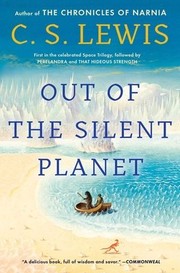
Out of the Silent Planet
A Cambridge philologist is kidnapped and taken to Mars, where the natives are civilized and the humans are the dangerous invaders.
2,612-word summary · 12 min read
Orlando
A young Elizabethan nobleman becomes a woman and lives for centuries, moving through English history while writing a single poem about an oak tree.
2,030-word summary · 9 min read
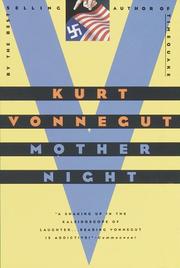
Mother Night
Howard W. Campbell Jr., a Nazi propagandist and American spy, tells the story of his double life from an Israeli prison cell while waiting to be tried for war…
1,988-word summary · 9 min read
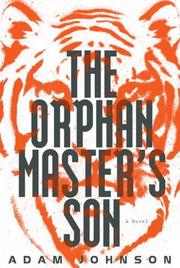
The Orphan Master's Son
Adam Johnson's Pulitzer-winning novel follows Pak Jun Do from a North Korean orphanage to a deadly identity swap, under a state whose loudspeakers never stop…
2,219-word summary · 10 min read
The House of Mirth
Lily Bart, beautiful and penniless at twenty-nine, navigates New York's marriage market until a Dorset yacht scandal strips her of the only currency she has.
2,468-word summary · 11 min read
Beyond Good and Evil: Prelude to a Philosophy of the Future
A guide to Friedrich Nietzsche's Beyond Good and Evil: its attack on moral prejudice, the will to power, master and slave morality, and the philosopher of the…
2,597-word summary · 12 min read
If on a Winter's Night a Traveler
You, the Reader, chase a defective novel through bookshops and translators while ten other novels keep interrupting. Calvino's famous puzzle about the act of…
2,173-word summary · 10 min read