
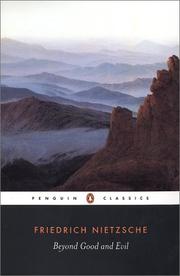
Beyond Good and Evil: Prelude to a Philosophy of the Future
2,597-word summary 12 min read 240 pages in the book
- First published
- 1886
- Publisher
- Penguin Classics
- Pages
- 240
- ISBN
- 9780140449235
- Original title
- Jenseits von Gut und Böse: Vorspiel einer Philosophie der Zukunft
Reading options
What's inside (9 sections)
Beyond Good and Evil is less a system than a testing ground. Nietzsche published it in 1886, after Thus Spoke Zarathustra, and called it a prelude because it clears the ground for a philosophy he never finished. The book has a preface, nine parts, 296 numbered sections, and a closing poem, "From High Mountains." The order matters, but the book refuses the shape of a treatise. It circles, repeats, and doubles back. A reader hunting for slogans will find dangerous ones. A reader who slows down will find one of the most unsettling works in modern philosophy.
The preface and the prejudice against prejudice
The preface opens with "Supposing truth is a woman." The joke is aimed at philosophers who approach truth as clumsy suitors, certain she must be captured, pinned down, and made to serve a system. Plato, Christianity, and Kant are the main suspects. Each builds a grand structure on faith in opposite values, then mistakes desire for proof. Nietzsche also calls Christianity "Platonism for the people." The phrase names the move by which Plato's two worlds, the real and the apparent, become a moral drama: the body is a prison, the senses lie, life is a trial, and the good are paid elsewhere. The death of God has already been announced in The Gay Science. Here Nietzsche cares less about the funeral than the inheritance.
The prelude is a demolition project, but it is also a school for readers. Nietzsche wants people who can hold a thought without kneeling to it, who can be suspicious of their own virtues, and who can laugh at a philosopher while still taking philosophy seriously. In his hands philosophy is passion, seduction, war, and comedy. The tone is part of the argument. A reader who needs calm and system has already been warned.
The prejudices of philosophers
Part One, "On the Prejudices of Philosophers," is the most technical stretch and the place where the major ideas surface. Nietzsche attacks the "faith in opposite values." Philosophers assume truth is the opposite of error, good the opposite of evil, reason the opposite of instinct, and that the higher cannot come from the lower. That faith is not a logical necessity. It is a moral prejudice, and it has shaped philosophy for centuries.
The most quoted line calls every great philosophy "the personal confession of its author and a kind of involuntary and unconscious memoir." The system is not a neutral map. It is a rationalization of drives, tastes, fears, and hopes. This is not a cheap genetic fallacy. Nietzsche does not say a philosophy is false because its author was sick. He says a philosopher who does not know what drives him is not yet honest. The task is to become conscious of the body and the instincts that think through us.
From there he goes after comfortable certainties. The "I think" is not an immediate given. The subject is a grammatical habit, a fiction of the sentence. We say "it thinks" as we say "it rains," then invent a thinker behind the thought. The will is not a simple faculty. It is a complex of commanding and obeying, a plurality of drives under one name. "Free will" and "unfree will" are both myths. There are strong wills and weak wills, which is a different matter.
The will to power appears first as psychological observation, then as speculative experiment. A living thing seeks above all to discharge its strength; self-preservation is secondary, a sign of distress. In section 36 Nietzsche asks us to suppose that the world is will to power. It is a hypothesis, not a proof. If we take it seriously, the world becomes a struggle of interpretations, a field of forces with no neutral facts underneath. Perspectivism follows: there is no view from nowhere, and knowledge is interpretation all the way down. Some interpretations are stronger, more honest, and more capable of including their own blind spots. The will to truth is itself a drive, and the philosopher who serves truth may be serving his need for certainty.
The free spirit and the religious mood
Part Two, "The Free Spirit," introduces the person who can live after the demolition. The free spirit is not a political liberal, a cheerful skeptic, or a fashionable dissenter. "Independence is for the very few; it is a privilege of the strong." He can endure unwelcome truths, solitude, and the absence of consolation. He wears masks, not because he is fake, but because profound spirits need protection from shallow readers. The mask chooses who gets to see the face.
The free spirit is an experimenter, a Versucher. He tests values, lives without a homeland, and keeps moving. He is not a nihilist. He wants to affirm life after the old certainties have collapsed, which makes him a transitional figure and a prelude to the philosopher of the future. He can say no, and he can say yes when a value deserves it. He is not a democrat, and he is not a friend of the herd. He is a friend of questions the herd cannot ask.
Part Three, "The Religious Mood," turns to belief. Nietzsche is not a simple atheist polemicist. He is interested in the psychology of religion. The saint, the ascetic, the sacrificer, and the priest are human types, and each reveals something about what people need. Christianity denigrates the body, the senses, and the world. It teaches people to sacrifice instinct, then reason, then God himself. Nietzsche calls this the "ladder of religious cruelty." The last rung is the sacrifice of God, which is the death of God.
That death is the central event of modern culture, even for people who still go to church. The old values linger like shadows. Modern secular creeds, democracy, socialism, nationalism, and even science, are often Christianity in disguise: they keep the moral machinery and lose the metaphysic. The free spirit lives with the draft from the open window.
Yet Nietzsche is ambivalent about religion. It can be a discipline, a way of cultivating strength for the few. It can comfort the many and make suffering bearable. The ascetic will, the ability to suffer for an ideal, is not contemptible. The problem is the Christian interpretation that turns weakness into virtue and strength into sin. The alternative is not pleasure-seeking. Section 56 describes the "most high-spirited, alive, and world-affirming human being," the one who wants the world repeated. That figure replaces the saint.
The natural history of morals
Part Four, "Epigrams and Interludes," is a sequence of 123 short aphorisms. The interlude trains the reader to resist the seduction of the epigram. Some lines are jokes, some cruel, some profound. The famous one about memory and pride: "I have done that," says my memory. "I cannot have done that," says my pride, and remains inexorable. Eventually, memory yields. The line is funny, then frightening, because it describes self-deception in two sentences.
Part Five, "On the Natural History of Morals," is the bridge to the central moral argument. Philosophers ask, "What is the rational foundation of morality?" Nietzsche asks, "What is morality?" He wants a comparative, historical, psychological account. Moral judgments are the "sign language of the affects." They are symptoms of what a people values and fears, not commandments delivered from heaven or conclusions deduced from reason.
Every morality is a tyranny against nature, but culture depends on such tyrannies. Long obedience, discipline, and cruelty toward oneself produce art, music, dance, reason, and spirituality. The achievements of culture are built on constraint, and the fantasy that we can keep the achievements without the constraint is a fantasy. The modern cult of freedom and comfort may produce nicer people, but it may also produce smaller ones.
The herd is the central social type of modern morality. Christianity and democracy have produced a "herd morality" that values pity, equality, comfort, and security. It is the morality of the majority, and it is hostile to greatness. The "good man" in this morality is the weak man, the harmless man, the man who does not threaten. Nietzsche sees decline, but he also sees intelligence. The herd is not stupid. It is adaptive, and it has made survival the highest value.
The "will to equality" is the political expression of the herd. It levels rather than serving justice. The pathos of distance makes hierarchy possible, and hierarchy makes greatness possible. This is the book's aristocratic turn. Nietzsche is not a liberal or a democrat. He thinks modern politics is a war against rank, and rank is the condition of culture. The reader does not have to agree, but should not pretend the argument is not there.
We scholars, our virtues
Part Six, "We Scholars," compares the scholar and the philosopher. The scholar is an instrument, a noble kind of servant. He is objective, cautious, and useful. He can mirror the world, but he cannot create values. The philosopher is a commander and a legislator. He must be able to say no, to cut, to legislate. The objective man is a tool. The philosopher is an end.
This is not a rejection of scholarship. Nietzsche admires the scholar's discipline. He simply thinks scholarship is not philosophy. The scholar's virtue is patience. The philosopher's virtue is command. The scholar asks, "What is the case?" The philosopher asks, "What should be valued, and by whom?" The philosopher of the future is not a professor. He is a physician of culture, a bad conscience of his age, a man with a mask, a man who can be alone. He needs the scholar's discipline but must not be reduced to it.
Part Seven, "Our Virtues," turns the knife on modern morality. Modern Europeans value pity, altruism, and comfort. Nietzsche thinks pity is the most seductive virtue because it looks selfless. It can be a form of superiority, a way of keeping the sufferer weak. The "religion of pity" is a form of nihilism. He is not against kindness. He is against a morality that makes weakness holy.
Suffering is not an argument against life. The "discipline of suffering" has produced depth, creativity, and strength. To want to abolish suffering is to want to abolish the conditions of greatness. Nietzsche is not saying "be cruel." He is saying that a life without difficulty is shallow, and that a culture which treats pain as the only evil will end up treating greatness as a disease. Honesty is the last virtue. The free spirit cannot help being honest, but honesty can become vanity, a way of feeling superior.
The sections on women are the clearest failure of the book's honesty. They are essentialist, condescending, and dated. Nietzsche writes about "woman" as a riddle, a creature of appearance, a danger. He mocks the emancipation of women. These passages are not a minor blemish. They are a real limit, and they fail the standard of self-examination the rest of the book demands.
Peoples, fatherlands, and the noble
Part Eight, "Peoples and Fatherlands," is about Europe. Nietzsche attacks nationalism and antisemitism. He treats antisemitic politics as the resentment of the failed, and he wants a European aristocracy that transcends the nation. But he still writes in the language of national character, race, and hierarchy. The "good European" is a cosmopolitan noble, not a liberal democrat. A long detour on music targets Wagner: German music is heavy, formless, and decadent, and Nietzsche wants a lighter, southern, more disciplined art. The detour reminds us that his tastes are not a philosophy.
Part Nine, "What Is Noble?," is the heart of the book. "Every elevation of the type 'man' has hitherto been the work of an aristocratic society." The "pathos of distance" is the feeling of rank, the sense that some people are farther from the herd and closer to themselves. The noble man creates values from his own abundance. He calls himself good. He calls the weak "bad." He does not need the slave's "evil" to define himself.
Slave morality is born of ressentiment. The weak cannot act, so they reinterpret. They call the strong "evil" and their own weakness "good." They value pity, humility, equality, and patience because those virtues help them survive. This morality is clever, deep, and historically powerful. It has made humans more interesting, more inward, more capable of suffering. It has also made them smaller. It is the morality of the herd, and it has won.
Nietzsche does not say the slave is simply wrong. He says the slave's values are a symptom of a condition, and we should ask what they cost. The master's values are also a symptom. The point is not to choose a team. The point is to understand the typology and ask what kind of human being each produces. The noble type is not a brute. He is capable of friendship, solitude, gratitude, hardness, and self-reverence. He is a work of art, and he is also a danger to everyone below him.
The philosopher of the future is the heir of this nobility, but he is not a warlord. He is a creator of values, a legislator, a friend, a solitary. He has the pathos of distance and the bad conscience of his age. He is a Dionysian figure, a lover of masks, a man who can say yes to the world and still cut it apart. The book ends with Dionysus and a poem about solitude and friendship. The last word is not a doctrine. It is a mood.
How to read it without enlisting it
The aphoristic style is both a strength and a weakness. It lets Nietzsche be brilliant, but it also lets him assert without arguing. The women sections are bad. The praise of hierarchy is uncomfortable, and the rhetoric of rank is easy to abuse. The will to power is a hypothesis, not a settled fact, and Nietzsche sometimes writes as if it were the key to everything. The book can feel like brilliant fragments rather than a whole.
The misreadings are predictable and worth naming. "Beyond good and evil" does not mean "no morality." It means beyond the inherited opposition, so that one can ask what values are for. "Will to power" does not mean "might makes right." "Master morality" does not mean "be a bully." "Free spirit" does not mean "nihilist." The Nazis used Nietzsche, but he despised antisemitism and nationalism, and his sister's editing made the misuse easier. The book is not a political program. It is a provocation to think.
Translation matters. I read the Penguin Classics edition, translated by R. J. Hollingdale, which is forceful and readable. The book is short, but it is not quick.
This is not a book for readers who want a clear ethical system, a political program, a self-help book, or a comforting read. It is not for readers who cannot tolerate misogyny, elitism, or provocation. It is for readers who want to think about why they believe what they believe, and who are willing to find some of their own beliefs ugly. If you want an easier route into Nietzsche, On the Genealogy of Morals or Twilight of the Idols might work better. But Beyond Good and Evil is the best single display of his range.
The book is a prelude: it clears the ground but does not build the house. It gives you tools, suspicions, and problems, then asks whether you can hold a thought without kneeling to it.
FAQ
Is Beyond Good and Evil a good first book by Nietzsche?
It is a demanding first book. The aphoristic style and dense references make On the Genealogy of Morals or Twilight of the Idols easier starting points.
What does will to power mean in Beyond Good and Evil?
Nietzsche presents it as a speculative hypothesis that living things seek to discharge strength and that the world can be read as competing interpretations. It is not a simple doctrine that might makes right.
Why does Nietzsche criticize philosophers in Beyond Good and Evil?
He argues that their systems express personal drives and moral prejudices, especially the faith that truth, reason, and goodness are the opposites of error, instinct, and evil.
Similar books
Thus Spoke Zarathustra
A prophet comes down from ten years alone to preach the overman after the death of God.
1,983-word summary · 9 min read
Tao Te Ching: Annotated & Explained
Eighty one brief verses on the Way and effortless action, with Lin's translation and facing notes.
2,140-word summary · 10 min read
Walden
Thoreau builds a cabin at Walden Pond and spends two years testing what a person really needs to live well.
2,986-word summary · 13 min read
The Republic
Socrates debates justice and sketches a city ruled by philosophers, with the cave and the soul.
2,167-word summary · 10 min read
The Prince
Machiavelli advises Lorenzo on rule through fear and love, fortune, cruelty and mercy.
2,204-word summary · 10 min read

The Art of War
Sun Tzu's thirteen chapters on winning without fighting: laying plans, knowing ground, using spies, and why the best victory costs least, in the classic Giles…
2,029-word summary · 9 min read
Crime and Punishment
Raskolnikov kills a pawnbroker to prove he is beyond morals, then unravels under Porfiry and Sonya.
3,206-word summary · 14 min read
Silas Marner
A falsely accused weaver hoards gold in Raveloe until a stolen hoard and an abandoned child remake his narrow life.
2,699-word summary · 12 min read
The Courage to Be Disliked: The Japanese Phenomenon That Shows You How to Change Your Life and Achieve Real Happiness
A philosopher and an angry young man argue over five nights about Adlerian psychology, trauma, approval, and the freedom to be disliked.
2,054-word summary · 9 min read
Rosencrantz and Guildenstern Are Dead
Stoppard's 1966 play retells Hamlet from the wings, where two minor courtiers wait, joke, and walk toward a death they cannot see.
2,021-word summary · 9 min read

Fathers and Sons
Arkady brings the nihilist Bazarov home to his father's estate, and a generational argument turns into love, a duel, and an early death.
2,192-word summary · 10 min read
Four Thousand Weeks: Time Management for Mortals
Oliver Burkeman turns the whole productivity project on its head, arguing that a human lifespan of roughly four thousand weeks is not a problem to optimize…
2,447-word summary · 11 min read
The Dharma Bums
Ray Smith rides freight trains, climbs Matterhorn Peak and argues about Zen with the poet Japhy Ryder in Kerouac's 1958 road novel.
2,729-word summary · 12 min read
The Road Less Traveled: A New Psychology of Love, Traditional Values and Spiritual Growth
M. Scott Peck argues that maturity begins with accepting difficulty, then builds discipline, love, and spiritual growth through honest, often painful work.
2,200-word summary · 10 min read

Out of the Silent Planet
A Cambridge philologist is kidnapped and taken to Mars, where the natives are civilized and the humans are the dangerous invaders.
2,612-word summary · 12 min read
Mother Night
Howard W. Campbell Jr., a Nazi propagandist and American spy, tells the story of his double life from an Israeli prison cell while waiting to be tried for war…
1,988-word summary · 9 min read
Ishmael: An Adventure of the Mind and Spirit
A gorilla named Ishmael teaches a disillusioned man that civilization is a story, and that humans may compete but must not wage war on other species.
2,015-word summary · 9 min read
Letters to a Young Poet
Rilke's ten letters to a young officer cadet refuse easy criticism and ask whether he must write, offering patience and solitude as a way of life.
2,530-word summary · 11 min read
The Fire Next Time
Baldwin writes his nephew and faith on race in America.
2,463-word summary · 11 min read
Leaves of Grass
Free verse songs of self, America, bodies and democracy.
2,240-word summary · 10 min read
God Is Not Great
Hitchens argues religion poisons life across history and texts.
2,545-word summary · 11 min read
A Canticle for Leibowitz
After nuclear war, monks save books across centuries while the world rebuilds and falls again.
2,381-word summary · 11 min read

The Fall
A fallen Paris lawyer confesses in an Amsterdam bar, tracing guilt from Paris success to a bridge he failed to face.
2,220-word summary · 10 min read
The Black Swan
Taleb argues rare shocks shape history more than models admit, and urges safer exposure over prediction.
2,588-word summary · 12 min read

Solaris
Kelvin reaches a silent station above Solaris and finds grief made solid when the ocean returns his dead wife Rheya, testing memory, science, and the limits of…
2,548-word summary · 11 min read
On the Origin of Species
Darwin's 1859 case for evolution by natural selection, from Beagle finches and breeding pigeons to fossils and anatomy.
2,589-word summary · 12 min read
In Defense of Food
Pollan argues we stopped eating food and started eating nutrients, and offers a plain way back.
2,320-word summary · 10 min read

Twelve Years a Slave
Free violinist Solomon Northup tells how Brown and Hamilton lured him south into twelve years of Louisiana bondage until Bass letters brought rescue in January…
2,931-word summary · 13 min read
The Untethered Soul
Singer names the noisy inner voice and shows how watching thoughts, loosening old hurt, and keeping the heart open through surrender can ease daily suffering…
2,752-word summary · 12 min read
The Art of Happiness
The Dalai Lama and psychiatrist Howard Cutler link lasting happiness to training the mind, human warmth, compassion, and basic spiritual values for daily life.
3,394-word summary · 15 min read