
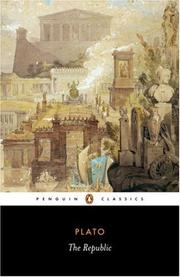
The Republic
2,167-word summary 10 min read 480 pages in the book
- First published
- 2007
- Publisher
- Penguin Classics
- Pages
- 480
- ISBN
- 9780140455113
Reading options
What's inside (7 sections)
I avoided this book for years because it sounded like homework. It is not. The Republic by Plato, in the Desmond Lee translation with introduction by Melissa Lane, published by Penguin Classics in a 480 page paperback with ISBN 9780140455113, reads like a long argument with friends who will not let you dodge. Socrates, Glaucon, Adeimantus, and others talk for one night about justice and end up sketching a whole city. I read it in morning chunks with coffee, arguing in margins, which is exactly how it wants to be read.
The setup is simple. Cephalus, an old rich man, says justice is telling truth and paying debts. Socrates picks that apart gently. Polemarchus says justice is helping friends and harming enemies. Socrates shows that harms even enemies makes them worse, which a good craft should not do. Thrasymachus barges in and says justice is whatever the strong say it is. That challenge fuels the rest. If being unjust pays better, why be just.
To answer, Socrates builds a city in speech. Find justice writ large in a polis, then look for the same pattern in a soul. The city grows in stages. Farmers, builders, traders. Then soldiers, the auxiliaries, to defend. Then guardians, a small group who rule, chosen for love of truth and trained for decades in math, dialectic, and hardship. No private property for rulers. No family secrets. Women train and rule equally if capable, which was radical then and still bracing now.
Justice in the city
The city building is the most fun part if you like thought experiments. Socrates insists each person do the work nature fits them for. Shoemakers make shoes. Soldiers guard. Rulers study. Specialization plus unity makes a healthy whole. Glaucon keeps pushing for luxuries. Fine couches, relishes, art. Socrates adds them, then shows they demand war for land, which demands an army, which demands the guardian class. Luxury has costs. That move still stings.
Education for guardians is strict and strange. No scary stories where gods misbehave. No wailing music that softens courage. Gymnastics for bodies. Mathematics for minds, not for trade but to turn the soul toward unchanging truths. Censorship here bothers modern readers, and should. Plato fears images shape character before reason can defend. I found myself arguing back. Who decides which stories harm. His answer, philosophers who know the Good, feels circular. The debate is the value, not agreement.
The three parts of the soul mirror the three classes. Reason rules like guardians. Spirit fights like auxiliaries. Appetite wants like workers. A just person, like a just city, has reason in charge with spirit as ally, not appetite driving. Socrates uses this to answer Thrasymachus. The unjust soul is at war with itself, even if rich. The just soul is harmonious, even if poor. Happiness follows order, not loot.
I liked the craft analogies. A doctor aims at health, not fees. A captain aims at safe voyage, not praise. So a ruler, in the strict sense, aims at subjects good, not personal gain. That reframes power as service. Modern politics rarely talks this way, which is why the passage feels fresh. It also sets up the hard rule. Those fit to rule will not want to. They must be compelled to return to the cave and govern.
A fair pushback. The city in speech cleans up real mess. No elections. No markets that surprise. No dissent that improves. Popper famously called this totalitarian. I think that is too quick, but the worry is real. Socrates banishes poets, fixes mating festivals by rigged lottery, and exposes deformed infants in some readings. Even allowing for ancient context and ironic layers, those passages chill. Read them as warnings about what happens when harmony beats freedom, not as plans.
The cave, the line, and the beyond
The middle books give the famous images. The divided line ranks opinion below knowledge. The cave shows prisoners watching shadows, one dragged up to sunlight, blinded, then returning to free others who call him mad. The sun stands for the Good, which gives truth its light. These pages are beautiful and difficult. I read the cave aloud and it helped. Shadows as news feeds. Fire as algorithms. Sun as a truth you cannot stare at directly but need to see by.
Socrates admits the Good is hard to define. He approaches by effects. Just as sun lets eyes see, Good lets minds know. Philosophers must study up to it through years of math and argument, then go back down to rule. Most will not want to. That reluctance is proof of fitness. People hungry for office love office more than work. It is a sharp test for any age. Ask who seeks power to serve versus to shine.
The theory of forms underpins all this. Beyond changing things are stable patterns. Bedness beyond beds. Justice itself beyond just acts. Souls recall these from before birth, learning as recollection. Modern readers may balk. I did. Do we need otherworldly forms to explain math or ethics. Perhaps not. But the image does work as aspiration. Aim at the pattern, not the applause. That advice survives even if metaphysics does not.
Glaucon and Adeimantus are great foils. They want Socrates to win, but they steelman the other side. The ring of Gyges story, a shepherd finds a ring that makes him invisible and seduces the queen and kills the king, asks if anyone would stay just with no witnesses. Their version of the unjust life succeeding is strong enough that Socrates needs ten books to answer. That honesty makes the dialogue trustworthy. No straw men.
If there is a drag, it is Book 10 return to poetry. After the heights, banning imitative art again feels repetitive. I skimmed some catalogs of meters and still got the point. Art at three removes from truth can corrupt. Read generously, he means art that flatters appetite over reason. Read strictly, he would gut libraries. Scholars debate how serious he is. I took it as provocation to choose art that steadies rather than inflames.
Decline and the tyrant soul
Books 8 and 9 trace how cities and souls decay. Timocracy loves honor. Oligarchy loves money. Democracy loves freedom to excess. Tyranny loves one man appetite. Each stage loosens discipline a notch until a tyrant, enslaved to lust and fear, rules a city enslaved likewise. Socrates ranks pleasures too. Philosophical pleasures, stable and true, beat political honor and beat bodily indulgence, which are restless and mixed with pain.
This decline story is meant to prove the just life happier, even if the tyrant seems to have everything. The tyrant cannot trust friends, sleep well, or enjoy simple food without suspicion. The philosopher can. It is persuasive as psychology if not as history. Real democracies do not always slide to tyranny. But the pattern of freedom curdling into license, then into a strongman promise, felt uncomfortably familiar as I read news between chapters.
The myth of Er closes the book. A soldier dies, sees souls choosing next lives, and returns to tell. Orpheus picks a swan. Ajax picks a lion. Odysseus, tired of glory, picks a quiet private man. The lesson is choice and responsibility. Character is destiny, but character can be trained. Drink carefully from Lethe. Remember what matters. It is a strange, moving end, part near death story, part ethics pep talk.
What I take away is less a blueprint than a set of tests. Does my work fit my nature and serve others. Do I let reason lead with spirit helping, or do appetites shout loudest. Do I love truth enough to study boring foundations like math and logic. Do I return to help after seeing something real, even when the cave laughs. Those questions improved my weeks. I argued with Plato daily and felt sharper, which is probably what he wanted more than agreement.
How to read it without drowning
A practical note, because this book defeats many readers around Book 4. Do not start at page one and push straight through like a novel. Treat it as ten evening talks. Read one book a night with a pencil. Write who speaks in margins. Glaucon pushes. Adeimantus refines. Socrates builds. Thrasymachus interrupts once loudly then simmers. Tracking voices prevents the blur where everything sounds like Plato lecturing. It is a dialogue, not a treatise, and voices matter.
Translations change the feel a lot. Desmond Lee, used here, is clear and brisk, good for first readers. Grube is tighter on argument. Bloom is literal and strange. Rowe, newest Penguin, is precise on philosophy terms. I compared cave passages in Lee and Grube at the library and preferred Lee flow for reading aloud. If a sentence confuses, try reading it aloud or checking another version online for that paragraph. No shame in that. Scholars do it constantly.
Keep two lists as you go. One for craft analogies. Doctor health. Captain voyage. Shepherd flock. Those analogies do heavy lifting about what ruling aims at. One for images. Sun, line, cave, metals, myths. When Socrates returns to an image later, you will catch the callback and feel smart. That feeling is not accidental. Plato teaches through recognition as much as proof.
Do not skip the boring math passages entirely, but do not stall on them either. Books 7 on arithmetic, geometry, and harmonics argue that abstract study turns the soul upward. You do not need to master proofs to get the point. The claim is that minds trained on unchanging patterns handle change better. If you hate math, substitute music practice or grammar study. Any discipline that rewards patience over opinion makes the same turn.
Talk back in writing. I filled margins with objections. Who guards the guardians in practice. What about art that heals rather than corrupts. Does the soul really have three parts or is that a useful story. Those objections are part of reading well here. Glaucon models it. He loves Socrates and still demands better arguments. Be Glaucon. Do not be the silent student who nods. The book respects fighters more than fans.
Why it still bites
It may help to name why a 2400 year old dialogue felt current to me in specific ways. Debates about experts versus crowds. The Republic asks who should rule and answers, those who know. Modern democracies answer, the people. Both see the other failure clearly. Experts can be arrogant and unaccountable. Crowds can be swayed by flattery and fear. Reading Plato while watching news made me less smug about my side. Any system needs checks, habits, and education. No constitution saves a people who will not study.
Debates about schooling hit too. Socrates wants censorship to protect character. Modern schools argue about books, phones, and curricula with the same worry in different language. What shapes kids before reason firms. Plato answer is strict and top down. Ours is messier and freer, but the question remains. I found myself moderating my own view while reading. Some limits help kids grow. Too many make them brittle or sneaky. The dialogue does not settle it, but it forces you to state a principle rather than a slogan.
Gender passages surprised me most. Socrates argues women with guardian natures should train, eat, and rule alongside men, doing the same work. In ancient Athens that was radical. He still says women are generally weaker at physical tasks and still uses sexist asides elsewhere. Both truths sit on the page. I read those sections as progress and warning. Reason can push past custom partway and still drag chains. Notice where your own reasoning stops early.
The tyrant psychology chapters felt written for doomscrolling. A soul ruled by unnecessary appetites, always hungry, never satisfied, suspicious of friends, performing happiness for followers. Socrates describes the tyrant as the least free person in the city. That inversion helped me check my own feeds. Who profits when I stay hungry for outrage. What would a freer attention diet look like. I did not delete apps, but I moved them off my home screen. Small ascent from the cave wall.
Finally, the ending myth reframes ambition. Souls choose next lives based on character formed now. The famous picks, Orpheus as swan, Ajax as lion, Odysseus as quiet nobody, suggest that fame exhausts and ordinariness heals. After ten books about justice and power, Plato closes with a story about choosing wisely rather than largely. That landed softly for me after loud politics. Aim to be the kind of soul who picks well when tired. Train now for that moment.
Read the Desmond Lee version if you want clear modern English with helpful notes. Give it twenty pages a day, not two hundred at once. Mark the cave, the city classes, and the decline. Argue with the censorship and the philosopher kings. Keep what steadies. A book written 2400 years ago should not feel this current. That it does is either tribute to Plato or indictment of us. Likely both.
FAQ
Which translation does this summary follow?
This summary follows the Desmond Lee translation in Penguin Classics, 480 pages, ISBN 9780140455113, reissued in 2007.
Does Socrates win easily?
No. Glaucon restates the case for injustice strongly, with the ring of Gyges, before Socrates answers.
Similar books

Fathers and Sons
Arkady brings the nihilist Bazarov home to his father's estate, and a generational argument turns into love, a duel, and an early death.
2,192-word summary · 10 min read
Beyond Good and Evil: Prelude to a Philosophy of the Future
A guide to Friedrich Nietzsche's Beyond Good and Evil: its attack on moral prejudice, the will to power, master and slave morality, and the philosopher of the…
2,597-word summary · 12 min read
The Dispossessed: An Ambiguous Utopia
Physicist Shevek leaves anarchist Anarres for capitalist Urras to share time theory, finding walls both places.
2,288-word summary · 10 min read
Thus Spoke Zarathustra
A prophet comes down from ten years alone to preach the overman after the death of God.
1,983-word summary · 9 min read
The Communist Manifesto
Marx and Engels trace class struggle from bourgeoisie to proletarians, review rival socialisms, and close with a call to opposition parties. Notes on the 1848…
2,570-word summary · 11 min read
The Prince
Machiavelli advises Lorenzo on rule through fear and love, fortune, cruelty and mercy.
2,204-word summary · 10 min read
The Unbearable Lightness of Being
Surgeon Tomas loves Tereza yet keeps mistresses, while artist Sabina and professor Franz test freedom around the 1968 Soviet invasion of Prague.
2,427-word summary · 11 min read
Rosencrantz and Guildenstern Are Dead
Stoppard's 1966 play retells Hamlet from the wings, where two minor courtiers wait, joke, and walk toward a death they cannot see.
2,021-word summary · 9 min read
Foundation's Edge
Exiled councilman Golan Trevize hunts for the Second Foundation and the lost world of Earth, and finds a planet with one mind waiting to change the galaxy.
2,335-word summary · 10 min read
The Dharma Bums
Ray Smith rides freight trains, climbs Matterhorn Peak and argues about Zen with the poet Japhy Ryder in Kerouac's 1958 road novel.
2,729-word summary · 12 min read
Out of the Silent Planet
A Cambridge philologist is kidnapped and taken to Mars, where the natives are civilized and the humans are the dangerous invaders.
2,612-word summary · 12 min read
Ishmael: An Adventure of the Mind and Spirit
A gorilla named Ishmael teaches a disillusioned man that civilization is a story, and that humans may compete but must not wage war on other species.
2,015-word summary · 9 min read
Leaves of Grass
Free verse songs of self, America, bodies and democracy.
2,240-word summary · 10 min read
A Canticle for Leibowitz
After nuclear war, monks save books across centuries while the world rebuilds and falls again.
2,381-word summary · 11 min read
The Fall
A fallen Paris lawyer confesses in an Amsterdam bar, tracing guilt from Paris success to a bridge he failed to face.
2,220-word summary · 10 min read
Solaris
Kelvin reaches a silent station above Solaris and finds grief made solid when the ocean returns his dead wife Rheya, testing memory, science, and the limits of…
2,548-word summary · 11 min read

One Day in the Life of Ivan Denisovich
One freezing day with prisoner Shch-854 in a Soviet camp: roll call, bricklaying in the cold, bread rations, and small wins that let Shukhov call the day…
2,668-word summary · 12 min read
Demian
Hesse's 1919 German classic of Emil Sinclair, from Kromer blackmail to Demian, Abraxas, Beatrice and Frau Eva, ending in war: a short, strange guide to growing…
2,510-word summary · 11 min read

The Island of Doctor Moreau
Shipwrecked Prendick finds Doctor Moreau shaping beasts into men by pain on lost island.
2,137-word summary · 9 min read
Nausea
Historian Roquentin in Bouville catalogs dread as objects turn strange in Sartre diary novel.
2,134-word summary · 9 min read
God Emperor of Dune
Worm god Leto II rules 3500 years to force humanity free through his Golden Path.
2,006-word summary · 9 min read
Faust, Part One
A restless scholar bets his soul against one perfect moment, then ruins an innocent girl in Goethe's 1808 verse tragedy.
2,568-word summary · 11 min read
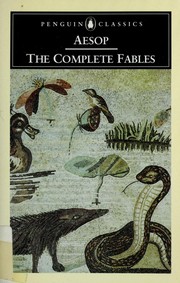
Aesop's Fables
Short animal tales of hares, foxes, ants, and wolves that still sting: old fables in plain modern English.
2,916-word summary · 13 min read
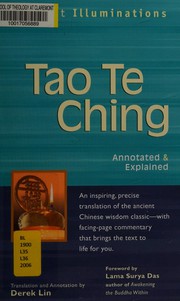
Tao Te Ching: Annotated & Explained
Eighty one brief verses on the Way and effortless action, with Lin's translation and facing notes.
2,140-word summary · 10 min read
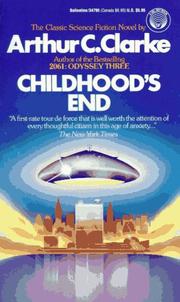
Childhood's End
Silver ships end war and want while Overlords midwife humanity's children into something beyond human.
2,054-word summary · 9 min read
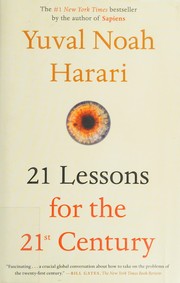
21 Lessons for the 21st Century
Twenty one essays on work, liberty, truth, and meaning when algorithms flood the world with noise.
2,101-word summary · 9 min read
The Death of Ivan Ilyich
A successful judge hurts his side hanging drapes, then faces a long dying where evasive doctors fail him and peasant Gerasim shows what his correct life missed…
2,986-word summary · 13 min read
Paradise Lost
Blind Milton's epic of Satan's revolt, Adam and Eve's fall, and their hard walk out of Eden.
2,963-word summary · 13 min read
Notes from Underground
Dostoevsky's 1864 Notes from Underground follows a bitter retired clerk who rants against reason, then relives a shameful dinner with old schoolmates and his…
3,636-word summary · 16 min read
Walden
Thoreau builds a cabin at Walden Pond and spends two years testing what a person really needs to live well.
2,986-word summary · 13 min read