
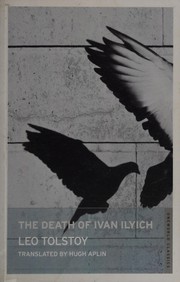
The Death of Ivan Ilyich
2,986-word summary 13 min read 165 pages in the book
- First published
- 1886
- Publisher
- Oneworld Classics
- Pages
- 165
- ISBN
- 9781847491916
- Original title
- Smert Ivana Ilyicha
Reading options
What's inside (8 sections)
I did not plan to read this book last week. A friend left it on my kitchen table after dinner, this thin Oneworld Classics edition from 2011 that runs 165 pages and also holds The Devil at the back, and said you can finish it in two sittings. I laughed because my shelf is full of thick novels I keep meaning to start. Then I opened it on a rainy night and did not get up until I had to. It is short, but it sat in my chest for days.
You should know where Tolstoy was when he wrote it. He had finished Anna Karenina in the late 1870s and gone through a rough spiritual crash. He was rich and famous yet empty inside. He wrote about faith and death in his journals and in short pieces, and he started asking whether a correct life was the same as a good life. This 1886 novella came out of that stretch. The Russian title is Smert Ivana Ilyicha. It first appeared in 1886, and the edition I am using here is the Oneworld Classics printing, 165 pages, ISBN as listed, which pairs it with The Devil. I mention that because the page count can confuse people. The Ivan Ilyich story itself is very short. The rest of the bulk in this printing is the second story and notes.
People call it a story about dying. It is. It is also a story about living wrong and knowing it too late. That sounds heavy, and it is heavy, but Tolstoy keeps the sentences plain. He does not preach for pages at a time here the way he sometimes does in the big novels. He shows a man arranging furniture and then shows the same man crying at night because his side hurts.
A man who did everything right
Ivan Ilyich Golovin is the kind of man you have met. He goes to law school, gets a post, marries at the right age, wants a tidy home. He is not cruel in the way villains are cruel. He is pleasant when it helps him and cool when it does not. He likes whist and dinners and being thought well of by important people.
Tolstoy walks us through his career step by step. Ivan starts as a student who is cheerful and liked, then becomes an examining magistrate, then moves up. He learns how to please his superiors and how to keep papers in order. He learns which opinions are safe to hold. When he marries Praskovya, it is partly love and partly because it looks right. She comes from a good family. She wants comfort and attention. He wants a home that runs smoothly.
The marriage sours in a way that felt painfully normal to me. At first they are happy. Then she gets pregnant and gets jealous and starts to nag. He pulls back into work. She pushes harder. He finds reasons to stay late at the office. She finds new things to complain about at home. Neither of them is a monster. They just stop trying to understand each other and start keeping score.
They have two children who live with them, a teenage daughter and a younger schoolboy son. Tolstoy does not give them long speeches. The daughter is at that age where parties matter more than sickrooms. The son is quieter. He still looks at his father with something like love. I kept thinking about that boy while I read, because he is the only one in the house who seems to see Ivan as a person rather than a problem.
What got me was how much Ivan cares about appearances. He gets a new post as a judge and moves his family to a new flat. He throws himself into decorating it. He picks out curtains and chairs with real joy. He hangs drapes himself one day, climbs up, slips, and knocks his side against a window frame. It does not seem serious. He laughs it off. That small fall is the hinge of the whole book.
He is proud of the flat. Friends come to see it and praise his taste. For a few weeks he is happy in a way he has not been in years. Then a strange taste stays in his mouth. Then a nagging pain starts in his side. Then it does not go away.
That flat he loved so much becomes the place where he learns he is dying.
The pain that will not go away
At first Ivan tells himself it is nothing. A bruise. A pulled muscle. A stomach upset from bad fish. He keeps working. He keeps playing cards. But the pain sits there, dull and odd, and his mood turns dark.
He goes to doctors. This part made me angry in a familiar way. The doctors are polite and busy and full of big words. One says it is a floating kidney. Another hints at something with the appendix. Another talks about diet and rest. They tap his belly and listen and frown and prescribe things that do not help. No one will say plainly that he is dying. They talk about probabilities and next visits. Ivan leaves each office more scared than before, because he can tell they are guessing.
Tolstoy knew this dance. He had watched doctors around sick friends and family. He writes the visits with a tired humor. The doctor greets Ivan the way Ivan used to greet prisoners in court, with that air of we know how this goes and you do not. Ivan, who used to be the man behind the desk, is now the man waiting for news. He hates it.
Praskovya tries at first. She asks about symptoms and buys medicines. But she is also tired and scared, and she has her own way of coping, which is to act as if good management can fix death. She suggests fresh air. She suggests a new doctor. She suggests he stop feeling sorry for himself. When he snaps at her, she cries and says he is unkind. Both of them are right and both are wrong, which is why those scenes hurt.
Work stops being a refuge. Ivan cannot focus on cases. The papers blur. Colleagues notice he looks thin. Some are kind. Most keep their distance, the way people do when illness makes them uneasy. One friend visits and talks about promotions and funerals in the same breath, as if one explains the other. Ivan listens and thinks about how he used to talk that way about other men.
The pain grows. He stops sleeping well. He starts to smell medicines on his own skin. He tries to pray and finds he does not know how. He tries to remember his childhood and finds one bright memory of his mother that makes him weep. Most days he just waits for morning and then waits for night.
I found this middle stretch hard to read in one go. Not because it is boring. Because it repeats. Pain. Doctor. Hope. Pain. Night. Wife arguing. Daughter playing piano. Pain again. Tolstoy does that on purpose, I think. He wants you to feel how time bends for a sick person, how one day feels like ten. But I will be honest as a friend. After a while I started skimming the doctor scenes because they circle the same point. The evasions tell you something true about pride, yet three or four visits would have made the point as well as six.
Everyone acts as if he will get better
One of the sharpest parts of the book is how alone Ivan feels in a crowded house.
Praskovya brings in more doctors. She airs the rooms. She tells friends her husband is ill but improving. She has to believe that, because the alternative is too large. Her friends nod and offer remedies. No one sits with Ivan and says you are dying and I am here.
His daughter has her own life. There is talk of an engagement and dresses and outings. She loves her father in the abstract, but she cannot stand the smell of sickness. She comes in, kisses his forehead, and leaves fast. I did not hate her for it. I recognized it. Being young makes death feel like a rumor.
The servants come and go. Most are awkward. They clean around him. They speak too loud or too soft. They are afraid of catching gloom, as if gloom were catching.
Work friends send notes. One or two stop by. They talk about cards and office news. They do not ask what he fears at 3 a.m. Ivan listens to them and feels further away than ever. He used to live for that approval. Now it tastes like dust.
Tolstoy keeps asking a plain question here without shouting it. What is a successful life if it leaves you with no one to tell the truth to. Ivan had status and money and a nice flat. He followed every rule his set gave him. And on his sofa, in pain, he cannot name one person who knows him through and through.
There is a scene where Ivan watches his family eat dinner while he cannot eat. He hears forks and small talk. He smells soup. He realizes they will keep eating like this after he is gone. That thought crushes him more than the pain for a minute. Not because he wants them to starve. Because he wants to matter more than a missing chair.
I had to put the book down at that point and make tea. It reminded me of sitting with my grandfather in his last year, when the house went on around him. People loved him, truly, but life kept moving in the next room. Tolstoy catches that exact ache.
No one in that house is evil, which makes the loneliness worse.
Gerasim sits with him
Then Gerasim enters, and the air changes.
Gerasim is a young peasant servant who helps around the house. He is strong and steady in the way Tolstoy admired. He does not flinch from sick bodies. When Ivan needs his legs lifted to ease the pressure in his side, Gerasim holds them for hours without complaint. He says it is no trouble. He means it.
What makes Gerasim different is honesty. He does not pretend Ivan will get better. He says, straight out, that dying happens to everyone, and that he does not mind helping because one day he will need help too. No big speech. Just plain talk while he chops wood or warms soup.
Ivan clings to him. At night he calls for Gerasim rather than his wife. He likes the weight of Gerasim's hands. He likes that the boy does not lie. In a house full of soft phrases, that bluntness feels like water.
There is a small moment I keep thinking about. Gerasim is holding Ivan's legs on his shoulders to relieve pain, and he falls asleep like that, young and tired. Ivan looks at his face and feels something close to envy. Not for youth, exactly. For a life that fits its work. Gerasim eats and rests without posing.
The son also breaks through once. The schoolboy slips in and kisses his father's hand and starts crying. Ivan wants to comfort him but cannot speak for pain. That touch stays with Ivan. It reminds him that love without performance exists. He had forgotten.
A priest comes at Praskovya's request. Ivan confesses and takes communion. It brings a brief calm, then doubt rushes back. Is this faith or fear. Is he sorry for his life or sorry to lose it. Tolstoy does not tidy this up. He lets Ivan swing between hope and terror.
I should say that some readers find Gerasim too good to be true. I see their point. He never snaps. He never asks for money or rest. He feels like Tolstoy's ideal peasant more than a full person. But in this short book, he works. You need one clear light or the dark would be too much. And anyone who has been cared for by a steady aide will recognize the truth in him, even if the edges are smoothed.
Asking if it was all wrong
The last third is mostly inside Ivan's head, and it is brutal.
He starts to review his life. School. First job. Marriage. Children. Promotions. The flat. He asks himself whether he lived right. At first he defends himself. He was decent. He did his duty. He did not steal. He went to church. What more could be asked.
Then a voice, or a memory, pushes back. What if the whole arrangement was wrong. What if pleasant and proper is not the same as true. He thinks about how he chose curtains with more care than he chose kindness. He thinks about how he judged defendants without wondering who they were. He thinks about games of whist that once felt so urgent and now feel like smoke.
Tolstoy does not give him easy comfort. Ivan screams at times. He begs for more time. He bargains. He gets angry at God and at his family and at himself. He feels sorry for himself and then ashamed of feeling sorry. The pain spikes and fades and spikes again. Nights are worst. He fears falling asleep because he dreams of a black sack he is being pushed into, narrow and deep, and he cannot tell if he is moving forward or stuck.
Praskovya and the doctors keep offering cures. He knows they are not cures. He wants someone to pity him the way you pity a child, without lectures. He rarely gets it, except from Gerasim and in flashes from his son.
There is a famous turn where Ivan feels sorry for his family instead of blaming them. He sees his wife crying and his daughter avoiding his eyes, and for a second he stops demanding that they save him. He thinks about how they will suffer after he goes, and he wants to spare them. That shift, from anger to pity, is the moral center of the book. Tolstoy, who could be stern, writes it with real tenderness.
I do not want to spoil the exact last pages beat by beat, since this story is short enough that you should feel them yourself. But I can say the shape. After long terror, Ivan stops fighting the truth. He accepts that he is dying. He asks forgiveness in his heart. He tells his family, in words or in looks, to let go. Fear loosens. Something like light comes into his mind. He hears that death is over, that there is no more death, only a release. He dies soon after, quietly, after days of noise.
Tolstoy leaves it open whether you read that light as Christian grace or as a mind at last at peace. I read it as both. After so much self defense, Ivan finally stops posing. That stopping feels like mercy.
What I struggled with and why I still tell people to read it
Let me be plain about the flaws, because this book is often handed out like medicine and that can annoy.
It is bleak. There are very few warm scenes. If you are in a low patch, the long middle can press down hard. Tolstoy wants that weight, but wanting it does not make it easy. I had to read in chunks and walk around between them.
It repeats. The pain cycle, the doctor talk, the family quarrels, they loop. I understand the point about how illness narrows life to a small room. Still, a few trims would not have hurt the lesson. Even at this length, about a hundred pages of story in most layouts, with The Devil filling out my 165 page Oneworld printing, some passages circle.
It can feel like a lesson with a man attached. Tolstoy has a clear view. Live for approval and you will die alone. Live with pity and honesty and you can die in peace. He does not hide that view. Late in the story the narration leans in and tells you what to think. Readers who dislike being taught may bristle. I bristled once or twice, then forgave it because the teaching grows out of felt scenes, not out of air.
So why do I still press it on friends. Because it is short enough to actually read, and deep enough to stay with you. Big Tolstoy can take a month. This takes an evening or two, and it asks the one question we all dodge. Did I live my own life or someone else's idea of a life.
It also changed how I act in small ways. I am quicker to sit with sick people without fixing talk. I am warier of busy pride. I check myself when I start decorating my life instead of living it. That sounds grand. In practice it means I put my phone down when someone is telling me something hard. Gerasim would approve.
If you pick up the Oneworld Classics edition, do not be surprised that The Devil follows after. That second story is darker in a different way, about lust and marriage, and it makes an odd companion. Read Ivan Ilyich first. Sit with it. Then decide if you want more Tolstoy in that mood. You might want air and a walk first. I did.
A last note from me to you. Read it slowly at the end. The final pages need quiet. Do not rush to finish so you can say you finished. Let Ivan scream and settle. Let the light, whatever you think it is, do its work. Then close the book and call someone you love. That is what I did, and I am glad.
FAQ
Does the Oneworld Classics edition hold only Ivan Ilyich?
No. The 2011 Oneworld Classics printing runs 165 pages and also holds The Devil, so the Ivan Ilyich story itself is much shorter than that count suggests.
When was it first published and what is the Russian title?
It was first published in 1886 as Smert Ivana Ilyicha, after Tolstoy finished Anna Karenina and went through a hard spiritual crisis.
Is it hard to read?
It is short and plainly written, but bleak and repetitive in the middle, so read it in two sittings and pause during the night pain scenes.
Similar books
Notes from Underground
Dostoevsky's 1864 Notes from Underground follows a bitter retired clerk who rants against reason, then relives a shameful dinner with old schoolmates and his…
3,636-word summary · 16 min read

War and Peace
Pierre, Natasha, and Andrei search for meaning amid the Napoleonic wars.
2,536-word summary · 11 min read
Rosencrantz and Guildenstern Are Dead
Stoppard's 1966 play retells Hamlet from the wings, where two minor courtiers wait, joke, and walk toward a death they cannot see.
2,021-word summary · 9 min read

Fathers and Sons
Arkady brings the nihilist Bazarov home to his father's estate, and a generational argument turns into love, a duel, and an early death.
2,192-word summary · 10 min read
The Dharma Bums
Ray Smith rides freight trains, climbs Matterhorn Peak and argues about Zen with the poet Japhy Ryder in Kerouac's 1958 road novel.
2,729-word summary · 12 min read
Out of the Silent Planet
A Cambridge philologist is kidnapped and taken to Mars, where the natives are civilized and the humans are the dangerous invaders.
2,612-word summary · 12 min read
The Complete Poems of Emily Dickinson
Thomas H. Johnson's one-volume edition gathers all 1,775 of Emily Dickinson's poems in their restored texts, the standard reading edition since 1960.
2,191-word summary · 10 min read

Beyond Good and Evil: Prelude to a Philosophy of the Future
A guide to Friedrich Nietzsche's Beyond Good and Evil: its attack on moral prejudice, the will to power, master and slave morality, and the philosopher of the…
2,597-word summary · 12 min read
Leaves of Grass
Free verse songs of self, America, bodies and democracy.
2,240-word summary · 10 min read

A Canticle for Leibowitz
After nuclear war, monks save books across centuries while the world rebuilds and falls again.
2,381-word summary · 11 min read

The Fall
A fallen Paris lawyer confesses in an Amsterdam bar, tracing guilt from Paris success to a bridge he failed to face.
2,220-word summary · 10 min read

Solaris
Kelvin reaches a silent station above Solaris and finds grief made solid when the ocean returns his dead wife Rheya, testing memory, science, and the limits of…
2,548-word summary · 11 min read

One Day in the Life of Ivan Denisovich
One freezing day with prisoner Shch-854 in a Soviet camp: roll call, bricklaying in the cold, bread rations, and small wins that let Shukhov call the day…
2,668-word summary · 12 min read
Demian
Hesse's 1919 German classic of Emil Sinclair, from Kromer blackmail to Demian, Abraxas, Beatrice and Frau Eva, ending in war: a short, strange guide to growing…
2,510-word summary · 11 min read
The Island of Doctor Moreau
Shipwrecked Prendick finds Doctor Moreau shaping beasts into men by pain on lost island.
2,137-word summary · 9 min read
The Dispossessed: An Ambiguous Utopia
Physicist Shevek leaves anarchist Anarres for capitalist Urras to share time theory, finding walls both places.
2,288-word summary · 10 min read
Nausea
Historian Roquentin in Bouville catalogs dread as objects turn strange in Sartre diary novel.
2,134-word summary · 9 min read
Faust, Part One
A restless scholar bets his soul against one perfect moment, then ruins an innocent girl in Goethe's 1808 verse tragedy.
2,568-word summary · 11 min read
Aesop's Fables
Short animal tales of hares, foxes, ants, and wolves that still sting: old fables in plain modern English.
2,916-word summary · 13 min read

Thus Spoke Zarathustra
A prophet comes down from ten years alone to preach the overman after the death of God.
1,983-word summary · 9 min read
Tao Te Ching: Annotated & Explained
Eighty one brief verses on the Way and effortless action, with Lin's translation and facing notes.
2,140-word summary · 10 min read
Childhood's End
Silver ships end war and want while Overlords midwife humanity's children into something beyond human.
2,054-word summary · 9 min read

The Communist Manifesto
Marx and Engels trace class struggle from bourgeoisie to proletarians, review rival socialisms, and close with a call to opposition parties. Notes on the 1848…
2,570-word summary · 11 min read
Paradise Lost
Blind Milton's epic of Satan's revolt, Adam and Eve's fall, and their hard walk out of Eden.
2,963-word summary · 13 min read
Walden
Thoreau builds a cabin at Walden Pond and spends two years testing what a person really needs to live well.
2,986-word summary · 13 min read

Steppenwolf
Harry Haller, half man and half wolf in his own mind, dances, loves, and enters a magic theatre in Hesse's strange 1927 novel.
3,181-word summary · 14 min read
Waiting for Godot
Two tramps wait by a tree for Godot who never comes, with jokes, boots, and silence.
2,045-word summary · 9 min read
The Republic
Socrates debates justice and sketches a city ruled by philosophers, with the cave and the soul.
2,167-word summary · 10 min read
The Man in the High Castle
In a 1962 America split between Japan and Germany, an antiques dealer, a craftsman, and a judo teacher cross paths over a banned novel claiming the Allies won,…
2,317-word summary · 10 min read
Starship Troopers
Rico earns citizenship through Mobile Infantry drops against Bugs.
2,071-word summary · 9 min read