

One Day in the Life of Ivan Denisovich
2,668-word summary 12 min read
- First published
- 1962
- Publisher
- Signet Classics
- ISBN
- 9780451531049
Reading options
What's inside (9 sections)
I came to this book late, after years of hearing it described as bleak homework. A friend who grew up in Moscow told me to read it in winter, with tea, in one sitting. I did, on a cold Sunday, and I was surprised by how fast it moves. Aleksandr Solzhenitsyn first published this short novel in November 1962 in the Soviet literary magazine Novy Mir, with the first English translations following in 1963. The edition cited here is the Signet Classics edition. It follows a single day in a Soviet labor camp in the early 1950s, and it does almost nothing the way I expected a prison novel to do.
There is no escape plan. No courtroom speech. No grand history lesson. There is a man trying to stay warm, get enough to eat, lay bricks straight in freezing wind, and end the day with his dignity and his spoon still his own. That focus is the whole point, and it left me quieter than books three times as long.
The man is Ivan Denisovich Shukhov, prisoner Shch-854. He is a former soldier, a peasant by birth, serving ten years for supposed treason after being captured briefly by the Germans in World War Two and then accused of spying for them. He says he is innocent, and the book treats that as plain fact. By the day we meet him he has served eight years. He has learned how to live inside rules that were built to wear men down.
Waking sick at reveille
The day starts before light, in a barracks that never quite warms. Shukhov wakes with aches and a fever feeling in his bones. He stays in his bunk a minute too long. For that small failure he is punished with floor washing in the guardhouse, which he does quickly and without protest because protest costs more than it gains.
I liked how Solzhenitsyn shows camp math from the first pages. Time, food, warmth, favor: everything is counted. Shukhov hides his bread ration in his mattress in a sewn pocket so no one steals it. He keeps his spoon in his boot, a small polished thing he carries like a tool. He watches who is in line at the dispensary and knows he is too late to be excused from work. The medical assistant, a former prisoner himself with limited power, can only free a few men, and the line is already closed. So Shukhov will go out with the gang.
Morning roll call happens in brutal cold. Men stand in rows while guards count and recount. The cold gets into boots, into gloves, into lungs. Shukhov has a felt vest, a worn coat, a hat with ear flaps, rags for feet. None of it is quite enough. He learns not to think about the cold as a whole. He thinks about the next minute, the next order, the next bit of shelter.
Breakfast is thin gruel and bread weighed to the gram. Shukhov eats slowly, crumbling the bread, saving a piece in cloth for later. Around him men bargain, eye each other's bowls, trade favors. Fetyukov, a member of his squad who has lost all shame, begs and scavenges and annoys everyone. Shukhov pities and despises him at once, because Fetyukov shows what happens when a man stops guarding his own habits.
Gang 104 and foreman Tyurin
Shukhov belongs to Gang 104, a squad of about two dozen men led by foreman Andrey Prokofyevich Tyurin. Tyurin is strict but fair by camp standards. He has been inside nineteen years himself. He argues with the camp officers for better work assignments and better food rates for his men, and in return he expects hard work and no whining. The men respect him because he understands the trade. If they produce, they eat a little more. If they slack, they all pay.
The squad files out to the work site under guard, past wire and towers, into open snow. Other key faces emerge on the march. Pavlo, the Ukrainian deputy, helps keep order. Kilgas, a Latvian mason, jokes in rough Russian and works with steady hands. Senka Klevshin, deaf from the war, moves quietly and endures. Gopchik, a young prisoner, reminds Shukhov of his dead son and draws out a fatherly protectiveness. Alyoshka the Baptist carries his faith openly, hiding pages of scripture where he can. Buinovsky, called the Captain, a former naval officer new to camp ways, still holds himself upright and has not learned when to bow. Tsezar Markovich, a cultured man who works in the office and gets food parcels from outside, stands a little apart, cleaner, better fed, envied and useful.
Solzhenitsyn does not pause for long biographies. He drops a sentence here, a habit there. A man who lines up for extra gruel. A man who mends his own mittens. A man who can lay brick fast when the mortar is right. Over hours, the squad becomes distinct without ever stopping the day for introductions.
Mortar, bricks, and the wall at Sotsgorodok
Work that day is at a building site, often called the Sotsgorodok settlement project, where the gangs are putting up walls for a power station building. The job is bricklaying in cold so sharp that mortar freezes if it sits. Shukhov, who was a mason outside and has become one of the best workers in the gang, finds a kind of pride here that the camp cannot fully take.
This long middle section is my favorite and, I suspect, the hardest sell for new readers. For pages, the book cares about trowels, levels, lines, and how to keep a wall true when your fingers are numb. Shukhov and Kilgas set up, mix, carry, lay, check, relay. Pavlo hauls. Others feed bricks. Tyurin watches the rate and pushes for a good percentage, because a high output percentage means extra bread for the squad.
Why does this matter so much. Because it is the one place where Shukhov can be good at something on purpose. In camp, almost every choice is made for him. When to wake. When to eat. Where to stand. But a wall shows skill. A straight joint shows care. He hides a bit of mortar, finds a good trowel, keeps working through the meal break because stopping would mean letting the course set badly. He is not romantic about labor. He knows it is forced and cold and unfair. Yet he refuses to lay a crooked brick if he can help it. That refusal is freedom on a very small scale, and Solzhenitsyn treats it with deep respect.
The cold keeps breaking in. Hands crack. Feet go numb. A man climbs down to warm up and is shouted back. The guards watch from shelters. The wind finds every gap. Lunch comes as a second bowl of sorts for the lucky, thin soup with a few bits of fish or vegetable, eaten fast with spoons kept close. Shukhov manages, by cunning and timing, to get a little extra, and he eats it with full attention, fish bones sucked clean, bowl wiped with bread. It is not a feast. In camp terms it is a win.
Buinovsky gets into trouble during the day for talking back and for failing to show the instant obedience the guards demand. He is used to command, not to crawling. His pride costs him. The book does not mock him for it. It shows how camp retrains even brave men to lower their eyes, and how painful that retraining is to watch.
Alyoshka, Tsezar, and different ways to survive
Back from work, or in gaps between counts, Shukhov talks and listens. Alyoshka the Baptist tells him that prison can be good for the soul because it leaves time for God. Shukhov answers plainly that he believes in God but has little patience for heaven and hell talk when the body is cold and hungry. He does not sneer. He respects Alyoshka's calm and his ability to keep a scrap of the Gospels hidden and to share warmth without asking for anything. But Shukhov's faith, if you can call it that, lives in actions. Do not steal from your squad. Do not lick another man's bowl. Keep your word. Save bread for morning.
Tsezar offers a different model. He does office work indoors, wears a fur hat that was not taken, speaks of films he once hoped to make, and receives parcels from family with sausage, sugar, butter, cigarettes. Men gather when a parcel comes, hoping for a share or a job carrying or queuing. Shukhov does small services for Tsezar, standing in line for him, bringing him things, and earns a cut of bread or a bit of sausage fat. He does not hate Tsezar for his luck. He studies it. In camp, connections are food. Tsezar's art talk with Buinovsky about formalism and cinema feels far from the brickyard, and that distance is part of the point. Some men survive with their hands. Some survive with their contacts. Some survive with prayer.
Fetyukov keeps circling through these scenes, asking for cigarette ends, licking bowls, getting slapped down. Shukhov watches him with a mix of anger and fear. It would be easy to become Fetyukov. One bad winter, one illness, one lost ration after another, and a man starts begging. Shukhov fights that slide by routine. Hide the bread. Guard the spoon. Mend the coat. Do not eat with your hat on in a rush. Do not take what belongs to the squad. Small rules hold the line when big hope is gone.
Evening brings the long rituals of return. Count at the gate. Search for hidden tools or extra food. Shukhov has picked up a small piece of a hacksaw blade at the site and decides to smuggle it in, because a good tool can be traded or used for mending. The search scene is tense in a quiet way. He keeps his hands still, his face dull, his body positioned so the metal stays hidden. The guard waves him through. Another small win, invisible to anyone outside.
Evening bread and being almost happy
Supper, mail, parcels, arguments over bunks, the struggle for a good place near the stove. Shukhov queues for Tsezar again, gets his share, eats his saved bread with slow care, sews a tear, checks his felt boots for the next day. He gives a little to Alyoshka, takes a little from Tsezar's generosity, trades a favor for tobacco to share with a neighbor. He avoids the punishment cell, avoids the officers' notice, avoids illness getting worse.
When he lies down, he runs through the day and counts the good parts. He was not thrown in the hole. He was not made sick enough to miss work and lose food. His gang got a good rate. He got a second portion at lunch. He smuggled in the blade blank. He helped Tsezar and was paid. He kept his bread. He worked well on the wall.
The famous closing line says the day had been almost happy, and that in his stretch of years from bell to bell there had been more than three thousand such days. I read that line twice. It is not saying camp is fine. It is saying a man can find hours of intact self inside a system built to erase him, and that those hours matter. Shukhov falls asleep content, not because he is free, but because he played the day well with the cards he was dealt.
That ending reframes everything before it. The book is not building to release. It is building to endurance. One day stands for thousands. Small choices stand for character. Almost happy is not happy, and the almost carries weight.
Why this short book still hits
Part of the power comes from history. Solzhenitsyn himself had been imprisoned from 1945 to 1953 for critical remarks about Stalin in private letters, then lived in exile before writing this story in 1959 and seeing it printed in Novy Mir in November 1962 with the backing of Nikita Khrushchev during a brief thaw. For Soviet readers it was the first open account of the camps to appear in print at home. Letters poured into the magazine from former prisoners, guards, teachers, workers. Then politics shifted, Khrushchev fell in 1964, and the book was pulled back from shelves. Solzhenitsyn was later expelled from the Writers Union, awarded the Nobel Prize in 1970, arrested and stripped of citizenship and sent into exile in 1974. Knowing that arc makes the calm tone more striking. The man who lived it chose to write one ordinary day, not a scream.
The style helps too. Short sentences. Plain words. Lists of objects. Bread, spoon, felt, mortar, wire. Time stamps instead of chapters. You feel the day pass in your body. When Shukhov eats, you taste salt. When he lays brick, your shoulders ache. Translators have handled that plainness in different ways over the years, from the early 1963 versions by Ralph Parker and others to the later authorized version by H. T. Willetts, and word choice can shift the texture a little. I read with an eye for that distance. Some slang, some camp terms, some patronymics sound smoother in one English version than another. None of that broke the spell for me, but readers who care about Russian voice may want to compare editions or read a translator's note first.
Fair criticism, plainly put
No book suits everyone, and this one has real limits worth naming.
First, by design it has almost no plot. If you need twists, chases, or a clear villain defeated by the end, you will be bored. The main tension is whether soup will be thin and whether mortar will set. That is intentional, and for many readers it becomes gripping, but it asks for patience. I found the bricklaying section absorbing. A friend put the book down there. Both reactions make sense.
Second, translation can create distance. Names shift spelling between editions. Camp slang, ranks, food terms, and forms of address do not land the same in English. Jokes that rely on tone can feel flat. The Willetts translation, the only one based on the final Russian text and authorized by the author, is often recommended for accuracy, while earlier 1963 translations carry the rush and roughness of their moment. If a passage feels stiff, it may be the bridge, not the house.
Third, the bleakness is steady and unrelieved by hope of change. No rescue is coming. No reform is promised inside the story. Shukhov does not dream of bringing the system down. He dreams of extra bread and warm feet. Some readers find that honesty refreshing. Others find it airless. I felt both at different hours. Morning felt airless. Evening, with the wall standing straight, felt like air.
What kept me on the book's side is fairness. Solzhenitsyn does not make prisoners saints or guards monsters in every frame. Tyurin is kind and hard. Buinovsky is brave and foolish. Tsezar is generous and sheltered. Fetyukov is pitiable and irritating. Shukhov himself can be cunning and selfish about food, then kind a minute later. The camp holds all of them without turning them into symbols. People stay people, which is rarer than it sounds in political fiction.
I closed the Signet Classics edition thinking about my own days, how much of them runs on small habits, and how easily I confuse comfort with happiness. Shukhov has almost no comfort and still finds a way to call a day almost happy because he worked well, ate with care, and hurt no one to get through. That is a hard standard and a useful one. It does not excuse the camp. Nothing in the book excuses the camp. It shows what a person can keep when everything else is taken, one bowl, one wall, one hidden spoon at a time.
FAQ
Who is Ivan Denisovich Shukhov?
He is Ivan Denisovich Shukhov, prisoner Shch-854, serving ten years for supposed treason after brief capture by the Germans. The book follows his eighth year.
When was the book first published?
It first appeared in November 1962 in the Soviet magazine Novy Mir, with English versions in 1963. It was the first open camp account printed at home.
Is there much plot in the traditional sense?
Yes, if you accept a story built from work, food, and endurance rather than twists. The bricklaying and meal scenes carry the weight of plot.
Similar books

Fathers and Sons
Arkady brings the nihilist Bazarov home to his father's estate, and a generational argument turns into love, a duel, and an early death.
2,192-word summary · 10 min read

The Fall
A fallen Paris lawyer confesses in an Amsterdam bar, tracing guilt from Paris success to a bridge he failed to face.
2,220-word summary · 10 min read

Demian
Hesse's 1919 German classic of Emil Sinclair, from Kromer blackmail to Demian, Abraxas, Beatrice and Frau Eva, ending in war: a short, strange guide to growing…
2,510-word summary · 11 min read

War and Peace
Pierre, Natasha, and Andrei search for meaning amid the Napoleonic wars.
2,536-word summary · 11 min read
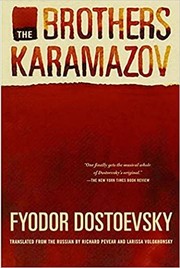
The Karamazov Brothers
Dmitri, Ivan, and Alyosha Karamazov face their father, murder, faith, and doubt in Dostoevsky's final novel.
2,512-word summary · 11 min read

Crime and Punishment
Raskolnikov kills a pawnbroker to prove he is beyond morals, then unravels under Porfiry and Sonya.
3,206-word summary · 14 min read

The Alchemist
The Alchemist from start to finish: Santiago's dream, the Personal Legend, the crystal merchant, the desert, and the treasure that was never where he thought.…
2,166-word summary · 10 min read
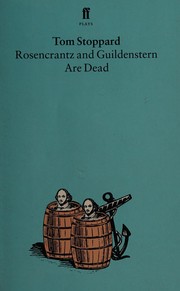
Rosencrantz and Guildenstern Are Dead
Stoppard's 1966 play retells Hamlet from the wings, where two minor courtiers wait, joke, and walk toward a death they cannot see.
2,021-word summary · 9 min read
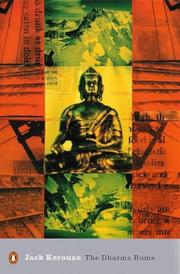
The Dharma Bums
Ray Smith rides freight trains, climbs Matterhorn Peak and argues about Zen with the poet Japhy Ryder in Kerouac's 1958 road novel.
2,729-word summary · 12 min read
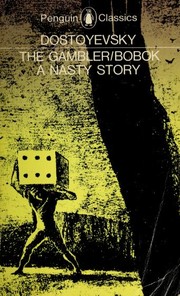
The Gambler
Dostoevsky's roulette novella: Alexei loses Polina, wins a fortune, loses everything, and promises himself one more bet tomorrow.
2,022-word summary · 9 min read

Out of the Silent Planet
A Cambridge philologist is kidnapped and taken to Mars, where the natives are civilized and the humans are the dangerous invaders.
2,612-word summary · 12 min read

Ishmael: An Adventure of the Mind and Spirit
A gorilla named Ishmael teaches a disillusioned man that civilization is a story, and that humans may compete but must not wage war on other species.
2,015-word summary · 9 min read

Doctor Zhivago
A doctor and poet lives through revolution, war, and love in Pasternak's novel of private life under the pressure of Russian history.
2,213-word summary · 10 min read
We
In a city of glass ruled by the Benefactor, a state engineer building a spaceship falls for a woman who wants to tear the One State down.
2,247-word summary · 10 min read

Beyond Good and Evil: Prelude to a Philosophy of the Future
A guide to Friedrich Nietzsche's Beyond Good and Evil: its attack on moral prejudice, the will to power, master and slave morality, and the philosopher of the…
2,597-word summary · 12 min read

The Swiss Family Robinson
Shipwrecked Robinsons build treehouses and tame island beasts.
2,400-word summary · 11 min read
The Red Badge of Courage
Henry Fleming runs at Chancellorsville, then returns to stand.
2,486-word summary · 11 min read

Stories of Your Life and Others
Eight stories about language, time and choice, including the tale behind Arrival.
2,402-word summary · 11 min read
Leaves of Grass
Free verse songs of self, America, bodies and democracy.
2,240-word summary · 10 min read
Ham on Rye
Henry Chinaski grows up rough in Depression Los Angeles and finds writing.
2,244-word summary · 10 min read

Anne's House of Dreams
Newlyweds Anne and Gilbert start in a seaside house with kind neighbors.
2,465-word summary · 11 min read

A Canticle for Leibowitz
After nuclear war, monks save books across centuries while the world rebuilds and falls again.
2,381-word summary · 11 min read
The Time Keeper
Mitch Albom's 2012 fable follows Dor, the first measurer of time punished in a cave, as he returns to guide a heartbroken teen and a dying businessman toward…
2,466-word summary · 11 min read

The Celestine Prophecy
A restless American chases a missing manuscript through Peru and learns Nine Insights about coincidence, energy, and how people vie for attention.
2,599-word summary · 12 min read

Solaris
Kelvin reaches a silent station above Solaris and finds grief made solid when the ocean returns his dead wife Rheya, testing memory, science, and the limits of…
2,548-word summary · 11 min read

The Tenant of Wildfell Hall
Helen flees a cruel marriage, hides as Helen Graham at Wildfell Hall, and tells her full story through a long diary young Gilbert Markham must read before…
2,838-word summary · 13 min read
The Prince and the Pauper
Tom Canty and Prince Edward swap clothes in Tudor London and live each other's lives, from palace dinners to prison cells, until a hidden seal decides the…
2,979-word summary · 13 min read

Brideshead Revisited
At Oxford Charles Ryder befriends Sebastian Flyte and falls into the Catholic Marchmain family, from Brideshead summers to Julia's affair and Lord Marchmain's…
2,353-word summary · 10 min read

The Island of Doctor Moreau
Shipwrecked Prendick finds Doctor Moreau shaping beasts into men by pain on lost island.
2,137-word summary · 9 min read