
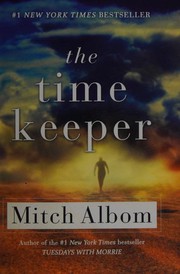
The Time Keeper
2,466-word summary 11 min read 240 pages in the book
- First published
- 2012
- Publisher
- Hyperion
- Pages
- 240
- ISBN
- 9781401312855
Reading options
What's inside (8 sections)
I picked up The Time Keeper on a rainy Saturday because Tuesdays with Morrie had stayed with me for years and I wanted to see what Albom would do with a fable. I expected something soft and quick. I read it in two sittings at the dining table while laundry ran in the next room, and I kept stopping to check the clock on the stove. First published in 2012 by Hyperion, it runs 240 pages and follows Dor, the man who first counted time, as he returns to our age to help two people who are drowning in it. It is strange and plain at once, part old myth and part modern kitchen sink story, and it made me sit quieter with my phone face down.
Dor begins in a time before hours had names. He lives with his wife Alli and watches shadows move across rock. He loves her in a steady way, the kind built from shared bread and evening talk. When Alli grows ill, Dor panics at how little he can hold. He starts marking sticks to track sun and moon. He wants to keep her longer by counting what they have. What started as love turns into control.
What pulled me in early was how human Dor feels for a myth figure. He is not a king or a priest. He is a runner and a husband who cannot stand to watch his wife fade. He climbs a hill to plead for more life for her. The gods in the book, led by a voice called Nim, warn him to stop trying to bind life. Dor keeps going. After Alli dies, he refuses to accept the limit. That refusal gets him shut in a cave for thousands of years, listening to every voice on earth asking for more time. I read those cave pages late at night and felt the damp come off them.
Dor counts the hours and pays for it
Dor lives before calendars, before weeks, before anyone says hurry. Albom paints that early world with simple work. Hunting, grinding grain, mending roofs, sitting by fire. Dor notices that shadows fall in repeat shapes. He cuts notches in wood. He floats sticks in bowls. Alli teases him at first and then worries when he misses meals to watch water fall drop by drop. I liked that Albom shows the invention as domestic before it turns grand. It starts at a table, not in a temple.
Alli is the anchor here. She is kind without being perfect, tired from work, amused by her husband, frightened by her own cough. When she weakens, Dor begs for a way to stretch her days. He keeps measuring, convinced that if he can name time he can keep it. After her death he is taken below and told his penalty. He must stay in the cave until he understands what he made.
The cave section is long and gray. Dor sits with stone and water and hears mothers and soldiers and tired night workers all asking for hours. Albom does not rush this. At last Nim offers a way out. Dor will be sent to earth with an hourglass. He must find two people and truly hear them.
My one gripe with this opening myth is that Nim and the gods stay vague. Are they God, fate, conscience. Albom never settles it. For some readers that openness will feel kind. For me it felt thin in spots, because Dor argues with a voice that never quite answers back. Still, the image of the first measurer trapped by his own marks stayed with me. I thought of my own timers and logs and counted steps.
Sarah Lemon waits by the phone
Sarah Lemon is seventeen and lives outside New York with her mother. Her father left years ago and calls rarely. She is smart, awkward around crowds, honest in a way that makes school harder. She works some shifts, takes the train, saves for small things. She falls hard for Ethan, an older boy who is friendly in bursts and cold the rest of the time. He walks her home once. He kisses her at a party. He sends short notes that she reads ten times.
Albom gets teen waiting right. Sarah checks her phone under her desk. She rewrites a reply five times and deletes it. She asks a friend what a period at the end of a text means. She counts minutes between his answers. She tells herself she will not look, then looks. Her mother tries to help with rules about curfews and kind talk over pasta, but Sarah hears advice as noise. What she wants is one clear yes from Ethan. When it does not come, shame floods in fast.
The hurt builds in small rejections. Ethan pulls back after a weekend. He talks to other girls. He says he needs space. Sarah goes to a party where she sees him laugh with someone else. She drinks a little, feels sick, walks home in cold air. At home she scrolls old photos and feels erased. She decides she is a burden and starts to plan an end on her birthday. She picks a time. She writes a note. She thinks of her mother crying and still cannot turn back. I found these pages painful to read because they are quiet. No big speech. Just a girl turning off her lamp and counting pills in her palm.
I want to pause here because Albom risks a lot with Sarah. He mostly avoids preaching by staying close to objects. The cracked phone case. The bus pass. The voicemail from her dad she keeps but will not delete. Those bits felt true to the teens I know, who speak through things when words fail. If there is a weak spot, it is Ethan, who reads a bit flat.
Victor Delamonte tries to buy more years
Victor Delamonte is eighty seven, rich from business, thin now from cancer that has spread past easy help. He lives in a clean high rise with his wife Grace, who has loved him for decades and still presses his shirts. Victor built firms, bought buildings, fired people without blinking. He tells himself that drive protected his family. Now doctors speak in soft tones about months. Victor hears a sentence and starts shopping for a way out.
His plan centers on a clinic that promises to freeze bodies until cures arrive. He has read brochures. He has wired money. He talks about units and procedures and revival odds as if he is closing a deal. Grace listens and folds her hands. She does not want a cold tank in a far state. She wants walks in the park and soup and prayer with him while he can still taste. Victor calls that giving up. He hires guards and lawyers. He sets dates. He tells Grace this is love, to stay for her later.
What makes Victor more than a cartoon is his fear. Under the bluster he is a boy who lost his parents young and swore never to feel helpless again. He counts his money the way Dor counted sticks, as proof against loss. Albom shows him at night, unable to sleep, touching Grace's shoulder to check her breath. I felt pity for him even when his talk about contracts annoyed me.
The medical and money detail here can drag. There are meetings with a doctor named Minkowski and a cool facility man who speaks in calm sales lines. Pages about trusts and transport slowed me down. I understand why Albom includes them. They show how wealth turns dying into a project. But after the third meeting I wanted to return to Grace, who sees clearest.
When Dor finally steps back into the world
Dor comes back looking old and wild, with long hair and skin like paper. He carries a wooden staff and an hourglass that runs oddly. He does not know subways or elevators. He stares at wristwatches the way we might stare at relics. Albom has fun here. Dor tries to pay with a stone. He gets lost in a department store. He hears a thousand clocks tick in shops and covers his ears. People think he is homeless. A helpful shelter worker gives him soup.
His task is to meet Sarah and Victor and listen until he truly hears. He finds Sarah first near a park bench where she sits with her phone. He asks her what she is waiting for. She laughs and says none of your business. He sits anyway. He walks her partway home. He notices the note in her bag without opening it. Slowly she lets a little light in, though she still holds her plan.
Victor meets Dor through a strange referral. Victor wants Dor to bless the freezing plan. Dor instead asks why Victor wants endless years. Victor talks about work left undone and love he will repair later. Dor listens and pours sand from hand to hand. He asks Victor to name one day he fully lived. Victor names a beach morning with Grace forty years back, when they had little and laughed at burnt toast.
The crossing of the three gives the book its best stretch. Dor takes Sarah to see an old clock tower and shows her how gears bite. He takes Victor to a hospital ward where time moves slow for families in chairs. He sits with Grace while Victor sleeps and hears what long marriage costs. None of this is flashy. It is errands and waiting rooms and bus rides. Dor cannot stop cancer or force a boy to love. He can only stay near and mark what matters.
What Albom is saying about time
At its core the book argues that measuring time made us sick with it. Before hours, people lived by light and hunger and tired limbs. After hours, they live by deadlines and countdowns. Albom is not against clocks. He is against letting counts decide worth. Dor learns that love cannot be stored by numbering days. Sarah learns that a late reply does not equal no worth.
Albom returns to presence as the cure. Put the phone down during dinner. Look at the person across from you. Do one thing fully rather than three things half awake. Dor tells Sarah to notice the heat of soup and the sound of her mother humming while folding towels. He tells Victor to spend an afternoon with Grace without checking stocks or nurses. He shows them his hourglass, where sand sometimes stops when someone truly listens. The device is simple, almost childlike, yet I found myself testing it. I ate lunch without scrolling and tasted more.
There is faith here but kept loose. Nim speaks like conscience. Alli speaks to Dor in dreams like memory. Grace prays without naming a church too loud. Sarah doubts. Victor bargains. Albom lets each stance breathe and does not force a creed. The moral stays close to home. Time is a gift given to spend, not a pool to dam. When we try to hold it, it sours. When we share attention, it stretches. I wrote that last line in my notebook and then crossed out stretches because it sounds neat. Still, for an evening after reading, I left my watch in a drawer.
A fair pushback is that this moral is easy to say and hard to live. A teen bullied online cannot think her way out of shame by watching soup steam. A dying man with bills cannot choose presence over treatment plans without help. Albom knows this and gives Sarah a mother who calls a counselor and Victor a doctor who speaks plainly about pain. Those supports matter. I wished he gave them more pages. The book leans on heart change and spends less time on money, care hours, rides to clinics, all the grit that lets attention happen. The lesson lands, but the ground under it feels swept clean.
What sings and what slips
What sings is pace and heart. Short chapters. Plain words. Scenes you can picture. The cave dripping. Sarah on the late bus with fogged glass. Victor in socks on cold tile, afraid to wake Grace. Dor tasting coffee for the first time and grinning. Albom writes like a friend across a table, not a lecturer. He repeats key images, sand and clocks and hands held, until they gain weight. When Dor finally breaks his hourglass, I felt relief in my chest. It earned its moment because we had watched sand rule three lives for two hundred pages.
What slips is balance. Sarah gets the most care. Dor gets myth weight. Victor gets less inward life until late, and his change turns fast in the final forty pages. One hospital visit and one talk with Grace shift a lifetime of control. I bought the turn because fear can crack a person quick, but I wanted more steps. A scene where Victor calls an old partner to say sorry. A scene where he tells Grace a true story he had hidden. Without those, his last choice feels right yet rushed.
The prose can also tip sweet. Alli appears in soft light. Grace seldom gets angry, though she has cause. Ethan never quite becomes a person. Readers who want hard edges may find the edges sanded. I did not mind much because the central images held, but on two evenings I caught myself wishing Albom would let someone stay mad longer. Sarah's anger at her father flashes and fades. Victor's anger at death gets channeled into deals. Only Dor is allowed long rage in the cave, and even that cools into sorrow.
Who should pick this up. Readers who liked The Five People You Meet in Heaven and want another short fable will feel at home. Teens past fifteen can read Sarah's arc with an adult near, since it touches suicide planning straight on without graphic method. People caring for aging parents may find Victor and Grace useful, though those needing medical guidance should look elsewhere. Book groups will get talk from it. Ask who owns your hours. Ask when counting helped you and when it hurt.
I closed the book on a Sunday and took a walk without earbuds. I heard sparrows and a bus sigh and my own shoes on grit. At home I called my sister and asked about her garden instead of texting. Small acts. The next morning I still checked the time too often and rushed toast. Change did not stick all at once. But for a week now I have left my phone in the kitchen during meals. Sand or no sand, that feels like a start I can keep.
FAQ
When was The Time Keeper published and how long is it?
It was first published in 2012 by Hyperion and runs 240 pages in the cited edition, ISBN 9781401312855, with short chapters that read quickly.
Who are Dor, Sarah, and Victor?
Dor is the man who first measured time and was punished in a cave. Sarah is a seventeen year old waiting on a boy named Ethan. Victor is an eighty seven year old businessman with cancer who seeks freezing.
Is The Time Keeper suitable for teens?
Readers past fifteen can handle Sarah's arc with an adult near, since it touches suicide planning without graphic method. The book suits fable readers more than those wanting medical detail.
Similar books

Ship of Magic
A sentient ship wakes when her captain dies, and the family that owns her starts to come apart over who gets to sail her.
2,026-word summary · 9 min read

Little Earthquakes
Four Philadelphia women meet during pregnancy and discover that new motherhood is nothing like the plan, while friendship becomes the thing that holds them…
1,997-word summary · 9 min read

Fathers and Sons
Arkady brings the nihilist Bazarov home to his father's estate, and a generational argument turns into love, a duel, and an early death.
2,192-word summary · 10 min read

Tales from the Café
Four more visitors to a Tokyo café travel through time under strict rules, each hoping to say the thing they could not say before.
2,242-word summary · 10 min read

Summer Island
A radio advice host hides a scandal, and the estranged daughter hired to write about it agrees to care for her at the family's island house.
2,325-word summary · 10 min read

The Borrowers
A family of tiny people live under the floorboards of an English house, borrowing what they need until a lonely boy and a suspicious housekeeper change…
2,164-word summary · 10 min read

Saga, Volume 3
Marko, Alana, and Hazel hide on the planet Quietus with the reclusive author who inspired their romance, while assassins and a prince close in.
1,989-word summary · 9 min read

Ishmael: An Adventure of the Mind and Spirit
A gorilla named Ishmael teaches a disillusioned man that civilization is a story, and that humans may compete but must not wage war on other species.
2,015-word summary · 9 min read

In an Instant
After a family camper crashes down a snowy mountain, sixteen-year-old Finn watches from the afterlife as survivors make impossible choices and try to live with…
2,130-word summary · 9 min read

Days at the Morisaki Bookshop
Heartbroken Takako moves into her uncle's tiny secondhand bookshop in Jimbocho, and the shop and its regulars slowly give her back her life.
2,011-word summary · 9 min read

Olive, Again
Elizabeth Strout returns to Crosby, Maine, as Olive Kitteridge marries Jack Kennison, confronts her son, and faces old age, grief, and small-town judgment.
2,333-word summary · 10 min read
The Stonekeeper
After their father's death, Emily and Navin chase a monster into a hidden world to save their mother, and Emily's great-grandfather's amulet offers power at a…
2,753-word summary · 12 min read

The Girl Who Drank the Moon
A witch who secretly rescues the town's sacrificed babies accidentally enmagicks one with moonlight, and the girl grows up with a power she cannot name.
2,078-word summary · 9 min read
Vanishing Acts
A search-and-rescue worker's perfect life cracks when her past and her father catch up.
2,799-word summary · 12 min read

True Colors
Three Grey sisters split over love and duty after their father judges them.
2,596-word summary · 12 min read

The Tea Girl of Hummingbird Lane
A Chinese tea farming mother gives up a daughter who later seeks roots.
2,607-word summary · 12 min read

The Most Fun We Ever Had
Four Sorenson sisters orbit perfect parents hiding old cracks.
2,590-word summary · 12 min read

The Identicals
Twin sisters swap Nantucket and Martha Vineyard lives for a summer.
2,556-word summary · 11 min read

The Buried Giant
An old couple crosses a misty post Arthur Britain searching for a son.
2,593-word summary · 12 min read

The Accidental Tourist
Grieving Macon writes travel guides for haters of travel, then Muriel intrudes.
2,252-word summary · 10 min read

Stories of Your Life and Others
Eight stories about language, time and choice, including the tale behind Arrival.
2,402-word summary · 11 min read

News of the World
Captain Kidd carries captive Johanna home across 1870 Texas.
2,571-word summary · 11 min read

Kitchen
Orphan Mikage finds home in a kitchen with Yuichi and Eriko after loss.
2,597-word summary · 12 min read

Anne's House of Dreams
Newlyweds Anne and Gilbert start in a seaside house with kind neighbors.
2,465-word summary · 11 min read

The Shell Seekers
Elderly Penelope Keeling must decide the fate of her father's treasured painting while her three children press her to sell.
2,592-word summary · 12 min read

The Fall
A fallen Paris lawyer confesses in an Amsterdam bar, tracing guilt from Paris success to a bridge he failed to face.
2,220-word summary · 10 min read

The Celestine Prophecy
A restless American chases a missing manuscript through Peru and learns Nine Insights about coincidence, energy, and how people vie for attention.
2,599-word summary · 12 min read

Heart of the Matter
Two Boston mothers collide after a burn injury puts a single mom in the orbit of another woman's surgeon husband.
2,585-word summary · 11 min read

The Rules of Magic
Franny, Jet, and Vincent Owens test strict family rules and a love curse in 1960s Manhattan and Massachusetts in Alice Hoffman's warm prequel about love, loss,…
2,686-word summary · 12 min read