
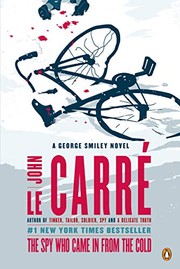
The Spy Who Came In from the Cold
2,578-word summary 11 min read 240 pages in the book
- First published
- 1963
- Publisher
- Penguin Books
- Pages
- 240
- ISBN
- 9780143124757
- Series
- George Smiley (#3)
Reading options
What's inside (8 sections)
I picked up this book because I was tired of smooth movie spies. I wanted to see what the job looked like before gadgets and quips took over. A friend told me this was the cold one, the book that made le Carré famous, and that it still stings. He was right. I read it in two sittings on a rainy weekend, and the damp Berlin streets in the story matched the weather outside my window a little too well.
What surprised me first was how short and plain it feels. My Penguin edition runs about 240 pages, first published in 1963, and there is no fat on it. No long speeches about freedom. No hero who enjoys the work. The main man, Alec Leamas, is tired, drinks too much, and looks older than his fifty years. George Smiley is in here too, but only at the edges. This is listed as Smiley book number three, yet if you come in expecting Smiley to solve things, you will wait a long time. He steps in quietly, watches, and steps back. The center belongs to Leamas.
The story is set after the Berlin Wall went up. That concrete split is everywhere in the book. You feel the checkpoints, the searchlights, the careful timing of cars at night. Leamas runs the British network in West Berlin and watches it get taken apart piece by piece. Then London calls him home and offers him one last ugly job. Accepting it means ruining his own name. That is the deal, and he takes it.
Leamas watches his Berlin network fail
The opening is one of the best I have read in any thriller. Leamas is in a car near the Wall in West Berlin, waiting in the cold for an agent to come across. His name is Karl Riemeck, a senior East German official who has been passing material for years. The arrangements are careful. Timing, lights, a signal. Leamas has done this before and lost people before. This time he watches Riemeck run for the gap while East German guards open fire. Riemeck falls almost within reach. There is nothing Leamas can do except sit there and take it in.
That death is the last in a string. Over the previous months, Leamas has lost every source he had in the East. Couriers go missing. Safe contacts stop showing up. One man hangs himself after arrest. The pattern points to one person on the other side: Hans-Dieter Mundt, who has risen fast in the East German Abteilung, their intelligence service. Mundt is young for such a post, early forties, blond, hard, a former Hitler Youth who remade himself as a fierce communist. He runs counterintelligence with speed and no soft spots. Leamas hates him in a personal way, not just professional. Mundt is the man who beat him.
I found this section convincing because le Carré does not dress it up. Leamas is not noble in defeat. He smokes, drinks coffee that has gone cold, snaps at his staff. His deputy in Berlin tries to keep morale up. The office feels cramped and tired. Files pile up. Money is tight. London sends sympathy that sounds like paperwork. When Leamas is told to wind things down and come home, it feels less like a recall and more like a shop closing. That flat tone makes the loss heavier than any shootout would.
Recalled to London and left to rot
Back in London, the Circus, which is what they call MI6 in these books, does not welcome Leamas as a veteran. He is put in a small office job. Banking section, dull hours, less pay. He lives in a mean flat. He drinks at lunch and after. To anyone watching, he looks like a man sliding out of the service with a grudge.
This is where the book slows down on purpose, and I have mixed feelings about it. Leamas takes a job in a suburban library in Bayswater, pasting cards and shelving returns. The pay is poor. The work is mindless. He meets Liz Gold there. She is young, in her twenties, Jewish, a committed communist who works at the library and argues politics with real heat. She lives in a small flat, shares concerns about rent and food, lends him books. They start a clumsy affair. He likes her more than he plans to, which worries him. She likes his roughness and treats him as a lost worker rather than a lost soldier.
Leamas starts drinking harder. He misses shifts. He gets into a row with a local grocer over credit and hits the man. It is not a brave scene. It is squalid. He pleads guilty in court and goes to prison for a few months. Prison is described without thrill. Bad food, boredom, fights over small things, wardens who treat him as routine. When he gets out, he has no job, little money, and a worse reputation.
I thought the library and prison stretch dragged a bit on first read. Little happens for pages. Then I saw what le Carré was doing. He needed Leamas to look authentically finished so the East would want him. Every stamp on his record had to be real. Still, Liz gets shortchanged here. We learn her politics and her kindness, but not much of her past beyond broad strokes. She functions as warmth in a cold plot. That works for the ending, but I wanted one more scene showing her life apart from Leamas.
The Controller offers one last mission
The turn comes before the library job, though I only understood it fully later. In London, Leamas is called to meet Control, the head of the Circus. Control is calm, upper class, soft spoken, a man who can ask terrible things in polite language. Smiley sits in on the meeting and says little. They lay out the state of things. Mundt is destroying British networks. Fiedler, Mundt's deputy, is clever and might be turned or used. But the real aim is stranger than Leamas expects.
Control wants Leamas to appear to quit in bitterness and to let the East Germans recruit him as a defector. Leamas will carry a story built from true scraps and false joins. He will say the Circus is falling apart, that officers steal operational funds, that payments are being made to a high East German source. He will hint at a British agent close to the top of the Abteilung, protected with fake bank transfers and travel records. The East will think they are pulling secrets out of a drunk ex officer. In truth, every detail is planted to make Jens Fiedler suspect his own chief, Mundt, and to trigger a power fight in East German intelligence.
Leamas asks why he should agree to be smeared. Control does not offer glory. He offers a chance to get Mundt and to settle Berlin. He also makes clear there is no clean version of this work. If Leamas says no, someone else will do a worse job of it. Smiley adds a practical note about money and protection, but even that sounds thin. Leamas says yes because he has nothing else that feels like purpose, and because he wants Mundt gone.
What I respected here is how little heroism is allowed. Leamas is not told he will be extracted with honors. He is told he will look like a cheat and a drunk, because he has to. He signs off on lies that will touch Liz later, though he does not know that yet. Control frames it as necessity. Reading it now, it feels grim and persuasive. The service protects itself by spending its people. Leamas knows it and goes ahead anyway.
Mundt against Fiedler and the trap between them
To follow the middle of the book you need to hold two East Germans in mind at once. Mundt holds power. He is physical, certain, feared by his own staff. People step aside when he enters. Fiedler holds the files. He is smaller, thoughtful, Jewish, a theorist who survived the war and built his faith in the party through study rather than muscle. He distrusts Mundt and suspects Mundt's past and methods. He also suspects Mundt may be playing a double game with London.
Leamas, fresh from prison and broke, is picked up through communist contacts connected to Liz's circle. He is moved carefully, first to the Netherlands for questioning, then into East Germany. His handlers test him with hunger, waiting, small comforts withdrawn. Fiedler takes over the debriefing. These scenes are long conversations in plain rooms. Fiedler asks about Circus pay structures, about safe houses, about who signs for funds. Leamas gives him the planted story in bits, as if reluctant, as if drunk memory is leaking. He mentions payments routed through banks in Copenhagen and Helsinki. He mentions a senior officer traveling under false papers. He never names Mundt outright. He lets Fiedler connect the lines.
I liked Fiedler more than almost anyone in the book. He is careful with logic, polite to Leamas, and honest about his doubts. He explains East German procedures with a kind of pride. He wants a case that will stand, not gossip. He checks dates, sums, signatures. At the same time, his decency makes him easy to use. London counted on him being fair minded enough to follow false evidence where it leads. Mundt, by contrast, stays off stage for much of this stretch, which makes him larger. Reports of his rages arrive secondhand. His absence feels like pressure building elsewhere.
The criticism I would make is that this middle demands patience. There are many rooms, many transcripts, many summaries of money movements. If you want action, you will fidget. Twice I had to flip back to keep the bank names straight. But the slow build pays off because the trap is intellectual, not physical. Leamas is not planting a bomb. He is planting a suspicion in a careful man, and suspicion grows best in quiet.
The trial that turns inside out
Fiedler thinks he has enough to move against Mundt. He arranges for Mundt to be arrested and calls for a closed tribunal inside East Germany. Leamas is held as a protected witness. For a short stretch it looks like London's plan will work. Fiedler lays out the payments, the travel, the pattern of British losses stopping wherever Mundt's protection might run. Mundt sits through it with contempt. His lawyer, a party man, picks at small gaps.
Then the door opens and the plan breaks. Liz Gold is brought in as a witness. She has been invited to East Germany on a party exchange, told she can see how socialism works and perhaps see Leamas again. She does not know she is being used to test his story. Under questioning, she says what she knows. A kindly Circus officer visited her flat in London and paid off the back rent on Leamas's behalf. He left money for groceries. He asked her not to mention it. She thought it was charity. The tribunal hears it as proof that London still cared for Leamas after his supposed disgrace, which means his defection is staged.
It gets worse. She admits Leamas once promised to marry her and spoke of going home. She admits she loves him. Her honesty, which is the best thing about her, sinks Fiedler's case. Mundt's lawyer turns her testimony into a weapon. If Leamas is still London's man, then his hints about Mundt are poison. The only person who benefits from fake suspicion against Mundt is Fiedler, who wanted his job. The tribunal swings. Fiedler is taken away. Mundt walks free, back in power, owed an apology by the room.
This is brutal to read and brilliantly built. Leamas realizes too late that London never told him the full shape of the operation. Mundt was not the target. Mundt was London's long placed asset all along, and Fiedler, the decent analyst, was the real threat to him because Fiedler was too sharp and too honest to be controlled. Leamas was sent to frame an innocent man to protect a guilty one. Liz was pulled in because Control needed a loose end that would speak truth without knowing its weight. I sat still for a minute after that landing. It recolors every kind act from earlier chapters.
The Wall and what it costs at the end
Smiley appears at last in East Germany, working the edges to pull Leamas out. The Circus still wants its man back, even after using him past the limit. The escape plan is simple and exposed. Leamas and Liz will go over the Wall at a broken stretch near Potsdam, where wire is low and a mortuary van can shield them briefly. A ladder, a signal with headlights, a short run through no man's land while searchlights sweep. No backup team can stop bullets.
Mundt, now restored, quietly allows the escape to proceed. It serves him to let Leamas vanish rather than answer more questions. For a moment it seems both of them might make it. Liz climbs first. She is slow, frightened, unused to this. Leamas pushes her up, follows, reaches for her hand across the top. Then the lights catch them. Shots come from the eastern side. Liz is hit and falls back. The orders shout out. Leamas is over the crest and could drop to the western side to safety.
He does not. He climbs back down to her. Another volley follows. The book ends there on the concrete, with Smiley calling from the West in distress. It is not a twist for shock. It is the only end these two could have after what London did. Leamas, who claimed to believe in nothing, refuses to leave the one person who believed in him. Liz, who believed in a fairer world, dies because two services treated fairness as cover.
I found the final pages spare and hard to shake. There is no speech about right and wrong. Leamas does not forgive. Smiley does not explain. The Wall stands, stupid and solid. My complaint is small but real. Liz never gets a full inner life, so her death lands more as Leamas's tragedy than her own. Le Carré seems aware of this and does not force it, but I still wished for one chapter in her voice. Even so, the ending holds because it refuses comfort. Most spy stories let the professional walk away clean. This one charges him everything.
Reading it sixty years after 1963, I keep thinking about how modern it feels in attitude even when the tradecraft is dated. Dead drops, coded bank books, and typed transcripts have given way to phones and hacks, but the moral math has not changed much. Services still ask people to lie for a cause and still call the damage collateral. Leamas is not admirable in any easy way. He drinks, he uses Liz, he agrees to ruin Fiedler. Yet I stayed with him because he sees the bill clearly by the end and pays it himself rather than passing it on. That is a bleak kind of honor, and this short novel presents it without flinching. If you want fun espionage, look elsewhere. If you want to understand why le Carré reshaped the genre away from glamour toward doubt, start here.
FAQ
When was The Spy Who Came In from the Cold published?
It was first published in 1963. This summary uses the Penguin Books edition, which runs about 240 pages.
Is this a George Smiley novel?
Yes. It is listed as George Smiley book 3, but Smiley stays at the edges. The central figure is Alec Leamas.
Is it like James Bond?
No. It rejects glamour and shows intelligence work as cold, bureaucratic and morally costly, ending at the Berlin Wall.
Similar books
More from George Smiley first, then related titles.
Tinker, Tailor, Soldier, Spy
Retired spymaster George Smiley is brought back to find a Soviet mole inside British intelligence, and the trail leads through old friends, old betrayals, and…
2,092-word summary · 9 min read

The Redbreast
Harry Hole chases an ageing sniper through modern Oslo while two Norwegian volunteers on the Eastern Front carry a fifty-year-old betrayal toward a royal…
2,453-word summary · 11 min read

The Lost Girls of Paris
In 1946, a war widow finds an abandoned suitcase in Grand Central holding photographs of twelve women who vanished in the war, and follows their story back to…
2,668-word summary · 12 min read
The Day of the Jackal
An English assassin takes an OAS contract to kill de Gaulle while a quiet French detective races to stop him in 1963 Paris.
2,969-word summary · 13 min read
I Am Pilgrim
A retired spy turned crime writer is pulled back when a grisly New York murder points toward a hidden bioterror plot, and the hunt runs from forensics to the…
3,023-word summary · 13 min read
Shutter Island
A U.S. marshal hunts a missing patient on a locked asylum island in 1954, where every clue turns back on him.
2,761-word summary · 12 min read
The Bourne Identity
An amnesiac pulled from the sea hunts his identity as Jason Bourne while assassins and the CIA close in.
2,994-word summary · 13 min read

What She Knew
Rachel lets her eight-year-old son run ahead in a Bristol park, and the nine-day search turns her into a suspect in the public eye.
2,952-word summary · 13 min read

The Beach House
A young valet is beaten to death at a Hamptons party, and his law-student brother spends a year building a case against the family that covered it up.
2,049-word summary · 9 min read

The Art Forger
A disgraced Boston painter agrees to copy a Degas stolen from the Gardner Museum, then begins to suspect the original she is copying is itself a forgery.
2,117-word summary · 9 min read

Six Years
A professor who promised to forget the woman he loved sees her husband's obituary and discovers that the wedding, the marriage, and the woman herself may never…
2,076-word summary · 9 min read

Anatomy: A Love Story
In 1817 Edinburgh, a noblewoman who wants to be a surgeon disguises herself to study anatomy and falls for the grave robber who supplies her with bodies.
2,031-word summary · 9 min read

The Trespasser
A Dublin Murder Squad detective investigates a staged dinner-party killing and finds a cover-up that reaches into her own department.
2,051-word summary · 9 min read

Rules of Prey
Minneapolis detective Lucas Davenport hunts a killer who leaves a new rule at every scene and treats murder as a game of wits.
1,914-word summary · 9 min read

Ace of Spades
Two Black seniors at an elite academy are celebrated by day and hunted by an anonymous texter in this YA thriller about institutional racism.
2,066-word summary · 9 min read

The Late Show
Exiled to the LAPD night shift after accusing her supervisor, Renée Ballard keeps two cases that were meant to be handed off at dawn: a brutal assault and a…
2,563-word summary · 11 min read
The Black Dahlia
James Ellroy builds a fiction around the real Black Dahlia murder, following two Los Angeles cops whose partnership and obsessions destroy them.
2,533-word summary · 11 min read
Only Time Will Tell
A Bristol dockworker's son wins a scholarship, falls in love with the daughter of the family that owns the shipyard, and learns that his father's death was not…
2,082-word summary · 9 min read

Night Film
A disgraced journalist investigates the death of a reclusive horror director's daughter, following a red coat through hospitals, secret clubs, and a family…
2,690-word summary · 12 min read

Cross My Heart and Hope to Spy
Cammie Morgan returns to Gallagher Academy for a second year of spy training, only to fall for a boy from a rival spy school and hunt a mole in her own school.
2,567-word summary · 11 min read

4th of July
Lindsay Boxer shoots two armed teenagers in self-defense, faces a wrongful-death trial, and spends her leave chasing a string of throat-slashing murders in…
2,192-word summary · 10 min read
The Camel Club
Four Washington misfits witness a murder on Roosevelt Island and stumble into a conspiracy that reaches the Oval Office, with a hostage president and a nuclear…
2,354-word summary · 10 min read
Sleeping Giants
A girl falls into a field and lands in a giant metal hand. Years later a secret team assembles the rest of the machine, and it chooses its own pilots.
2,466-word summary · 11 min read

61 Hours
A bus crash strands Jack Reacher in a snowbound South Dakota town where a drug gang, a corrupt police force, and a single witness are on a collision course.
2,227-word summary · 10 min read

Once Upon a River
A wounded man stumbles into a riverside inn carrying what appears to be a drowned child who is not quite dead, and the story braids the guesses of everyone who…
2,173-word summary · 10 min read

The Echo of Old Books
Barbara Davis's 2023 novel sends a rare-book dealer in 1984 New Hampshire hunting for the authors of two unpublished volumes that tell opposite sides of one…
2,491-word summary · 11 min read
American Assassin
Before he became the CIA's most feared counterterrorist, Mitch Rapp was a Syracuse student mourning his girlfriend, killed on Pan Am Flight 103. Then came…
2,114-word summary · 9 min read
The Last Mile
Melvin Mars is hours from execution for his parents' murder when another man confesses, and FBI cold case detective Amos Decker goes looking for the trap.
2,746-word summary · 12 min read

The Chemist
A former government interrogator on the run takes one last job, then learns the case she was handed was built to pit her against him.
2,249-word summary · 10 min read

Still Missing
A realtor is abducted at a Vancouver Island open house and held for more than a year. Told through therapy sessions, the novel follows her escape and the hunt…
2,466-word summary · 11 min read