
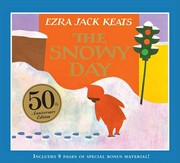
The Snowy Day
2,375-word summary 11 min read 40 pages in the book
- First published
- 1962
- Publisher
- Viking Press
- Pages
- 40
- ISBN
- 9780670012701
Reading options
What's inside (8 sections)
I came back to this one on a gray February morning with cold light at the windows and a child asking what we should read. The stack on the table was full of longer, louder books, but I pulled out The Snowy Day because I remembered how quiet it felt. Ezra Jack Keats published it in 1962 with Viking Press, forty pages with very few words, and it won the Caldecott Medal in 1963. I had seen Peter in his red snowsuit on posters and stamps before I ever sat down with the whole book. Reading it straight through took maybe five minutes, and then we read it again, slower, because the pictures kept pulling us back.
What surprised me that second time was how much happens in so little text. A boy wakes to snow, goes outside alone, tries everything the snow offers, comes home, and goes out again the next day with a friend. My young reading partner cared most about the snowball in the pocket. I cared most about the city around Peter, the brownstone steps and the hill with older kids, all of it cut from paper and somehow warmer than a photograph.
This is a forty page picture book, so a summary at length might sound strange. But the length lives in the page turns, the art, and the history around it. Keats gave American picture books their first widely loved Black protagonist in Peter. The book has since drawn praise, argument, sequels, stage versions, postage stamps, and a place at the very top of the New York Public Library checkout lists.
Waking up to a white city
Peter wakes and looks out the window, and snow has covered everything he knows. Keats gives him no dialogue at first, only looking. The first spreads show a small brown boy with dark hair watching a city turned white, with snow piled on sills and railings. His mother is nearby but the focus stays on Peter and his sense that the day has changed while he slept.
I love how Keats slows this moment. Many books would rush outside. He lets Peter wake, look, and dress. We see him in pajamas at the window, then bundled in the red snowsuit, bright against white snow and brown and gray buildings. Anyone who has dressed a small child for snow will recognize the pause here, the tug of sleeves and the shuffle to the door.
The city matters from the start. This is not a suburb with wide lawns. It is a New York street with apartment buildings, parked cars rounded by snow, and stairs with iron railings. Peter lives in a brick building with a stoop. Keats grew up in Brooklyn and knew these streets. He shows hydrants, windows, and corners half buried, and trusts us to feel the quiet that falls after a heavy snow.
For a child reader, this opening builds waiting. Will the snow be deep enough? Peter will test what this new world allows, alone at first, with his body and his eyes. No lesson is announced. There is only a boy and fresh snow.
A small boy in a bright red suit
Peter steps into snow up to his ankles in that bright red suit, with a pointed hood framing his face, and starts to explore. On page after page of white and soft gray, with buildings in tan and brown collage, Peter glows like a small flame. You can find him at once even on a wide spread.
The first experiments are physical and familiar. Peter walks with his toes pointed out and then with his toes pointed in, making tracks that fan and meet. He drags his feet slowly to make lines. Keats shows the footprints clearly, dark dents in white. A child listening will often lift their own feet at this part. Mine did, testing pointed toes on the rug.
Then comes the stick. Peter finds a stick and smacks a snow covered tree. Snow plops down on his head. It is a small mishap, funny rather than scary, and Keats lets it sit without scolding.
He climbs a small mound and pretends he is a mountaineer, hands raised, looking out over white peaks that are really drifts and curbs. We still see the street behind him. The game does not remove him from home. It widens home a little.
What I notice rereading is how alone Peter is in this stretch, and how unlonely it feels. No friend calls him yet. No adult directs the play. He narrates with his feet and hands. The text stays short, often one or two sentences a page. The pictures carry time passing through footprints and shadows.
Left out, then making his own fun
The mood shifts when Peter sees older boys having a snowball fight. He wants to join. Keats handles this in a few words and one clear image. Peter tries to join in, but he is not old enough for the hard packed balls. He stands at the edge while snow flies past. The older boys keep playing. Peter walks on.
This moment lands because Keats does not inflate it and does not erase it either. He does not give the big boys cruel lines. Peter simply learns he cannot join this game today and keeps walking. When I read this with a child, we stopped here. Being too small for a game stings in a way most children know by heart.
What follows is Peter answering exclusion with invention. He makes a smiling snowman with coal eyes and a carrot nose, round and a little lopsided. He makes snow angels, lying back and sweeping his arms, then standing to look at the winged shape he left behind. Keats shows the angel from above and from the side, white on white with Peter's red suit in the middle like a stamp.
Then Peter tries the big slide. He climbs up and slides down fast. The slide scene brings noise back after the quiet angel pages. You can feel speed in the tilt of his hood. He slides, climbs again, and the day stretches the way good snow days stretch.
All through this middle section Keats keeps the city present. Windows watch. Footprints cross and recross. Peter is small in a big winter, but he is not lost. His block holds him.
The snowball in the pocket
Late in the day Peter forms a snowball, round and firm, and puts it in his pocket for tomorrow. It is such a child move, saving something perfect to show later. He goes inside and tells his mother about his day while she takes off his wet socks. She tells him to get ready for a warm bath.
The bath scene is cozy and plain. Warm water, Peter pink cheeked, his mother nearby. Peter checks his pocket and finds it empty. The snowball has melted. Nothing remains but dampness.
Keats treats this as loss without tragedy. Peter feels sad. Any child who has saved snow understands the letdown. It was solid outside and gone inside. He does not cry hard. His face falls. His mother does not scold.
That night Peter goes to bed and dreams that the snow is still there, or that the sun has melted it all away. Will it last? Will morning take it? Peter sleeps in a small bed while outside the window the snow waits under moonlight. I find this the tenderest turn in the book.
The pocket snowball has become the detail most adults remember, even more than the angels. Cold things need cold. Keats lets the fact and the feeling sit side by side.
Cut paper, fabric and snow
To see why the book looks like nothing else from 1962, it helps to know how Keats built the pages. He worked in collage with paint, a method still fresh in picture books at the time. He cut and tore decorative papers and pasted them to form walls, clothes, and drifts. He added fabric scraps for texture and painted over and around them with gouache and oils. The white of the snow is layered, not flat.
Look at the buildings and you see brown paper with printed dots and lines, like wallpaper samples. Look at the snow and you see white worked with blue and gray. For falling snow Keats used a carved stamp and white paint spattered with a toothbrush, plus cut paper flakes. For outlines and faces he used India ink with a loose hand, so Peter's smile stays simple and readable across the room.
The method came from a long apprenticeship. Keats was born Jacob Ezra Katz in Brooklyn in 1916 to Polish Jewish parents, served in the Army making camouflage and murals, painted street scenes, and illustrated other writers books through the 1950s. He kept in a drawer a set of photographs clipped from Life magazine in 1940 showing a small Black boy in Harlem, smiling and curious. He returned to those images when planning his own stories. He wanted a Black child as the hero of an ordinary city day, not a problem story or a fable, but a snowy Tuesday.
That choice landed in a particular America. In 1962 segregation still shaped schools and libraries in much of the country, and picture books with Black children as central figures were rare. Mainstream publishers offered few such titles, and those that existed often framed race as the topic. Keats, a white artist raised in poverty in Brooklyn, put Peter at the center without making the plot about prejudice. Peter wakes, plays, is left out for being small rather than for being Black, saves a snowball, dreams, and wakes again. The ordinariness was the point, and for many families it felt like a door opening.
Viking Press backed the unusual art and the quiet text. The book ran forty pages, a standard picture book length that allowed Keats to pace page turns like steps outside. When the Caldecott committee gave The Snowy Day the 1963 Medal for the most distinguished picture book of the prior year, it confirmed that collage could carry a story and that a Black boy could anchor a classic. Keats was the first to win that prize with a Black protagonist, and the win brought the book into schools and libraries that might otherwise have missed it.
Friends, sequels, arguments and staying power
The next morning Peter wakes and the snow is still there. This small mercy lifts the whole ending. He goes outside with his friend Archie, a boy from the neighborhood, and they cannot decide what to do first. The last pages show them together in the snow, talking and planning, with the day fresh again. After a whole book alone, Peter has company. After loss, the melt in the pocket, he gets another chance, not a replacement snowball but a shared day.
Keats kept Peter and Archie and their street in his work for years. Peter returned in Whistle for Willie, where he tries to whistle for his dachshund, in Peter's Chair, where he adjusts to a new baby sister and paints his old chair, in A Letter to Amy, where he navigates a birthday party invitation, in Goggles, with Archie and Halloween trouble, and in later titles like Hi, Cat. Together these books form a loose cycle of city childhood, with stoops and lots and friends and dogs. Parents who meet Peter in winter can follow him through seasons without leaving the block.
Praise for the book has always run alongside debate, and a full summary should name it plainly. Some critics in the late 1960s and after argued that Keats, as a white creator, gave Peter a world that felt too safe or too thin on Black life, with few markers of family culture or community language. Others pointed to the illustrations of Peter's mother in early spreads, her kerchief and broad features, as echoing older mammy images from advertising and film, even as they praised the warmth between mother and son. A related line of criticism called the book tokenism, a single Black face in a white field that let publishers feel done rather than opening doors to Black authors and artists.
Keats answered in interviews that he wrote from the neighborhood he knew and from the boy in the photographs that stayed with him, and that he wanted Peter to have the same everyday adventures white children already had in books. Later scholars have kept both views in play. They note what the book opened, who it kept out by taking up room, and how moving it remains for many Black readers who first saw themselves in Peter on a library shelf. Reading today, I try to hold that double truth. The book broke ground and it came from outside the community it pictured. Children can love Peter fully while adults talk honestly about who tells stories and who gets published.
What is not in doubt is the staying power. The Snowy Day has never gone out of print. It has been adapted for stage and screen, including an animated short with music that many schools still show, and read aloud recordings that keep the spare text intact. In 2017 the United States Postal Service issued stamps honoring the book, with Peter sliding and making angels. The New York Public Library has counted The Snowy Day as its most checked out book of all time, with hundreds of thousands of loans, ahead of many longer famous titles. For a forty page story about tracks and angels and a melted snowball, that record says a great deal about how often families reach for it.
When we finished our second read that February morning, my reading partner asked to save ice cubes in a pocket to test the melting, which seemed exactly right. We talked about footprints and about being too small for a game, and about Archie waiting on the last page for whatever comes next. The book does not close with a moral. It closes with a friend and fresh snow. I like ending there, with the day still open and Peter in red against white, ready to try again.
FAQ
When was The Snowy Day published and by whom?
It was published in 1962 by Viking Press, written and illustrated by Ezra Jack Keats.
Did The Snowy Day win the Caldecott Medal?
Yes. It won the 1963 Caldecott Medal for its collage illustrations, the first win centered on a Black protagonist.
Is The Snowy Day part of a series?
Peter returns in later books like Whistle for Willie, Peter's Chair, A Letter to Amy, Goggles and Hi, Cat.
Similar books
The Mitten
Jan Brett retells a Ukrainian folktale about a boy, a lost white mitten, and the woodland animals that crowd inside until a bear sneezes.
2,609-word summary · 12 min read

Make Way for Ducklings
A pair of mallards raise eight ducklings on the Charles River and lead them across Boston to the Public Garden, with a little help from a friendly policeman.
2,044-word summary · 9 min read
Amelia Bedelia
A literal-minded housekeeper follows her employer's list to disastrous and funny effect in the 1963 picture book that made wordplay a children's staple.
2,038-word summary · 9 min read

Clifford the Big Red Dog
Emily Elizabeth picks the smallest puppy in the litter, loves him as hard as she can, and wakes up to a dog the size of a house.
2,092-word summary · 9 min read
The Story of Ferdinand
A gentle Spanish bull would rather smell flowers than fight, and when he is taken to the bullring he simply sits down among the flowers in the ladies' hats.
2,135-word summary · 9 min read
Go, Dog. Go!
Dogs drive, work, play, and climb a tree for a party in this Beginner Book built on repetition, opposites, and one very unpopular hat.
2,196-word summary · 10 min read
Caps for Sale
A peddler balances his caps on his head, naps under a tree, and wakes to find monkeys wearing his stock in this 1940 picture book.
2,787-word summary · 12 min read
The Little Engine That Could
Watty Piper follows a stranded toy train past proud engines that refuse, to a small blue switcher who agrees to try the mountain and pulls her chanting load…
2,311-word summary · 10 min read
Curious George
Curious George retold: a monkey sails from Africa to the city, phones the fire station, floats off on balloons, and finds home.
2,979-word summary · 13 min read
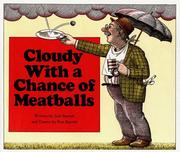
Cloudy with a Chance of Meatballs
A grandfather tells of Chewandswallow, where soup rains and meatballs fall, until giant food storms force everyone to flee.
2,873-word summary · 13 min read
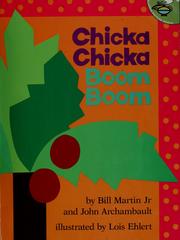
Chicka Chicka Boom Boom
Letters race up a coconut tree, tumble down with a boom, then climb again with help in this chant classic.
2,120-word summary · 9 min read
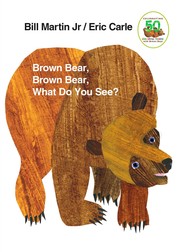
Brown Bear, Brown Bear, What Do You See?
A rhythmic animal parade teaches colors and names, from brown bear to schoolchildren.
3,226-word summary · 14 min read
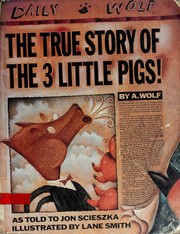
True Story of the Three Little Pigs
A. Wolf tells his side from the Pig Pen: he only wanted sugar for a cake, had a bad cold, and sneezed. You decide.
2,975-word summary · 13 min read
Alexander and the Terrible, Horrible, No Good, Very Bad Day
Alexander has one bad day from gum in his hair to bedtime, while his family copes and his mother stays honest.
2,548-word summary · 11 min read
One Fish, Two Fish, Red Fish, Blue Fish
Counting fish and silly creatures from here to there, with rhymes for beginning readers.
1,900-word summary · 8 min read
Madeline
Ludwig Bemelmans's 1939 Madeline: the twelve girls in Paris, Miss Clavel, the midnight appendix scare, and why the smallest girl became a classic.
2,944-word summary · 13 min read
The Tale of Peter Rabbit
Peter Rabbit disobeys his mother, squeezes under the gate into Mr. McGregor garden, and ends in a chase back home to chamomile tea.
2,157-word summary · 10 min read
The Polar Express
A doubting boy rides a night train to the North Pole and keeps a bell only believers hear.
2,195-word summary · 10 min read
Are You My Mother?
A newborn bird falls from the nest and asks a kitten, a hen, a dog, a cow, a plane and a giant Snort if any will be his mother.
2,351-word summary · 10 min read
The Lorax
The Once-ler fells Truffula Trees for Thneed greed despite the Lorax, who speaks for the trees, warning him to stop.
2,563-word summary · 11 min read
Goodnight Moon
A small bunny says goodnight to each object in the green room in this 1947 bedtime classic.
2,600-word summary · 12 min read
The Very Hungry Caterpillar
Eric Carle's hungry caterpillar eats through the week and turns into a butterfly: what the holes, counts, and days teach, and why kids still ask for it again.
2,413-word summary · 11 min read
The Cat in the Hat
A tall Cat turns a rainy day upside down for Sally and her brother, with Thing One and Thing Two in tow.
2,546-word summary · 11 min read
Where the Wild Things Are
Maurice Sendak follows Max in his wolf suit from mischief to a forest of Wild Things, through the wordless rumpus and back home to supper waiting still hot…
2,585-word summary · 11 min read
The Giving Tree
A boy and a tree grow older together as he takes her apples, branches, and trunk until only a stump remains.
2,249-word summary · 10 min read

The Long Winter
Dakota Territory, 1880: seven months of blizzards cut a town off from the railroad, and a family survives on twisted hay, ground wheat, and a dangerous wheat…
2,210-word summary · 10 min read

Little Town on the Prairie
In the spring after the Long Winter, fifteen-year-old Laura sews shirts, studies for a teaching certificate, and helps send her blind sister Mary to college.
2,071-word summary · 9 min read
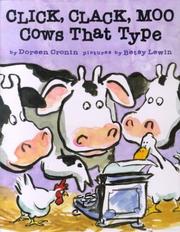
Click, Clack, Moo: Cows That Type
Cows learn to type, demand electric blankets, and go on strike in a deadpan picture book about negotiation and withheld labor.
2,617-word summary · 12 min read
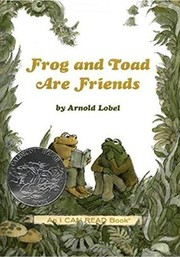
Frog and Toad Are Friends
Five short stories about a cheerful frog and a grumpy toad who need each other for waking up, swimming, and waiting for the mail.
1,969-word summary · 9 min read
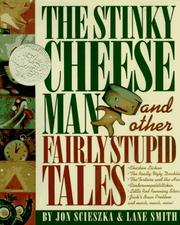
The Stinky Cheese Man and Other Fairly Stupid Tales
Scieszka and Lane Smith take nine fairy tales apart, joke by joke, while Jack, the narrator, keeps losing the pages.
2,206-word summary · 10 min read