
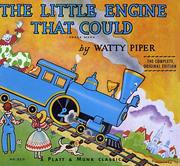
The Little Engine That Could
2,311-word summary 10 min read 48 pages in the book
- First published
- 1930
- Publisher
- Grosset & Dunlap
- Pages
- 48
- ISBN
- 9780448405209
Reading options
What's inside (8 sections)
I met this book the way a lot of parents do, tired on a small chair while a child handed it to me again. I expected something thin and sweet that I could read on autopilot. What I got instead was a story that stuck in my head for days, partly because of the rhythm and partly because I kept arguing with it after lights out. Watty Piper published this telling in 1930 with Grosset and Dunlap, forty eight pages that most American children still hear before they can tie shoes. I came back to it this week with a pencil, reading slowly, and I was surprised by how much machinery is packed around such a simple climb.
People remember it as the book with the chant. A small engine pulls a load over a mountain by repeating a hopeful sentence to herself. That is accurate as far as it goes. The full story has more edge, more refusal, more waiting toys, and a longer history than the playground version suggests. It is also a book that invites disagreement. I love reading it aloud. I also wince at parts of it. Both reactions seem worth keeping.
The toys waiting on the wrong side of the hill
The story opens in a rail yard full of playthings that need to get over a mountain. Piper fills the cars with the kind of toys a child in 1930 would recognize at once, dolls and clowns and elephants and puzzles and drums, all packed and ready for the boys and girls on the other side. They are not luggage. They are characters with faces and worries. They laugh and chatter at first, excited for the trip, because they assume some engine will pull them.
Then their engine breaks down. It happens just before the climb, with no warning, and suddenly the whole happy load is stranded. The toys look around for help. The mountain sits ahead, tall and unmoving. The town with the children waits beyond it. Piper takes time with this moment of stuckness, and I think that is why the book still works. Any child knows what it feels like to have a plan stop cold. Any adult knows the sinking feeling of a car that will not start when other people are counting on you.
What I noticed on this reread is how much personality Piper gives the freight. The dolls fret about missing birthdays. The clown tries to stay cheerful. The animals wobble in their cars. They are polite in their panic, calling out to each passing engine, explaining that they must get over, that children are waiting. It is a clever move for a picture book. The freight cannot move itself, so the reader feels the helplessness at once. You want someone big to stop. You also learn, page by page, that bigness does not guarantee kindness.
The pictures in the classic Hauman telling help here. George and Doris Hauman drew the stranded train in bright shapes, with round faces and worried eyes. The mountain looms in simple blue and gray, clearly too steep for toys alone. Kids always point to the toys first, naming which one they would be.
The fine engines who keep rolling past
This middle stretch is less cozy than people recall. One by one, larger engines come along, and one by one they refuse.
First comes a shiny passenger engine, built for important work and proud of it. He looks at the loaded cars full of dolls and blocks and says, in effect, that he does not pull that sort of thing. He is for grand travel, not for toys. Then comes a freight engine, strong and gruff, who says he has spent the morning pulling his own heavy cars and has no interest in adding more. Then comes a rusty old engine who says he cannot, he is too tired, his joints ache, leave him alone. Each answer is a little different, and each stings in its own way.
I read these pages aloud with more feeling than I expected. Children hear the refusals clearly. They frown. They ask why the big train will not help. Adults hear something else, the way work sorts people into important and unimportant, the way fatigue becomes a shield. Piper does not pause to scold the big engines. He lets their reasons sit on the page. The passenger engine cares about status. The freight engine cares about his own load. The old engine cares about rest. None of them is painted as evil. They are busy, proud, worn out. That feels honest, which makes it harder.
There is a rhythm to these encounters that begs for voices. I do a puffed up voice for the passenger engine and a creaky whisper for the old one, and kids laugh even while they protest. Same question, new answer, mounting worry. Will anyone say yes.
The small blue engine down in the yard
Then, when the toys are close to giving up, a little blue engine comes chugging along. She is not built for mountain work. She is used for switching cars in the yard, moving a few at a time on flat track. Her paint is bright. Her size is modest. The toys call to her with the same plea they used before, almost shy now because they have heard no three times.
Her answer is what makes the book. She does not boast. She does not promise speed. She agrees to try. In the classic telling she admits she has never pulled a train over a mountain, and that admission matters. She is not certain. She is willing. She couples herself to the heavy cars, and the toys cheer with relief that feels earned after so many turndowns.
I love this arrival because Piper resists making her cute in a helpless way. She is small, yes, but she is competent at her own job. She knows yards and switches and short pulls. She understands weight and coupling. What she lacks is mountain experience, not sense. When children hear that she says yes, they sit up. The story tilts. Someone kind has entered who also knows how to work.
The Hauman art marks the change well. The little blue engine has a round face and eyes that look forward, sturdy and cheerful without looking silly. Next to the tall passenger engine, she looks almost toy sized herself. Help does not have to come from far above.
The climb, the chant, and the other side
The climb takes up the heart of the book, and Piper stretches it the way a good read aloud stretches time. The little engine starts bravely. The cars rattle behind her. The grade steepens. Her wheels slow. Steam puffs harder. The toys go quiet, which after their earlier chatter feels significant. Everyone is listening to effort.
This is where the famous refrain lives. As she labors upward, the little engine repeats a short hopeful sentence to herself, a private chant about thinking she can. Piper weaves it into the chug of the wheels so that text and sound merge. I will not quote it at length here because most readers already hear it in their heads, but its function is plain. It paces her. It steadies her. It turns a huge task into small repeated pushes. Children often join in without being asked, whispering along, then louder as the top nears.
What I appreciate, and what I missed as a child, is that Piper does not make the climb quick. The engine slips into doubt halfway up. The cars feel heavier. The track seems longer. She keeps going not because she suddenly gains power but because she keeps choosing motion. Puff by puff, as the old read aloud phrasing has it, she inches forward. The mountain does not shrink. She outlasts it.
The top arrives with a burst of joy that feels physical when you turn the page. The little engine rolls over the crest, looks down the other side, and lets gravity help her at last. The toys laugh and wave. The valley with its houses and children spreads below. Down they go, faster now, brakes squealing a little, everyone giddy. Delivery follows, with dolls and animals lifted out to eager hands, and the toys thanking the engine who did not leave them.
Piper gives the little engine a changed chant for the descent, a contented answer to her earlier effort. Downhill is easier, and her voice shows it. Then she heads back to the yard alone, ready for the next day of switching cars. She does not stay to be praised.
How this telling reached us
The history behind the book is tangled, which is part of its charm and part of its controversy. Stories about a small engine helping a stranded train circulated in American kindergartens and Sunday school papers well before 1930. Teachers told versions with different engines and different loads. Printed versions appeared in the nineteen oughts and teens, some signed, some unsigned, with titles about engines and mountains and willingness.
Two threads matter most for Piper. One involves an early telling linked to Mabel C. Bragg and a version sometimes connected with an Olson name in schoolroom retellings, where a small engine agrees to help toys over a hill. The other involves the publishing house of Platt and Munk, where Arnold Munk shaped reader friendly texts for young children. Watty Piper was the house pen name used for such books, not a single person with a birthplace and a desk, though many covers carry the name as if it were. When the Piper telling of The Little Engine That Could appeared in 1930, in the edition families now associate with Grosset and Dunlap, it pulled those loose threads into one smooth read aloud text with steady repetition and clear voices for each engine.
That 1930 smoothing is why the book lasted. Earlier versions can feel preachy or choppy on the page. Piper evens the beats. Each refusal gets its own spread and reason. The agreement gets warmth. The climb gets sound. The descent gets relief. He also keeps the vocabulary close to speech, with short words a four year old can follow and enough variation that adults do not go numb on the fiftieth reading. Forty eight pages sounds long for a picture book, and it is on the generous side, but the pages turn fast because so much is dialogue and action.
Attribution stayed fuzzy for decades. Children met Watty Piper as author. Adults later learned about the house name and the prior tellings and argued about who deserved credit. The Piper text is the one that fixed the story in memory, the way a particular recording fixes a folk song. Knowing about the earlier versions enriches the reading without undoing it.
Pictures, classrooms, and the quarrel about trying
The look of the book has shifted across printings. The Hauman illustrations, with rounded engines and rosy cheeked dolls, set the standard. Later editions brightened colors and gave the little blue engine an even friendlier face. I prefer the older warmth, with heavier outlines and calmer blues, because effort looks harder when the world is not too slick.
Teachers adopted the book early and never let go. In kindergarten and first grade it supports talk about persistence, asking for help, and helping when asked. Many classrooms act it out, with children lining up as cars and chanting together up an imaginary slope. The refusals invite ethics talk. Why did the big engines say no. What could they have said instead.
That classroom use also sparked the main criticism, and it deserves a fair hearing. Some readers argue the moral slides too easily toward bootstrap thinking, the idea that anyone who tries hard enough will crest any hill. Real hills differ. Real engines differ. A tired engine with a cracked boiler should not be shamed for saying no. A child facing hunger or illness or an underfunded school is not a stalled toy train that only needs a peppier pull. When adults use the story to imply that failure means you did not chant hard enough, they twist kindness into pressure.
I feel that worry most when the book is quoted at children who are already trying. Telling an exhausted second grader to try harder can sound like blame. The story works better, I think, when the emphasis falls on the helper rather than the climbed. The point worth copying is not that willpower moves mountains on its own. The point is that a willing neighbor matters, that small help given freely can finish a job that pride refused. Read that way, the book is about generosity and cooperation, not about grinding alone until you succeed.
There are smaller knocks too. The plot repeats by design, which can bore older siblings hearing it nightly. The toys can read as passive, waiting to be rescued. I notice these things and then watch them dissolve when a three year old leans in at the climb. Repetition is scaffolding at that age.
So where does that leave me after a week with forty eight pages. Still fond, more careful. I will keep doing voices for the proud engines. I will keep letting children chant on the way up. I will also pause after the delivery and say something plain, that trying helps and help helps more, that rest is allowed, that saying no for a good reason is different from refusing out of pride. The little blue engine earns her happy return not because she proves small is best but because she shows up when others would not. That feels like enough moral for one short book to carry, and a sturdy one to hand to the next tired reader on the next small chair.
FAQ
When was The Little Engine That Could published and by whom?
The familiar Watty Piper telling appeared in 1930 from Grosset and Dunlap, building on earlier schoolroom and Munk house versions of the small engine story.
How long is the Piper edition?
It runs 48 pages, with much of the length carried by repeated engine encounters, the climb, and full page illustrations.
Is the book only about trying harder?
Trying matters, but the story reads best as praise for willing help, since the turn comes when the small engine agrees where prouder engines would not.
Similar books

Make Way for Ducklings
A pair of mallards raise eight ducklings on the Charles River and lead them across Boston to the Public Garden, with a little help from a friendly policeman.
2,044-word summary · 9 min read

Amelia Bedelia
A literal-minded housekeeper follows her employer's list to disastrous and funny effect in the 1963 picture book that made wordplay a children's staple.
2,038-word summary · 9 min read
The Mitten
Jan Brett retells a Ukrainian folktale about a boy, a lost white mitten, and the woodland animals that crowd inside until a bear sneezes.
2,609-word summary · 12 min read
Clifford the Big Red Dog
Emily Elizabeth picks the smallest puppy in the litter, loves him as hard as she can, and wakes up to a dog the size of a house.
2,092-word summary · 9 min read
The Story of Ferdinand
A gentle Spanish bull would rather smell flowers than fight, and when he is taken to the bullring he simply sits down among the flowers in the ladies' hats.
2,135-word summary · 9 min read
Go, Dog. Go!
Dogs drive, work, play, and climb a tree for a party in this Beginner Book built on repetition, opposites, and one very unpopular hat.
2,196-word summary · 10 min read
Caps for Sale
A peddler balances his caps on his head, naps under a tree, and wakes to find monkeys wearing his stock in this 1940 picture book.
2,787-word summary · 12 min read

The Snowy Day
Peter in his red snowsuit explores fresh snow, from footprints and angels to a melted pocket snowball, in Keats classic winter day.
2,375-word summary · 11 min read
Curious George
Curious George retold: a monkey sails from Africa to the city, phones the fire station, floats off on balloons, and finds home.
2,979-word summary · 13 min read
Cloudy with a Chance of Meatballs
A grandfather tells of Chewandswallow, where soup rains and meatballs fall, until giant food storms force everyone to flee.
2,873-word summary · 13 min read
Chicka Chicka Boom Boom
Letters race up a coconut tree, tumble down with a boom, then climb again with help in this chant classic.
2,120-word summary · 9 min read
Brown Bear, Brown Bear, What Do You See?
A rhythmic animal parade teaches colors and names, from brown bear to schoolchildren.
3,226-word summary · 14 min read
True Story of the Three Little Pigs
A. Wolf tells his side from the Pig Pen: he only wanted sugar for a cake, had a bad cold, and sneezed. You decide.
2,975-word summary · 13 min read
Alexander and the Terrible, Horrible, No Good, Very Bad Day
Alexander has one bad day from gum in his hair to bedtime, while his family copes and his mother stays honest.
2,548-word summary · 11 min read
One Fish, Two Fish, Red Fish, Blue Fish
Counting fish and silly creatures from here to there, with rhymes for beginning readers.
1,900-word summary · 8 min read
Madeline
Ludwig Bemelmans's 1939 Madeline: the twelve girls in Paris, Miss Clavel, the midnight appendix scare, and why the smallest girl became a classic.
2,944-word summary · 13 min read
The Tale of Peter Rabbit
Peter Rabbit disobeys his mother, squeezes under the gate into Mr. McGregor garden, and ends in a chase back home to chamomile tea.
2,157-word summary · 10 min read

The Polar Express
A doubting boy rides a night train to the North Pole and keeps a bell only believers hear.
2,195-word summary · 10 min read
Are You My Mother?
A newborn bird falls from the nest and asks a kitten, a hen, a dog, a cow, a plane and a giant Snort if any will be his mother.
2,351-word summary · 10 min read
The Lorax
The Once-ler fells Truffula Trees for Thneed greed despite the Lorax, who speaks for the trees, warning him to stop.
2,563-word summary · 11 min read
Goodnight Moon
A small bunny says goodnight to each object in the green room in this 1947 bedtime classic.
2,600-word summary · 12 min read
The Very Hungry Caterpillar
Eric Carle's hungry caterpillar eats through the week and turns into a butterfly: what the holes, counts, and days teach, and why kids still ask for it again.
2,413-word summary · 11 min read
The Cat in the Hat
A tall Cat turns a rainy day upside down for Sally and her brother, with Thing One and Thing Two in tow.
2,546-word summary · 11 min read
Where the Wild Things Are
Maurice Sendak follows Max in his wolf suit from mischief to a forest of Wild Things, through the wordless rumpus and back home to supper waiting still hot…
2,585-word summary · 11 min read
The Giving Tree
A boy and a tree grow older together as he takes her apples, branches, and trunk until only a stump remains.
2,249-word summary · 10 min read

Little Town on the Prairie
In the spring after the Long Winter, fifteen-year-old Laura sews shirts, studies for a teaching certificate, and helps send her blind sister Mary to college.
2,071-word summary · 9 min read
Click, Clack, Moo: Cows That Type
Cows learn to type, demand electric blankets, and go on strike in a deadpan picture book about negotiation and withheld labor.
2,617-word summary · 12 min read
Frog and Toad Are Friends
Five short stories about a cheerful frog and a grumpy toad who need each other for waking up, swimming, and waiting for the mail.
1,969-word summary · 9 min read
The Stinky Cheese Man and Other Fairly Stupid Tales
Scieszka and Lane Smith take nine fairy tales apart, joke by joke, while Jack, the narrator, keeps losing the pages.
2,206-word summary · 10 min read
The Borrowers
A family of tiny people live under the floorboards of an English house, borrowing what they need until a lonely boy and a suspicious housekeeper change…
2,164-word summary · 10 min read